Yellow Foxtail in Cannabis Beds: ID and Seed Control
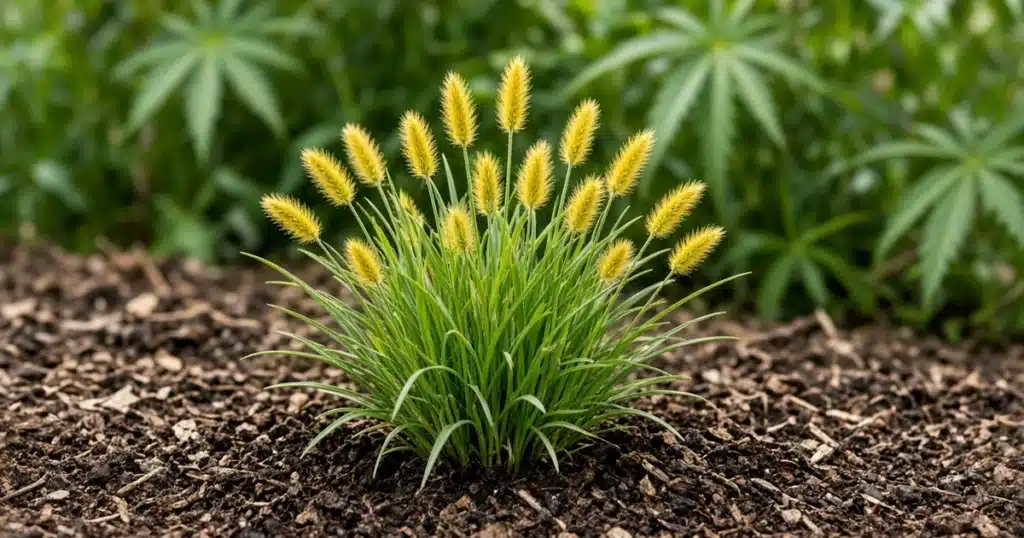
Quick answer: Yellow foxtail is a summer annual grass with flattened stems, twisted leaf blades and bristly, spikelike seed heads. UC IPM says it reproduces by seed and blooms from June through December. Pull or hoe clumps while they are young, never let a seed head ripen, and keep bare soil covered with mulch so new seedlings struggle to start.
What Is Yellow Foxtail?
A warm season annual grass that lives for one summer and leaves seed behind. The University of California Statewide IPM Program (UC IPM) calls yellow foxtail a summer annual grass of agricultural land and other disturbed areas. Its habitat list includes roadsides, ditch banks, fields, cropland, gardens and turf. UC IPM adds that it is found more often in moist soil.
NC State Extension says yellow foxtail is quite weedy and grows throughout the US in open areas and disturbed turf. It prefers full sun with moist to slightly dry conditions. Our overview of weed control in outdoor cannabis covers the general plan, and this guide focuses on one of the most common grassy weeds you will meet at a bed edge.
How Do You Identify Yellow Foxtail?
Look at the seed head first. UC IPM describes yellow foxtail flower heads as spikelike, bristly and densely packed, with yellow to reddish needlelike awns. Other features from UC IPM and NC State:
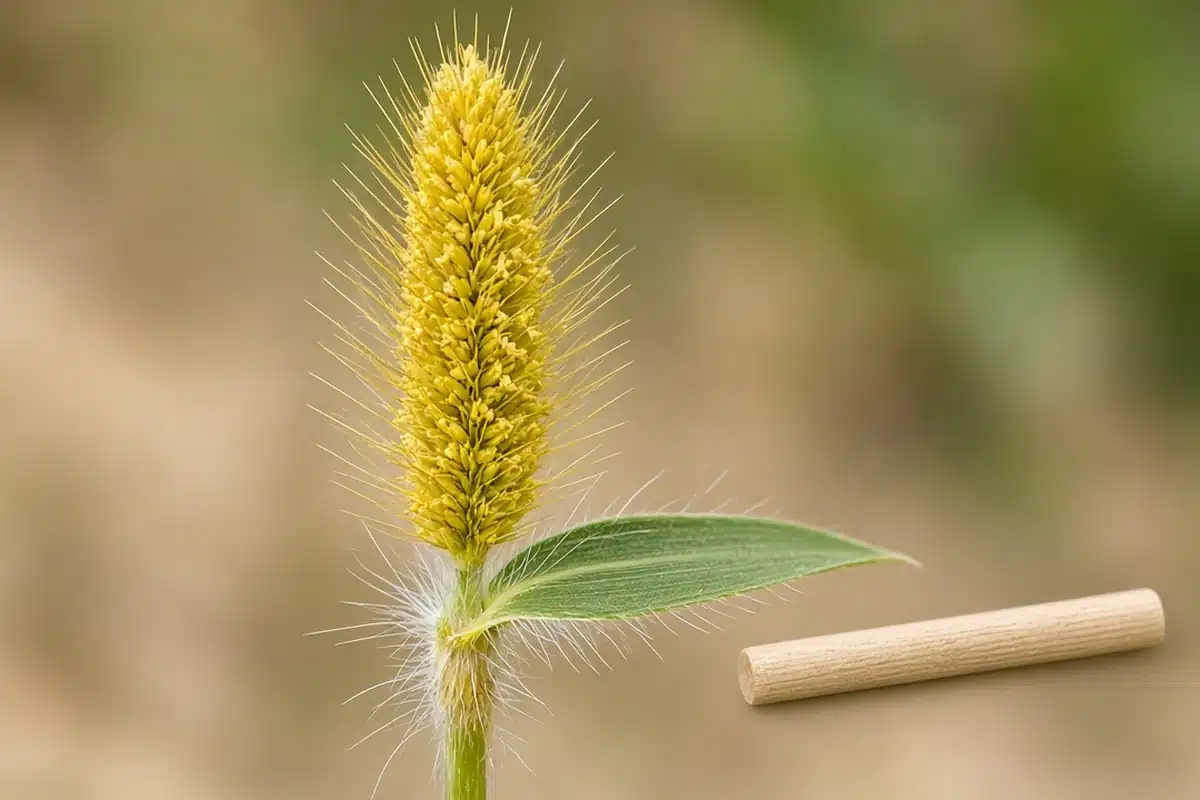
- Growth. Loose clumps, or single plants, with stems that branch at the base.
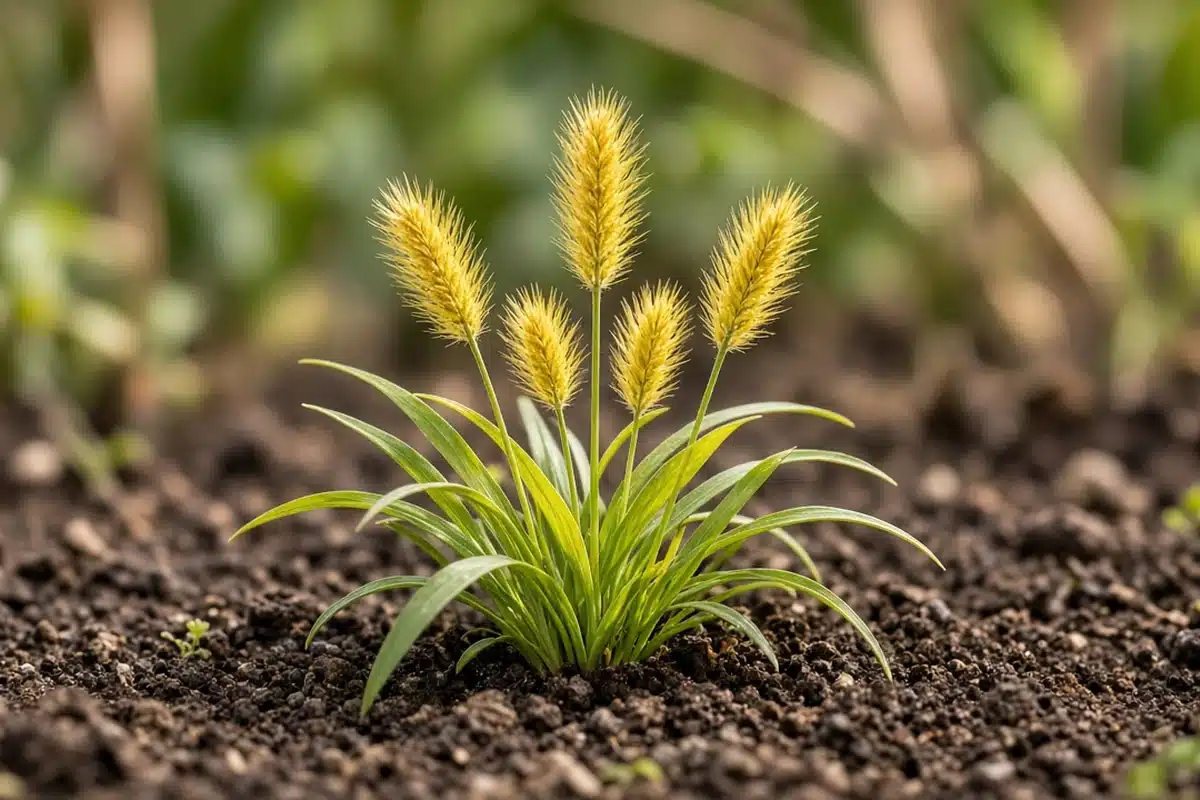
- Height. UC IPM says stems can reach 4 feet, though foxtails usually range from 1 to 3 feet.
- Stems. Flattened in cross section, upright or bent at the base. NC State notes a reddish tint at the base on some plants.
- Leaves. Blades about 2 to 12 inches long, and most have a spiral twist. The upper surface is hairless except for long hairs near the base.
- Collar. The ligule is a fringe of hairs, and there are no auricles.
- Seedlings. UC IPM says the first leaves usually lie parallel to the ground.
NC State adds that the immature spikelets are shiny green with yellow bristles, and the whole spike turns light tan at full maturity.
How Is Green Foxtail Different?
Peel back a leaf sheath. UC IPM explains that yellow foxtail has no hairs on the leaf sheath margin below the collar. If you pull the sheath of green foxtail away from the stem, you can see fine hairs there, and its leaf blades are flat and lack hairs.
The seed heads differ too. NC State says yellow foxtail blooms in a straight spike with yellow bristles, while other foxtails have green or purple bristles and nodding heads. NC State describes the green foxtail head as 1 to 4 inches long and often nodding at the tip. Both are managed the same way, so the main goal is to catch either one before the heads ripen. If a clump looks flatter and tougher, compare it with goosegrass in cannabis beds.
Why Does Yellow Foxtail Matter Near Cannabis?
It fills gaps quickly. NC State calls its growth rate rapid and says all plants of this species can have weedy and aggressive tendencies. NC State’s note about several generations in a single season comes from its green foxtail page, so it is not a yellow foxtail fact. For yellow foxtail, simply keep checking for new seedlings through summer.
Foxtail also likes to settle wherever soil is open. UC IPM lists gardens, cropland and other disturbed sites as habitat, which describes a newly planted cannabis bed in early summer. Young cannabis plants have little canopy, and grass seedlings in the same bed compete for the same light and water until the cannabis grows tall enough to shade them.
When Does Yellow Foxtail Grow?
Through the warm months. UC IPM gives bloom times of June through December for yellow foxtail and May through November for green foxtail. That long window means seed heads can appear at almost any point in the outdoor season.
UC IPM’s landscape guide says summer annuals are easiest to identify in mid to late summer. For foxtail, it pays to start checking earlier. Look along bed edges and paths in late spring, then check again every week or two once the first heads show. Our guide to fall garden cleanup after cannabis harvest is a good moment to remove any late clumps before they drop seed.
Does Trimming Foxtail Work?
Not very well. UC IPM’s landscape guide says string and blade trimmers control annual broadleaf weeds more effectively than annual grasses, because the growing points of grasses are usually below ground. A trimmed foxtail clump can simply send up new stems and still set seed.
Pulling and hoeing work better in a garden bed. NC State says yellow foxtail has a fibrous root system. Pulling young clumps from moist soil is usually easiest. For larger clumps, loosen the soil beside the plant first, then pull the whole crown.
How to Control Yellow Foxtail in a Cannabis Bed
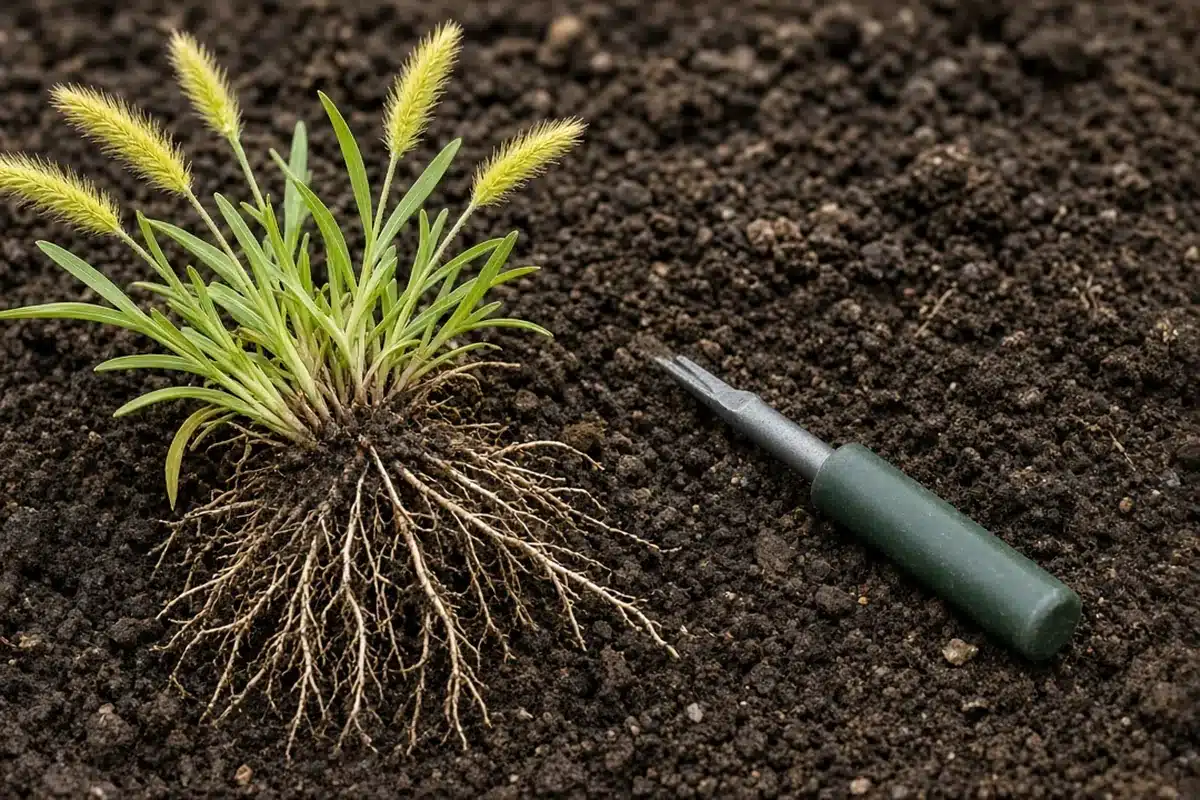
- Learn the seed head. UC IPM describes a dense, bristly spike with yellow to reddish awns.
- Check the collar. No hairs on the sheath margin points to yellow foxtail, as UC IPM explains.
- Pull young clumps. UC IPM’s landscape guide says to remove young weeds by hand before they flower and set seed.
- Hoe shallowly between plants. UC IPM recommends shallow cultivation or hoeing for annual weeds.
- Do not rely on trimming. UC IPM says the growing points of grasses usually sit below ground.
- Bag ripe heads. Remove any plant with mature seed heads from the garden so the seed cannot fall on the bed.
- Mulch bare soil. UC IPM recommends a medium mulch kept 3 to 4 inches deep. Our guide to mulch for cannabis compares materials.
Yellow Foxtail at a Glance
| Subject | Extension finding | Attribution |
|---|---|---|
| Life cycle | Summer annual grass | UC IPM, NC State |
| Height | Usually 1 to 3 feet, up to 4 feet | UC IPM |
| Bloom | June through December | UC IPM |
| Key trait | No hairs on sheath margin below collar | UC IPM |
| Roots | Fibrous | NC State |
| Reproduction | By seed | UC IPM |
Should You Use Herbicides Near Cannabis?
No. Pull, hoe shallowly and mulch. Remember that EPA has not registered any herbicide for use on marijuana, and state rules vary, so check with your state agriculture department. UC IPM says home gardeners who hand weed and mulch should not need herbicides. Before you plant cannabis outdoors, check your state’s home grow law.
Troubleshooting Yellow Foxtail
Clumps came back after trimming. UC IPM says grass growing points are usually below ground. Pull the whole crown instead.
New seedlings keep appearing. A missed clump can keep dropping seed, so keep checking through summer and mulch bare soil.
You cannot tell yellow from green foxtail. UC IPM says green foxtail has fine hairs on the sheath margin below the collar. Manage both the same way.
Heads ripened while you were away. UC IPM gives a bloom window of June through December. Bag ripe heads and remove them.
Foxtail lines the bed edge. UC IPM lists roadsides, ditch banks and disturbed sites as habitat. Clear edges and paths too.
At Kind Seed Co, we see a bristly seed head at the bed edge as a reminder to pull before the week is out.
Frequently Asked Questions
Is yellow foxtail an annual or a perennial?
Yellow foxtail is an annual. UC IPM calls it a summer annual grass, and NC State lists its life cycle as annual with seed as its means of spread. Each plant lives for one warm season, so the key to control is stopping seed. Pull or hoe clumps before their bristly heads ripen and drop seed.
How can I tell yellow foxtail from green foxtail?
Check the collar. UC IPM says yellow foxtail has no hairs on the leaf sheath margin below the collar, while green foxtail shows fine hairs there when the sheath is pulled back. NC State adds that yellow foxtail has yellow bristles and a straight spike, while green foxtail heads often nod at the tip.
When does yellow foxtail bloom?
UC IPM says yellow foxtail blooms from June through December, and green foxtail from May through November. That long window means seed heads can appear through most of the outdoor season. Check bed edges and paths every week or two from late spring onward and remove clumps before their heads mature.
Can I just mow or trim foxtail?
Trimming is not a reliable fix. UC IPM’s landscape guide says string and blade trimmers control annual grasses less effectively than broadleaf weeds, because grass growing points are usually below ground. In a cannabis bed, pull young clumps from moist soil or hoe them out shallowly, then mulch the bare spot.
Where does yellow foxtail grow?
UC IPM lists roadsides, ditch banks, fields, pastures, cropland, orchards, vineyards, gardens, turf and other disturbed sites. NC State says it prefers full sun with moist to slightly dry conditions. In a home garden, that means sunny bed edges, paths and any open soil left bare after planting or cleanup.
Sources
- UC Statewide IPM Program, Yellow Foxtail, Weed Gallery: https://ipm.ucanr.edu/weeds-identification-gallery/yellow-foxtail/
- UC Statewide IPM Program, Foxtails, Weed Gallery: https://ipm.ucanr.edu/weeds-identification-gallery/foxtails/
- NC State Extension Gardener Plant Toolbox, Setaria pumila: https://plants.ces.ncsu.edu/plants/setaria-pumila/
- NC State Extension Gardener Plant Toolbox, Setaria viridis: https://plants.ces.ncsu.edu/plants/setaria-viridis/
- UC Statewide IPM Program, Weed Management in Landscapes: https://ipm.ucanr.edu/home-and-landscape/weed-management-in-landscapes/