
Wild Radish in Cannabis Gardens: Spot It and Stop Seed
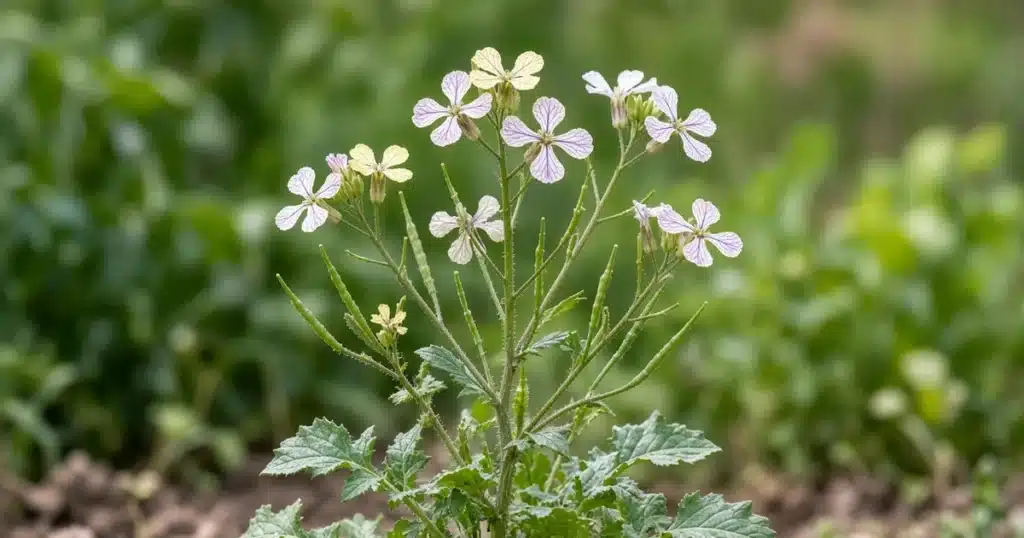
Quick answer: Wild radish is an annual in the mustard family with rough, lobed leaves, four petaled flowers with dark veins and long pods that pinch between the seeds. UC IPM says it reproduces by seed and its pods do not open. Pull rosettes and young plants before they flower, and keep bare soil covered with mulch.
What Is Wild Radish?
A weedy annual in the mustard family. The University of California Statewide IPM Program (UC IPM) calls wild radish a winter or summer annual, or sometimes a biennial broadleaf, found in agricultural fields and other disturbed sites. UC IPM notes that wild radish and cultivated radish readily hybridize where they grow together.
NC State Extension says wild radish is found on disturbed sites, roadsides and floodplains, and that it can spread rapidly. It does best in sandy, loamy and clay soils that stay evenly moist, in full sun or partial shade. Our overview of weed control in outdoor cannabis covers the general plan for weeds like this one.
How Do You Identify Wild Radish?
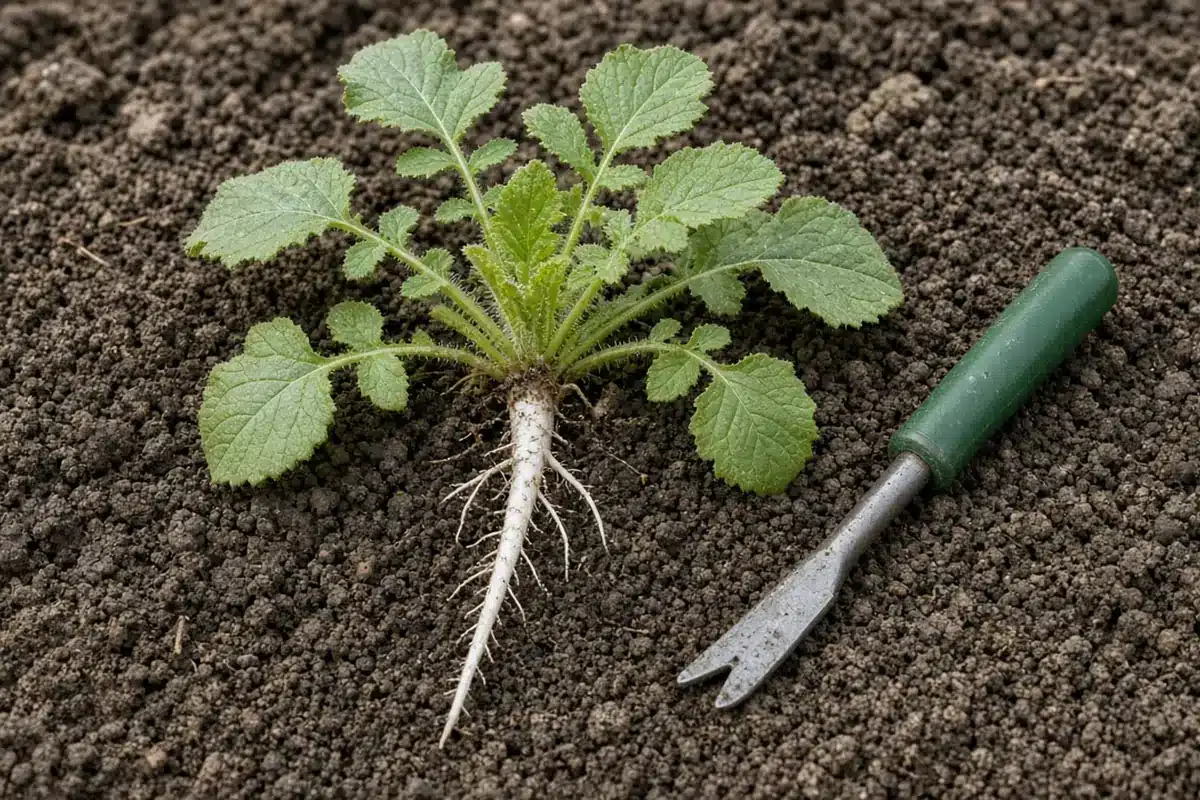
Start with the rosette. UC IPM says plants exist as rosettes until the flower stem develops. Other features from UC IPM and NC State:
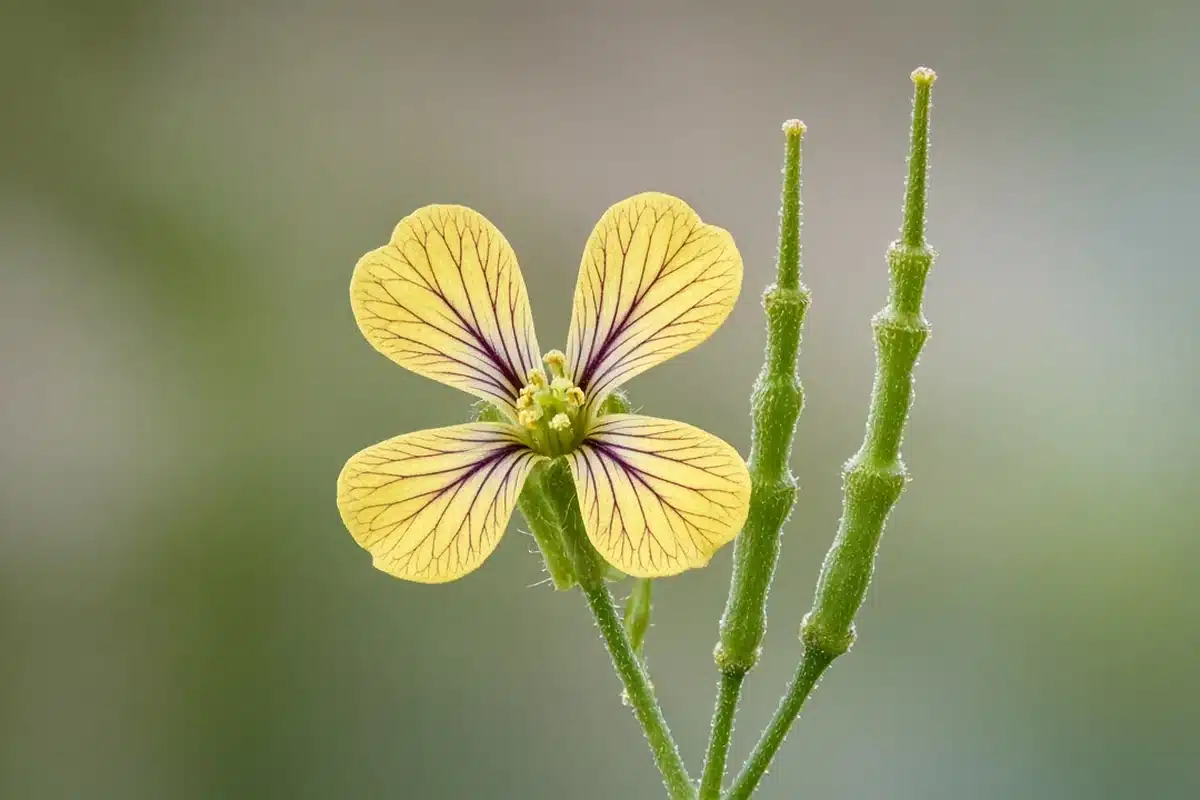
- Height. UC IPM says mature plants are erect, up to 2 feet tall, and usually branch in the upper portion.
- Leaves. Sparsely covered with stiff, flattened hairs. Lower leaves are deeply lobed and about 2 1/3 to 8 inches long.
- Feel. NC State says the leaves have hairs that make them rough to the touch, and the stems are bristly all over.
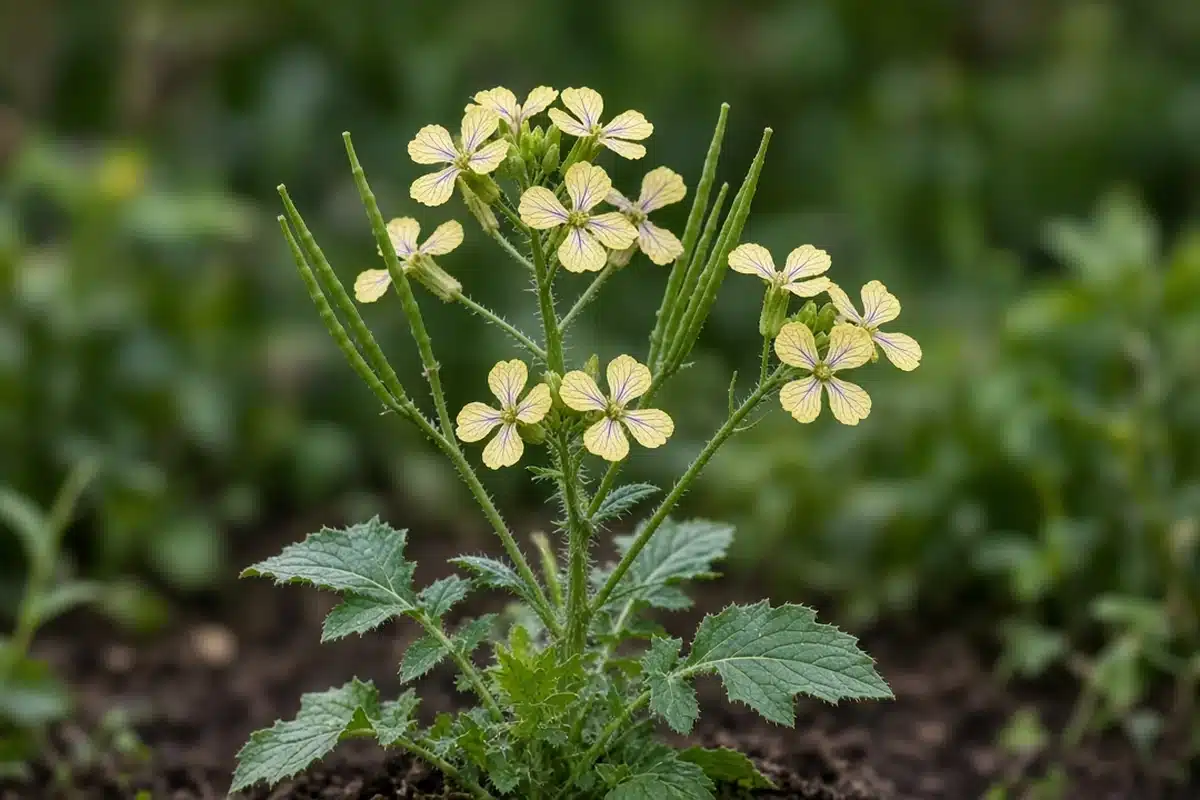
- Flowers. Four petals, white to faded yellow or pale purplish pink, often with dark violet veins.
- Pods. Long and narrow with a pointed beak. UC IPM says dry pods are noticeably constricted between seeds.
UC IPM adds that the seedlings resemble mustards but are duller green and more roughly textured.
How Is Wild Radish Different From Wild Mustard?
Start by checking the pods and petals. UC IPM says wild radish pods do not open to release seed. They start fleshy, turn dry and corky, and pinch between the seeds. NC State says the pods are divided into conspicuous segments and the petals have greenish or purplish veins.
If the petals lack veins and the pods split open, you may have a mustard instead. Our guide to wild mustard in cannabis gardens covers that plant. Both are managed the same way, by pulling them before seed forms.
Why Does Wild Radish Matter Near Cannabis?
It carries pests. UC IPM says wild radish is susceptible to several diseases and pests that damage a variety of crops, including flea beetle, thrips, blackleg of brassicas and turnip yellow mosaic virus. NC State notes it is a host of an eelworm that attacks cultivated crops.
UC IPM also says wild radish attracts beneficial predators and bees, so it is not all bad. In and right around a cannabis bed, though, a patch of a pest host is well worth removing. The best time is while it is still a rosette, before any flowers open.
When Does Wild Radish Grow?
In the cool and mild months. UC IPM says wild radish flowers from April through July, and NC State lists spring as its bloom time. UC IPM says plants exist as rosettes until the flower stem develops at maturity.
UC IPM’s landscape guide says the best time to look for winter annual weeds is mid to late winter. Check bed edges then, and pull rosettes before the flower stalk rises. Our guide to fall garden cleanup after cannabis harvest is a good time for the first pass.
What Happens to the Seed?
The seed stays right in the pod. UC IPM says wild radish seedpods do not open to release seed. Instead, the seed stays inside the dry, corky pod, which NC State describes as divided into conspicuous segments. UC IPM describes the seeds as round to egg shaped and about 1/10 to 1/6 inch long.
Since UC IPM says the pods do not open, a plant left to ripen can leave its seed where it grew, and that patch may return. Mark those areas and check them early each season, and bag any plants that already carry dry pods.
How to Control Wild Radish in a Cannabis Garden
- Learn the pods and veins. UC IPM and NC State describe veined petals and pods that pinch between seeds.
- Pull rosettes early. UC IPM says plants stay as rosettes until the flower stem develops.
- Remove plants before they flower. UC IPM’s landscape guide says to remove young weeds by hand before they flower and set seed.
- Wear gloves. NC State says the stems are bristly all over and the leaves feel rough.
- Bag plants with pods. Remove them from the garden so dry pod segments cannot drop seed on the bed.
- Recheck last year’s patches. Seed can stay where a plant ripened, since the pods do not open.
- Mulch bare soil. UC IPM recommends a medium mulch kept 3 to 4 inches deep. Our guide to mulch for cannabis compares materials.
Wild Radish at a Glance
| Subject | Extension finding | Attribution |
|---|---|---|
| Life cycle | Winter or summer annual, sometimes biennial | UC IPM |
| Height | Up to 2 feet | UC IPM |
| Flowers | Four petals, often dark veined | UC IPM, NC State |
| Bloom | April through July | UC IPM |
| Pods | Do not open, pinch between seeds | UC IPM |
| Reproduction | By seed | UC IPM |
Should You Use Herbicides Near Cannabis?
No. Pull, hoe shallowly and mulch. Remember that EPA has not registered any herbicide for use on marijuana, and state rules vary, so check with your state agriculture department. UC IPM says home gardeners who hand weed and mulch should not need herbicides. Before you plant cannabis outdoors, check your state’s home grow law.
Troubleshooting Wild Radish
Plants keep returning in one spot. UC IPM says the pods do not open, so seed stays where the plant grew. Recheck old patches early.
You cannot tell it from mustard. UC IPM and NC State point to veined petals and segmented pods. Manage both the same way.
Hands feel scratched. NC State says the stems are bristly all over. Wear gloves.
Flea beetles appear nearby. UC IPM lists flea beetle among the pests wild radish can carry. Clear it from edges.
Rosettes were missed in winter. UC IPM says to look for winter annuals in mid to late winter. Pull before flowering.
At Kind Seed Co, we like to clear rosettes like this one before the cannabis ever goes in the ground.
Frequently Asked Questions
Is wild radish an annual?
Mostly, yes. UC IPM calls wild radish a winter or summer annual, or sometimes a biennial, and NC State lists it as an annual in the mustard family. UC IPM says plants exist as rosettes until the flower stem develops at maturity. Pull rosettes before the flower stalk rises and seed pods form.
How can I tell wild radish from wild mustard?
Look at the petals and pods. UC IPM says wild radish petals may have dark violet veins and its pods do not open, pinching between the seeds as they dry. NC State says the pods are divided into conspicuous segments. A plant with unveined petals and pods that split open is more likely a mustard.
When does wild radish bloom?
UC IPM says wild radish flowers from April through July, and NC State lists spring as its bloom time. UC IPM’s landscape guide says the best time to look for winter annual weeds is mid to late winter, so check beds then. Pull plants while they are rosettes, well before the first four petaled flowers open.
Does wild radish attract pests?
It can. UC IPM says wild radish is susceptible to several diseases and pests, including flea beetle, thrips and blackleg of brassicas. NC State says it hosts an eelworm that attacks cultivated crops. UC IPM also notes it attracts bees and some beneficial predators, but in a cannabis bed it is best removed early.
Where does wild radish grow?
UC IPM says wild radish grows in agricultural fields and other disturbed sites. NC State lists disturbed sites, roadsides and floodplains, and says it does best in evenly moist sandy, loamy or clay soils in full sun or partial shade. In a home garden, look along bed edges, paths and freshly worked ground.
Sources
- UC Statewide IPM Program, Wild Radish, Weed Gallery: https://ipm.ucanr.edu/weeds-identification-gallery/wild-radish/
- NC State Extension Gardener Plant Toolbox, Raphanus raphanistrum: https://plants.ces.ncsu.edu/plants/raphanus-raphanistrum/
- UC Statewide IPM Program, Weed Management in Landscapes: https://ipm.ucanr.edu/home-and-landscape/weed-management-in-landscapes/


