
Chili Peppers Cracking: Corking Lines plus Watering Swings
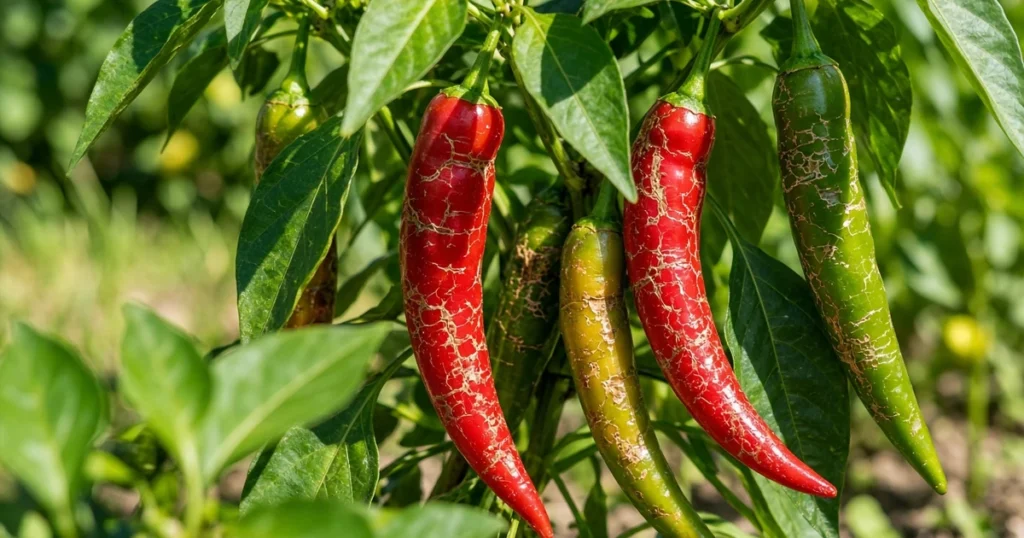
Chili peppers cracking with fine brown or white lines are showing corking. Iowa State University Extension notes these lines look like stretch marks, often sit on the shoulder of the fruit plus come from variations in moisture plus temperature.
The short answer
Corking is a surface defect linked to swings in moisture plus temperature. Iowa State notes it lowers looks but does not notably change flavor. It advises uniform moisture, mulch plus water in dry weather. Older jalapeno varieties cork more, so crack resistant types such as Jalapeño Jalafuego help.
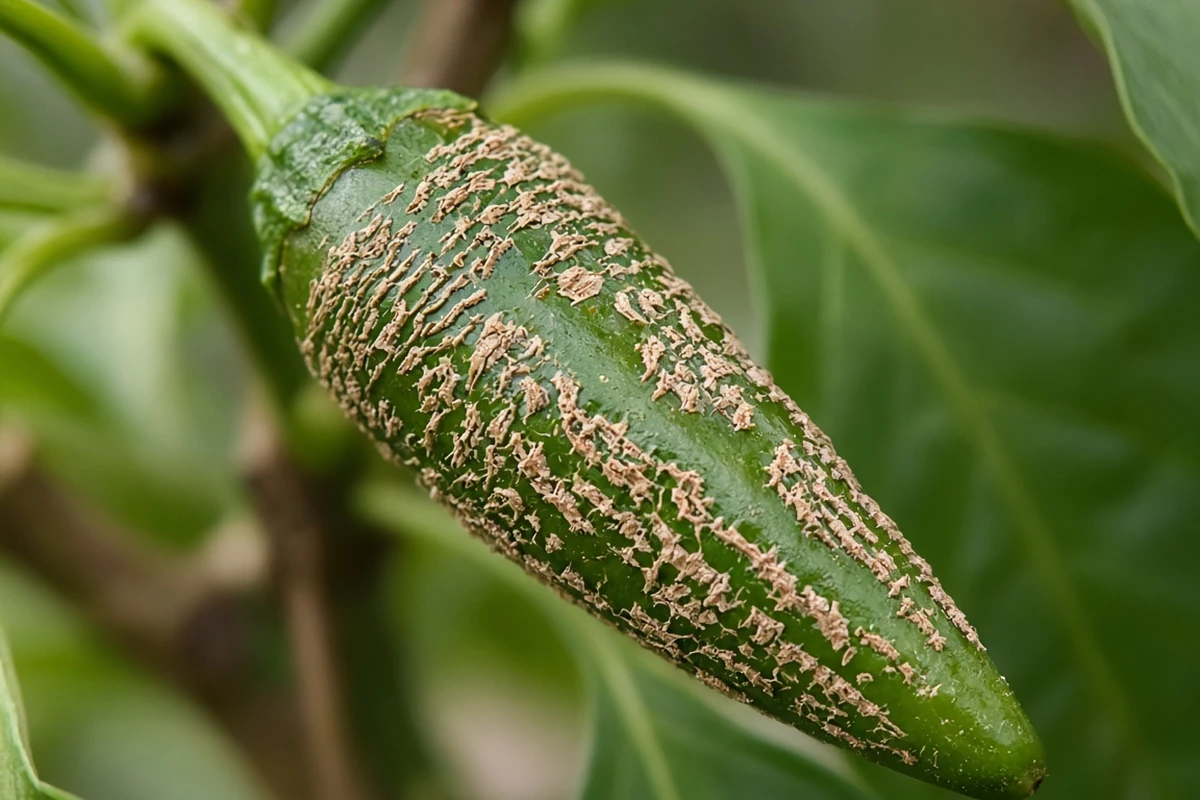
What is corking on chili peppers?
Iowa State describes corking as small brown to white lines or cracks. They may run the length of the fruit or circle the stem. University of Georgia Extension calls it surface cracking or concentric radial cracking plus notes it usually shows on the shoulders but can appear anywhere on the fruit.
Why do chili peppers crack?
UGA notes a probable cause is the shift between day plus night temperatures along with water from dew or irrigation sitting on the shoulders of fruit. Iowa State points to variations in moisture plus temperature. NC State Extension notes hot peppers are not drought tolerant plus need consistent moisture levels.
| Factor | Detail | Source |
|---|---|---|
| Look | Brown to white lines | Iowa State |
| Location | Shoulders most often | UGA |
| Cause | Moisture plus temperature swings | Iowa State |
| Water on fruit | Dew or irrigation | UGA |
| Variety | Older jalapenos more prone | Iowa State |
| Soil | Consistent moisture | NC State |
Source: Iowa State University Extension, University of Georgia Extension plus NC State Extension.
Can you prevent corking?
Iowa State advises uniform supplies of moisture, mulch plus water during dry weather. It also advises crack resistant varieties like Jalapeño Jalafuego. UGA notes varieties differ in how prone they are to cracking, plus many older jalapeño varieties cracked readily. NC State notes hot peppers favor humus rich, well drained loam.
New Mexico State University Extension notes a well drained loam gives good water retention plus drainage for chile. It notes the early green crop is ready about 120 days after planting while the red crop takes about 165 days.
How to: step by step
- Plant crack resistant varieties where you can.
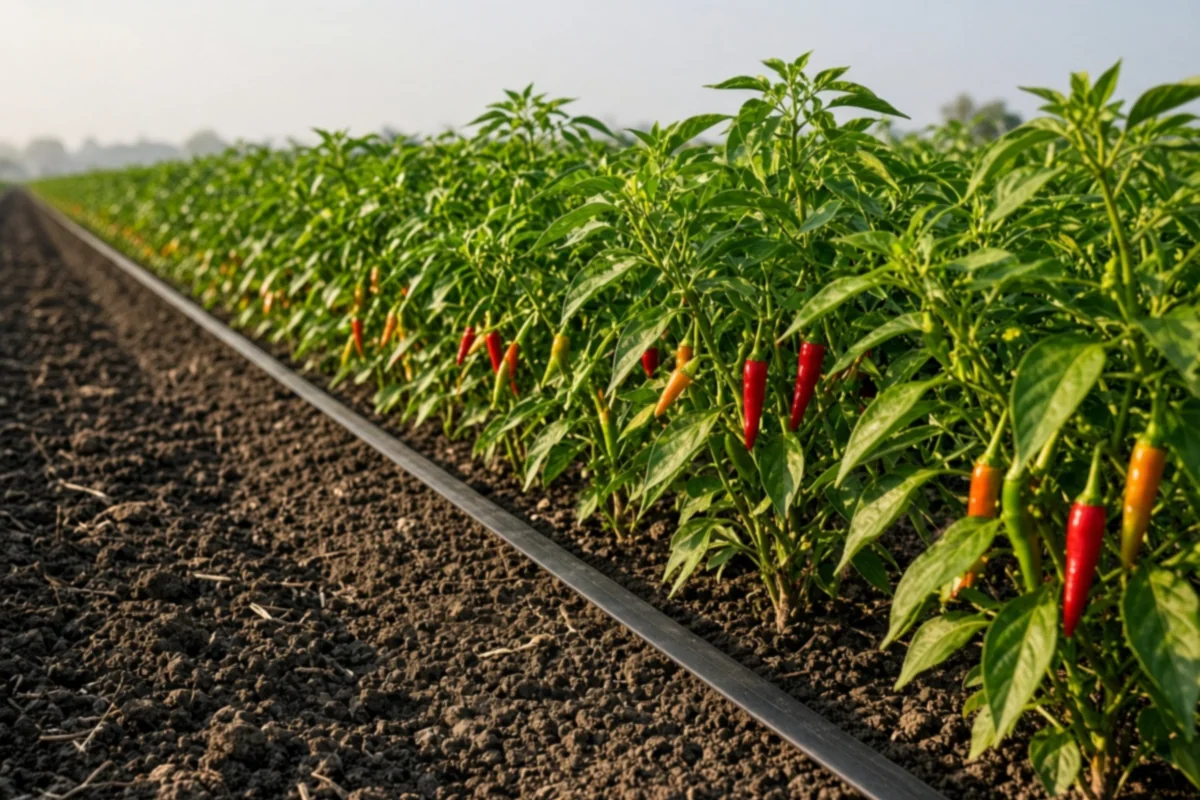
- Grow in well drained loam rich in humus.
- Mulch the bed to even soil moisture.
- Water deeply during dry spells.
- Aim water at the soil, not the fruit shoulders.
- Check shoulders for fine lines as fruit sizes up.
Troubleshooting
Lines on the shoulders: moisture or temperature swings. Iowa State advises uniform moisture.
Cracks on every jalapeno: an older variety. Iowa State advises crack resistant types.
Lines after wet nights: dew on the fruit. UGA notes water sitting on shoulders is a probable cause.
For water see underwatering cannabis plus mulch for cannabis. Read the effects of environmental stresses on weed plants plus cannabis heat stress. Kind Seed Co also stocks cannabis seeds.
Sources
- Why do my peppers have brown lines on them?, Iowa State University Extension Yard and Garden
- Common defects of bell peppers explained (C1306), University of Georgia Extension
- Growing chiles in New Mexico (H-230), New Mexico State University Extension
- Capsicum frutescens (hot pepper), NC State Extension Gardener Plant Toolbox
FAQ
Where does corking show on a pepper?
Iowa State University Extension notes corking often appears on the shoulder of the fruit but can show anywhere, running the length of the fruit or circling the stem.
Does dew play a part in pepper cracking?
University of Georgia Extension notes water from dew or irrigation sitting on fruit shoulders plus day to night temperature shifts are a probable cause.
Do jalapenos cork more than other peppers?
Iowa State notes older jalapeno varieties are more prone to corking. UGA notes many older jalapeño varieties were prone to surface cracking.
How long until chile is ready to pick?
New Mexico State University Extension notes the early green crop is ready about 120 days after planting plus the red crop takes about 165 days.
What soil moisture suits hot peppers?
NC State Extension notes hot peppers are not drought tolerant plus need consistent moisture levels in well drained soil.



