
Peas Powdery Mildew: Late Season Mildew plus Timing
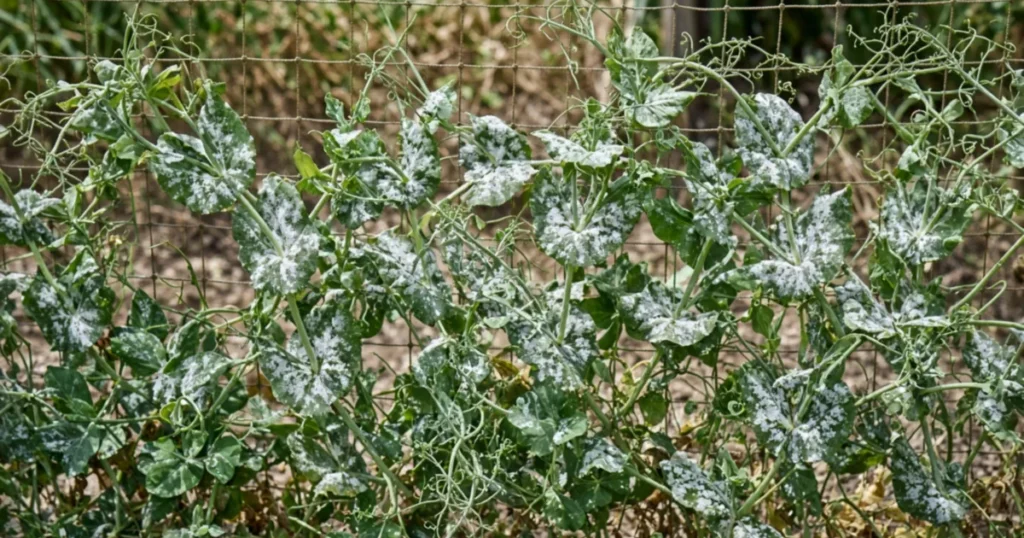
Peas powdery mildew shows up as white powdery mats on leaves, pods plus stems. Washington State University Hortsense notes warm days, cool nights plus humid weather favor it, so it is often worse in the fall.
The short answer
Powdery mildew on peas is a late season fungal disease. South Dakota State University Extension notes late planted peas are usually more susceptible than early ones. WSU advises planting early, choosing resistant varieties plus clearing plant debris. Spring crops seldom show serious damage, so timing does most of the work.
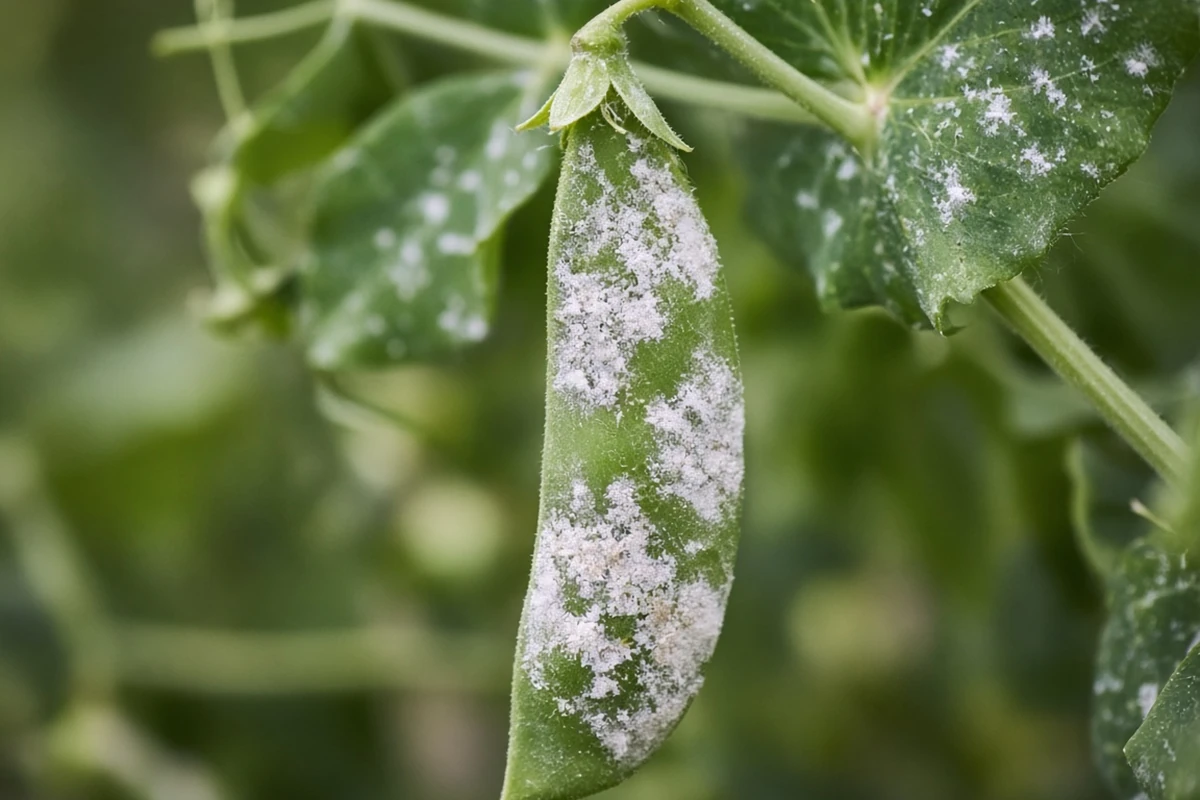
What does powdery mildew on peas look like?
SDSU notes white powdery spots appear first on the upper surface of the oldest leaves plus stipules, then on stems plus pods. WSU notes the white mats give a bluish cast to the foliage. Small black fruiting bodies may dot the mats. Some varieties such as Oregon Sugar Pod may show brown or black spots on pods.
Why do late peas get more mildew?
SDSU notes warm dry weather with cool nights plus dew favors the spread. WSU notes the disease is often worse in fall. UC IPM notes moderate temperatures of 60 to 80°F plus shade encourage powdery mildew. Clemson Extension notes peas suffer in summer heat plus humidity plus advises sowing as early in spring as the ground can be worked.
| Factor | Detail | Source |
|---|---|---|
| First signs | Oldest leaves plus stipules | SDSU |
| Weather | Warm days plus cool nights | WSU |
| Temperature | 60 to 80°F | UC IPM |
| Sowing | Early spring | WSU plus Clemson |
| Varieties | Resistant types exist | WSU |
| Nitrogen | Avoid excess | UC IPM |
Source: WSU Hortsense, SDSU Extension, UC IPM plus Clemson HGIC.
How do you reduce mildew on peas?
WSU advises planting peas early plus not replanting fall peas in the same spot. It lists resistant varieties such as Almoto, Aspen, Concord, Knight, Sentry plus Super Sugar Melt. UC IPM advises against too much nitrogen, which causes lush foliage plus shade. Overhead sprinkling can wash spores off plants, it notes. WSU notes the fungus can ride on infected seed plus overwinter on plant debris, so clear old vines.
How to: step by step
- Sow peas as early in spring as the soil can be worked.
- Choose a resistant variety.
- Plant in full sun, as Clemson advises.
- Limit nitrogen.
- Scout the oldest leaves for white spots as pods form.
- Clear vines plus debris after harvest.
Troubleshooting
White mats in late summer: a late sowing. WSU notes spring crops seldom show serious damage.
Mildew every fall: one spot reused. WSU advises a new location for fall peas.
Lush shaded vines: too much nitrogen. UC IPM advises moderate feeding.
For more see the effects of environmental stresses on weed plants plus what roles do bees play in outdoor cannabis. Read underwatering cannabis plus cannabis heat stress. Kind Seed Co also stocks cannabis seeds.
Sources
- Pea: powdery mildew, Washington State University Hortsense
- Powdery mildew: a disease concern in field peas, South Dakota State University Extension
- UC Statewide IPM Program (UC ANR), Powdery mildew on vegetables
- Garden peas, Clemson Cooperative Extension, HGIC
FAQ
What weather favors pea powdery mildew?
WSU Hortsense notes warm days, cool nights plus humid weather favor it. SDSU notes warm dry weather with cool nights plus dew aids its spread.
Does overhead sprinkling help with mildew?
UC IPM notes overhead sprinkling can wash spores off infected plants.
Do resistant pea varieties exist?
Yes. WSU lists Almoto, Aspen, Concord, Freezer 604, Knight, Sentry, Sounder plus Super Sugar Melt among resistant varieties.
Should mildewed vines go in compost?
Sources differ. WSU advises against composting diseased material. UC IPM notes properly maintained compost piles should kill spores.
Should peas be sown in fall?
Clemson Extension notes fall plantings are not recommended in its guide, plus WSU notes powdery mildew is often worse in the fall.



