
Chives Falling Over: Crowding and Old Clumps
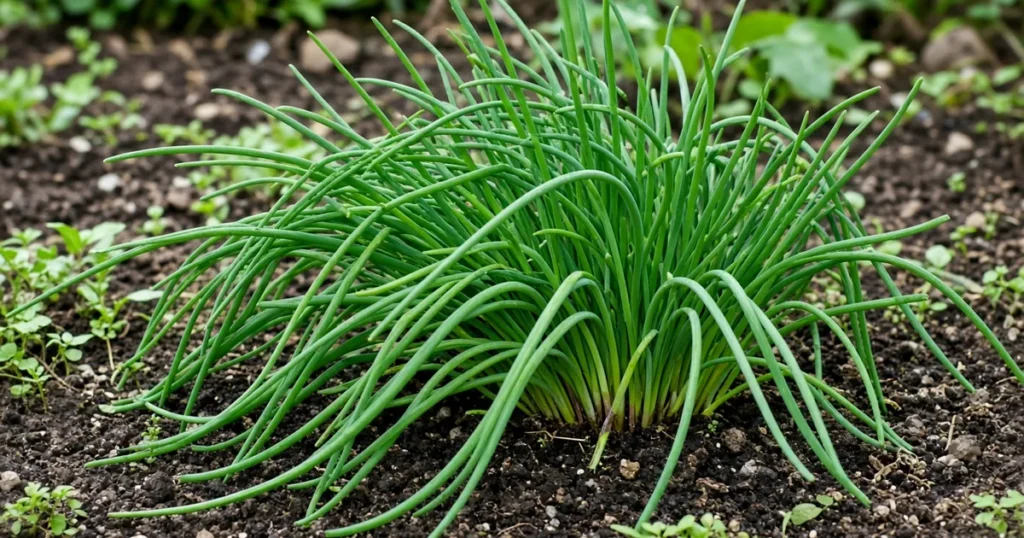
Chives falling over usually signals an old, crowded clump or too little sun. University of Minnesota Extension says perennials that go years without division may need staking to stop their stems from falling over, and it advises dividing chives every three to four years.
The short answer
Chives often flop when a clump gets old and crowded or grows in shade. Wisconsin Extension says to divide chives every 2 to 3 years to avoid overcrowding. Minnesota Extension calls for six to eight hours of direct light. Cut floppy plants to about 3 inches and fresh leaves regrow.
Why do chives fall over?
Chives grow in dense clumps of slender bulbs, each with hollow leaves 8 to 20 inches long, according to Wisconsin Extension. As a clump ages, the bulbs crowd. Minnesota Extension notes that older perennials may form smaller blooms, a bald center or stems that fall over. Plant stress from the setting can play a part too, as the effects of environmental stresses on weed plants explains.
How does crowding affect chives?
Minnesota Extension says overcrowded plants compete for nutrients and water. Dividing them reduces that competition, spurs new growth and lets more air and light reach the plants. Chives tolerate light shade, but Minnesota Extension says six to eight hours of direct light suits them, and Wisconsin notes flowering may drop in shade. Hot spots add stress, covered in cannabis heat stress.
How do you divide and cut back chives?
| Task | Timing | Source |
|---|---|---|
| Divide clumps | Every 3 to 4 years, spring | Minnesota Extension |
| Divide clumps | Every 2 to 3 years | Wisconsin Extension |
| Cut back | To about 3 inches after flowering | Wisconsin Extension |
| Remove flower stalks | At the soil line after bloom | Minnesota Extension |
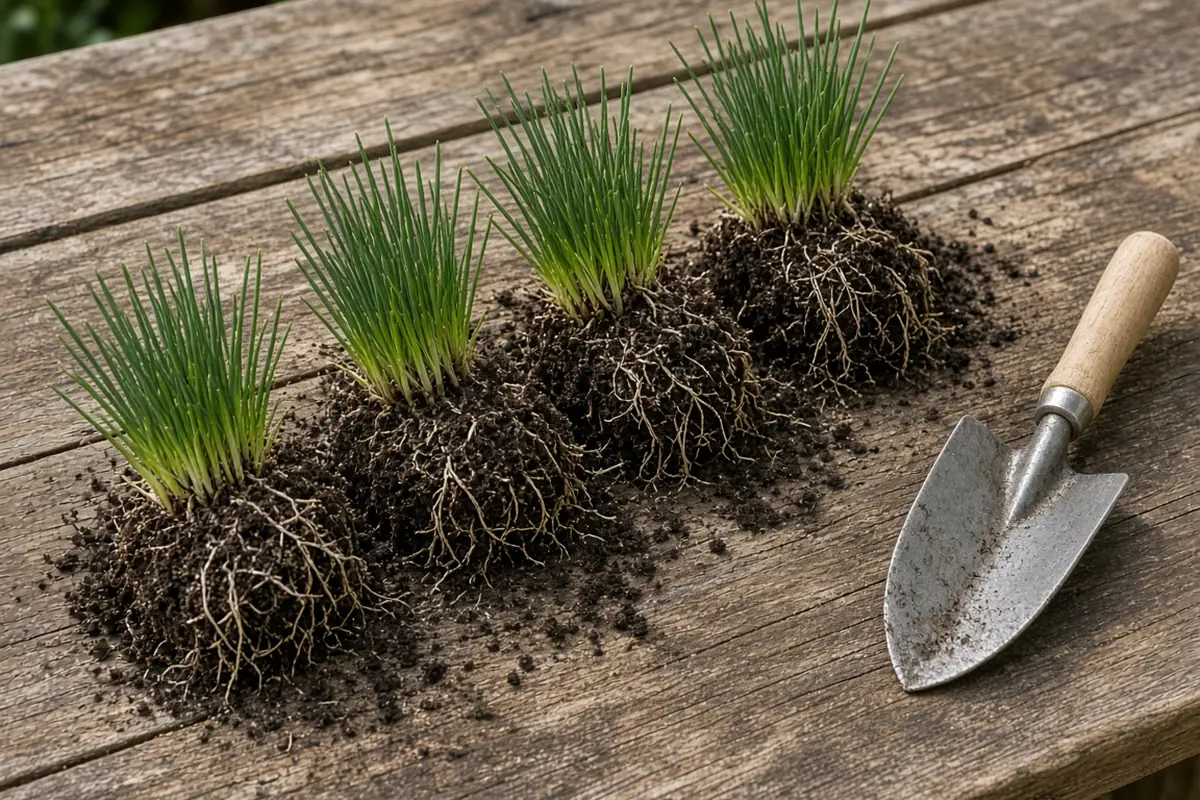
NC State says clumps can be divided in spring or fall. Minnesota Extension suggests watering the soil a day before you dig if it is dry. Give each division three to five vigorous shoots and plenty of roots. Space new clumps 6 to 12 inches apart.
How to: step by step
- Cut floppy leaves back to about 3 inches.
- Water the bed a day before dividing.
- Dig the clump in spring.
- Split it into pieces with three to five shoots.
- Replant 6 to 12 inches apart in compost rich soil.
- Water deeply when rain is scarce.
Troubleshooting
Floppy leaves mean an old clump, so divide it. Thin leaves and few flowers mean shade, so move to more sun. Dry soil around roots: low rain. Water deeply and mulch lightly, as Minnesota Extension advises. Check moisture with checking soil moisture by feel.
Chives sit among the herbs in easy to grow herbs on the Kind Seed Co blog.
Sources
- Growing chives, University of Minnesota Extension
- Chives, Allium schoenoprasum, University of Wisconsin Extension Horticulture
- Allium schoenoprasum (chives), NC State Extension Gardener Plant Toolbox
- Dividing perennials, University of Minnesota Extension
FAQ
How often should chives be divided?
Minnesota Extension says every three to four years, with spring as the preferred time. Wisconsin Extension suggests every 2 to 3 years to avoid overcrowding.
Can you cut chives back hard?
Yes. Wisconsin Extension says plants can be cut back to about 3 inches after flowering to push out new, tender leaves.
Do chives come back every year?
Yes. Minnesota Extension describes chives as a cold hardy, clump forming garden perennial in the onion family.
Should chive flowers be removed?
Minnesota Extension says to cut flower stalks at the soil line after bloom so the plant does not set seed. Wisconsin notes deadheading also cuts down volunteer seedlings.
How much sun do chives need?
Minnesota Extension says six to eight hours of direct light suits them, though they tolerate light shade.



