
Raised Bed Irrigation Layout: Drip Lines and Manifolds for a Group of Beds
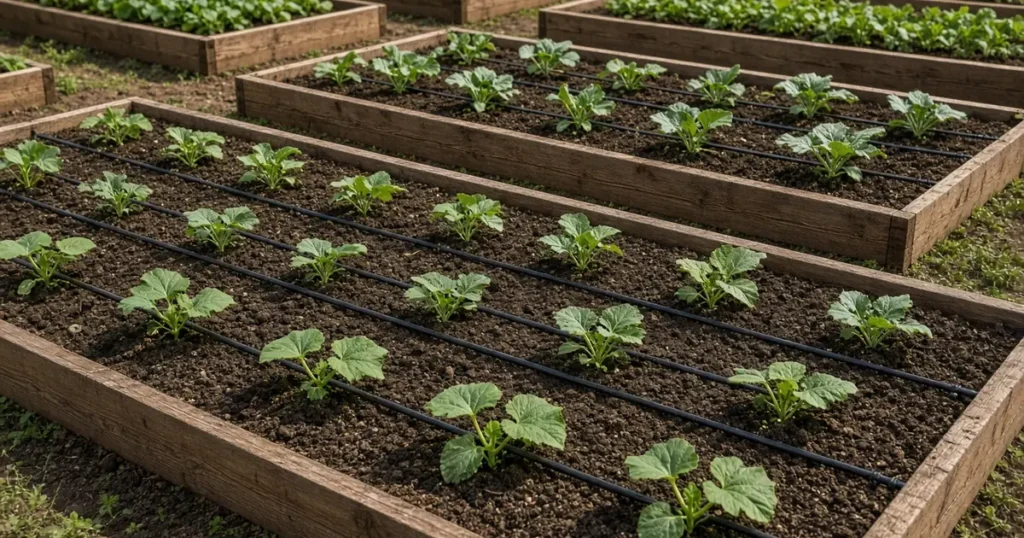
A raised bed irrigation layout runs one main line past the beds, with a header or manifold that feeds drip lines into each bed. Iowa State Extension describes a main connected to a header that runs the width of the garden, with lateral lines running the length of each row and ending in a cap.
The short answer
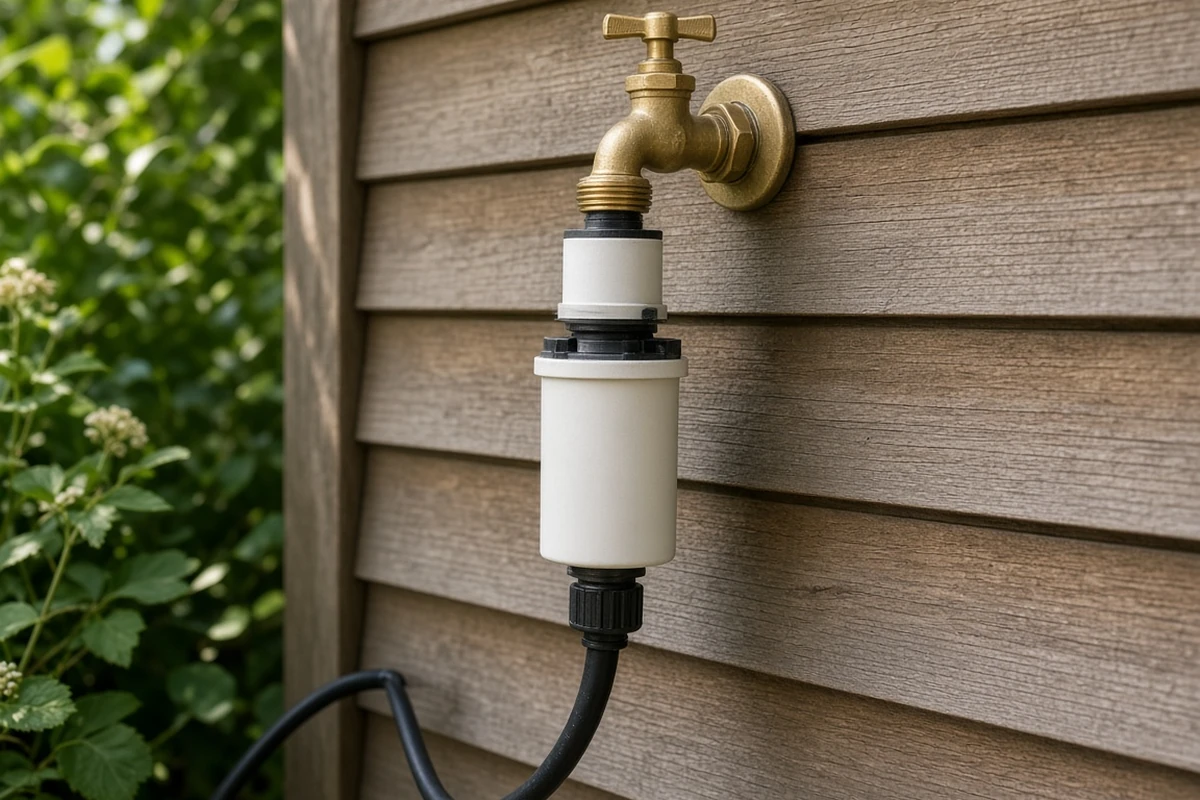
Start at the faucet with a head assembly of backflow preventer, filter and pressure regulator, as Colorado State Extension describes. Run a mainline along the beds and branch a capped lateral into each bed. If flow is short, group similar beds into zones and run one at a time.
How does a raised bed drip layout work?
Colorado State Extension says drip uses plastic pipes to carry a low flow of water under low pressure to plants. Iowa State says headers and laterals can sit on the soil or under mulch, with each lateral running down a row to a cap. Bed design basics are in raised beds for cannabis.
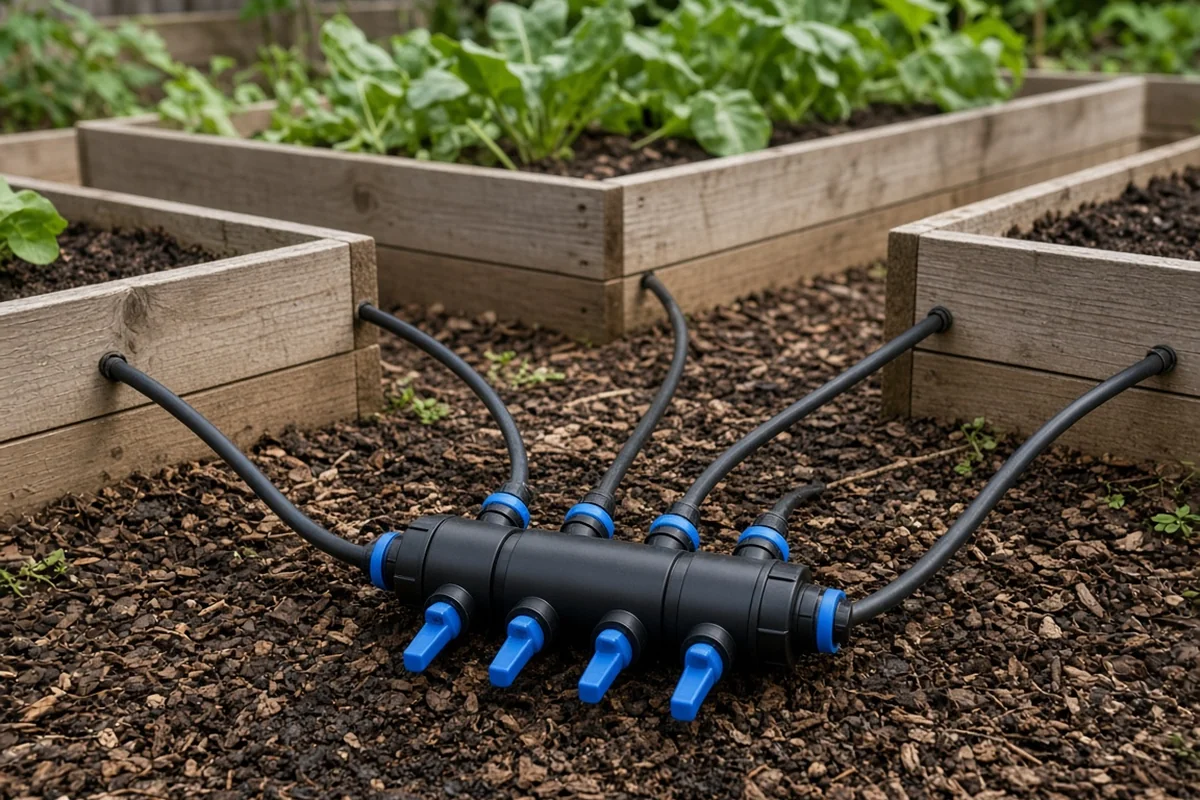
How do you plan a manifold?
For a faucet system, Colorado State lists the head assembly as backflow preventer, filter and pressure regulator. A WSU Extension Master Gardener describes a manifold with a filter, a pressure limiting valve and battery valves on swivel parts, fed from a yard hydrant. WSU adds that if emitters outnumber what your flow can supply, split the system into zones.
| Part | Job | Source |
|---|---|---|
| Backflow preventer | Part of the faucet head assembly | Colorado State |
| Filter, 150 to 200 mesh | Catches particles that clog emitters | Colorado State |
| Pressure regulator | Holds pressure at maker specs | Colorado State |
| Mainline | Limit to 200 feet per zone | Colorado State |
Colorado State says ½ inch mainline handles about 200 gph per zone, and ¾ inch raises that to 480 gph.
How far apart should drip emitters be?
Colorado State suggests emitters 12 inches apart in sand, 18 in loam and 24 in clay. Iowa State uses 12 inch spacing in vegetable and annual beds. Bed soil mixes in Minnesota Extension raised bed guidance tend to be loose and rich in organic matter. For local conditions, see garden microclimates for cannabis.
How to: step by step
- Map the beds and the water source.
- Fit a backflow preventer, filter and pressure regulator.
- Run a mainline along the beds.
- Tee a lateral into each bed and cap the end.
- Flush main, header and laterals before fitting emitters, as Iowa State advises.
- Run water and check each bed for even wetting.
Troubleshooting
Dry spots mean emitters sit too far apart, so add more. Low flow at the far bed means too many emitters, so split into zones per WSU. Clogged emitters: Iowa State says clean the filter, remove the end cap and flush at full pressure.
Rain barrels can feed low pressure systems, covered in rainwater for cannabis. For growing notes see drip irrigation for cannabis on the Kind Seed Co blog.
Sources
- Drip irrigation for home gardens, Colorado State University Extension
- Designing a drip irrigation system, WSU Extension
- Using drip irrigation in the garden, Iowa State University Extension and Outreach
- Raised bed gardens, University of Minnesota Extension
FAQ
Do I need a pressure regulator?
Colorado State Extension says a pressure regulator holds pressure at the levels drip makers specify, and names skipping one as a common setup mistake.
Can I put drip on a timer?
Yes. Colorado State says a faucet valve can be opened by a mechanical or battery operated timer attached to the faucet.
How do I winterize the system?
Colorado State says to detach the head assembly and store it indoors, then uncap the mainline to drain it and recap.
How long can a mainline run?
Colorado State Extension advises limiting mainline to 200 feet in a single zone.
How deep should drip water the soil?
Iowa State Extension suggests first soaking the garden to 10 to 12 inches and timing how long that takes.



