
Tree Line Clearing for Garden Beds: Brush, Roots and the Wooded Edge

The short answer
Tree line clearing for garden beds starts with choosing which trees stay. Then you cut brush and deal with roots and stumps. Purdue Extension notes that cutting stems low is only half the job, since cut stumps resprout. Iowa State Extension covers grinding, digging and natural decay for stumps.
How do you plan a garden near a tree line?
Start by noting species, invasive plants, slope and past land use, the same first step Clemson Extension gives for working a woodland edge. Clemson describes a soft, gradual edge rather than a hard line between field and forest. Edge trees close the canopy over time, so check how much sun the bed gets. See garden microclimates for cannabis for how shade and shelter shift near an edge.
How do you clear brush and roots?
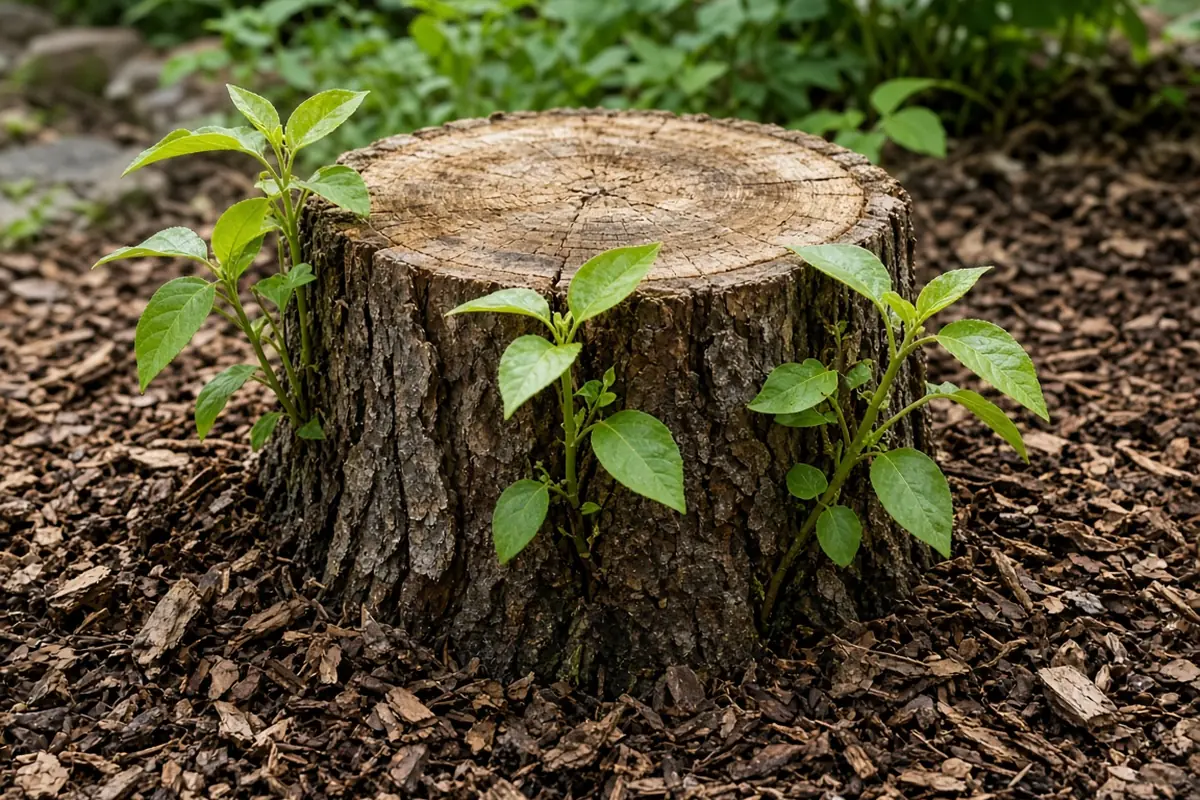
Purdue Extension recommends cutting woody stems near ground level. Severing stems starves the roots, and an early cut may stop seed from ripening. Purdue pairs cutting with a stump herbicide applied right away, so the roots die back and resprouts stay low. Read more on growing cannabis near trees.
What do you do about stumps?
Iowa State Extension calls professional grinding the quickest and easiest option. Grinders chew the stump and large lateral roots to about 8 to 12 inches deep. Digging works on stumps under about 12 inches across. Natural decay is cheap but can take 10 or more years, though drilled holes speed it up.
Tree line clearing plan
| Task | How | Notes |
|---|---|---|
| Plan | Note species and slope | Clemson Extension |
| Brush | Cut stems near the ground | Purdue Extension |
| Resprouts | Cut and handle stumps | Purdue Extension |
| Large stumps | Grind 8 to 12 inches deep | Iowa State Extension |
| Small stumps | Dig a trench and cut roots | Iowa State Extension |
| Soil | Sample before planting | NC State Extension |
Sources: Purdue Extension, Iowa State University Extension, Clemson Extension, NC State Extension.
How to: step by step
- Mark trees and shrubs that stay.
- Check the sun the cleared area will get.
- Cut brush close to the ground.
- Dig out small stumps or have large ones ground.
- Hire a certified arborist for large trees.
- Remove grinding shavings, add compost and send a soil sample to a lab before planting.
Troubleshooting
Brush regrows: stumps resprouting. Cut again and handle the stumps.
Poor growth in old stump spots: grinding shavings. Remove them before adding topsoil.
Too much shade: tall edge trees. Grow shade tolerant crops or open the edge.
Before you plant
NC State Extension advises a soil sample before planting and every two to three years after. Clearing compacts soil and restricts roots, so loosen it and work in compost. See soil compaction in cannabis beds for more on loosening beds.
A cleared edge can become a productive bed. Kind Seed Co shares more garden site notes on the blog.
Sources
- Controlling unwanted trees or brush in woodlands, Purdue Extension Forestry and Natural Resources
- How to remove tree stumps, Iowa State University Extension
- Edge feathering for wildlife benefit, Clemson Extension Forestry and Wildlife
- Extension Gardener Handbook, chapter 1: Soils and plant nutrients, NC State Extension
FAQ
How far from trees should a garden be?
Extension sources give no set distance for beds near a tree line. Clemson Extension notes that edge trees close the canopy over time, so map the sun the cleared strip will get and place sun loving crops where light lasts longest.
Can I garden over old stumps?
Iowa State Extension says stumps left to decay can take 10 or more years to break down. Grinding removes the stump and large roots about 8 to 12 inches deep, but the shavings change the soil, so remove them before adding topsoil.
What should I do with brush piles?
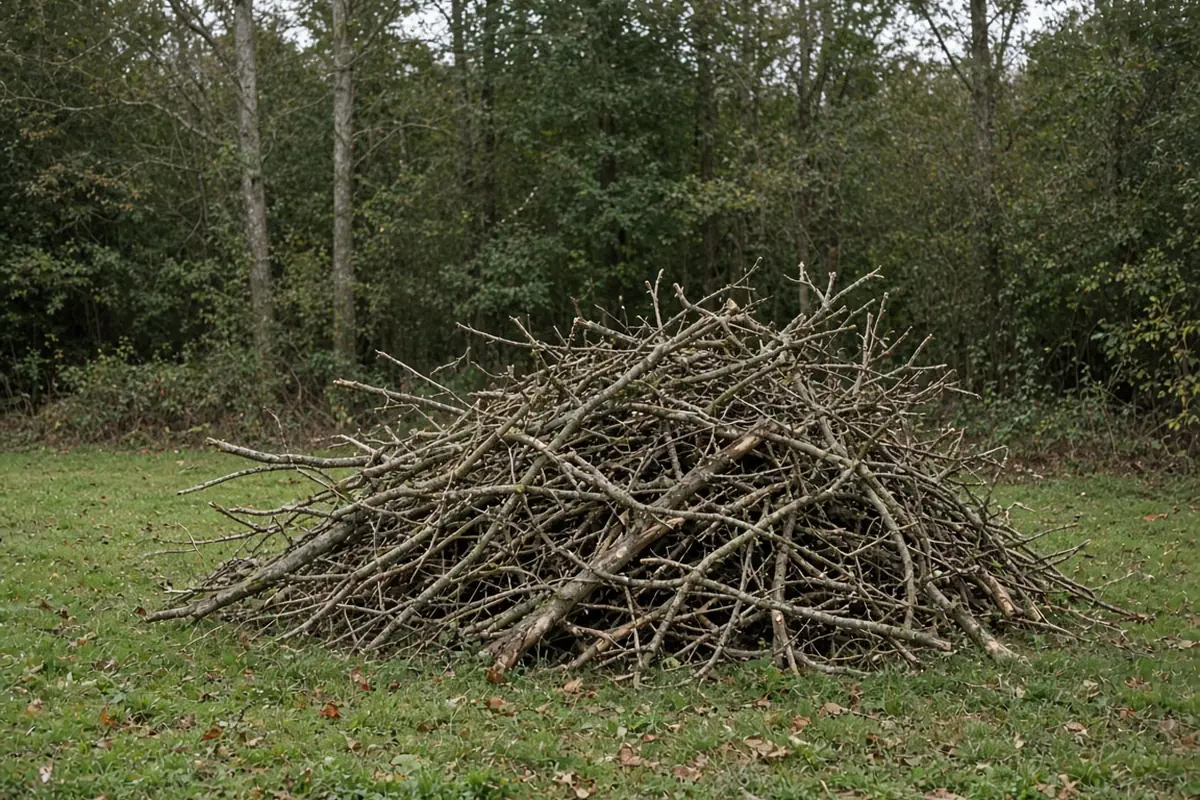
Iowa State Extension lists grinding, digging and natural decay for stumps, and drilled holes speed decay. Chip brush for mulch, compost it or haul it away, then grind or dig stumps before you plant.
Do tree roots hurt vegetables?
Extension sources do not measure tree root effects on vegetables. NC State Extension notes that soil conditions limit how far roots spread and that compaction restricts root growth, so loosen and enrich the soil in new beds.
What do I do with stump grinding shavings?
Iowa State Extension says the shavings change soil structure, moisture and nutrient balance, which makes it hard for new plants to grow. Remove them before you add topsoil and replant. They can be composted or taken to a municipal compost site.


