
Common Catsear in Cannabis Beds: The False Dandelion
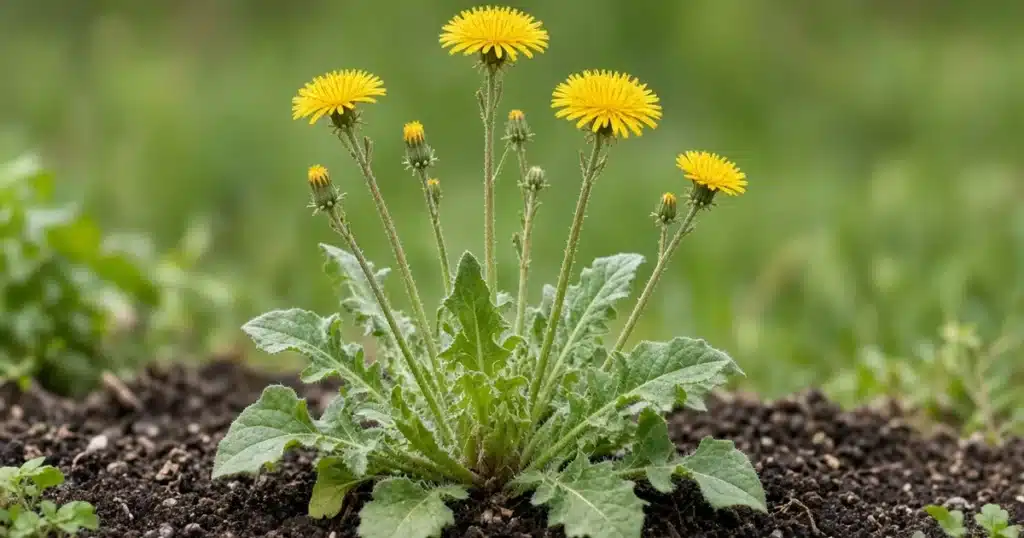
Quick answer: Common catsear is a perennial rosette weed that looks like a dandelion but has coarse, hairy leaves and branched flower stems. UC IPM says it has a fleshy taproot and reproduces by seed. NC State says removing the plant below the crown in early spring is the most efficient method. Mulch the bare spot afterward.
What Is Common Catsear?
A dandelion lookalike with a taproot. The University of California Statewide IPM Program (UC IPM) calls common catsear a perennial broadleaf of agricultural land and other disturbed places. Its habitat list includes fields, grassland, roadsides, landscaped areas, gardens and turf.
NC State Extension says catsear is a perennial weed from Eurasia that has naturalized on every continent except Antarctica. It grows in lawns, fields, roadsides and meadows, tolerates a wide range of conditions and grows in most soil types. Our overview of weed control in outdoor cannabis covers the general plan.
How Do You Identify Common Catsear?
Gently touch a leaf. UC IPM says the leaves carry coarse, yellow hairs on both surfaces that are rough to the touch. Other features from UC IPM and NC State:
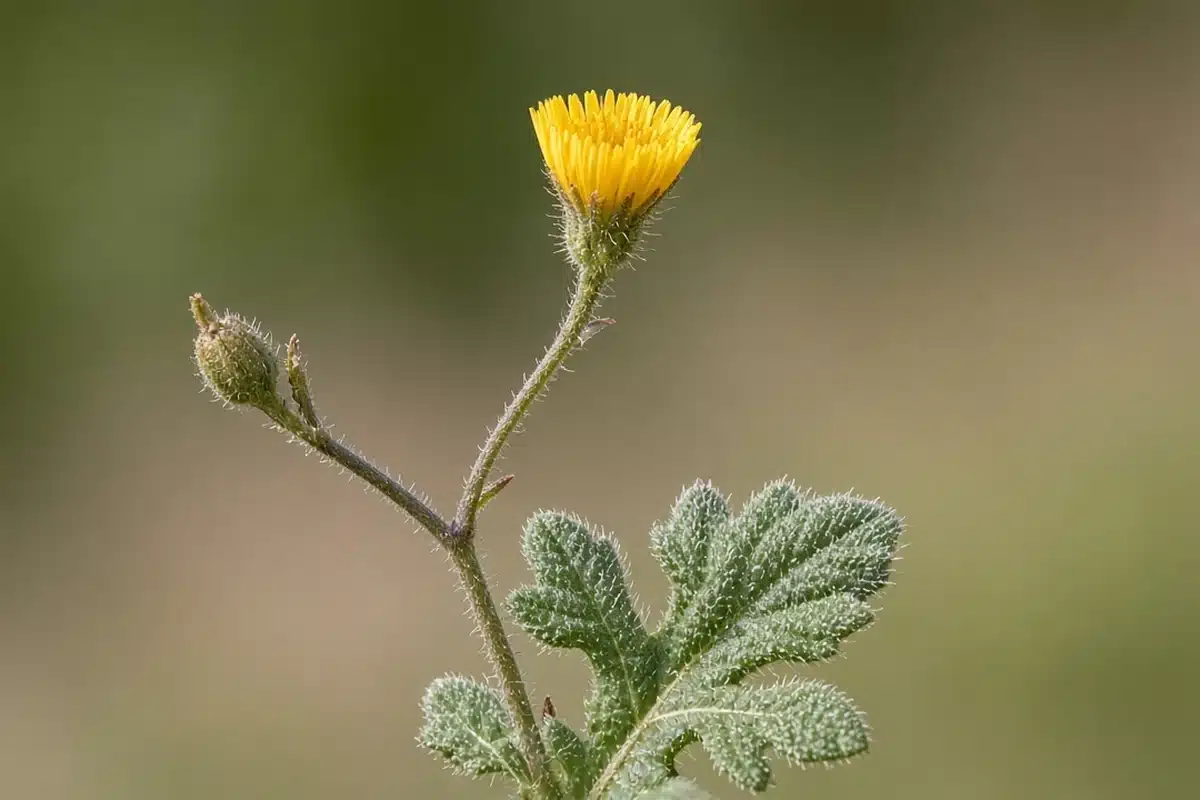
- Rosette. NC State says the basal rosette of hairy leaves can span about 1 foot.
- Leaves. Lobed or saw toothed, up to about 6 inches long and 2 inches across.
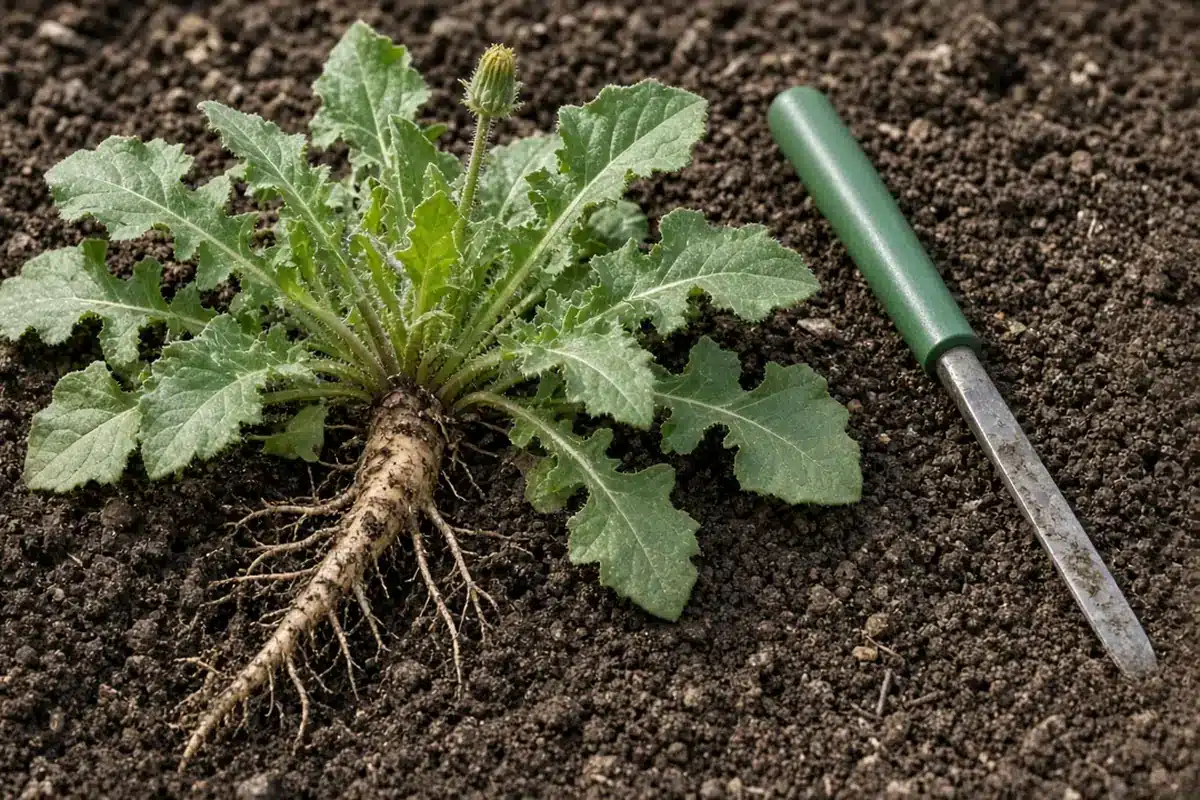
- Root. UC IPM describes a fleshy taproot.
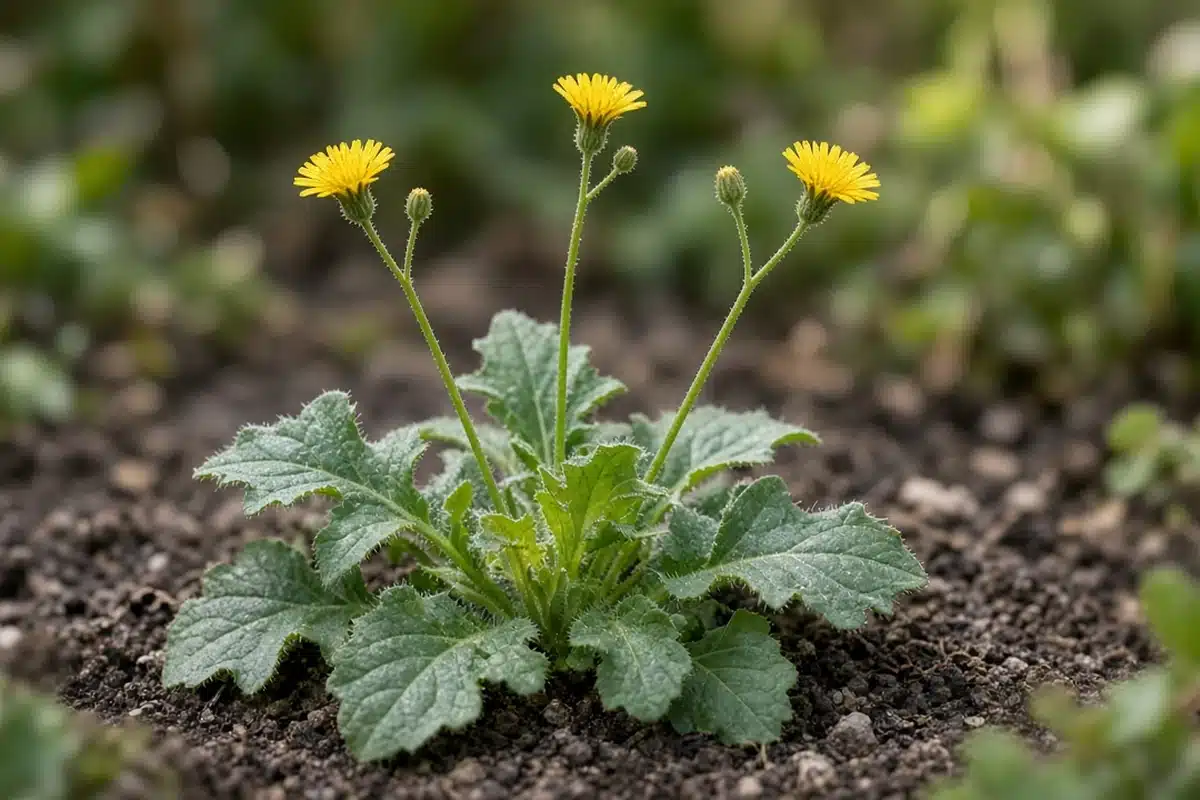
- Stems. NC State says each plant can have 1 to 15 stems that are erect, typically branched and leafless.
- Height. UC IPM says the flowering stem grows to about 2 3/5 feet.
- Flowers. Heads of tiny yellow flowers that resemble small dandelions.
NC State adds that the leaves and stems contain a milky latex.
How Is Catsear Different From a Dandelion?
Look at the stems and leaf hairs. UC IPM says catsear can be told from dandelion by its branched flower stems and its coarse, yellowish leaf hairs. It adds that catsear leaves are more distinctly lobed than dandelion leaves.
Turn a flower stalk over in your hand. If it forks and carries two or more heads, UC IPM’s branched stem test points to catsear. Our guide to dandelions in cannabis beds covers the other plant. Both have taproots and are dug out the same way.
Why Does Catsear Matter Near Cannabis?
It seeds heavily and grows fast. NC State says catsear produces many seeds per plant each year, and each seed can become a mature plant in 2 months. NC State says offsets can form as well, and UC IPM adds that in mowed turf it can grow new shoots from the crown.
Its seed travels. UC IPM says each fruit ends in a tuft of stiff, white bristles, and NC State says the seeds float on the wind. A lawn full of catsear next to your beds can keep sending seed while it blooms.
When Does Catsear Grow?
Almost all year round. UC IPM says seed can germinate from fall through spring, depending on conditions, and that common catsear blooms from May to November. NC State gives a bloom window of midsummer to early fall.
NC State says the most efficient way to remove it is to take the plant out below the crown in early spring. Check bed edges then, and again in fall. Our guide to fall garden cleanup after cannabis harvest is a good time to dig fall rosettes.
Why Remove It Below the Crown?
So it cannot regrow. NC State says catsear grows from a thick taproot and woody base, and recommends removal of the plant below the crown. Cutting it off at the surface leaves the crown to resprout, and UC IPM notes that mowed plants can send up new shoots from the crown area.
Use a dandelion knife or narrow trowel after rain or watering. UC IPM’s landscape guide recommends this kind of tool to dig up all roots and underground parts of perennial weeds without overly disturbing the soil. Push the blade down beside the root, lever it up and lift the whole plant.
How to Control Common Catsear in a Cannabis Bed
- Check for branched stems. UC IPM says branched flower stems separate catsear from dandelion.
- Dig in early spring. NC State says early spring removal below the crown is most efficient.
- Use a narrow tool. UC IPM’s landscape guide suggests a dandelion knife for perennial roots.
- Cut below the crown. UC IPM notes that the crown can send up new shoots.
- Remove flowers before seed. Pull flowers before seed forms, since UC IPM says each fruit ends in a tuft of stiff, white bristles.
- Keep checking the lawn edge. NC State says each seed can become a mature plant in 2 months.
- Mulch the bare spot. UC IPM recommends a medium mulch kept 3 to 4 inches deep. Our guide to mulch for cannabis compares materials.
Common Catsear at a Glance
| Subject | Extension finding | Attribution |
|---|---|---|
| Life cycle | Perennial | UC IPM, NC State |
| Root | Fleshy taproot | UC IPM, NC State |
| Leaves | Lobed, coarse yellow hairs | UC IPM |
| Flower stems | Branched, leafless | UC IPM, NC State |
| Bloom | May to November | UC IPM |
| Spread | Wind blown seed, crown shoots | UC IPM, NC State |
Should You Use Herbicides Near Cannabis?
No. Pull, hoe shallowly and mulch. Remember that EPA has not registered any herbicide for use on marijuana, and state rules vary, so check with your state agriculture department. UC IPM says home gardeners who hand weed and mulch should not need herbicides. Before you plant cannabis outdoors, check your state’s home grow law.
Troubleshooting Common Catsear
Plants regrow after cutting. NC State says to remove the plant below the crown. Dig instead of cutting at the surface.
You thought it was a dandelion. UC IPM says catsear has branched flower stems and rough, hairy leaves. Manage both the same way.
New rosettes appear quickly. NC State says each seed can mature in 2 months. Watch for new rosettes and remove them below the crown.
It spreads in from the lawn. UC IPM says mowed plants can resprout from the crown. Clear the lawn edge.
Roots snap when you pull. Use a narrow tool in moist soil, as UC IPM’s landscape guide suggests.
At Kind Seed Co, we flip a flower stalk over before we pull, since a fork in the stem tells us it is catsear.
Frequently Asked Questions
Is common catsear a dandelion?
No, but it looks like one. UC IPM says catsear forms a rosette like a dandelion, but it has branched flower stems and coarse, yellowish leaf hairs that are rough to the touch. Its leaves are more distinctly lobed. NC State notes the flowers are often mistaken for dandelions because both form wind borne seed.
Is catsear a perennial?
Yes. UC IPM and NC State both call common catsear a perennial. UC IPM says it has a fleshy taproot, and NC State says it grows from a thick taproot and can form offsets. That root lets it return each year, so removing the plant below the crown is the key to keeping it out of beds.
How do I get rid of catsear?
NC State says the most efficient way is to remove the plant below the crown in early spring. Use a dandelion knife or narrow trowel in moist soil, as UC IPM’s landscape guide suggests for perennial roots. Lift the whole taproot, remove flowers before seed forms and mulch the bare spot.
Why does catsear spread so fast?
NC State says catsear produces many seeds per plant each year, and each seed can become a mature plant in 2 months. UC IPM says each seed carries a tuft of stiff white bristles, and NC State says the seed floats on the wind. In mowed turf, UC IPM adds, it can also resprout from the crown.
Where does catsear grow?
UC IPM lists fields, grassland, pastures, roadsides, orchards, landscaped areas, gardens and turf. NC State says it tolerates a wide range of conditions and grows in most soils but is not usually found in wetlands. In a home garden, look for it at lawn edges and along paths next to beds.
Sources
- UC Statewide IPM Program, Common Catsear, Weed Gallery: https://ipm.ucanr.edu/weeds-identification-gallery/common-catsear/
- NC State Extension Gardener Plant Toolbox, Hypochaeris radicata: https://plants.ces.ncsu.edu/plants/hypochaeris-radicata/
- UC Statewide IPM Program, Weed Management in Landscapes: https://ipm.ucanr.edu/home-and-landscape/weed-management-in-landscapes/


