
Compost Pile Placement: Access, Shade and Drainage
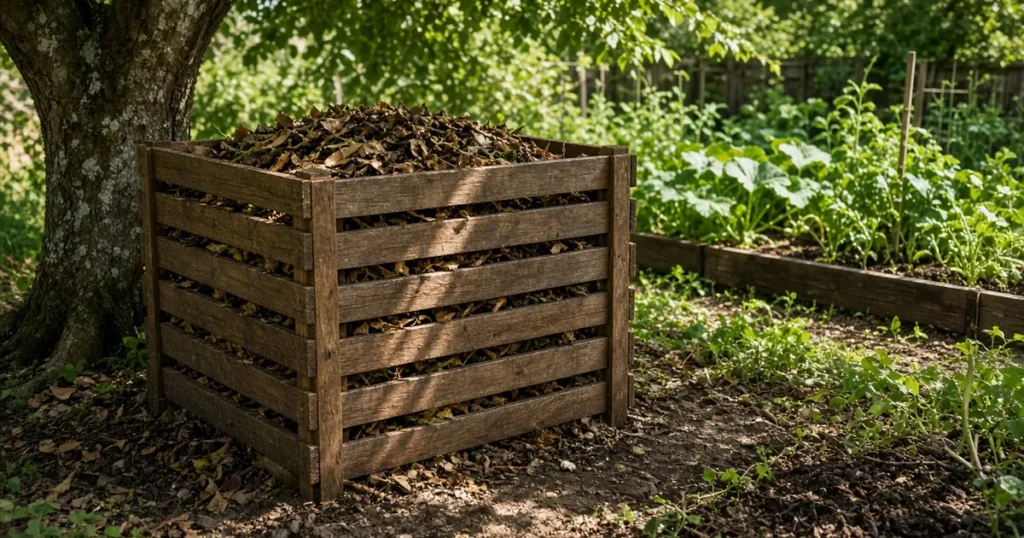
Compost pile placement decides how easily you feed, water and turn the pile. NC State Extension suggests a level spot within reach of a hose, partly shaded and clear of flooding or runoff.
The short answer
Set the pile on level ground near a hose and in partial shade. Shelter it from wind, avoid low spots that pool water and leave room to turn it. Build it at least 3 feet on each side so it heats.
Where should a compost pile go?
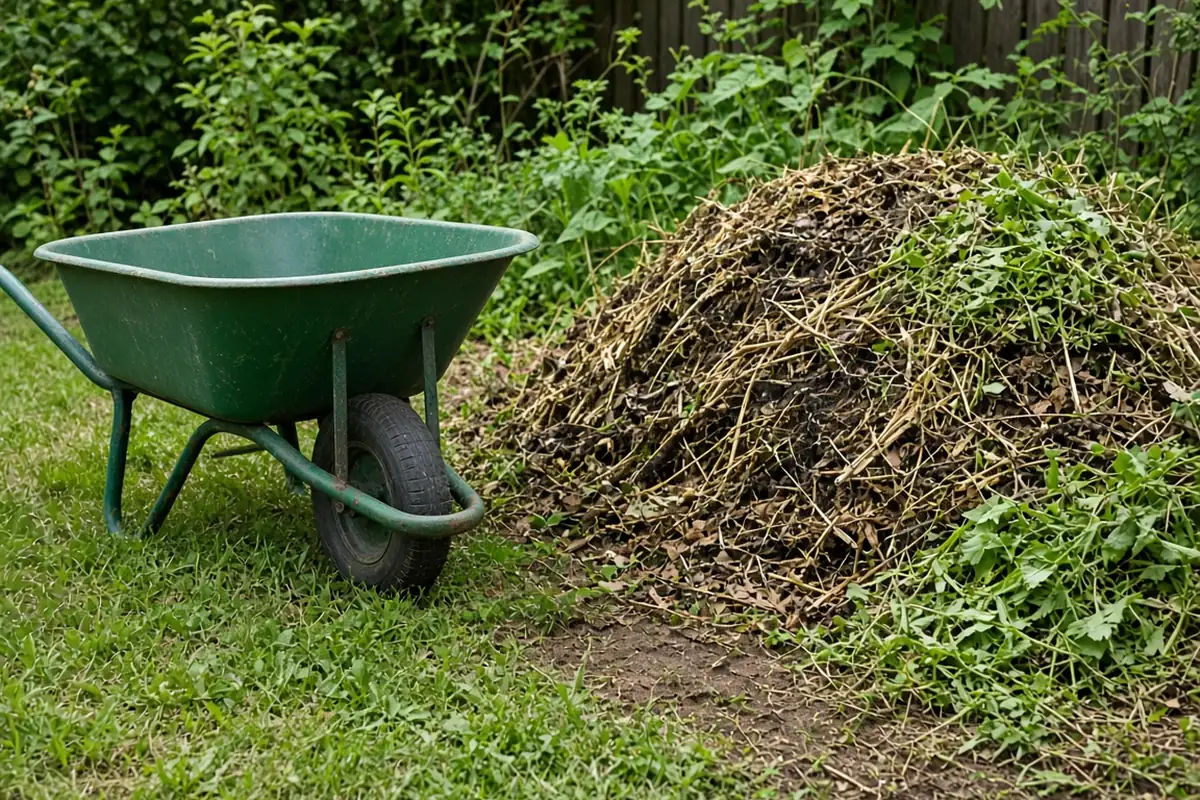
NC State lists site traits such as shade to hold moisture, a hose within reach and a flat space clear of flooding or runoff. Colorado State adds convenience. A pile near the garden and kitchen door gets fed more often, and a clear path makes loading easier.
Does a compost pile need sun or shade?
Partial shade suits most piles. Colorado State says partial shade stops the pile from baking dry yet still gives it some solar heat. Wind shelter cuts moisture loss too. Maryland Extension wants the pile about as moist as a wrung out sponge, so a spot that dries out every afternoon means more watering. Read how sun and shade shift across a yard in garden microclimates for cannabis.
Why do drainage and access matter?
Piles in low spots sit in water. Colorado State notes that compost in ground pits can pool water, and soggy piles turn slow and sour. Maryland suggests mixing in more browns when a pile gets too wet. Access matters because turning feeds the pile air. NC State suggests turning weekly, and Colorado State describes a three bin setup that moves material from one bin to the next.
| Factor | Target | Source |
|---|---|---|
| Access | Room to turn weekly | NC State |
| Light | Partial shade | Colorado State, NC State |
| Water | Hose within reach | NC State, Colorado State |
| Ground | Level and clear of runoff | NC State |
| Size | At least 3 by 3 by 3 feet | NC State, Colorado State |
How to: step by step
- Pick a level spot clear of flooding or runoff.
- Check that a hose reaches it.
- Look for partial shade and some wind shelter.
- Build the pile at least 3 feet wide, deep and tall.
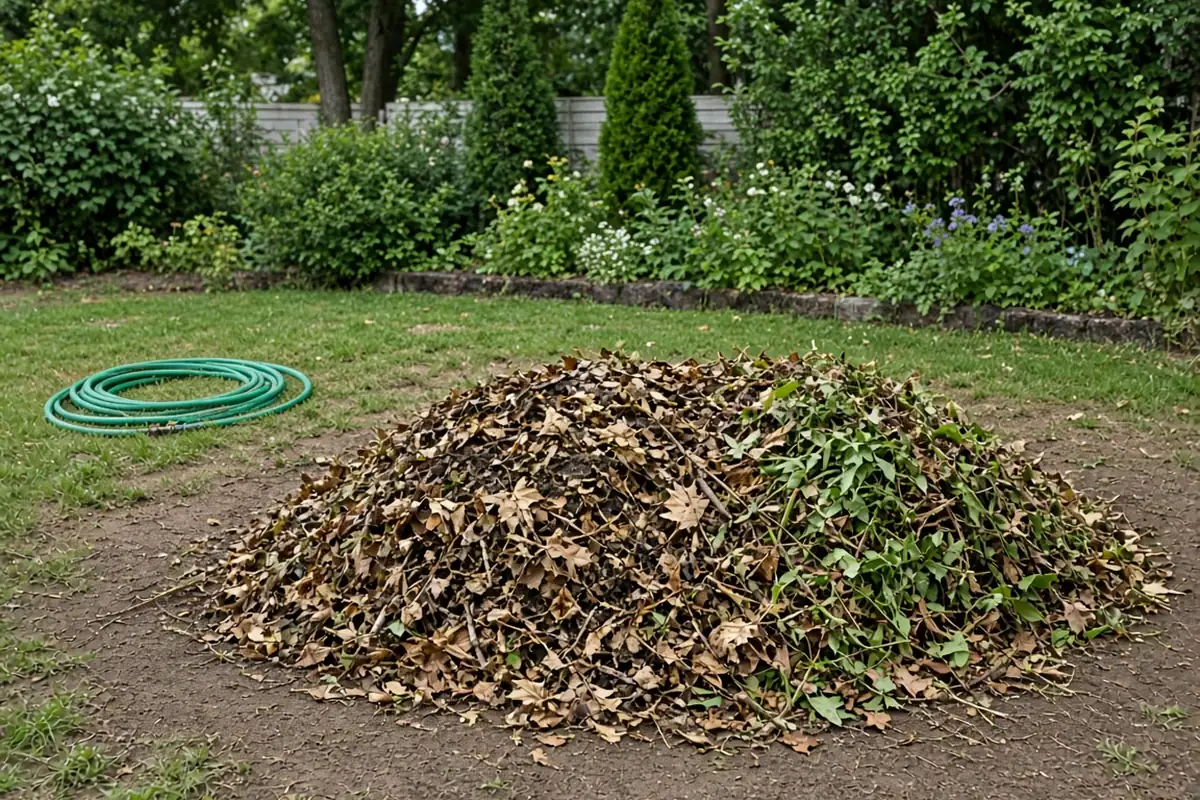
- Top fresh greens with 4 to 5 inches of browns, as NC State suggests.
- Turn the pile weekly.
Troubleshooting
Pile stays dry: move it into partial shade or water it more often.
Pile smells sour: add browns and turn it.
Spent plants piling up: see composting cannabis garden waste and fall garden cleanup after cannabis harvest.
Pick the spot first
The right site makes every later chore easier. Fit the pile into planning an outdoor cannabis garden layout before the first load of scraps. Kind Seed Co shares more notes for growers who compost alongside their gardens.
Sources
- Extension Gardener Handbook, chapter 2: composting, NC State Extension
- Making compost, Colorado State University Extension
- Composting (FS-2023-0687), University of Maryland Extension
FAQ
Should compost sit in a low spot?
No. NC State suggests a flat area clear of flooding or runoff, and Colorado State notes that pits in the ground can pool water.
Should compost be near a hose?
Yes. NC State Extension suggests a spot within reach of a hose so the pile stays moist.
How big should a compost pile be?
NC State and Colorado State give 3 by 3 by 3 feet, or 27 cubic feet, as the minimum for a pile that heats.
Does compost need full sun?
Not usually. Colorado State says partial shade stops baking yet still offers some solar heat.
How often should I turn the pile?
NC State suggests turning weekly. Maryland Extension says regular turning speeds the process.



