
Corrugated Metal Raised Beds: Panels, Corners and Fill
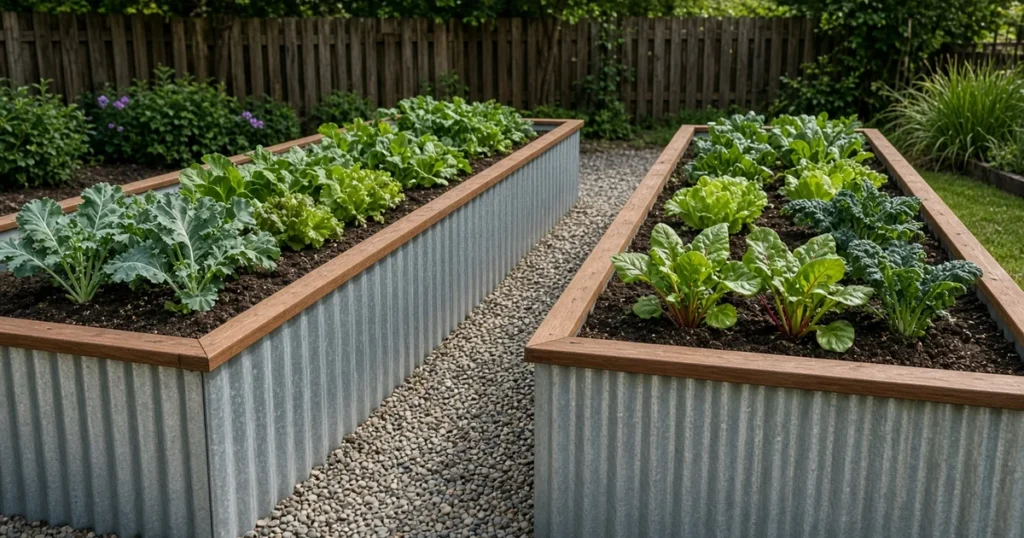
Corrugated metal raised beds use galvanized steel panels joined at the corners to hold soil above grade. The University of Minnesota Extension says galvanized steel is a popular alternative to wood, is virtually rust resistant for upwards of 50 years and typically comes in panels 24 inches wide. Wood corners usually join the panels.
The short answer
Build corrugated metal raised beds about four feet wide so you can reach the center from either side. Set on edge, a 24 inch panel makes a deep bed. Join panels with wood corners and fill with about 2/3 to 1/2 topsoil and 1/2 to 1/3 plant based compost.
Why build a corrugated metal bed?
Metal sides cost more than wood but can last longer, per Minnesota. Minnesota and the University of Delaware say raised bed soil warms faster in spring, which allows earlier planting. Missouri Extension notes that better drainage speeds soil warming. For how bed placement changes warmth and wind, see garden microclimates for cannabis.
How do you frame metal panels?
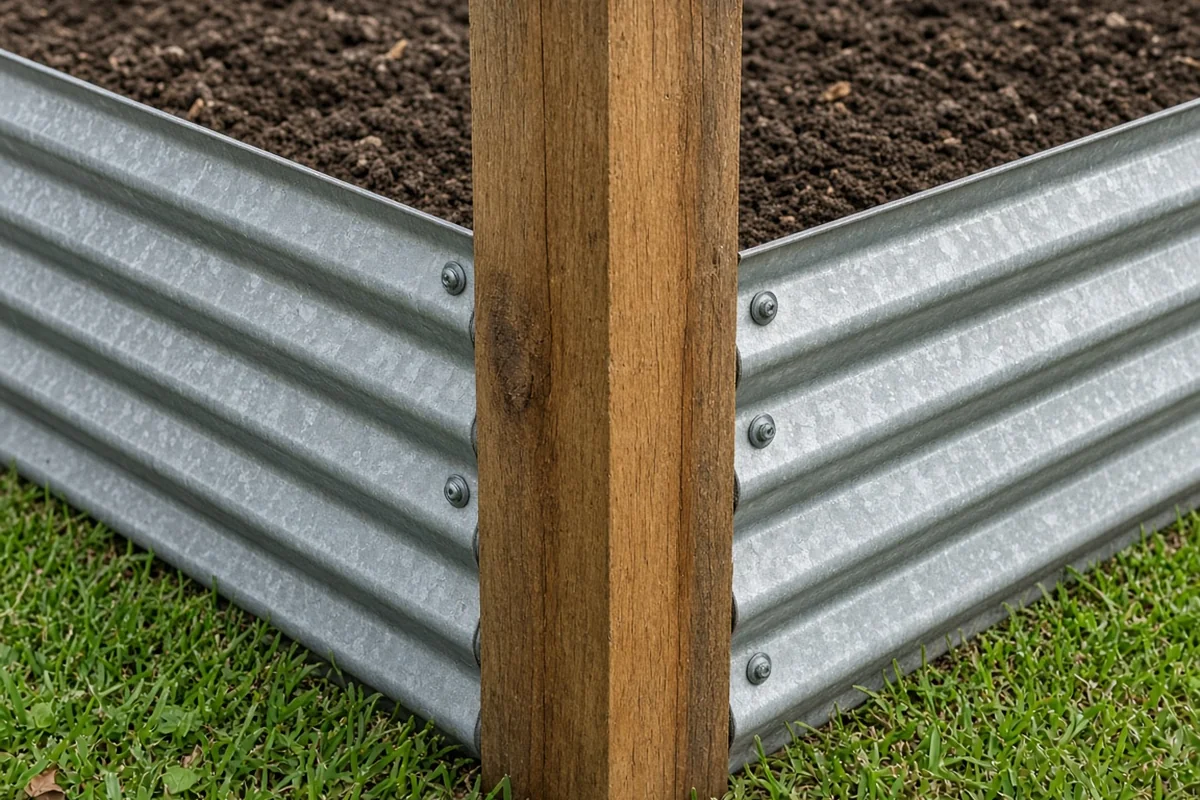
Minnesota says wood corners typically connect the panels. Match the bed to your reach. Missouri and Delaware call four feet a convenient width because the center is easy to reach from either side. The University of Georgia suggests 4 feet wide for adults and 3 feet for children. Georgia adds that most crops need at least 10 inches of soil. Delaware suggests at least 1 foot of depth. Find more layout ideas in raised beds for cannabis.
| Feature | Target | Source |
|---|---|---|
| Panel height | Often 24 inches | Minnesota Extension |
| Bed width | 4 feet | Missouri, Delaware |
| Soil depth | At least 10 to 12 inches | Georgia, Delaware |
| Corners | Wood corners | Minnesota Extension |
| Fill | 2/3 to 1/2 topsoil, rest compost | Minnesota Extension |
How do you fill the bed?
Minnesota suggests loam or sandy loam topsoil mixed with plant based compost. Excess compost can dry out and shed water. Manure adds high phosphorus, so use it only when a soil analysis calls for it. Compare mixes in garden soil vs potting mix for cannabis and sourcing in buying topsoil for cannabis beds.

How to: step by step
- Pick a sunny, level spot.
- Plan a bed four feet wide.
- Join 24 inch panels with wood corners.
- Fill with topsoil and compost.
- Water to settle the soil and top up.
Troubleshooting
Bed on pavement runs hot: Minnesota says raising it one to two feet helps reduce heat.
Soil sinks: add more topsoil and compost blend.
Center out of reach: narrow the bed.
Build once, grow for years
Steel panels, wood corners and a good fill make a bed that lasts. Kind Seed Co shares more notes for growers who raise cannabis and vegetables in beds.
Sources
- Raised bed gardens, University of Minnesota Extension
- Raised garden bed dimensions (C1027-4), University of Georgia Extension
- Raised-bed gardening (G6985), University of Missouri Extension
- Raised bed gardening, University of Delaware Cooperative Extension
FAQ
How wide should a metal bed be?
Missouri and Delaware say four feet is a convenient width because you can reach the center from either side.
How deep should a metal bed be?
Georgia says most crops need at least 10 inches of soil. Delaware suggests at least 1 foot. Minnesota notes panels often come 24 inches wide.
Do metal beds get too hot?
Minnesota says a bed in a very hot spot such as pavement can be raised one or two feet to reduce heat.
How long do metal beds last?
Minnesota says galvanized steel is virtually rust resistant for upwards of 50 years.
What soil goes in a raised bed?
Minnesota suggests about 2/3 to 1/2 topsoil and 1/2 to 1/3 plant based compost.



