
Edge Effect in Permaculture: Why Borders Boost Diversity
The short answer
The edge effect describes how borders between two habitats, such as lawn and woods or water and land, often hold more kinds of plants and animals. Permaculture designers use this idea to shape wavy beds, hedges and pond margins. More edge can mean more variety, but it also brings more upkeep and weed pressure.
The idea comes from ecology, but it works on any scale, from a farm to a small backyard.
What is the edge effect?
An edge is where two habitats meet. Examples include a forest meeting a meadow, a pond meeting dry land or a lawn meeting a shrub border.
Edges mix conditions from both sides. A forest edge gets more light than deep woods and more shelter than open field. Plants and animals from both habitats use it, along with some species that live mainly at edges.
The Oregon State University Extension permaculture basics guide describes edge as one of the core ideas in permaculture design. Designers add and shape edges on purpose to raise diversity and yields.
Why do edges boost diversity?
Edges offer a range of conditions in a small space. Light, moisture, wind and temperature all shift across a border. That variety lets more species find a spot that suits them.
Edges give animals access to two habitats at once. Wildlife can use both sides of a border for shelter and food.
The UMass Amherst Extension permaculture fact sheet explains how permaculture uses patterns from nature, including edges, to build diverse and productive gardens.
| Edge | Example | Benefit |
|---|---|---|
| Woods and lawn | Shrub border at forest edge | Shelter and food for birds |
| Water and land | Plants around a pond | Habitat for frogs and insects |
| Bed and path | Curved or keyhole bed | Many plants in easy reach |
| Field and hedge | Hedgerow along a property line | Windbreak and wildlife corridor |
Sources: Oregon State University Extension, UMass Amherst Extension, NC State Extension.
How do you design with edges?
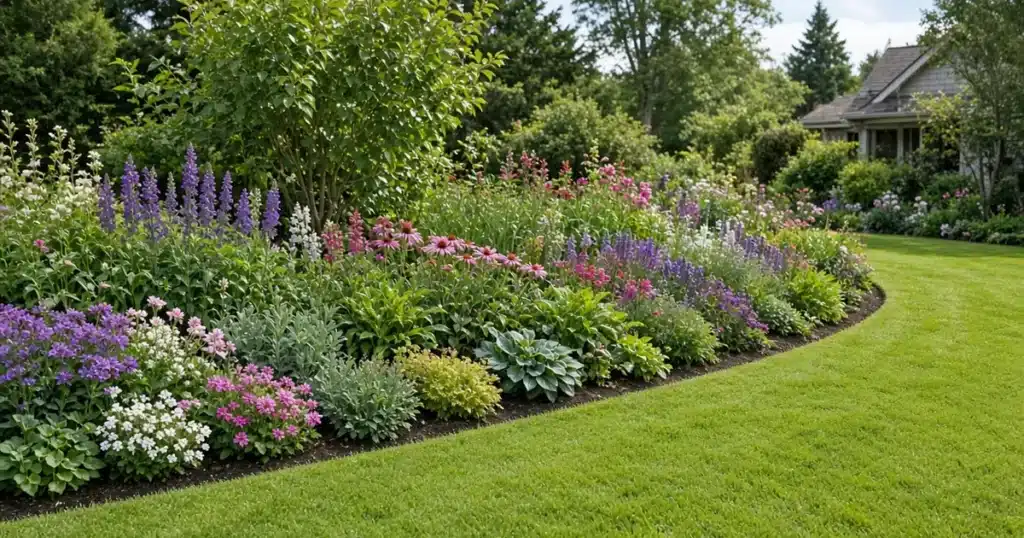
Curves add edge. A wavy bed border has more length than a straight one, so more plants can line it.
Keyhole beds cut a small path into a round bed. You reach the whole bed from the center, and the path adds edge inside the bed. Our post on keyhole gardens for cannabis explains how to build one.
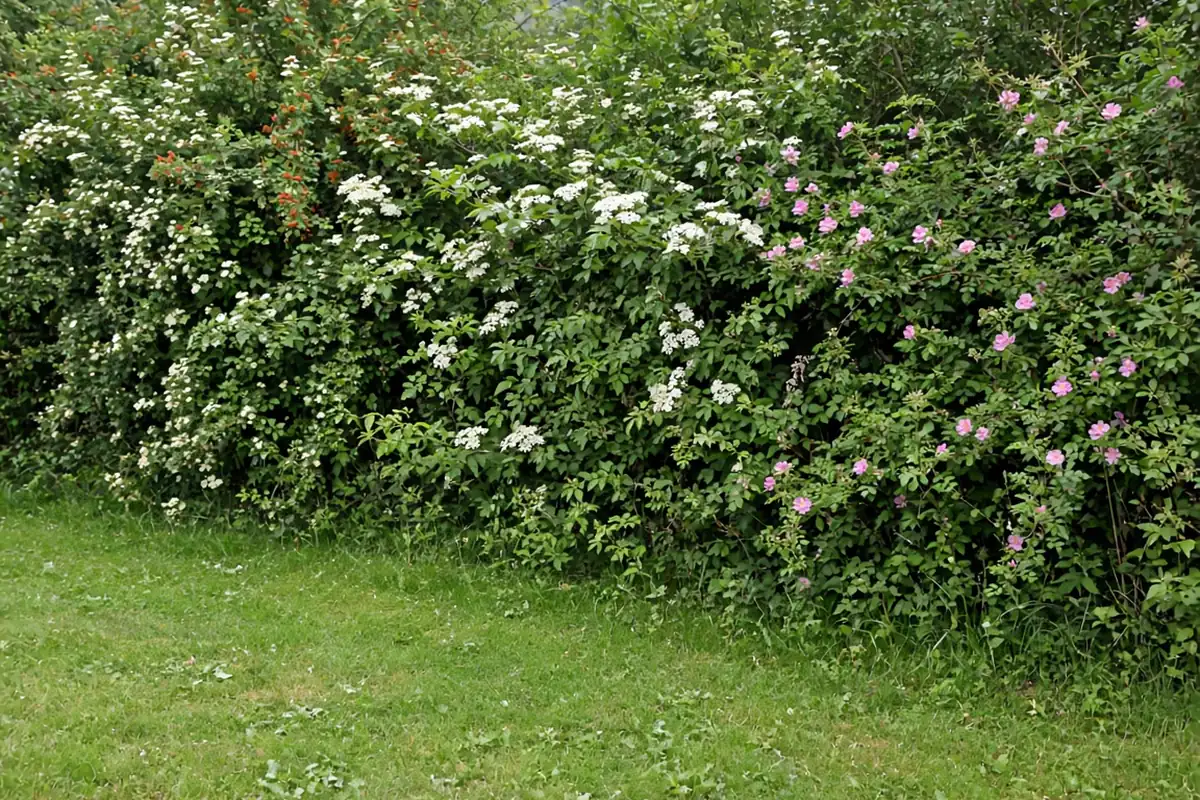
Hedgerows and layered plantings add edge between lawn and woods. Plant tall shrubs at the back, smaller shrubs in the middle and flowers in front.
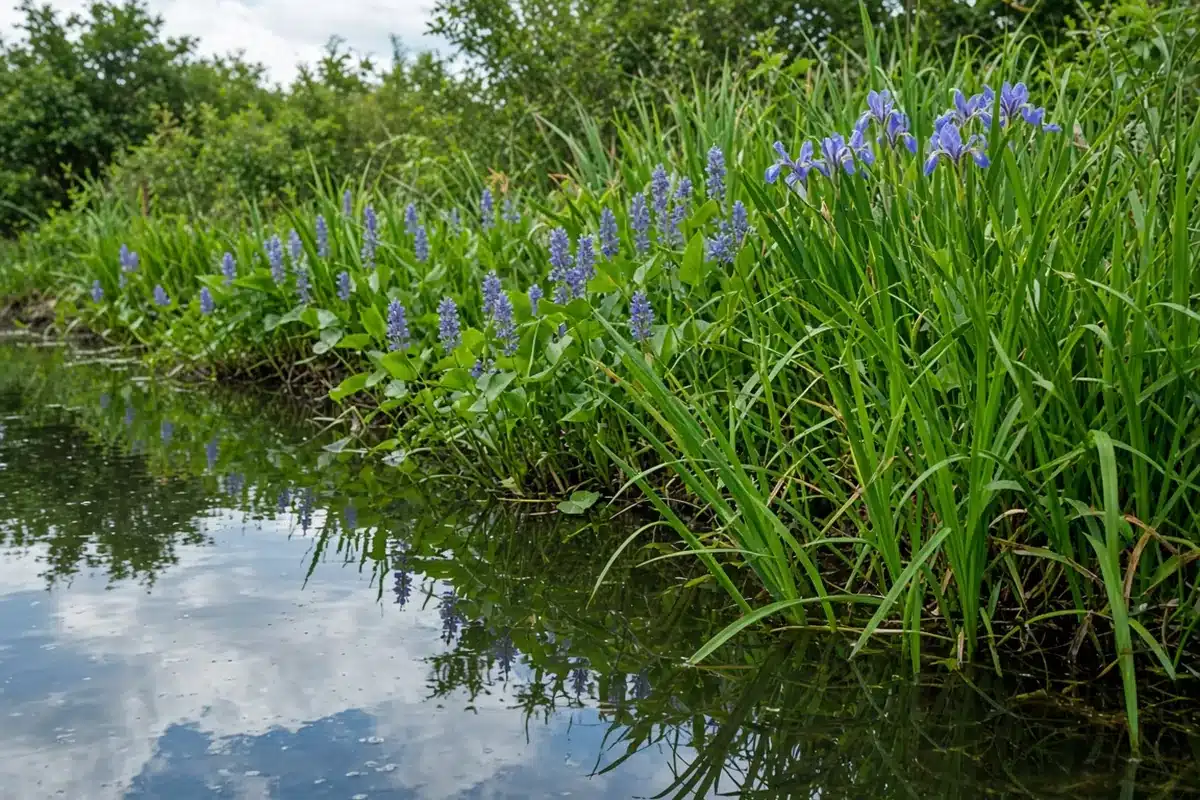
Pond margins become rich edges when planted with moisture loving natives instead of mowed lawn.
The NC State Extension Gardener Handbook appendix on permaculture design covers how designers use edge along with zones and sectors when planning a site.
Is more edge always better?
No. Edges bring more weeds because open soil and light let them in. Long, wavy borders take more time to mulch and trim.
In some cases, too much edge can fragment habitat, which may not suit every wildlife species.
Aim for edge where it adds clear value, such as a hedgerow for birds or a keyhole bed for easy reach. Leave other areas simple.
How do you map edges on your site?
Walk your property and note where habitats meet. Lawn and beds, woods and open space, wet spots and dry ground all count.
Note sun, shade and moisture at each edge, and those conditions shape what will grow there.
Our post on planning an outdoor cannabis garden layout covers how to map sun, shade and paths, which helps when deciding where to add edges.
How do plant mixes help edges?
Edges thrive with varied plants. Mix heights, bloom times and leaf types. Varied plantings draw more insects and birds than one plant type.
Our post on companion plants when growing marijuana explains how plant pairings support each other.
Can small yards use edge design?
Yes. A curved bed, a small hedge along a fence or a few pots grouped around a birdbath all add edge. Even a narrow strip of flowers along a lawn border creates habitat.
How do edges change over time?
Edges shift as plants grow. A young hedgerow is open and sunny. After several years, it casts shade and changes the conditions beside it.
Watch how each edge develops. Move sun lovers away as shade grows, and add shade plants where light fades. Revisit your map every few years.
How to: step by step
- Map existing edges on your site.
- Note sun, shade and moisture at each edge.
- Use curved or keyhole beds to add edge.
- Add hedgerows or layered plantings.
- Plant varied species along edges.
- Watch which edges need more upkeep.
Start with one edge and expand once it settles.
Troubleshooting
Weedy edges. Soil is open. Mulch and plant densely.
Too much upkeep. There’s excess edge. Simplify.
Few visitors. There’s one plant type. Add variety.
Lawn creeps into beds. There’s no border. Add an edging strip.
Shrubs crowd paths. Spacing was tight. Prune or move plants.
Thoughtful edges bring more life into a garden with each season. Kind Seed Co shares more garden projects in outdoor growing.
Sources
- Permaculture basics for Master Gardeners, Oregon State University Extension, Permaculture basics for Master Gardeners
- Permaculture fact sheet, UMass Amherst Extension, Permaculture fact sheet
- Extension Gardener Handbook, appendix G: permaculture design, NC State Extension, Extension Gardener Handbook
FAQ
Is more edge always better?
No. More edge means more weeds and upkeep. Add edge where it brings clear value.
What is a keyhole bed?
A round bed with a path cut into it so you can reach every part from the center.
How does edge help wildlife?
Animals get shelter on one side and food on the other.
Can small yards use edge design?
Yes. Curved beds and small hedges add edge in little space.
Where should I start?
Map existing edges and improve one before adding more.



