
Understory Planting for Shade: Native Plants to Grow Under Trees
The short answer
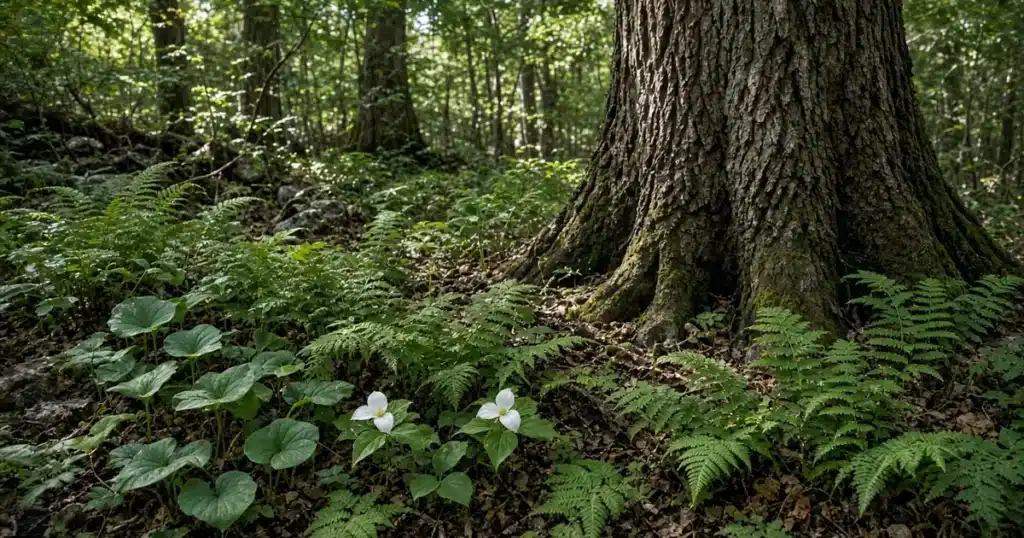
Understory planting for shade means matching native plants to the shade under an existing tree. Light shade suits many wildflowers, shrubs and sedges. Deep shade narrows the list to ferns, some sedges and shade groundcovers. Set small plants with a hand trowel to spare roots, hold mulch off the trunk and water until they settle.
The ground under a big tree is often bare or patchy lawn. A layer of native plants turns it into a living woodland floor.
What is understory planting?
In a natural forest, plants grow in layers. Tall canopy trees sit on top. Smaller trees and shrubs fill the middle. Ferns, wildflowers and groundcovers cover the floor.
Understory planting rebuilds those lower layers under existing trees. It adds habitat for birds and insects, covers bare soil and replaces lawn that struggles in shade.
How do you spare tree roots?
Tree roots often extend well beyond the canopy edge, and many grow near the soil surface. Digging, piling soil or compacting the ground can harm them.
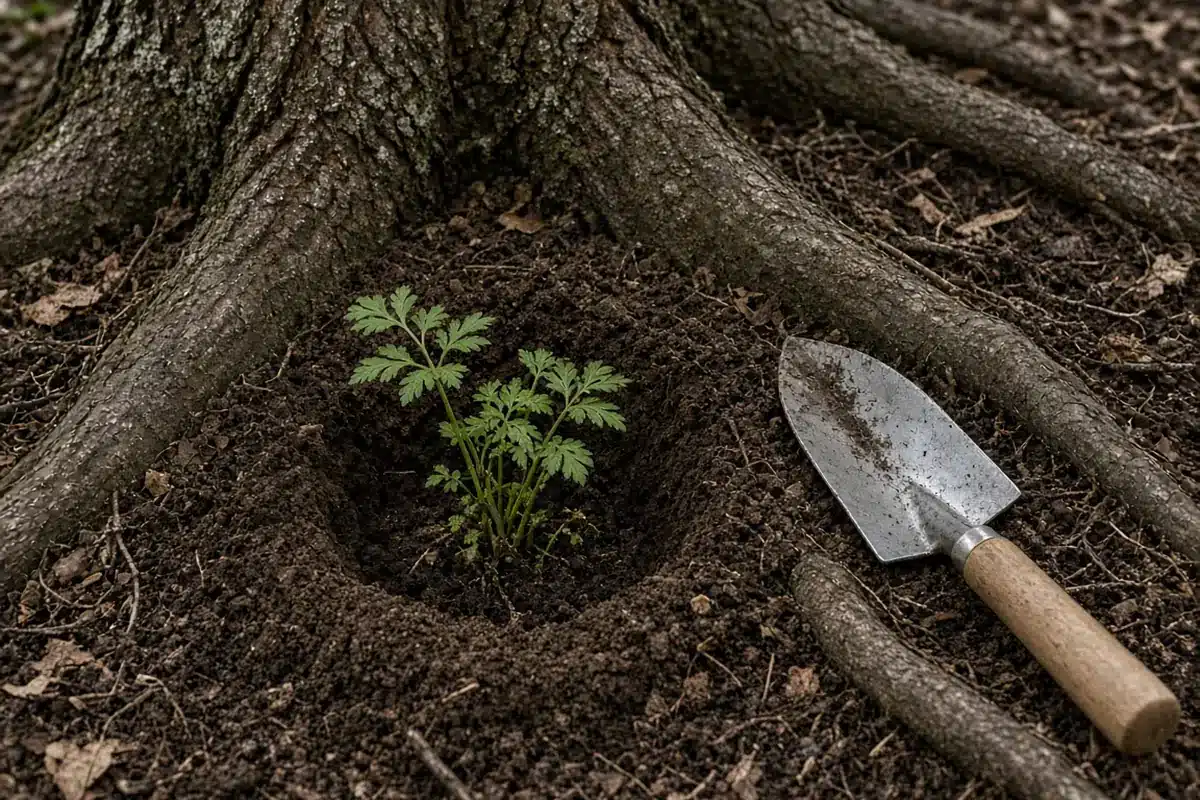
The Penn State Extension article on underplanting trees explains that piling soil on roots blocks air exchange, so add no more than two inches. It recommends small plants set in pockets dug with a trowel rather than big holes.
The University of Vermont Extension article on planting under trees gives similar advice. Avoid tilling under trees. Work around big roots rather than cutting them. Spread mulch thin and away from the trunk.
Pick small plants such as plugs, bare root perennials or small pots. They need small holes and settle in fast.
Which plants suit shade under trees?
Shade varies a lot. Light shade under high, open canopies lets many plants thrive. Deep shade under dense trees like maples allows far fewer.
Moisture varies too. Some trees create dry shade because their roots take most of the water.
The University of Maryland Extension page on native plants for shade lists ferns, sedges, wildflowers and shrubs suited to shaded sites.
| Shade level | Plant types | Notes |
|---|---|---|
| Light shade | Many wildflowers, shrubs and sedges | Widest choice |
| Part shade | Ferns, woodland wildflowers, sedges | Morning sun helps |
| Deep shade | Ferns, some sedges, shade groundcovers | Fewer choices |
| Dry shade | Sedges and dry shade natives | Water to establish |
Sources: University of Maryland Extension, University of Vermont Extension.
Our post on garden microclimates for cannabis explains how to read light and moisture across a yard.
How do you plant under a tree?
Mark the area and remove lawn by hand or by smothering it with cardboard. Avoid digging up grass with a spade near the trunk.
Dig small pockets with a trowel between roots. If you hit a big root, move a few inches over.
Group plants in drifts rather than single specimens. Groups look natural and shade the soil faster.
Water well after planting and through the first season. Tree roots compete hard for water.
How should you mulch?
A thin layer of shredded leaves or fine bark, an inch or two deep, holds moisture and suppresses weeds. Set mulch a few inches away from the trunk.
Our post on mulch for cannabis covers mulch types and depth.
Over time, let fallen leaves stay in place. They break down into the rich layer that woodland plants love.

How do plants work together?
Mixing ferns, sedges and wildflowers gives varied heights, textures and bloom times. Different plants use different soil depths and seasons, so they share space well.
Our post on companion plants when growing marijuana explains how plant pairings work in a garden.
How long does it take to fill in?
Understory plantings can take several growing seasons to fill in. The first year, plants settle roots. The second, they grow. The third, they spread.
Which trees are easiest to plant under?
Trees with deep roots and open canopies are the easiest. Oaks and many hickories let light through and leave room near the surface for small plants.
Trees with dense, shallow roots are harder. Maples and beeches crowd the top layer of soil and cast deep shade. Under them, pick tough sedges and ferns and plant in small numbers.
Look at what already grows under a tree. Moss, sparse grass or bare soil tell you a lot about light and moisture. Native plants that grow under similar trees in nearby woods are good choices.
Avoid planting right at the trunk flare, where roots spread from the base. Start a few feet out where roots are smaller and easier to work around.
How to: step by step
- Note how much shade and moisture the area gets.
- Choose native plants for that shade level.
- Use small plants and a hand trowel.
- Avoid cutting large roots.
- Do not pile soil over roots.
- Mulch lightly and water until established.
Plant in spring or early fall when weather is mild.
Troubleshooting
Plants wilt. The shade is dry. Water and pick dry shade natives.
Tree declines. Roots were buried. Remove extra soil.
Sparse growth. Shade is deep. Pick shade specialists.
Weeds fill gaps. Spacing is wide. Add more plants.
Mulch against trunk. It was piled too close. Pull it back.
An understory layer brings a shaded yard to life without harming the trees above it. Kind Seed Co shares more garden projects in outdoor growing.
Sources
- Underplanting trees: respect the roots, Penn State Extension, Underplanting trees
- Planting under trees, University of Vermont Extension, Planting under trees
- Native plants for shade, University of Maryland Extension, Native plants for shade
FAQ
Can I add soil under a tree?
Add no more than two inches. Plant in small pockets instead.
Which natives handle dry shade?
Some sedges and dry shade wildflowers. Local lists help.
How close to the trunk can I plant?
Stay a few feet away and avoid large roots.
Does understory planting harm trees?
Not when done gently with small plants and no added soil.
How long does it take to fill in?
Often several growing seasons.



