
Flood Tolerant Plants: Choices for Wet Spots and Rain Gardens
The short answer
Flood tolerant plants handle soggy soil and short periods of standing water. Iowa State and Wisconsin Extension list perennials, shrubs and trees that cope with wet roots. Note how long water stands, then match plants to each zone, with the wettest tolerant ones in the low spots and drier types on the edges.
Most yards have a spot where water pools after a storm. Lawn there turns yellow, and most garden plants rot. The solution is not always drainage work. Often it is choosing plants that like wet feet.
Which plants tolerate flooding?
Many native plants evolved along streams, ponds and wet prairies. They take wet soil far better than common garden plants.
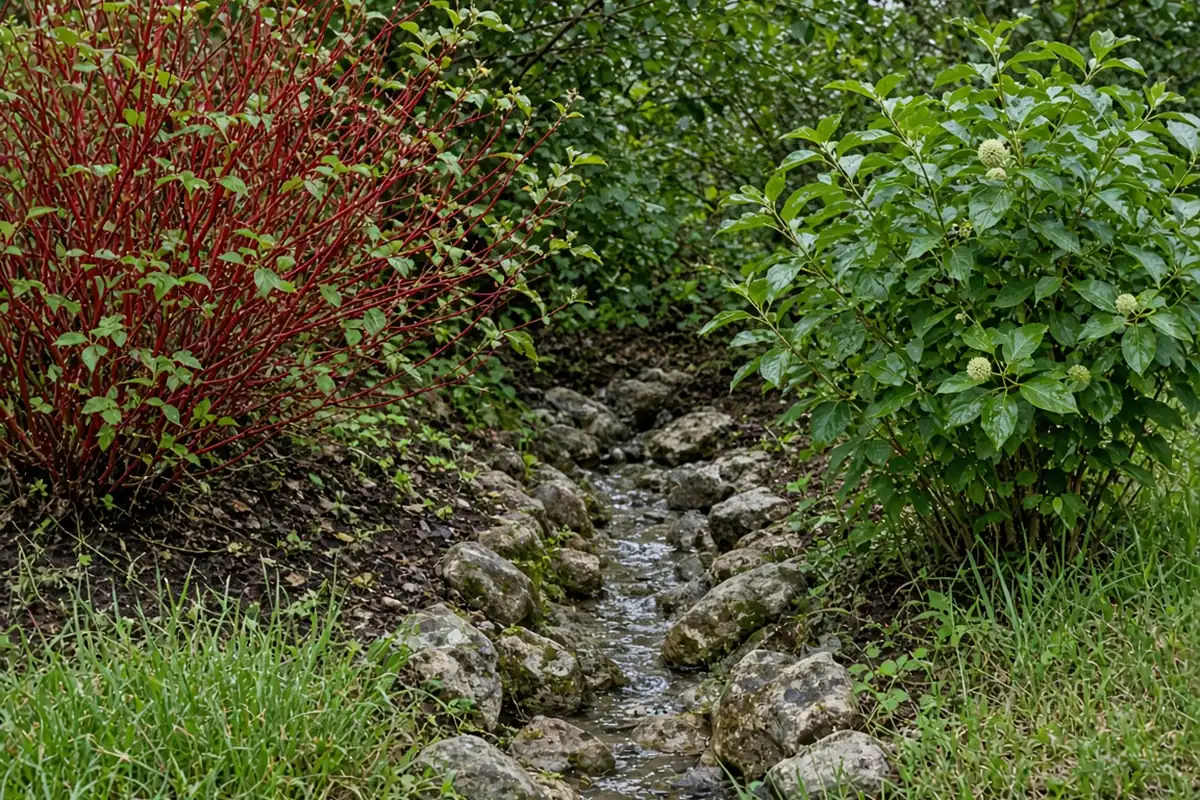
The Iowa State University guide to native perennials for moist to wet soils lists blue flag iris, swamp milkweed, cardinal flower, sedges and joe pye weed. These plants bloom well in damp ground.
For shrubs, red twig dogwood, buttonbush, elderberry and winterberry holly all handle wet roots.
For trees, river birch, bald cypress, swamp white oak and red maple are classic choices.
| Plant | Type | Wet soil notes |
|---|---|---|
| Blue flag iris | Perennial | Handles standing water |
| Swamp milkweed | Perennial | Likes moist to wet soil |
| Cardinal flower | Perennial | Thrives in damp spots |
| Red twig dogwood | Shrub | Handles wet roots |
| Buttonbush | Shrub | Grows in shallow water |
| River birch | Tree | Tolerates periodic flooding |
| Bald cypress | Tree | Tolerates long flooding |
Sources: Iowa State University, University of Wisconsin Extension, University of Arkansas.
How long can plants sit in water?
It depends on the plant, the season and the water temperature.
The University of Wisconsin Extension article on flooding and woody plants explains that roots need oxygen. Standing water blocks air from the soil, and roots begin to suffocate.
Dormant plants handle flooding better than actively growing ones. Cool water holds more oxygen than warm water, so spring floods often do less harm than summer ones.
Plants rated as highly flood tolerant may survive weeks of standing water. Moderately tolerant ones handle a few days. Many common shrubs decline after just a day or two.
Watch for signs of stress after flooding. Yellow leaves, wilting in wet soil and leaf drop often show root damage. Our post on flooded gardens covers recovery steps after heavy water.
How do you check drainage?
Dig a hole about a foot deep and fill it with water. Let it drain, then refill it.
Time how long the second fill takes to drain. Our post on checking soil drainage gives a full walk through and what the results mean.
Water that drains within a day suits most rain garden plants. Water that stands for several days needs the most flood tolerant choices.
How do rain gardens help?
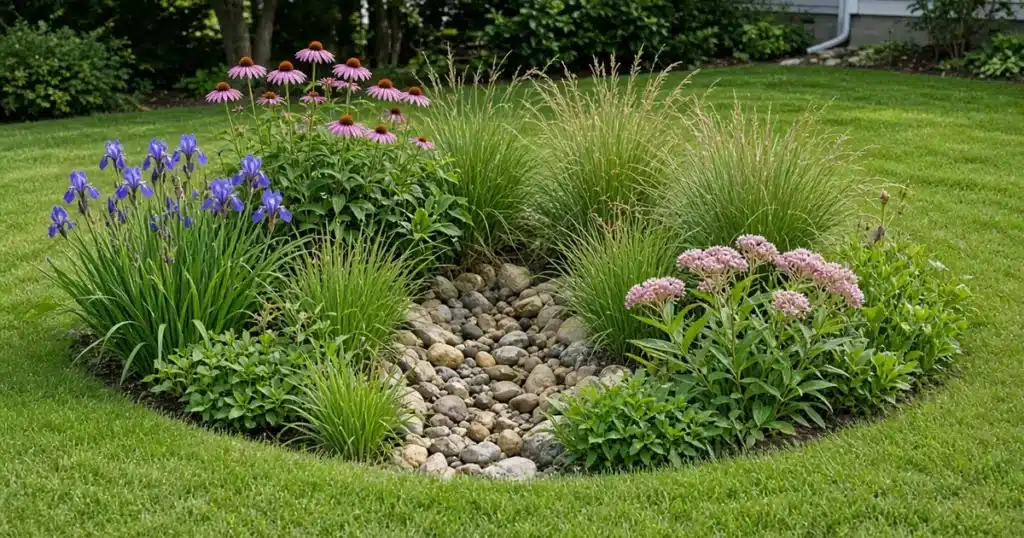
A rain garden is a shallow, planted basin that catches runoff from roofs, driveways or lawns. Water soaks in over a day or two instead of running off.
The University of Arkansas Cooperative Extension list of rain garden plants groups plants by where they sit in the basin.
Center. The lowest point holds water the longest. Use the most flood tolerant plants here.
Sides. The slopes get wet but drain faster. Use plants that handle both wet and dry spells.
Edges. The top rim stays drier, so use plants that like average soil.
Rain gardens also feed pollinators and filter runoff. Our post on rainwater explains ways to capture and use roof runoff.
How to: step by step
- Note where and how long water stands.
- Do a simple drainage check.
- Choose plants rated for wet soil.
- Put the wettest tolerant plants in the lowest spot.
- Use drier tolerant plants on the edges.
- Mulch and water plants until established.
How do you plant in wet soil?
Plant in spring or fall, when soil is moist but not flooded. Digging in soaked soil ruins its structure.
Use shredded hardwood mulch, which stays in place better than light mulch when water flows.
Water new plants in dry spells during their first season. Even wet site plants need help while roots settle.
Troubleshooting
Plants rot in the low spot. Swap in plants rated for standing water.
If a rain garden stays wet for days, the soil drains too slowly. Mix in compost or choose wetter site plants.
Mulch washes away. Use heavier shredded hardwood and edge stones.
Plants on the rim dry out. Move drier tolerant plants there.
Lawn dies in the same spot every year. Replace it with a planted wet bed.
A wet corner can support plants suited to its conditions. Kind Seed Co shares more garden ideas in outdoor growing.
Sources
- Native perennials for moist to wet soils, Iowa State University Extension, Yard and Garden, Native perennials for moist to wet soils
- Effects of flooding on woody landscape plants, University of Wisconsin Extension Horticulture, Effects of flooding on woody landscape plants
- Plants for the rain garden, University of Arkansas Cooperative Extension, Plants for the rain garden
FAQ
Can trees survive flooding?
Some can. River birch and bald cypress handle long periods of wet soil.
What is a rain garden?
It is a shallow planted basin that catches runoff and lets it soak in.
Do native plants handle wet soil?
Many natives come from wetlands and thrive in soggy spots.
How do you fix a soggy yard?
Plant wet tolerant species or add a rain garden in the low spot.
When should you plant a rain garden?
Spring or fall works well, when soil is moist but not flooded.



