
Windy Garden Site: Reading Wind and Choosing Sturdy Plants

The short answer
Watch which way plants lean and where gusts hit hardest in each season. Put a windbreak on that side, such as picket fencing, hardy shrubs or a row of rye. Grow short season vegetables, support tall crops early and mulch to hold moisture. Secure any row covers well so they stay put in gusts.
A windy garden site calls for three moves: learn where the wind comes from, slow it with a windbreak and choose sturdy plants. Extension guides advise watching wind direction as you design and note that a windbreak shelters the area closest to it most. Rows of rye, fencing or hardy shrubs can all slow wind.

How do you read wind on a garden site?
Start by watching. Oregon State University Extension advises observing wind direction along with sun and shade patterns across your yard as you design. One coastal Master Gardener in the article notes her wind comes from the south in winter and the north in summer, so direction can shift by season.
Small areas differ too. Oregon State describes a microclimate as the climate of a very small area that differs from its surroundings, and the same gardener counts four to five microclimates in her own garden. For more on reading those pockets, see garden microclimates for cannabis. Gardens near the ocean face salt as well as wind, and salt spray and coastal cannabis gardens covers that.
What windbreaks work in a home garden?
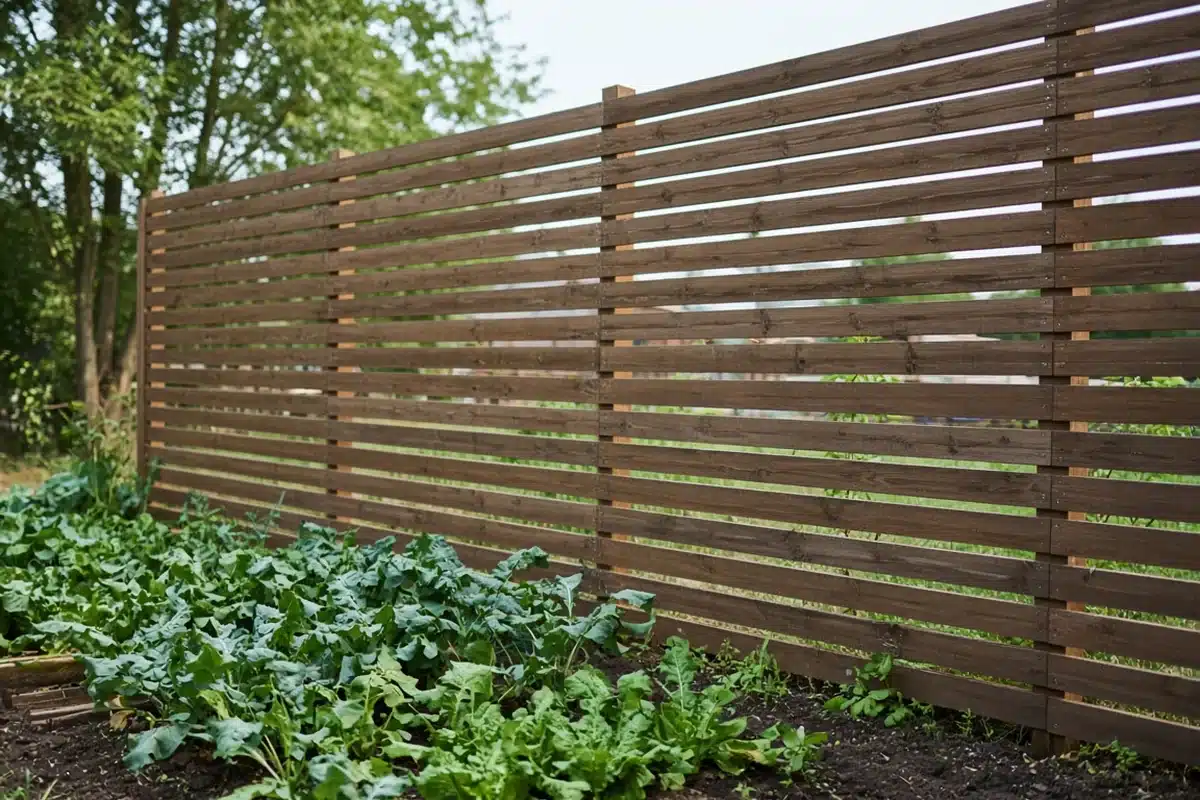
Windbreaks slow the wind. The USDA National Agroforestry Center notes that location, orientation to the wind, height, width, density and species all shape what a windbreak does. University of Delaware Cooperative Extension says windbreaks shield young plants from whipping and torn leaves, reduce wilting and leave soil warmer.
| Option | Effect | Notes |
|---|---|---|
| Picket fencing | Shields plants | Suggested for coastal gardens (Oregon State) |
| Hardy shrubs | Living windbreak | Escallonia, rhododendrons and euonymus (Oregon State) |
| Rye rows | Blocks high winds near beds | Planted the fall before (University of Delaware) |
| Sudangrass | Summer windbreak | Planted in May or June (University of Delaware) |
| Low tunnels with row covers | Shelter young plants | Covers must be well secured (University of Delaware) |
Sources: Oregon State University Extension Service, University of Delaware Cooperative Extension.
Distance matters. Iowa State University Extension notes that the greatest shelter occurs closest to a windbreak and becomes minimal at 15 to 20 times its height. Iowa State also advises against surrounding a property with a solid barrier of trees.
Which plants handle windy sites?
Oregon State Extension notes coastal wind and cool summers suit shrubs, perennials and hardy annuals. For vegetables, the article suggests short season crops that mature in 75 to 85 days, such as lettuce, kale, peas, beans, carrots, beets, chard and radish. Cherry or grape tomatoes ripen sooner there than large types.
Wind dries soil and plants. University of Delaware notes that windbreaks reduce water loss from young transplants, and Iowa State University Extension notes that mulch helps conserve soil moisture. Read mulch for cannabis for mulch choices.
How to: step by step
- Watch where plants and flags lean.
- Note the main wind direction by season.
- Place a windbreak on that side.
- Choose compact, sturdy plants.
- Stake tall plants early in the season.
- Mulch to stop soil from drying out.
Troubleshooting
Torn leaves: exposed site. Put a windbreak on the windward side.
Fallen stalks: no support. University of Maryland Extension notes that staking plants early in the season can help prevent damage in windy conditions.
Soil dries fast: wind drying. Add mulch to conserve soil moisture.
Calm corners in a breezy yard
A windy garden site still grows plenty once you learn where gusts come from. The Kind Seed Co blog has more planning ideas in the garden layout and care section.
Sources
- Coastal gardening: how to succeed in wind and microclimates, Oregon State University Extension Service
- Windbreaks for vegetables, University of Delaware Cooperative Extension, Weekly Crop Update
- Windbreaks, Iowa State University Extension Natural Resources
- Windbreaks, USDA National Agroforestry Center
- Why some flowering plants fall over, University of Maryland Extension
- Using mulch in the garden, Iowa State University Extension and Outreach
FAQ
Is a solid fence a good windbreak?
The sources favor other options. Iowa State University Extension warns against surrounding a property with a solid barrier of trees, and the USDA National Agroforestry Center lists density as one factor that shapes how a windbreak works. Oregon State University Extension suggests picket fencing and hardy shrubs for coastal gardens.
How far does a windbreak reach?
Iowa State University Extension says the greatest effect occurs closest to the windbreak and becomes minimal at 15 to 20 times its height. A six foot hedge gives the most shelter right beside it, and the effect fades with distance. Place the most tender plants nearest the windbreak.
Do row covers help with wind?
Yes, if they're fastened down. University of Delaware Cooperative Extension says low tunnels with clear or spun row covers are effective at sheltering young plants, and the covers must be well secured. Oregon State University Extension also advises securing light covers against the wind so they don't blow away.
Which vegetables suit windy gardens?
Oregon State University Extension points coastal gardeners to short season vegetables that mature in 75 to 85 days. The Oregon State list includes mustard, lettuce, spinach, kale, peas, broccoli, cabbage, carrots, beets, beans, squash, chard, onion, radish and cucumbers. Cherry and grape tomatoes ripen sooner than larger types in cool, windy summers.
How do you stop tall crops from falling over in wind?
University of Maryland Extension notes that staking plants early in the season can help prevent damage in windy conditions.



