
Forcing Bulbs Indoors: Chilling Tulips, Daffodils and Hyacinths
The short answer
Forcing bulbs means giving spring bulbs a cold period, then bringing them into warmth so they bloom early indoors. Wisconsin, Virginia and Vermont Extension say tulips, daffodils and hyacinths need weeks of chilling first. Paperwhites and amaryllis need no chill. Pot bulbs close together, chill them, then move them to a cool, bright room.
Winter can feel long when the garden is bare. Forced bulbs bring color indoors months before spring.
What does forcing bulbs mean?
Forcing means tricking a plant into blooming outside its normal season. Spring bulbs bloom after a winter of cold underground.
Indoors, you copy that cold period with a cool spot or a fridge. After chilling, move the pots somewhere warmer and brighter to encourage flowering.
The University of Wisconsin Extension article on forcing bulbs explains that the chill builds roots and readies the flower inside the bulb.
How do you pot bulbs for forcing?
Pick large, firm bulbs. Many sellers mark varieties that force well.
Use a pot with drainage holes and fill it partway with potting mix. Our post on potting up covers mixes and pot sizes.
Set bulbs close, almost touching. Tulips look fuller with the flat side out.
Add mix around them so the tips just show. Water well and label each pot with the variety and date.
How long do bulbs need to chill?
Most hardy spring bulbs need 12 to 16 weeks of cold. Ideal chilling sits around 35 to 45 degrees.
The Virginia Cooperative Extension guide to forcing flower bulbs lists chill times for many bulbs.
| Bulb | Chill weeks | Weeks to bloom after chill |
|---|---|---|
| Tulip | 14 to 16 | 2 to 3 |
| Daffodil | 15 to 17 | 2 to 3 |
| Hyacinth | 11 to 14 | 2 to 3 |
| Crocus | 15 | 2 |
| Grape hyacinth | 13 to 15 | 2 to 3 |
| Paperwhite | None | 3 to 5 |
Sources: Virginia Cooperative Extension, University of Wisconsin Extension.
Good chill spots include an unheated garage, a cool basement or a spare fridge. Water so the mix stays lightly moist.
Fruit gives off ethylene, which can damage flower buds. Store bulbs away from apples and other fruit in the fridge.
Our post on soil temperature explains how temperature drives root growth.
Which bulbs need no chill?
Paperwhites and amaryllis come from warm climates and need no cold period.
Pot them up or set them on pebbles and water. They bloom in a few weeks.
The University of Vermont Extension article on forcing spring bulbs notes paperwhites are an easy first project.
How to: step by step
- Choose bulbs sold for forcing.
- Pot them close together with tips showing.
- Water and label the pots.
- Chill for the time guides suggest.
- Move pots to a cool, bright room.
- Rotate pots and enjoy blooms.
What happens after chilling?
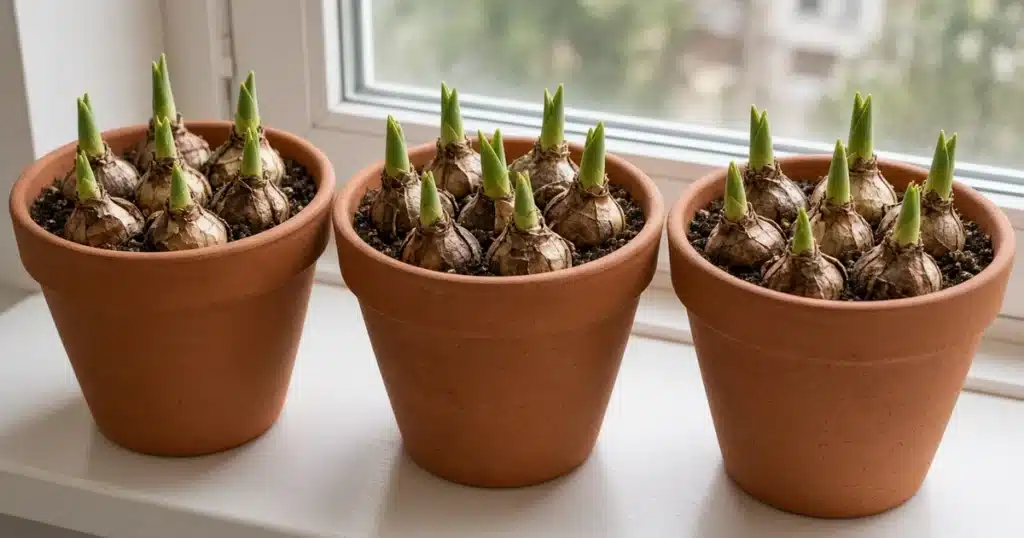
When shoots reach about two inches and roots show at the drainage holes, chilling is done.
Move pots to a cool room around 50 to 60 degrees with indirect light for a week. Then move them to a bright window.
Turn pots every few days so stems grow straight. A grow light on a timer helps if window light is weak.
Cool rooms make flowers last longer.
Stagger pots. Bring a few out of the cold every week or two for a steady show.
Can forced bulbs be planted outside?
Forcing uses up much of a bulb’s stored energy, so tulips and hyacinths rarely bloom well again.
Daffodils and crocus often recover. Let leaves grow on after bloom, then plant them in the garden in spring. They may take a year or two to bloom again.
Paperwhites are usually discarded after bloom.
Can you force bulbs in water?
Hyacinths and crocus can grow in special forcing glasses. The bulb sits in the cup at the top, with its base just above the water.
Chill the bulb in its glass in a dark, cool spot. Set the water level just below the base so roots reach down into it.
Once the roots fill the glass and a shoot appears, move it to a cool, bright window.
Paperwhites grow well in a bowl of pebbles with water just below the base of each bulb.
Which varieties force well?
Early and mid season varieties often force more reliably than late ones. Short stemmed tulips stand up better indoors than tall ones.
Daffodils such as Tete a Tete and Jetfire are popular choices. Hyacinths of most colors force well.
Buy bulbs in early fall and pot them by October for blooms from January on.
Troubleshooting
Flowers stayed short or did not open. Chill time was too short.
Stems flopped over. The room was too warm or dim.
Buds dried up. Fruit nearby, or the mix dried out.
Bulbs rotted. The mix was too wet. Use pots with drainage.
Paperwhite stems too tall. Grow them in a cooler, brighter spot.
Pots of bulbs bring spring indoors during winter. Kind Seed Co shares more garden ideas in outdoor growing.
Sources
- Forcing bulbs, University of Wisconsin Extension Horticulture, Forcing bulbs
- Fooling Mother Nature: forcing flower bulbs for indoor bloom (SPES-677), Virginia Cooperative Extension, Fooling Mother Nature
- Forcing spring bulbs, University of Vermont Extension, Forcing spring bulbs
FAQ
Can forced bulbs be planted outside?
Daffodils and crocus often recover. Tulips and hyacinths rarely bloom well again.
Do paperwhites need chilling?
No. They bloom without a cold period.
Can you chill bulbs in a fridge?
Yes. Store them away from fruit.
How long do forced flowers last?
Often one to two weeks, longer in a cool room.
How long does forcing take?
Most hardy bulbs need 12 to 16 weeks of chill, then a few weeks to bloom.



