
Winter Sowing in Jugs: Starting Seeds Outdoors in Milk Jugs
The short answer
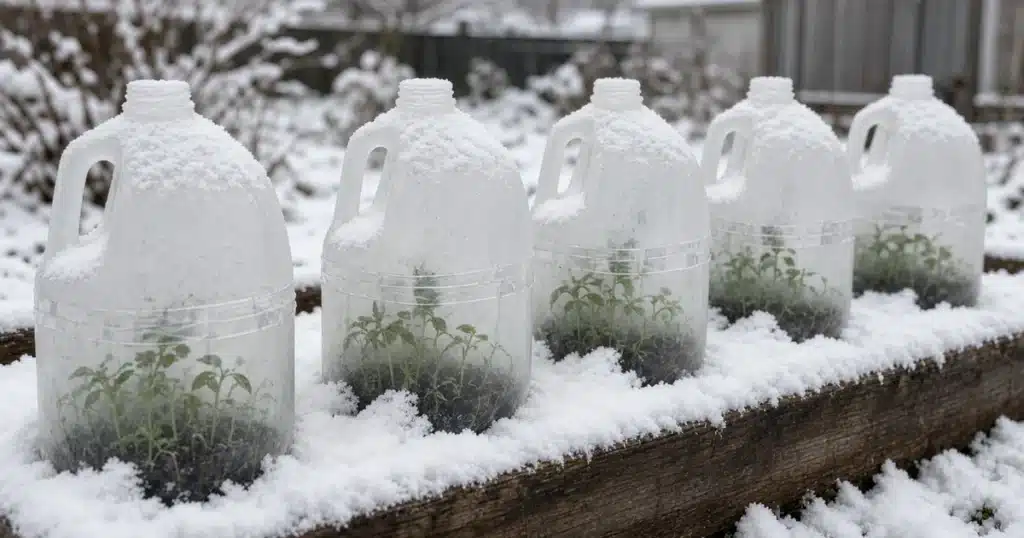
Winter sowing uses clear milk jugs as mini greenhouses so seeds sprout outdoors as weather warms. Missouri and Minnesota Extension describe cutting jugs, adding drainage holes and filling them with moist mix. Cold hardy perennials and natives suit midwinter sowing, while tender crops wait until late winter or early spring.
Grow lights and heat mats are not the only way to start seeds. Winter sowing lets nature handle the timing. Seeds sit outside in covered jugs and sprout when conditions suit them.
What is winter sowing?
Winter sowing starts seeds outdoors in winter inside clear containers that act like tiny greenhouses.
The cover traps warmth on sunny days and shields seeds from wind and birds. Snow and rain soak in through holes in the top.
Seeds get the natural cold and moisture many of them need to sprout. When spring warms the jug, they come up on their own schedule.
The University of Missouri Extension article on milk jug greenhouses explains that seedlings grown this way tend to be sturdy. They adapt to outdoor light and temperatures from the start.
How do you prep jugs?
Clear or translucent gallon milk jugs are the top choice, though water jugs and clear tubs work too.
Rinse each jug well. Cut around the middle, leaving a small section uncut near the handle as a hinge.
Poke four to six drainage holes in the bottom. Add a few small holes near the top for air.
Fill the bottom with about three to four inches of moist seed starting or potting mix. Our post on seed starting mix covers good blends.
Sow at the packet depth and water lightly.
Close the jug and seal the cut with duct tape. Leave the cap off so moisture can get in.
Label each jug outside with a paint pen, and add a second label inside.
Which seeds suit winter sowing?
Seeds that need cold to sprout do well. So do hardy annuals that self sow in nature.
The University of Minnesota Extension article on winter sowing for pollinator gardens highlights native wildflowers. Many of them need a cold, moist period before they sprout.
| Timing | Seed type | Examples |
|---|---|---|
| Midwinter | Native perennials needing cold | Milkweed, coneflower, aster, columbine |
| Midwinter | Hardy annuals | Larkspur, poppy, bachelor button |
| Late winter | Cool season vegetables | Kale, lettuce, spinach, cabbage |
| Early spring | Tender annuals | Tomato, zinnia, marigold, basil |
Sources: University of Missouri Extension, University of Minnesota Extension, Penn State Extension.
The Penn State Extension article on starting seeds in winter explains how timing varies with each crop’s needs.
How to: step by step
- Rinse clear milk jugs.
- Cut them around the middle, leaving a hinge.
- Poke drainage holes in the bottom.
- Fill with moist seed starting mix.
- Sow seeds and tape the jug shut.
- Set jugs outside and check moisture.
Where should jugs sit?
Set jugs in a sunny spot that gets rain and snow. A south facing patio or bed edge works well.
Group jugs together in a tray or box so wind does not tip them.
Avoid spots under roof eaves, where jugs stay dry.
How do you care for jugs?
Check jugs every week or two. Look for moisture beads on the inside of the plastic. If none show, water from the top or set the jug in a shallow tray.
As spring arrives, sprouts appear. On warm days above about 50 degrees, open the top so seedlings do not overheat. Close it again at night.
Remove the top fully once nights stay above freezing. This also helps seedlings adjust, much like hardening off.
Our post on cold frames explains a larger version of the same idea.
When do you transplant?
Transplant when seedlings have a few true leaves and the weather fits the crop. Hardy perennials can go out in spring as soon as the soil works.
Cut the mix into small clumps of seedlings, then plant each clump and thin later.
Troubleshooting
Nothing sprouted by late spring. Some seeds take time. Give jugs a while longer and hold them moist.
Mix dried out. Water and check more often in sunny spells.
Seedlings wilting on warm days. Open the top for more air.
Labels faded. Use a paint pen and a second label inside.
Jugs blew over. Group them in a crate or tray.
A few recycled jugs can fill a whole garden by spring. Kind Seed Co shares more garden ideas in outdoor growing.
Sources
- Turn milk jugs into mini greenhouses, University of Missouri Extension, Turn milk jugs into mini greenhouses
- Jug it and grow: winter sowing for pollinator gardens, University of Minnesota Extension, Jug it and grow
- Starting seeds in winter, Penn State Extension, Starting seeds in winter
FAQ
When should you winter sow?
Sow hardy seeds in midwinter and tender crops in early spring.
Which seeds need cold to sprout?
Many native perennials such as milkweed, coneflower and columbine.
Do jugs need caps?
No. Leave caps off so rain and snow can soak in.
When do you transplant?
Once seedlings have true leaves and the weather fits the crop.
What kind of jug works well?
Clear or translucent gallon jugs let in the most light.



