
Garden by a Bench: Fragrance plus Seat Height Planting
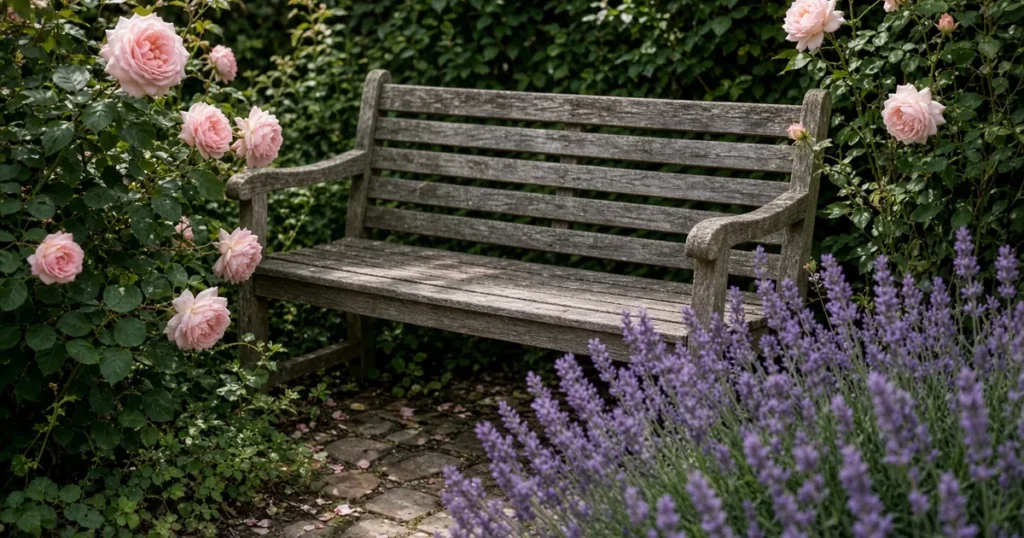
A garden by a bench turns a seat into a small destination. Kansas State Research and Extension notes a garden path needs an ending such as a fountain, a bench or a spectacular plant, while UC Marin Master Gardeners note shade from trees plus structures shifts with the time of day plus season.
The short answer
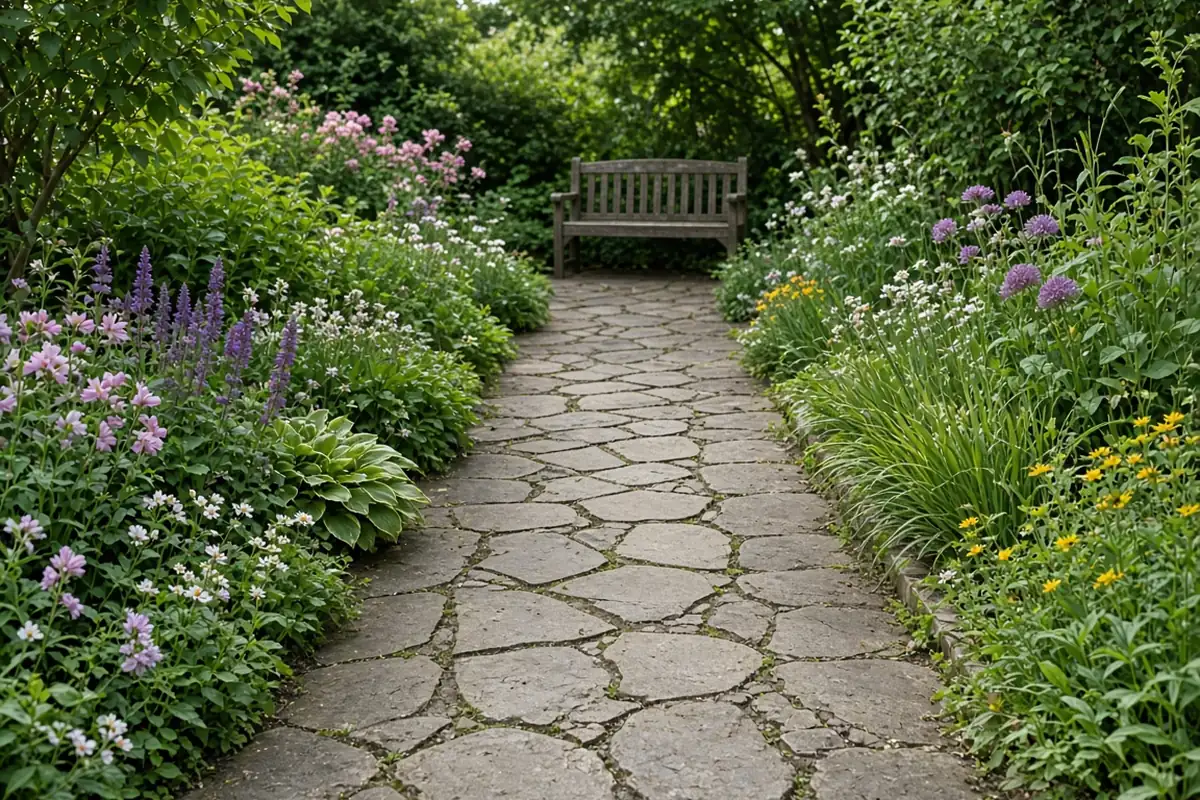
A garden by a bench works with low plants beside the seat, room to walk up plus a look at its microclimate. Clemson notes low plantings avoid a hemmed in feeling plus suggests a small herb or perennial bed near a bench. Kansas State advises paths at least three feet wide.
What should I plant by a garden bench?
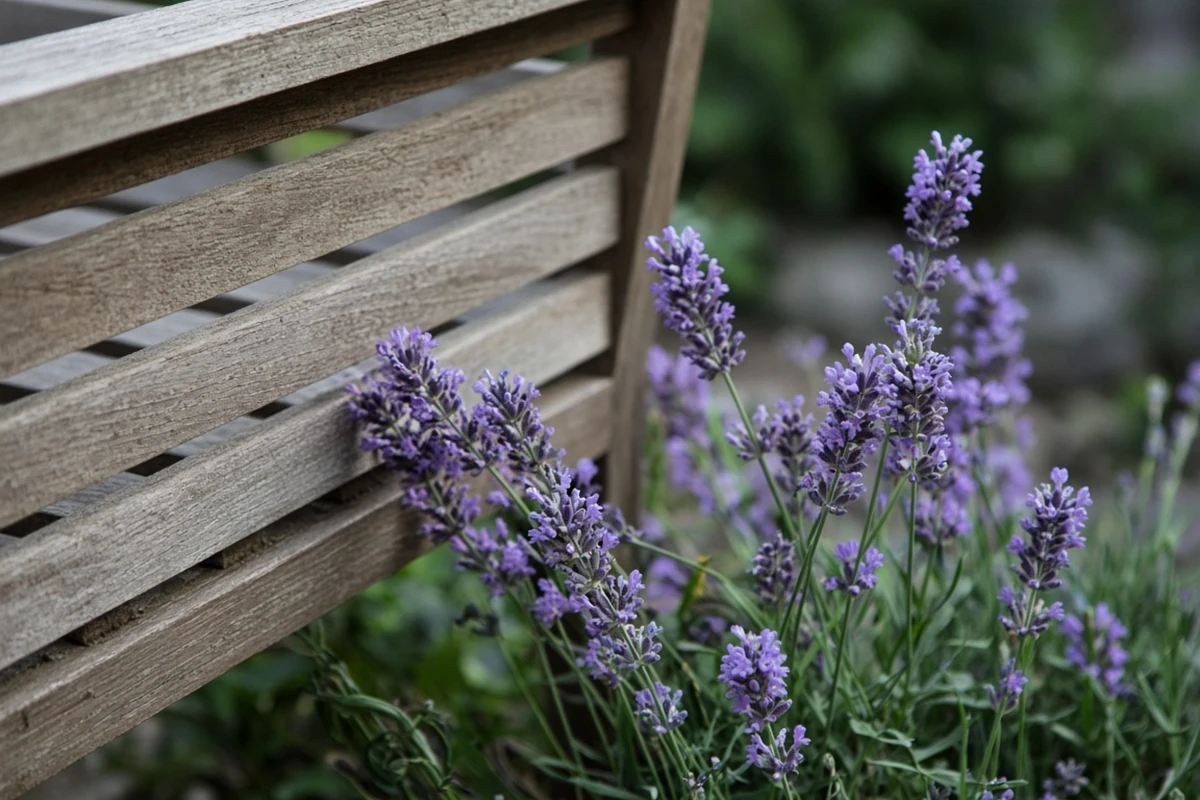
Low plants beside the seat leave views open, while taller plants farther back give shelter. Clemson notes a small patio with a bench can include a small herb or perennial garden that looks good in all seasons.
| Factor | Target | Source |
|---|---|---|
| Path to bench | At least 3 feet wide | Kansas State |
| Two people side by side | 5 to 6 feet wide | Kansas State |
| Plants near the seat | Low | Clemson |
| Mulch near walls | 1 foot back | LSU AgCenter |
| Shade | Check through the day | UC Marin |
Source: UC Marin Master Gardeners, Kansas State, Clemson plus LSU AgCenter.
How tall should plants be beside a bench?
Clemson notes low plantings avoid a hemmed in feeling plus aid visibility. Hold plants near the seat below its height plus set taller ones farther back. LSU AgCenter advises placing the highest point at the back of a bed.
How do I make a bench garden tidy?
Kansas State notes misplaced paths lead to shortcuts, trampled plants plus broken branches. Lay a clear path to the bench, edge the bed plus leave room so plants do not spill over the seat.
How to: step by step
- Watch sun plus shade at the bench through the day.
- Lay a path at least 3 feet wide.
- Plant low plants beside the seat.
- Set taller plants at the back.
- Add scented herbs near the arms.
- Edge the bed plus mulch it.
Troubleshooting
Plants crowding the seat: too close. Move them back.
Bare, trampled patches: no clear path. Add one.
Seat too hot by afternoon: sunny, paved site. Add shade.
For more on outdoor growing see garden microclimates for cannabis, planning an outdoor cannabis garden layout plus what roles do bees play in outdoor cannabis. Kind Seed Co also stocks cannabis seeds.
Sources
- How to assess your microclimates, UC Marin Master Gardeners
- Down the garden path, K-State Research and Extension, Johnson County
- Foundation plantings, Clemson Cooperative Extension HGIC
- Designing and planting foundation beds, LSU AgCenter
FAQ
Should a garden bench sit in sun or shade?
UC Marin Master Gardeners note shade from trees plus structures matters plus changes with the time of day plus the season. Watch the bench spot through a day before planting. Many people prefer morning sun plus afternoon shade, so match plants to the light the bed actually gets.
Can I plant fragrant herbs by a bench?
Yes. Clemson Cooperative Extension suggests a small patio with a bench can include a small herb or perennial garden that is attractive in all seasons. Herbs planted beside the seat release scent when brushed. Choose low growing kinds so they sit below the seat plus leave room to walk.
How much space does a bench need around it?
Kansas State Research and Extension advises a path at least three feet wide for one person plus five to six feet wide for two adults side by side. Leave that clear room in front of the bench so people can sit down plus stand without stepping on plants.
How can a bench garden look good all year?
Clemson notes plantings near a seat area should be attractive plus interesting in all seasons. LSU AgCenter suggests about half evergreen plants, a quarter flowering shrubs plus trees plus a quarter annuals plus perennials. A mix holds structure in winter while flowers add summer color.
Do paved areas change a bench garden?
Yes. UC Marin Master Gardeners note paved surfaces, gravel, rock plus decks absorb heat during the day plus release it at night. A bench on a paved pad may feel hot in afternoon sun, while nearby plants may need more water. Structures can also shelter plants from wind.



