
Garden by a Gazebo: Roof Runoff plus Shade Planting
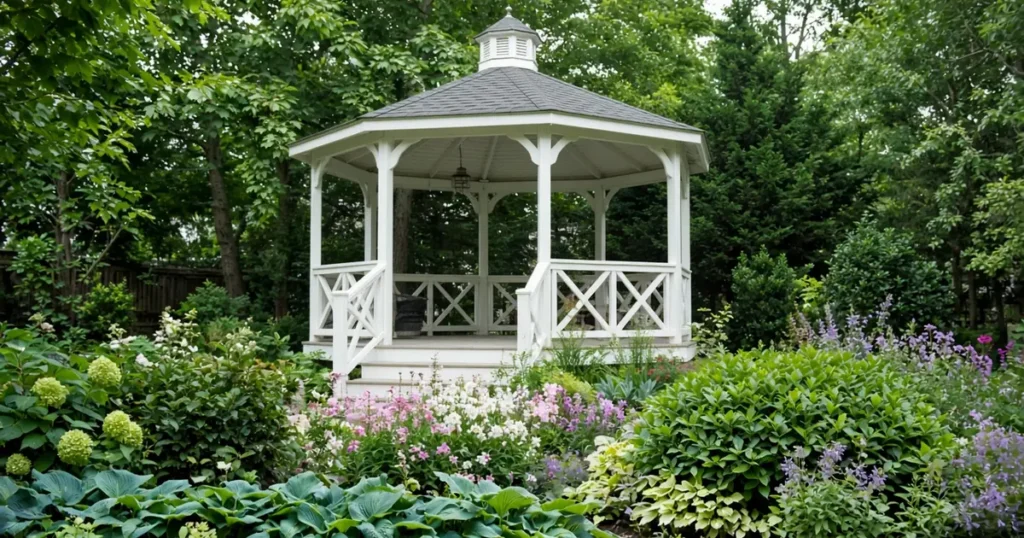
A garden by a gazebo sits in a small microclimate of its own. UC Marin Master Gardeners note structures cast shade that shifts with the time of day plus season, while Clemson Cooperative Extension advises against planting under the eaves of a building.
The short answer
A garden by a gazebo works with shifting shade, roof runoff plus clear paths. Clemson advises setting shrub foliage 3 to 5 feet from walls by mature size plus avoiding the eaves. Kansas State advises paths at least 3 feet wide. Watch where water pools after rain.
How do I plan beds around a gazebo?
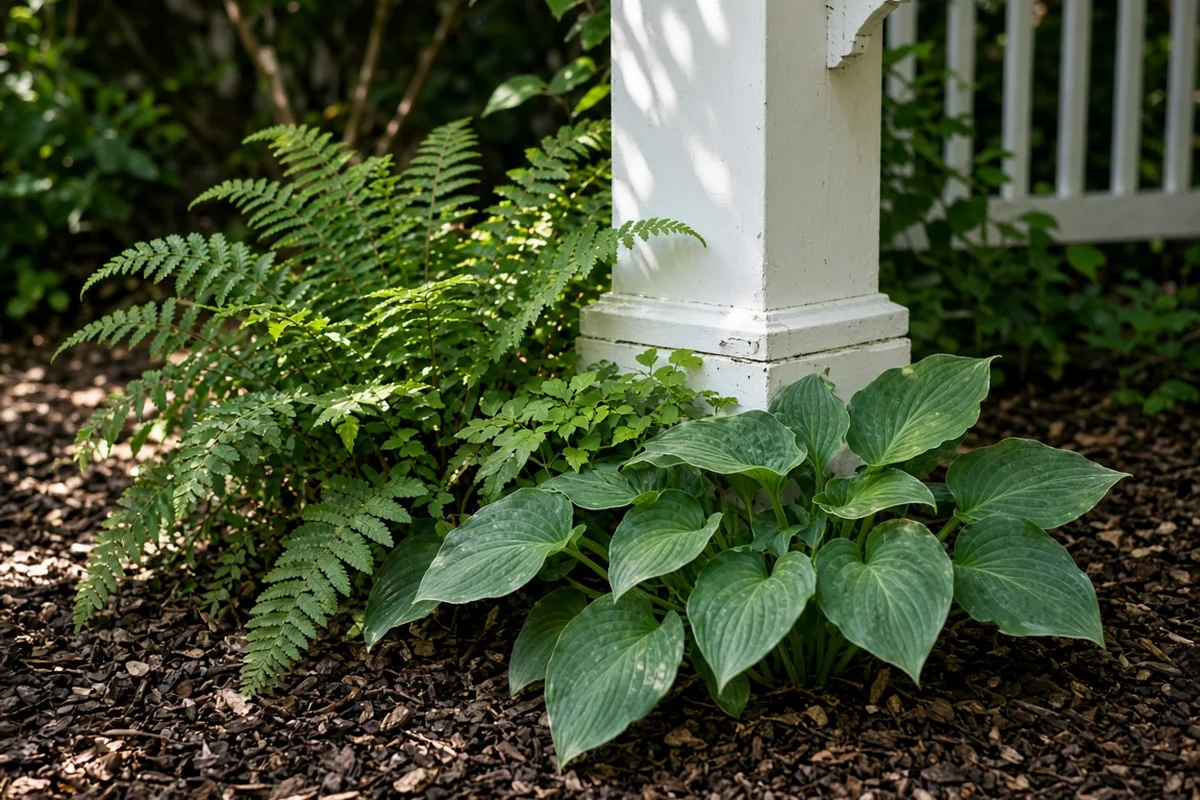
Begin with the paths, then fit beds around them. LSU AgCenter suggests foundation beds 6 to 9 feet wide with a slight slope away from the building.
| Factor | Target | Source |
|---|---|---|
| Path width | At least 3 feet | Kansas State |
| Shrubs over 6 feet | Foliage 5 feet from walls | Clemson |
| Shorter shrubs | Foliage 3 feet from walls | Clemson |
| Bed width | 6 to 9 feet | LSU AgCenter |
| Mulch near walls | 1 foot back | LSU AgCenter |
Source: Kansas State, Clemson plus LSU AgCenter.
Where does roof runoff go?
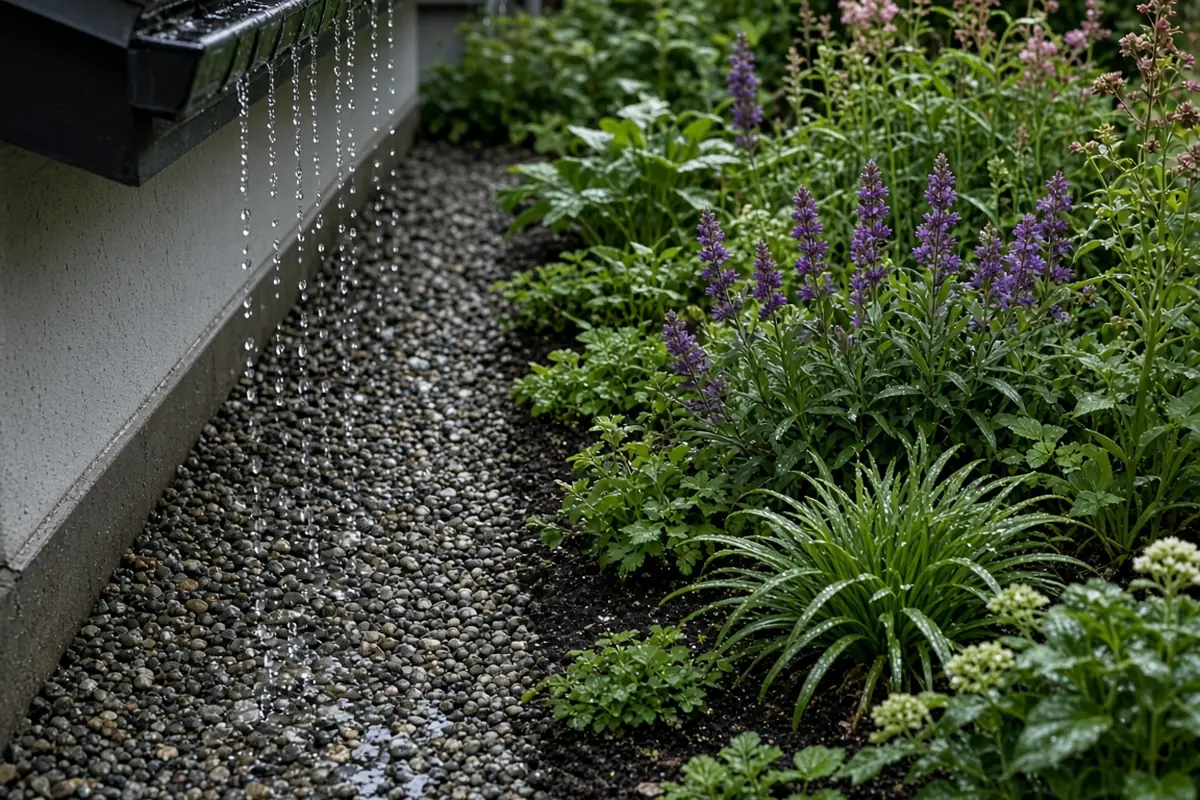
UC Marin Master Gardeners advise noting where water pools after rain. Clemson notes ground should slope so water drains away from a building. Leave the strip under the roof edge open or graveled instead of planted.
How much shade does a gazebo cast?
UC Marin notes shade from structures changes through the day plus season. East sides get morning sun, west sides run hotter plus drier while north sides stay shady plus cool. Suit plants to each side.
How to: step by step
- Watch sun plus shade around the gazebo through a day.
- Mark where water pools after rain.
- Lay paths at least 3 feet wide.
- Leave the strip under the roof edge open.
- Set shrubs by mature size away from posts.
- Mulch beds but hold mulch back from the base.
Troubleshooting
Soil washed away at the roof edge: runoff strikes bare soil. Add gravel.
Plants brushing the posts: set too close. Move them out by mature width.
Plants crushed at the steps: no clear path. Widen it.
For more on outdoor growing see garden microclimates for cannabis, planning an outdoor cannabis garden layout plus the guide to overwatering and cannabis growth. Kind Seed Co also stocks cannabis seeds.
Sources
- How to assess your microclimates, UC Marin Master Gardeners
- Foundation plantings, Clemson Cooperative Extension HGIC
- Designing and planting foundation beds, LSU AgCenter
- Down the garden path, K-State Research and Extension, Johnson County
FAQ
Should I plant right under the gazebo roof edge?
Clemson Cooperative Extension advises against planting under the eaves of a building. Plants there get little rain plus can crowd the structure. Leave that strip open or fill it with gravel, then set the bed just outside it so roof runoff does not wash soil away from roots.
How wide should beds around a gazebo be?
LSU AgCenter suggests foundation beds 6 to 9 feet wide, sloping about 6 inches per 10 feet away from the building. Narrower beds work beside paths. Size the bed to the mature width of the plants so they do not crowd the posts or spill over the walkway.
How far from a gazebo should shrubs go?
Clemson advises foliage of shrubs that mature over 6 feet tall sit at least 5 feet from walls, while shorter shrubs sit at least 3 feet away. LSU AgCenter gives similar spacing. Measure from the post line plus plan by mature size rather than nursery pot size.
How wide should a path to a gazebo be?
Kansas State Research and Extension advises garden paths at least 3 feet wide plus 5 to 6 feet wide where two people walk side by side. Place paths where people already walk, since misplaced paths lead to shortcuts, trampled plants plus broken branches around the beds.
What grows on the north side of a gazebo?
UC Marin Master Gardeners note northern exposures are shady, cooler plus moister than other sides. Shade tolerant foliage plants suit that side. Clemson lists foliage perennials such as hostas for beds near buildings. Watch the spot through the day before choosing plants.



