
Garden by an Air Conditioner: Airflow Gaps plus Hot Exhaust
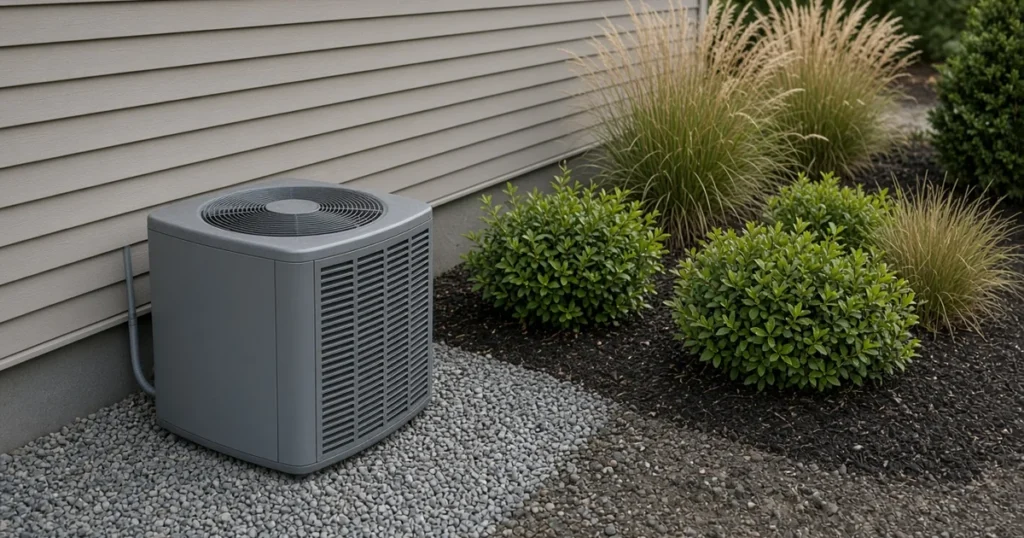
A garden by an air conditioner has to leave room for air to move. Utah State University Extension notes shrubs planted near an air conditioner reduce air flow plus cooling efficiency, so plants should sit back while shade from trees does the cooling work.
The short answer
Leave open space around the unit. Utah State advises pruning for at least several feet of clearance plus notes shrubs near an air conditioner reduce air flow. Shade the unit from mid morning through evening with trees set farther out. University of New Hampshire Extension notes shade helps an air conditioner run efficiently.
How close can plants be to an air conditioner?
Utah State advises pruning so there are at least several feet of clearance around the unit. It notes shrubs near an air conditioner cut air flow plus cooling efficiency. Clemson Cooperative Extension also advises spacing shrubs so their mature width does not crowd walls.
Does shade help an air conditioner?
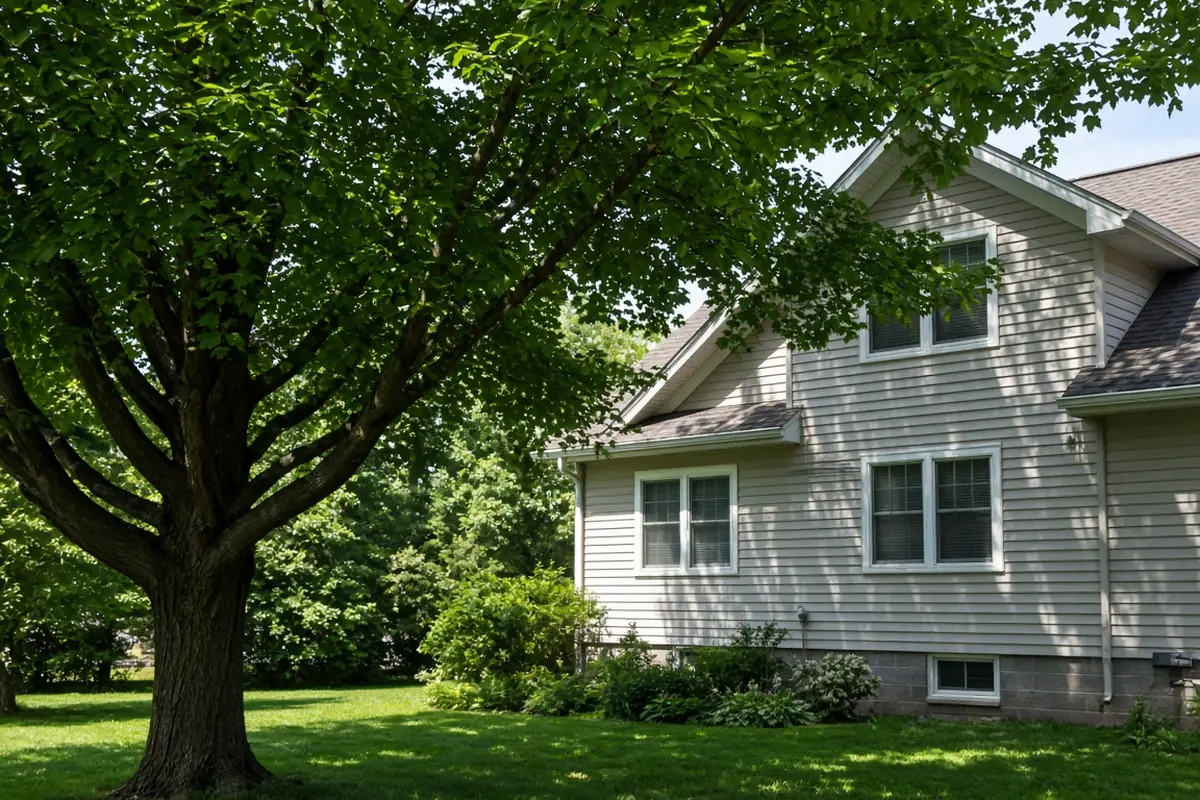
Yes. UNH Extension notes shade can lower air temperature by as much as 15 to 20 degrees plus shaded surfaces can run 20 to 45 degrees cooler. It notes placing the unit on the shadiest side or planting a shade tree helps it run efficiently.
| Placement | Shade time | Source |
|---|---|---|
| Trees east of the house | 7 to 11 a.m. | Utah State |
| Trees west of the house | 3 to 7 p.m. | Utah State |
| Tree over the unit | Mid morning through evening | Utah State |
| Trees 25 feet tall at maturity | 10 to 20 feet from the house | Utah State |
Which plants handle hot exhaust air?
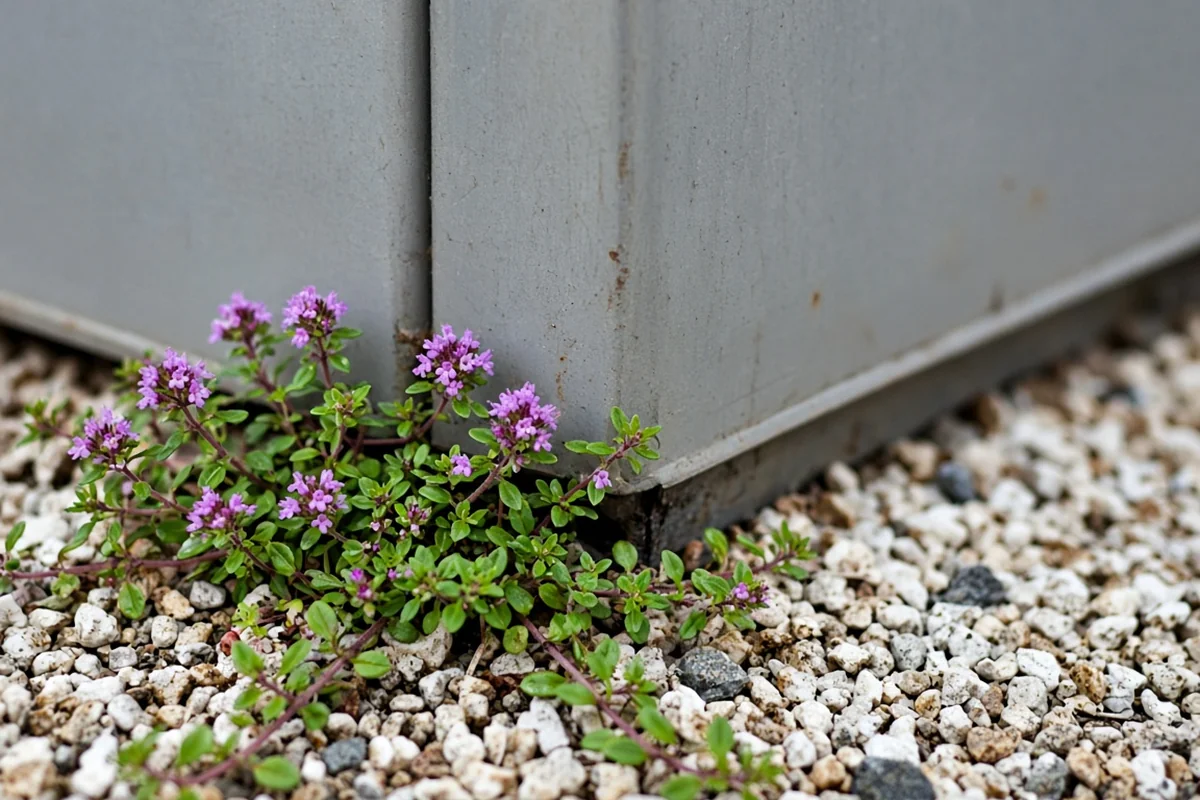
No source names plants for exhaust air, so plan for space over plant choice. Clemson advises plants that are hardy plus heat tolerant for your area. Use low groundcovers or mulch near the unit plus set taller plants several feet away.
How to: step by step
- Measure several feet of open space around the unit.
- Shift any shrubs that crowd it.
- Plant a shade tree that will reach at least 25 feet, 10 to 20 feet from the house.
- Fill the clear zone with 3 inches of mulch.
- Pick heat tolerant plants for the bed edge.
- Prune each season to hold that clearance.
Troubleshooting
Unit runs hot: check for shrubs that block air flow, as Utah State notes.
Sun hits the unit all afternoon: plant a tree to the west, which Utah State notes shades walls from 3 to 7 p.m.
Plants scorch near the fan: move them back plus pick heat tolerant kinds.
For more on site planning see garden microclimates for cannabis, planning an outdoor cannabis garden layout plus cannabis heat stress. Kind Seed Co also stocks cannabis seeds.
Sources
- Planting trees for energy conservation: the right tree in the right place, Utah State University Extension
- Shade matters, University of New Hampshire Extension
- Mulches for home gardens and plantings, University of Wisconsin Extension Horticulture
- Foundation plantings, Clemson Cooperative Extension HGIC
FAQ
Can shrubs screen an air conditioner?
Utah State University Extension notes shrubs planted near an air conditioner reduce air flow plus cooling efficiency. It advises pruning so there are at least several feet of clearance around the unit. A screen, if you want one, should sit outside that clear zone so air can move freely around the unit.
Does mulch belong near the unit?
Mulch can cover the open zone around the unit instead of plants. University of Wisconsin Extension notes most organic mulches go about 3 inches deep. It notes gravel plus pebbles are often used in permanent plantings, which can suit the space right next to an air conditioner.
Will shade trees save energy?
Utah State notes trees that shade an air conditioner from mid morning through evening help it run more efficiently. UNH Extension notes shade can lower air temperature by as much as 15 to 20 degrees, plus shaded surfaces can be 20 to 45 degrees cooler than surfaces in the sun.
Where should shade trees go?
Utah State advises planting trees that reach at least 25 feet tall at maturity 10 to 20 feet to the east plus west of the house. It notes deciduous trees shade east walls from 7 to 11 a.m. plus west walls from 3 to 7 p.m. during summer.
How much cooler is shade?
University of New Hampshire Extension notes shade can lower air temperature by as much as 15 to 20 degrees. It also notes shaded surfaces can be 20 to 45 degrees cooler than unshaded ones. That is why it notes a unit on the shadiest side of a house runs more efficiently.



