
Garden Near Linden Trees: Sticky Drip plus Shade
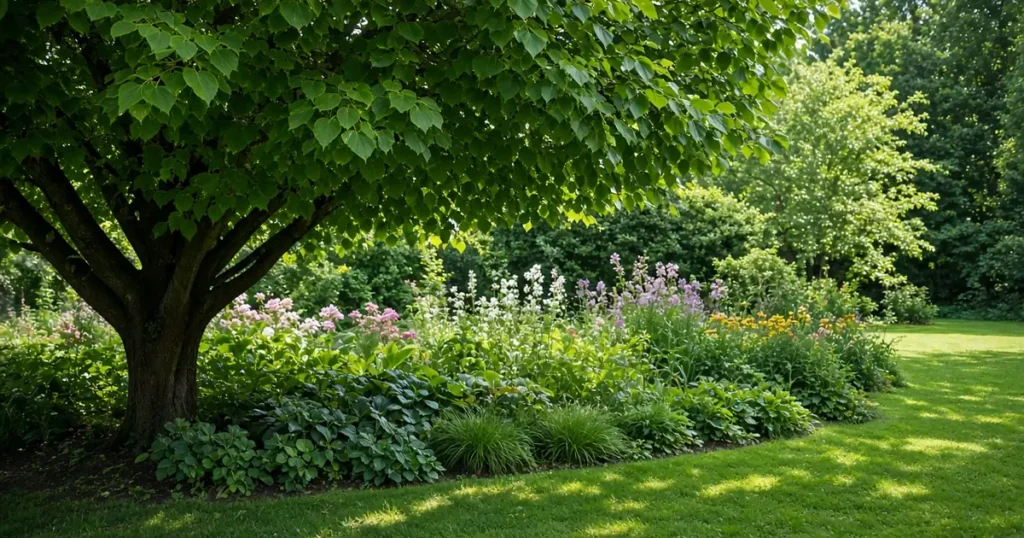
A garden near linden trees has two quirks to plan for. Washington State University Extension notes linden aphids drop sticky honeydew that grows a dark film, while Penn State Extension notes tree roots win the contest for water in beds below a canopy.
The short answer
Expect drip plus dry shade. WSU notes the honeydew plus the dark film on it do not harm the tree, plus a rinse with water clears leaves below. Penn State advises adding no more than 2 inches of soil over roots, planting small plugs plus watering deeply once a week.

Why do linden trees drip?
WSU notes the linden aphid feeds on the leaves plus excretes honeydew. A dark false sooty mold then grows on that film. UMass Amherst Extension notes the drip lands on anything beneath the tree, from cars to garden plants.
Where should beds go near a linden?
NC State Extension notes American linden reaches 60 to 80 feet tall plus is sensitive to soil compaction. Penn State advises starting about 1 foot from the trunk plus digging small holes between roots rather than cutting large ones. Beds set past the drip zone stay cleaner.
| Factor | Detail | Source |
|---|---|---|
| Drip | Honeydew from linden aphids | WSU |
| Film | Does not harm the tree | WSU |
| Reach | Lands on anything beneath | UMass |
| Size | 60 to 80 feet tall | NC State |
| Soil | No more than 2 inches added | Penn State |
| Water | Deeply once a week | Penn State |
Source: Washington State University Extension, UMass Amherst Extension, NC State Extension plus Penn State Extension.
Which plants grow in linden shade?
NC State notes linden grows in sun to part shade, so the ground below is often shady by midsummer. Penn State notes dry shade perennials suit spots under trees plus advises small plants, plugs or divisions over large pots. It also advises 1 to 2 inches of bark mulch. NC State plus WSU note linden flowers draw honeybees, which can be a plus for nearby beds.

How to: step by step
- Map the drip zone under the canopy.
- Set sun crops past that zone.
- Add no more than 2 inches of soil over roots.
- Plant small plugs about 1 foot or more from the trunk.
- Mulch with 1 to 2 inches of shredded bark.
- Water deeply once a week for the first year or two.
Troubleshooting
Black film on leaves: sooty mold on honeydew. WSU notes a rinse with water clears it.
Weak sun crops: too much shade. Penn State notes dry shade perennials suit these spots.
Dry bed: root competition. Penn State notes tree roots always win, so water often.
For siting see garden microclimates for cannabis plus planning an outdoor cannabis garden layout. Read growing cannabis near trees plus mulch for cannabis. Kind Seed Co also stocks cannabis seeds.
Sources
- Linden (Tilia): linden aphid, Washington State University Hortsense
- Eucallipterus tiliae (linden aphid), UMass Amherst Extension Landscape Program
- Tilia americana (American linden), NC State Extension Gardener Plant Toolbox
- Underplanting trees: respect the roots, Penn State Extension
FAQ
Does linden honeydew harm the tree?
Washington State University Extension notes the honeydew plus the false sooty mold on it do not harm the tree. A rinse with water clears plants below.
Do linden trees attract bees?
NC State Extension notes American linden is attractive to honeybees. WSU also notes linden flowers are very attractive to bees.
How much soil can go over linden roots?
Penn State Extension advises adding no more than 2 inches of soil over tree roots when planting beneath a canopy.
How tall does American linden grow?
NC State Extension notes American linden reaches 60 to 80 feet tall plus grows in sun to part shade.
How often should beds under a linden get water?
Penn State Extension advises watering deeply once a week plus watering consistently for the first year or two.



