
Garden Near Mesquite: Filtered Shade in Dry Yards
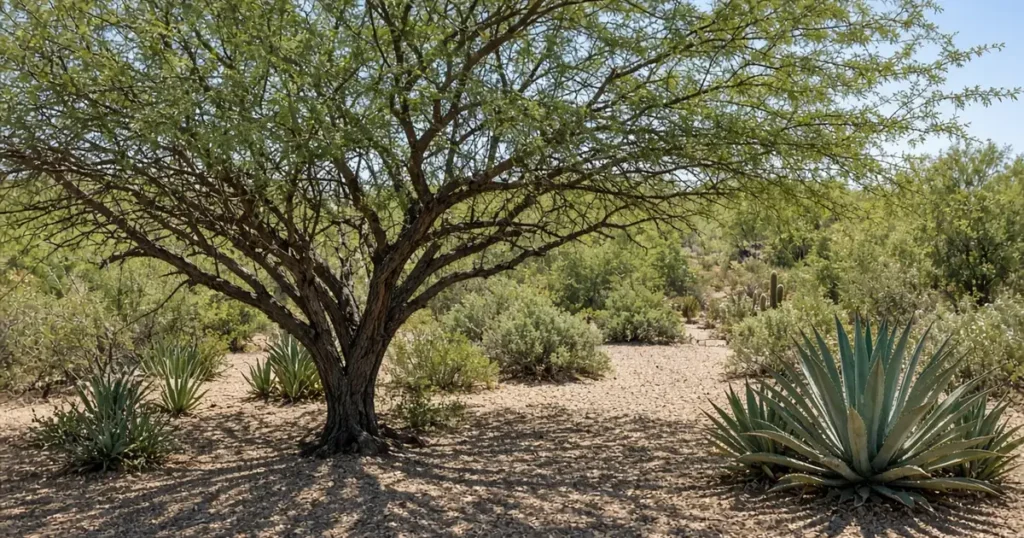
A garden near mesquite sits under light, filtered shade. University of Arizona Cooperative Extension notes Argentine mesquite has airy foliage plus Chilean mesquite has a lacy crown, both built from feather like leaves of many small leaflets.
The short answer
Mesquite casts light shade from fine leaflets plus drops most leaves in winter in the low desert. Arizona notes trees irrigated monthly develop a dense canopy, so watering the tree with the garden thickens shade. UC IPM notes mesquite needs little to moderate water, so beds with higher needs suit the canopy edge.

What kind of shade does mesquite give?
Arizona notes leaves are bipinnate, with pairs of pinnae carrying many small leaflets, which gives airy cover. Mesquites are deciduous plus shed foliage in cold or long drought, it notes. Below 2,500 feet, Chilean mesquite loses most foliage in winter, plus new growth appears in late March or early April.
Where should beds go near mesquite?
UC IPM notes mesquite does well in full sun plus needs little to moderate water. Arizona notes mesquite tolerates irrigated turf plus full sun. It notes that with deep soil plus ample water a tree may reach 30 feet in height plus width. New Mexico State University Extension lists mesquite as a low water use shade tree about 20 feet tall.
| Factor | Detail | Source |
|---|---|---|
| Foliage | Airy, lacy, fine leaflets | Arizona |
| Winter | Deciduous in cold or drought | Arizona |
| Water | Little to moderate | UC IPM |
| Size | Up to 30 feet tall plus wide | Arizona |
| Pods | Ripen July to August | Arizona |
| Water use rating | Low | NMSU |
Source: University of Arizona Cooperative Extension, UC IPM plus NMSU Extension.
How do you water a bed under mesquite?
Arizona notes established mesquite irrigated monthly grows larger with a dense canopy. Water beds at the drip line with care so the tree does not become a heavy water user. UC IPM notes established trees are drought tolerant but accept some water. Utah State University Extension notes floating row covers are lightweight fabric that can sit over frames to shield beds.
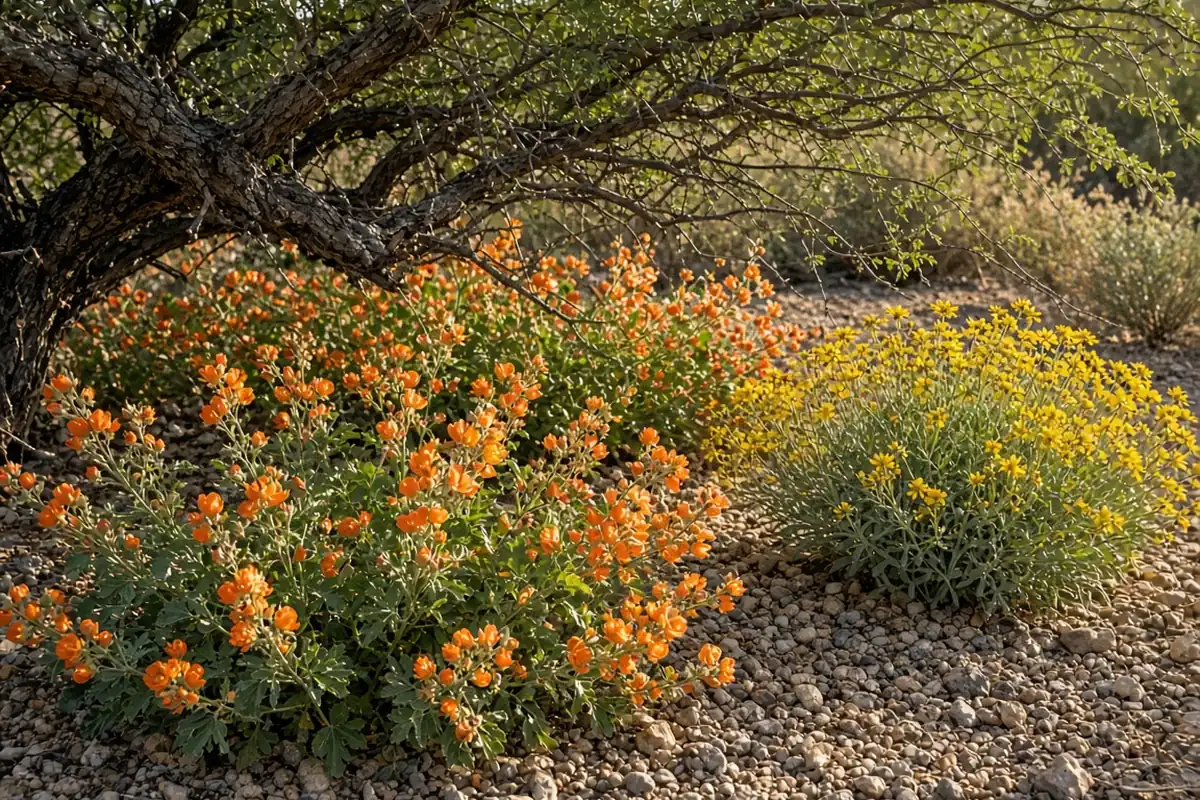
How to: step by step
- Note where the canopy edge falls at midday.
- Set beds with higher water needs near that edge.
- Water beds directly rather than the whole root zone.
- Prune dead plus broken limbs, as UC IPM advises.
- Clear pods from beds in summer.
- Plan for more sun in winter after leaf drop.
Troubleshooting
Shade too dense: frequent watering. Arizona notes monthly watering builds a dense canopy.
Pods in beds: summer ripening. Arizona notes pods ripen in July plus August.
Thorny branches over paths: a thorny type. UC IPM notes thornless varieties exist.
For layout see planning an outdoor cannabis garden layout plus growing cannabis near trees. Read garden microclimates for cannabis plus underwatering cannabis. Kind Seed Co also stocks cannabis seeds.
Sources
- Mesquite and palo verde trees for the urban landscape, University of Arizona Cooperative Extension
- Mesquite, UC Statewide IPM Program (UC ANR)
- Shade trees for New Mexico (H-426), New Mexico State University Extension
- Extending the garden season, Utah State University Extension
FAQ
Does mesquite lose its leaves in winter?
Arizona Extension notes mesquites are deciduous plus shed foliage in response to cold plus long drought. New growth appears in late March or early April.
How big do mesquite trees get?
UC IPM notes mesquite can grow up to 30 feet tall in good conditions but stays shrubby in poor, rocky soil.
When do mesquite pods drop?
Arizona Extension notes pods of some mesquite species ripen in July plus August.
Should mesquite be watered with the garden?
Arizona notes trees irrigated monthly develop into larger trees with a dense canopy. UC IPM notes mesquite needs little to moderate water.
Are thornless mesquites available?
Yes. UC IPM notes many varieties are thorny but thornless varieties are available.



