
Garden on a Narrow Lot: Long Thin Yards and Side Strips
The short answer
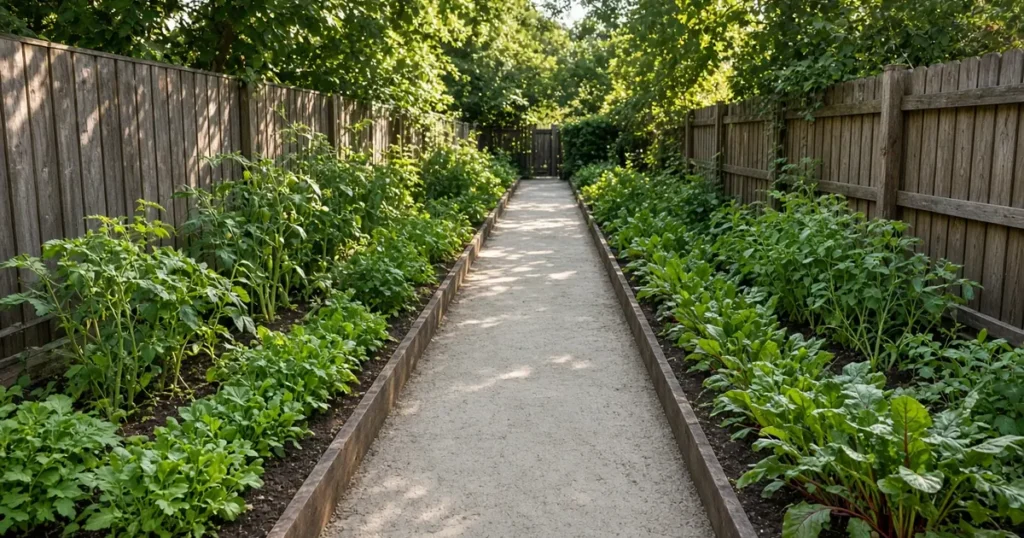
A garden on a narrow lot works with long beds you can reach across, fence trellises and containers in side strips. UF IFAS and UVM Extension suggest vertical growing, compact varieties and careful use of sunny spots. Map the sun first. Then plan a clear path and beds.
How do you lay out a narrow yard?
UVM Extension says the ideal spot gets 6 to 8 hours of sun a day. University of Minnesota Extension sizes beds by arm reach: 2.5 feet for one side access and up to 5 feet when you can reach from both sides. UF IFAS suggests a gravel or mulch path and a linear feature that pulls the eye down the yard. See garden microclimates for cannabis and planning an outdoor cannabis garden layout.
How can fences and walls help?
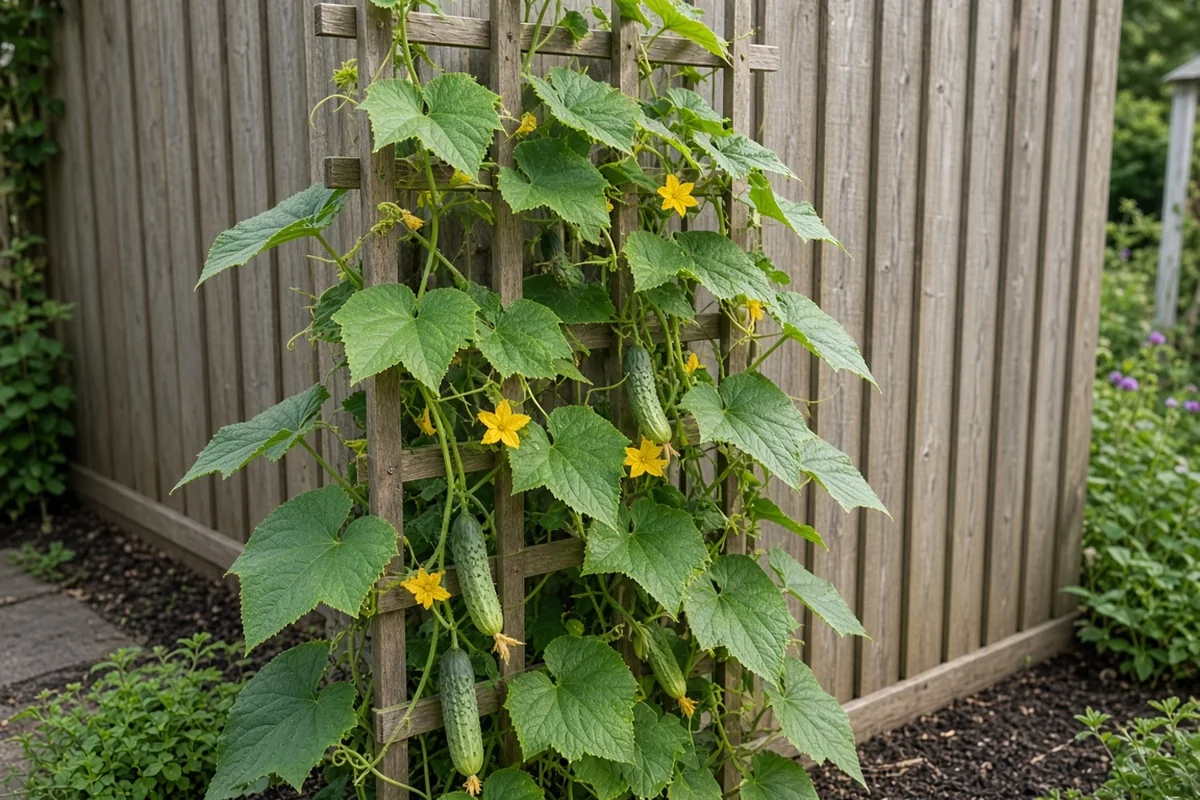
UF IFAS says plants grow up walls and suggests vines on a trellis or wall brackets for hanging baskets. UVM Extension says a trellis lifts cucumbers and squash off the ground and frees space. Set the trellis at planting so you don’t disturb roots later. More ideas are in the art of cannabis trellising.
What grows well in side strips?
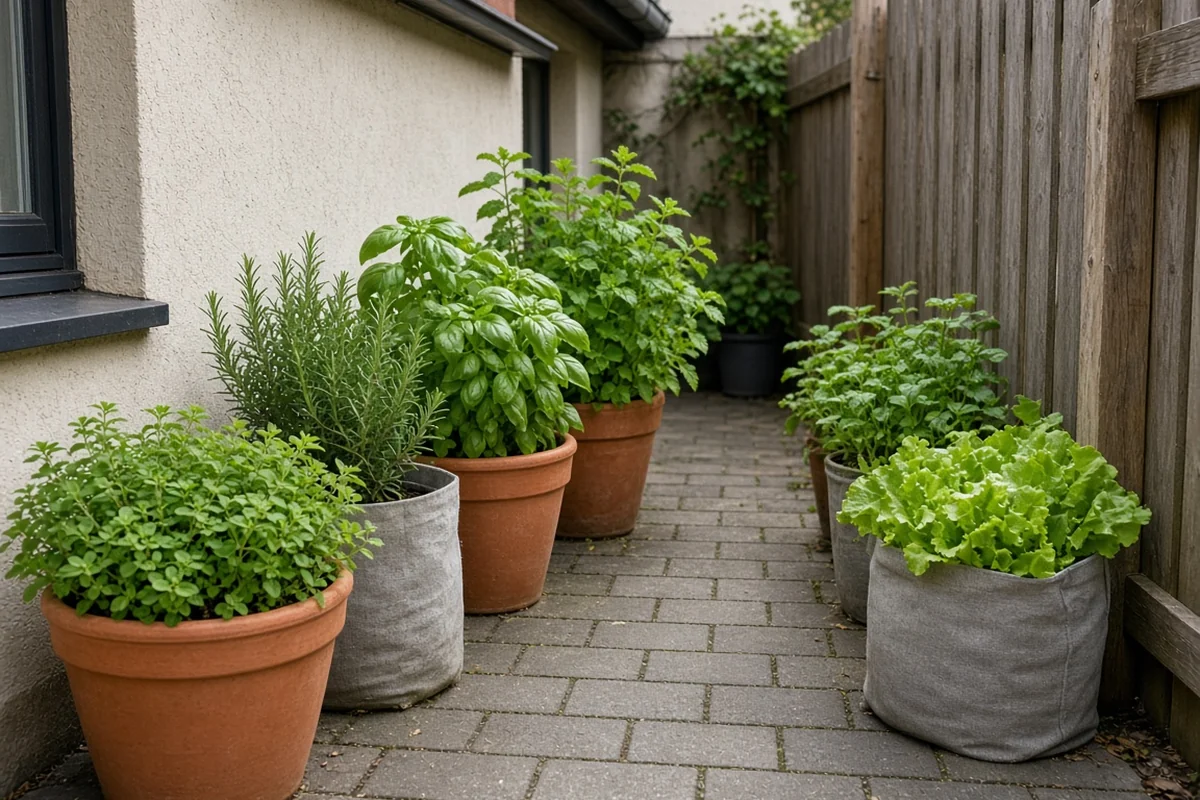
UF IFAS says a sunny side yard can hold a raised bed or a series of herb containers. UVM Extension favors dwarf, compact or patio varieties. UC Master Gardeners of Orange County list strawberries, lettuces, tomatoes, peppers, beans and radishes for small spaces.
Narrow lot basics
| Item | Guide | Source |
|---|---|---|
| Sun | 6 to 8 hours | UVM |
| One side bed | 2.5 feet wide | UMN |
| Two side bed | Up to 5 feet | UMN |
| Vines | Trellis at planting | UVM |
| Shade | Lettuce and radishes | UMN |
Sources: UF IFAS Gardening Solutions, UVM Extension, UC Master Gardeners of Orange County, University of Minnesota Extension.
How to: step by step
- Map sun and shade along the lot.
- Plan long, narrow beds you can reach across.
- Leave one clear path.
- Pick dwarf or compact varieties.
- Add trellises on fences and walls.
- Use containers in paved side strips.
Troubleshooting
Shaded beds: tall neighbors. Try lettuce, scallions or radishes.
Crowded paths: beds too wide. Trim them to arm reach.
Hot beds: heat off the paving. Raise the bed one or two feet, as University of Minnesota Extension suggests.
A narrow lot can still feed you. Kind Seed Co shares more small garden notes on the blog.
Sources
- Gardening with limited space, UF IFAS Gardening Solutions
- Gardening in small spaces, UVM Extension
- Small spaces, UC Master Gardeners of Orange County
- Raised bed gardens, University of Minnesota Extension
FAQ
How wide should beds be in a narrow yard?
University of Minnesota Extension uses arm reach as the guide. Beds reached from one side should be no more than 2.5 feet wide, and beds reached from both sides can be up to 5 feet.
What crops climb well?
UVM Extension says cucumbers and squash sprawl, so a trellis lifts vines and fruit off the ground. It also suggests beans or cucumbers on a trellis at the back of a bed.
Can side yards grow vegetables?
Yes, if they get sun. UF IFAS says a sunny side yard can hold a raised bed or containers of herbs. UC Master Gardeners list narrow side yards among small space garden spots.
How do I handle neighbor shade?
University of Minnesota Extension says beds with only a few hours of sun can still grow lettuce, baby kale, scallions, microgreens, radishes and beet greens.
How much sun do vegetables need?
UVM Extension says the ideal spot gets 6 to 8 hours of sun a day for fruits and vegetables. UC Master Gardeners of Orange County give 4 to 6 hours for edibles.



