
Moveable Garden Beds: Raised Beds on Locking Casters You Can Relocate
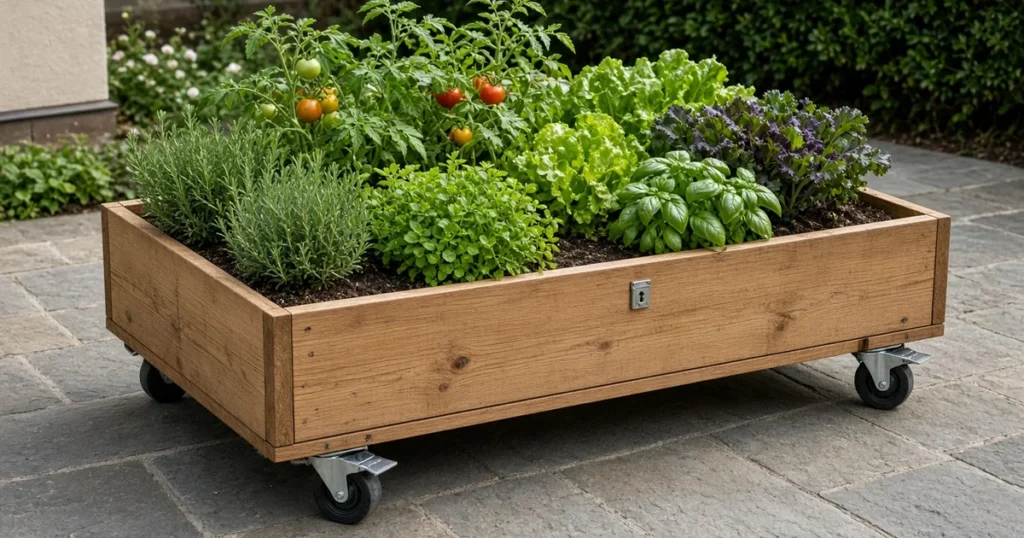
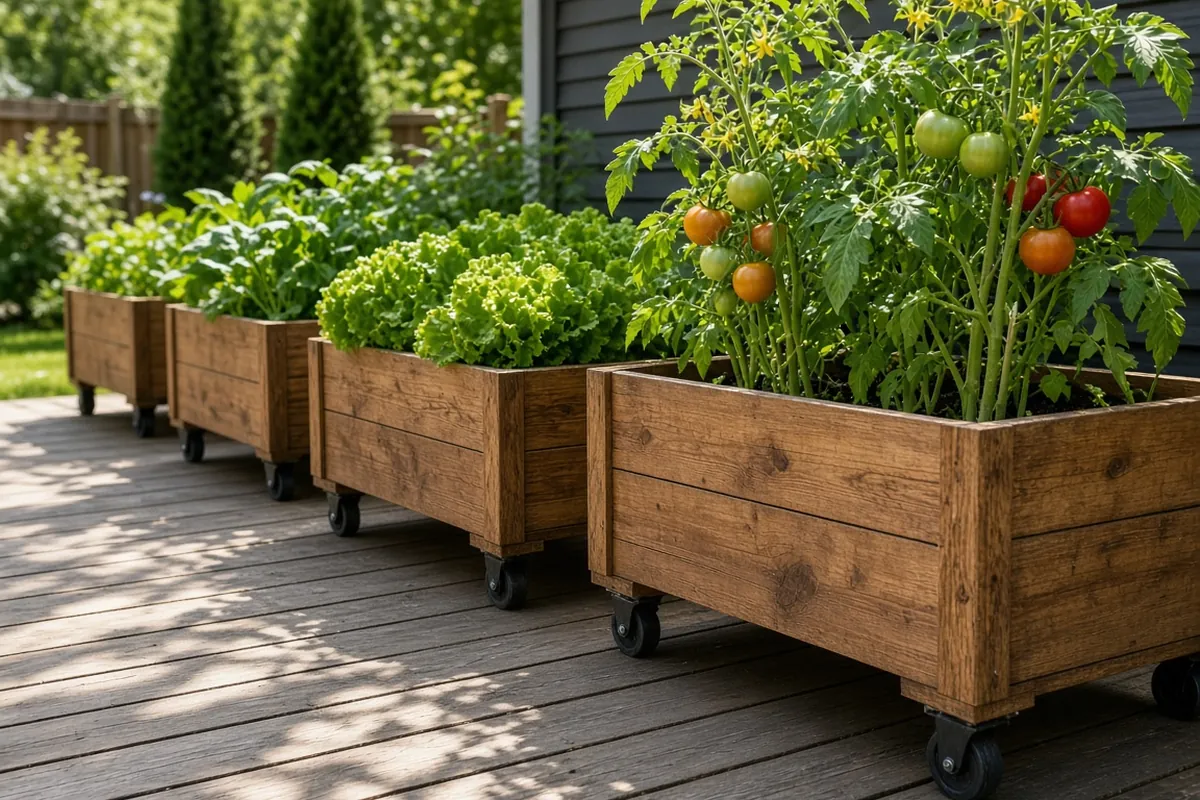
Moveable garden beds are raised beds or planter boxes built on locking casters or a rolling base so you can shift them. UC Master Gardeners describe wooden beds on locking casters, and Oregon State Extension notes raised beds help gardeners who find kneeling hard. Build small, since wet soil is heavy.
The short answer
A moveable garden bed is a small, sturdy raised box on locking casters. UC Master Gardeners suggest a rolling base with locking wheels for any container with heft. Drill drainage holes before filling, use a light mix and roll the bed before watering, since wet soil adds weight.
What is a moveable garden bed?
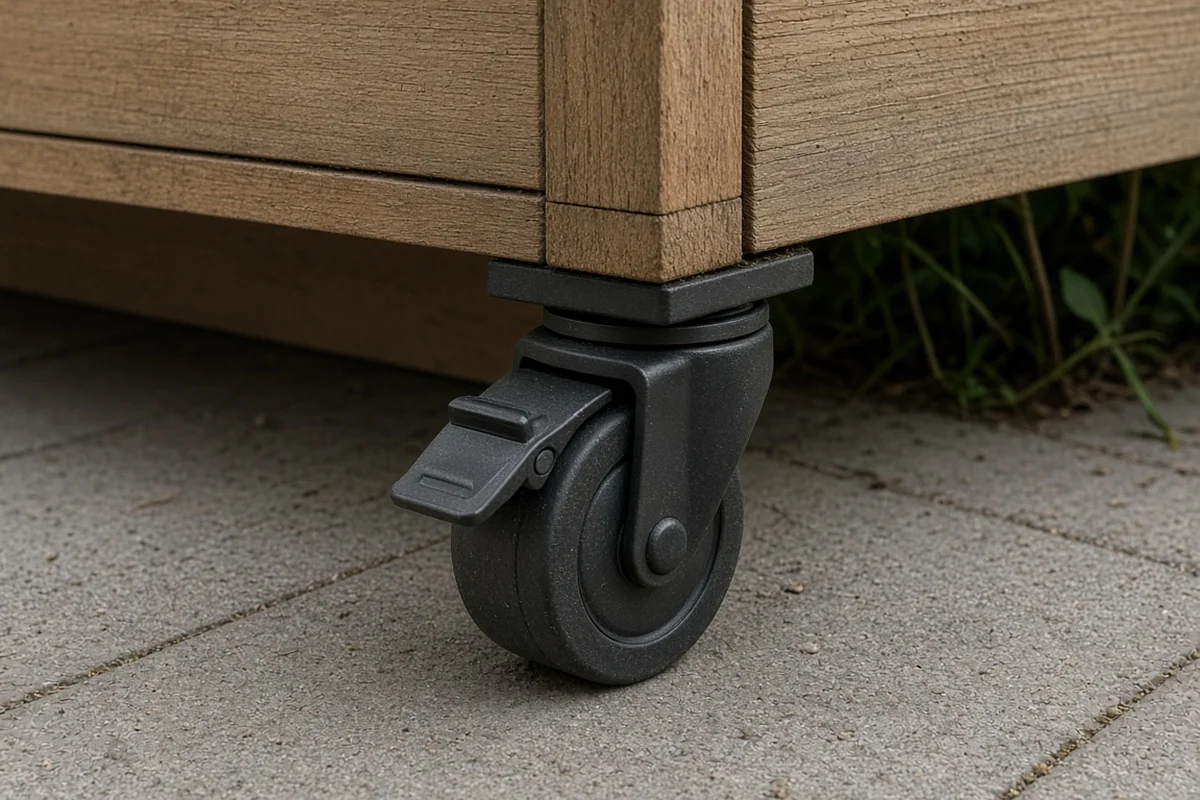
It’s a raised bed or big container on wheels. UC Master Gardeners of Solano County say lightweight containers are easier to relocate and that a rolling base with locking wheels helps with any container that has heft. A moving bed can chase sun all season. See garden microclimates for cannabis.
How do you build one?
UC Master Gardeners suggest a raised bed near the gardener’s hip height, with room underneath for a wheelchair if needed. NC State Extension says frames can be wood, rot resistant cedar or redwood, synthetic lumber or concrete blocks. Garden tables with knee room suit seated gardeners. More designs are in raised beds for cannabis.
How much can it hold?
Extension sources give no weight limits, but UC Master Gardeners warn that containers weigh more once watered. Size it so it still rolls when wet. Drill drainage holes before planting and make sure the base does not block them. Read garden soil vs potting mix for cannabis to pick a fill.
Moveable bed basics
| Item | Guide | Source |
|---|---|---|
| Base | Locking casters | UC Master Gardeners |
| Height | Hip height | UC Master Gardeners |
| Seated use | 2 to 3 feet | Oregon State |
| Drainage | Holes drilled first | UC Master Gardeners |
| Frame | Wood, cedar or blocks | NC State |
Sources: UC Master Gardeners of Solano County, Oregon State University Extension, NC State Extension, University of Delaware Cooperative Extension.
How to: step by step
- Decide where and how far you will move the bed.
- Choose locking casters or a rolling base.
- Build a sturdy base frame.
- Drill drainage holes before filling.
- Fill with a light mix and compost.
- Move the bed before watering, not after.
Troubleshooting
Bed won’t roll: too heavy. Use a smaller box or lighter mix.
Water pools: blocked holes. Clear the space under the base.
Base sags: weak frame. Add cross supports.
Drainage matters
Delaware Extension notes raised beds hold roots above waterlogged or compacted ground, and compost helps drainage.
A bed on wheels gives you options. Kind Seed Co shares more raised bed notes on the blog.
Sources
- Accessible, adaptive and age resilient gardening, part 1, UC Master Gardeners of Solano County
- Gardens are for everyone (EM 9403), Oregon State University Extension
- Accessible gardening: raised beds, containers and garden tables, NC State Extension
- Raised bed gardening, University of Delaware Cooperative Extension
FAQ
How heavy is a moveable bed full of soil?
Extension sources give no weight figures. UC Master Gardeners of Solano County note that containers weigh more once watered, so lighter containers are easier to move. Build small and move beds before watering.
What wheels work well?
UC Master Gardeners of Solano County suggest a rolling base with locking wheels for any container with heft, and describe wooden raised beds on locking casters. Check that the base does not block drainage holes.
Can you move a bed on skids?
Extension sources do not cover skids. They describe locking casters and rolling bases, so we stick to those.
Are moveable beds good for renters?
The sources do not speak to renting, but NC State Extension says containers and garden tables offer flexibility and work on patios and small yards. A bed on locking casters can move with you.
How tall should a raised bed be?
UC Master Gardeners of Solano County suggest hip height for the gardener. Oregon State Extension says easy access beds are 3 feet or more tall, and beds for wheelchair users are about 2 feet high or 3 feet on legs.



