
Garden on a Retaining Wall: Narrow Beds plus Drainage
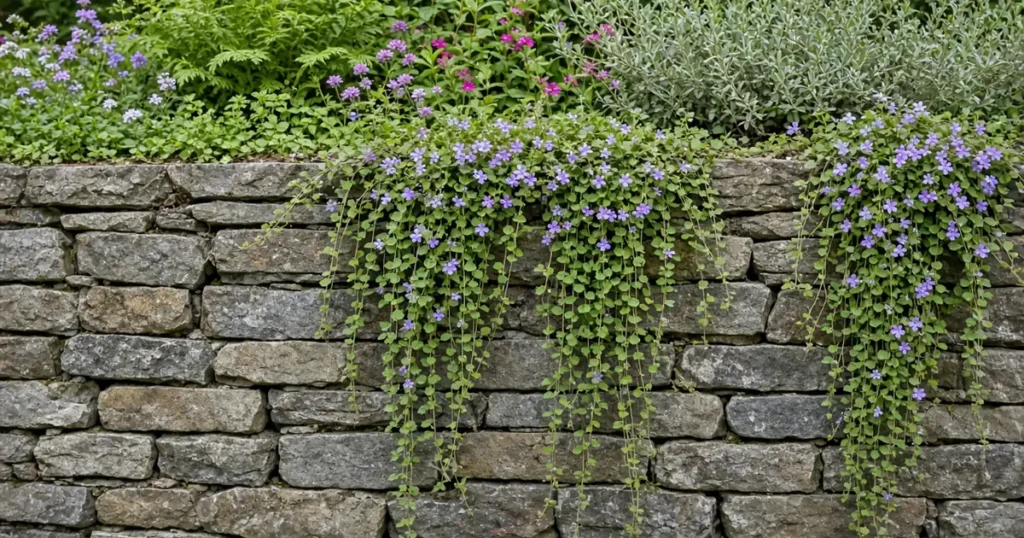
A garden on a retaining wall is a narrow bed that sits high, drains fast and faces full sun plus wind. Plants plus watering should suit this dry, exposed strip.
The short answer
Pick plants that tolerate full sun plus little water, such as prostrate junipers, ivies, rugosa rose or sedums, which Mississippi State lists for slopes. Water slowly with drip so it soaks in before it runs off. Cover the soil with mulch plus send downspout water away from the top of the wall.
What grows well on a wall top?
Iowa State University Extension notes steep slopes are drier, so drought resistant plants work well. Groundcovers suit a wall top since they cover soil plus hold it.
| Plant type | Why it fits | Source |
|---|---|---|
| Prostrate junipers | Full sun plus little water | Mississippi State |
| Sedums | Full sun plus little water | Mississippi State |
| Rugosa rose | Full sun plus little water | Mississippi State |
| Groundcovers in rows across the slope | Cover plus hold soil | Iowa State |
How do you water a narrow wall bed?
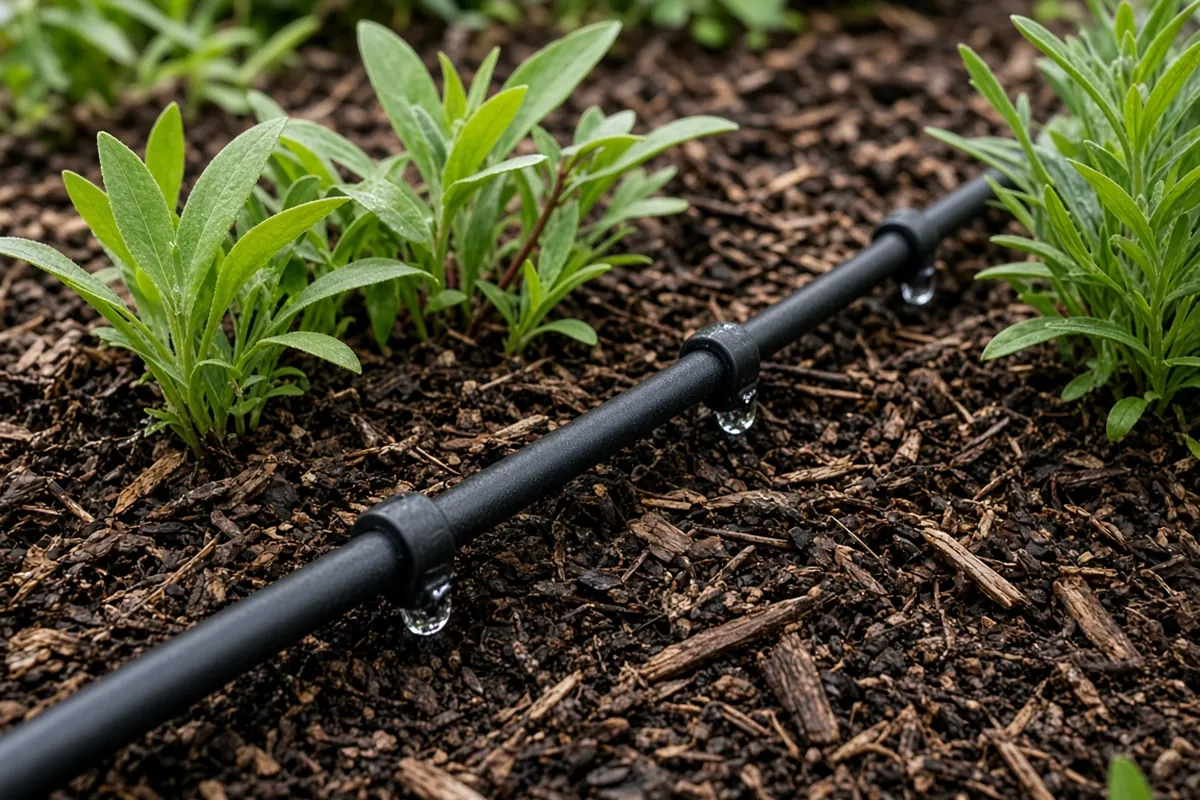
Colorado State University Extension notes drip applies water slowly, so it soaks in before it can run off a slope. Set emitters over the root ball. Space them 12 inches apart in sand, 18 inches in loam or 24 inches in clay. Cover tubing with mulch plus stake it every 2 to 3 feet.
Where should downspout water go?
Iowa State advises moving downspout water away from the top of a slope so it does not soak the bed.
How to: step by step
- Pick sun plus drought tolerant plants like sedums or prostrate junipers.
- Set rows across the slope, as Iowa State advises.
- Run drip tubing with emitters over each root ball.
- Cover the soil plus tubing with thick mulch.
- Route downspout water away from the wall top.
Troubleshooting
Soil washes off the top: use shredded bark or leaf mold, which Iowa State notes wash down less than bark chips or river rock.
Plants wilt in summer: the strip dries out. Add drip plus mulch.
Water seeps through the wall face: move downspout runoff away from the bed plus water less at a time.
For more on site planning see garden microclimates for cannabis, planning an outdoor cannabis garden layout plus underwatering cannabis. Kind Seed Co also stocks cannabis seeds.
Sources
- Gardening on steep slopes, Mississippi State University Extension
- Gardening on slopes and hillsides, Iowa State University Extension and Outreach
- Drip irrigation for home gardens, Colorado State University Extension
- Measuring slope (RGS 2-5), University of Wisconsin Arboretum
FAQ
Which plants suit a sunny wall top?
Mississippi State University Extension lists sedums plus prostrate junipers among plants for slopes that take full sun plus little water. Set them in rows across the slope, as Iowa State advises, so their roots help hold the narrow bed.
Do trailing plants help soften a wall?
Yes. Mississippi State lists ivies plus prostrate junipers among plants for slopes that tolerate full sun plus little water. Planted along the top edge, these spreading plants can drape over the face of a wall while their roots help hold the soil in the narrow bed behind it.
Should erosion fabric be used on a wall top?
Mississippi State notes erosion fabric plus binding mulches such as pine needles or hay can block weeds while holding soil on a slope. On a wall top bed, fabric under mulch can slow runoff, while plants go in through cuts so their roots can reach the soil.
Which mulch stays put on a wall top?
Iowa State University Extension advises a thick layer of mulch on slopes. It notes shredded bark, leaf mold plus grass clippings wash down less than bark chips or river rock. That makes finer mulch a sound choice for a narrow, sloped bed on top of a wall.
How far apart should drip emitters go?
Colorado State University Extension advises spacing emitters 12 inches apart in sandy soil, 18 inches in loam plus 24 inches in clay. Place emitters over each root ball. Cover the tubing with mulch plus stake it every 2 to 3 feet so it stays in place on the bed.



