
Garden by a Stone Wall: Terraced Beds plus Mulch

A garden by a stone wall often starts as a terrace, where stone holds soil in place on a slope. Iowa State University Extension notes retaining walls, boulders plus field stones can slow runoff plus create planting zones, while University of Maine Cooperative Extension builds terraced beds with large rocks.
The short answer
Iowa State advises terracing slopes with retaining walls, boulders or field stones to slow runoff plus create flat planting zones. University of Maine Extension suggests terraced raised beds 8 to 12 inches tall plus no more than 4 feet wide. Mulch the soil plus water slowly with drip lines.
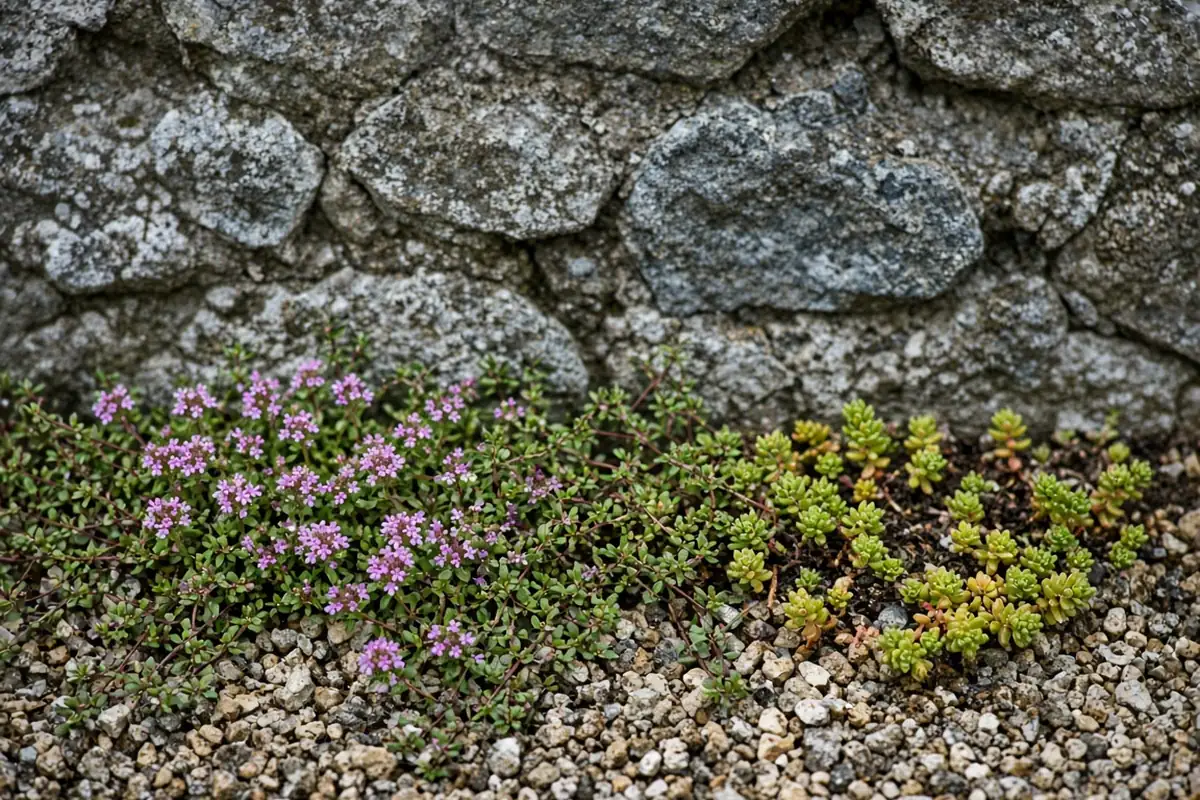
How does a stone wall help a sloped garden?
Iowa State notes slopes are prone to erosion, plus terraces built with stone slow runoff plus create flat planting zones. Maine builds permanent raised beds along the contours of the land.
| Item | Guide | Source |
|---|---|---|
| Bed height | 8 to 12 inches | Maine |
| Bed width | No more than 4 feet | Maine |
| Wall material | Retaining walls, boulders, field stones or timbers | Iowa State |
| Slope mulch | Shredded bark, leaf mold or grass clippings | Iowa State |
| Watering | Slow drip that soaks in | Colorado State |
Why does soil dry out on a slope?
Iowa State notes many slopes are well drained, so drought tolerant plants are a good choice, while soil at the base of a slope is often wetter. Find wet plus dry spots before choosing plants.
Which plants suit a stone terrace?
Iowa State advises plants suited to the site’s light plus soil, low maintenance kinds plus a mix of sizes plus root systems to anchor soil.
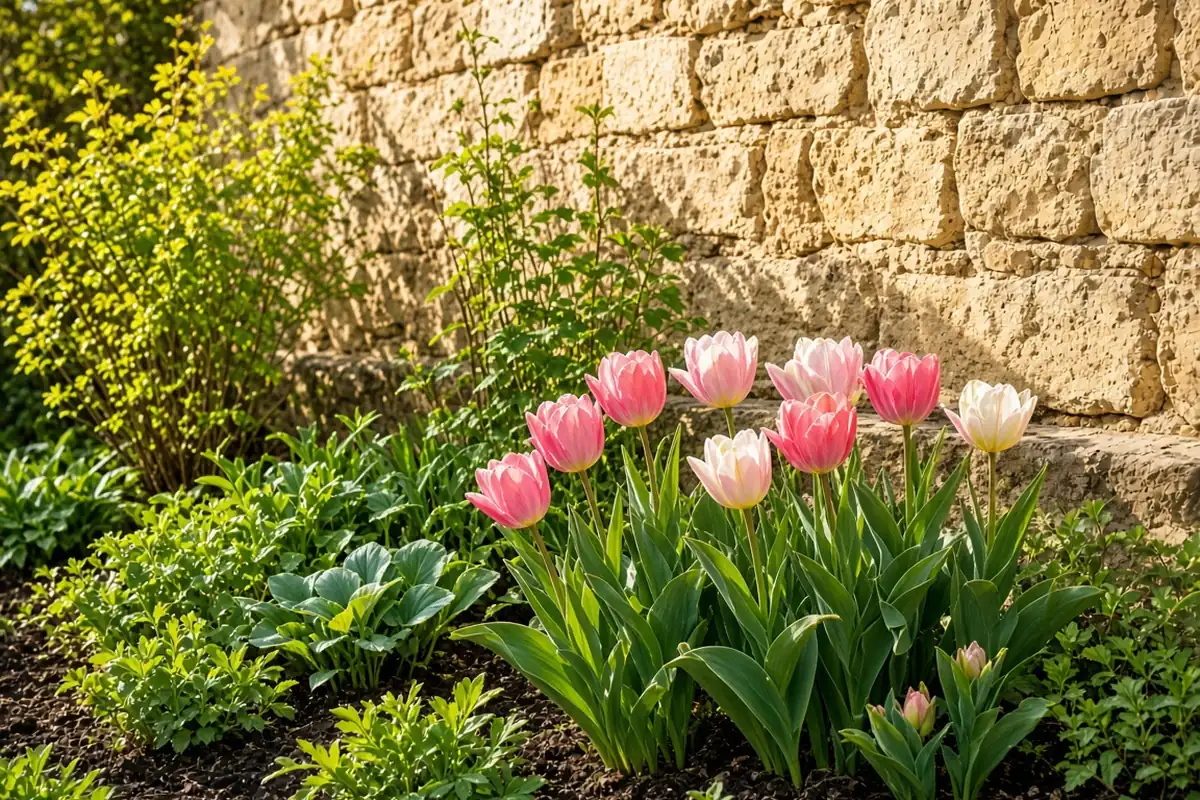
How to: step by step
- Note sun, shade plus wind on each terrace.
- See which spots stay wet plus which drain fast.
- Build terraces parallel with the slope’s contours.
- Set root balls level with the upper side of the slope.
- Mulch any bare soil.
- Water with drip lines so water soaks in.
Troubleshooting
Soil washing off a terrace: Iowa State advises coarse mulch with angular edges.
Plants wilting on upper terraces: fast draining soil. Choose drought tolerant plants.
Soggy soil low down: Iowa State notes the base of a slope is often wetter.
Crowns buried after rain: Iowa State advises stones or bricks on the lower side to hold soil.
For site planning see garden microclimates for cannabis, planning an outdoor cannabis garden layout plus frost damage on cannabis. Kind Seed Co also stocks cannabis seeds.
Sources
- Do you have any tips to help with gardening on slopes?, University of Maine Cooperative Extension
- Gardening on slopes and hillsides, Iowa State University Extension and Outreach
- Mulches for home gardens and plantings, University of Wisconsin Extension Horticulture
- Drip irrigation for home gardens, Colorado State University Extension
FAQ
How tall should terraced beds be?
University of Maine Extension suggests raised beds 8 to 12 inches tall plus no more than 4 feet wide, so you can reach the center from either side without stepping in. Mulch or plant the pathways between beds with a groundcover such as white clover to limit erosion.
Which mulch stays put on a slope?
Iowa State notes shredded bark, leaf mold plus grass clippings are less likely to wash downhill than bark chips plus river rock. It advises coarse, natural mulches with angular edges. Mulch also holds soil moisture plus suppresses weeds on terraces that drain quickly after rain.
Does drip irrigation work on terraces?
Yes. Colorado State notes slopes are inefficient to irrigate because gravity pulls water downhill, causing runoff. Drip lines apply water slowly, so it is more likely to soak in before it runs off. Colorado State also notes micro irrigation is ideal for berm plantings.
How do you plant on a slope beside stone?
Iowa State advises setting the root ball level with the upper side of the hill, then mounding soil on the lower side to cover it. Stones or bricks on the lower side hold soil in place. Small planting terraces should be 2 to 3 times wider than the root ball.
Does mulch change soil temperature?
Yes. Wisconsin notes organic mulches buffer soil temperature in summer, holding the ground cooler by day plus warmer at night. They also hold soil warmer in winter than bare ground. Synthetic mulches such as black plastic warm the soil in summer instead.



