
Garden Shed Foundation: Site Drainage plus a Raised Floor
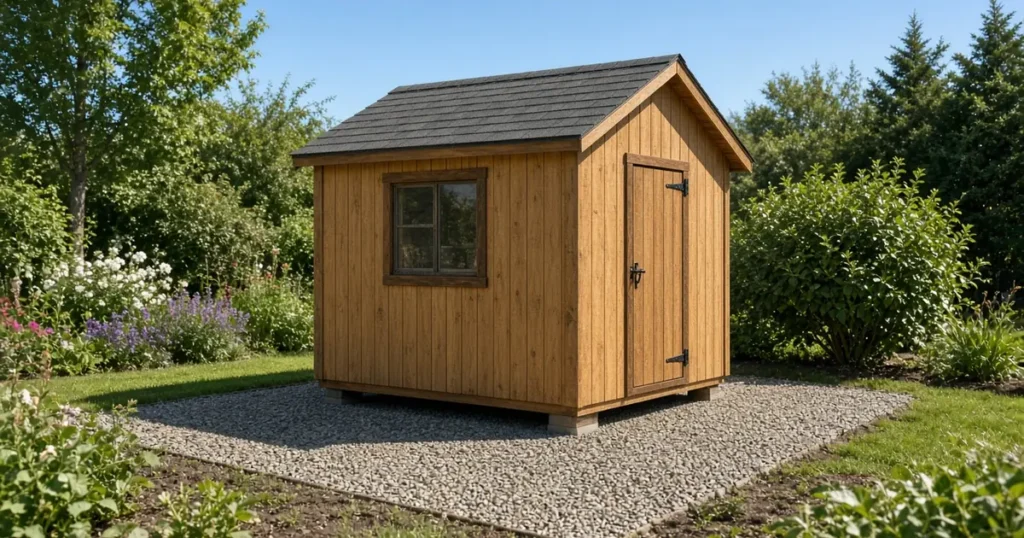
A garden shed foundation works only on a dry site, so start with drainage. University of Georgia Extension advises placing a shed in a well drained area, close to the ground but not touching it. Fix low, wet spots first with organic matter, raised soil or a drain, then build the base.
The short answer
Pick a well drained spot plus raise the shed floor just off the soil. University of Georgia Extension advises a site that is well drained, ideally with a little shade, plus a floor close to the ground without touching it. Utah State University Extension notes water pooling in a low spot signals a drainage problem.
Why does a shed need a dry site?
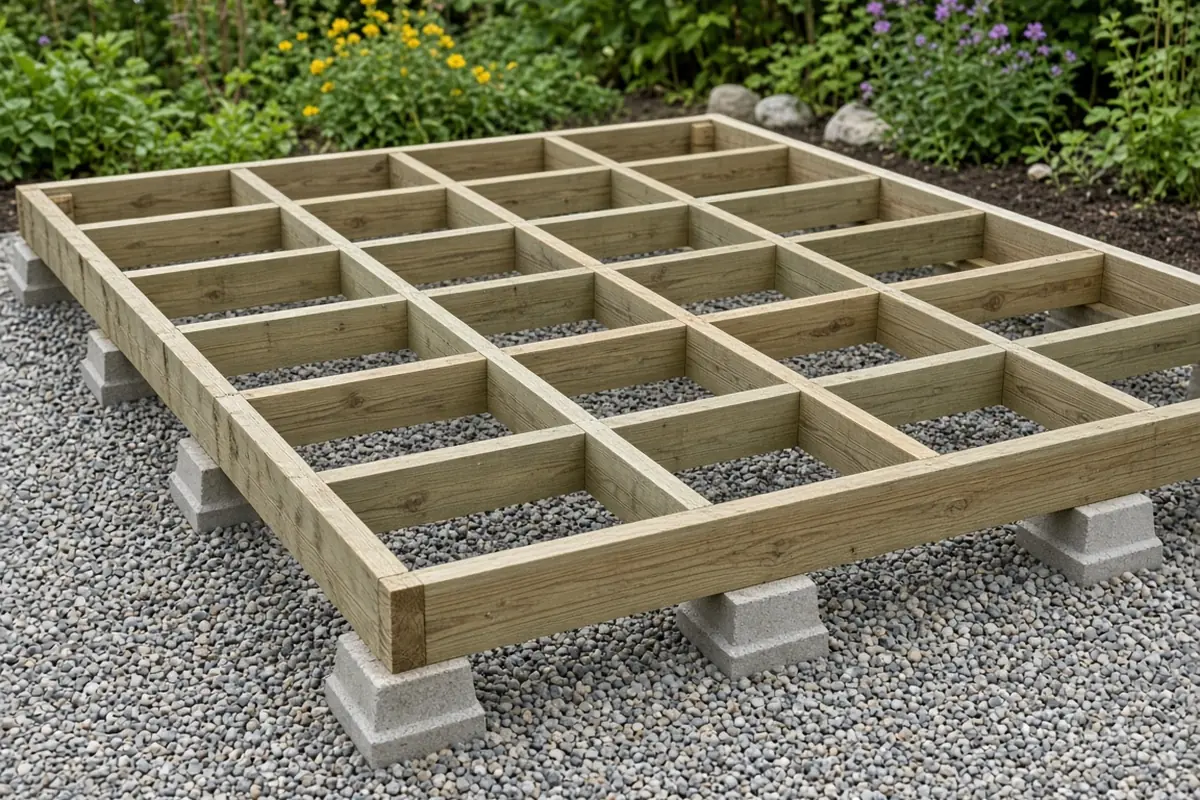
Wet ground rots floors. University of Georgia Extension lists rot resistant wood floors plus 2 by 6 floor joists among shed features to look for, plus advises a well drained site. Alabama Cooperative Extension System notes wet soil stays cold plus lacks oxygen, which shows why drainage comes first.
| Site problem | Fix | Source |
|---|---|---|
| Water pools in a low spot | Build up soil or a raised area | Utah State University Extension |
| Poorly drained clay | Add topsoil on the surface rather than digging deep | Alabama Cooperative Extension System |
| Excess water under the site | Install perforated pipe 12 to 18 inches deep | Utah State University Extension |
| Slow drainage | Work in organic matter | Alabama Cooperative Extension System |
| Shed touching soil | Set the floor close to but off the ground | University of Georgia Extension |
Source: Utah State University Extension, Alabama Cooperative Extension System plus University of Georgia Extension.
How do you spot a drainage problem?
Utah State University Extension notes most drainage problems show up when you inspect the soil. Very coarse or very fine soils drain poorly or too fast, compacted layers can be found with a probe, metal rod or shovel plus water pooling in a low spot or hole signals trouble. Water should drain within 24 hours.
How should the site be prepared?
Alabama Cooperative Extension System advises building up topsoil on poorly drained clay rather than digging deep, since a deep hole can act like a bathtub. Utah State University Extension notes a perforated drain pipe 12 to 18 inches below the surface can carry excess water to an open ditch.
How to: step by step
- Choose a well drained spot near the garden.
- Check for pooling after rain.
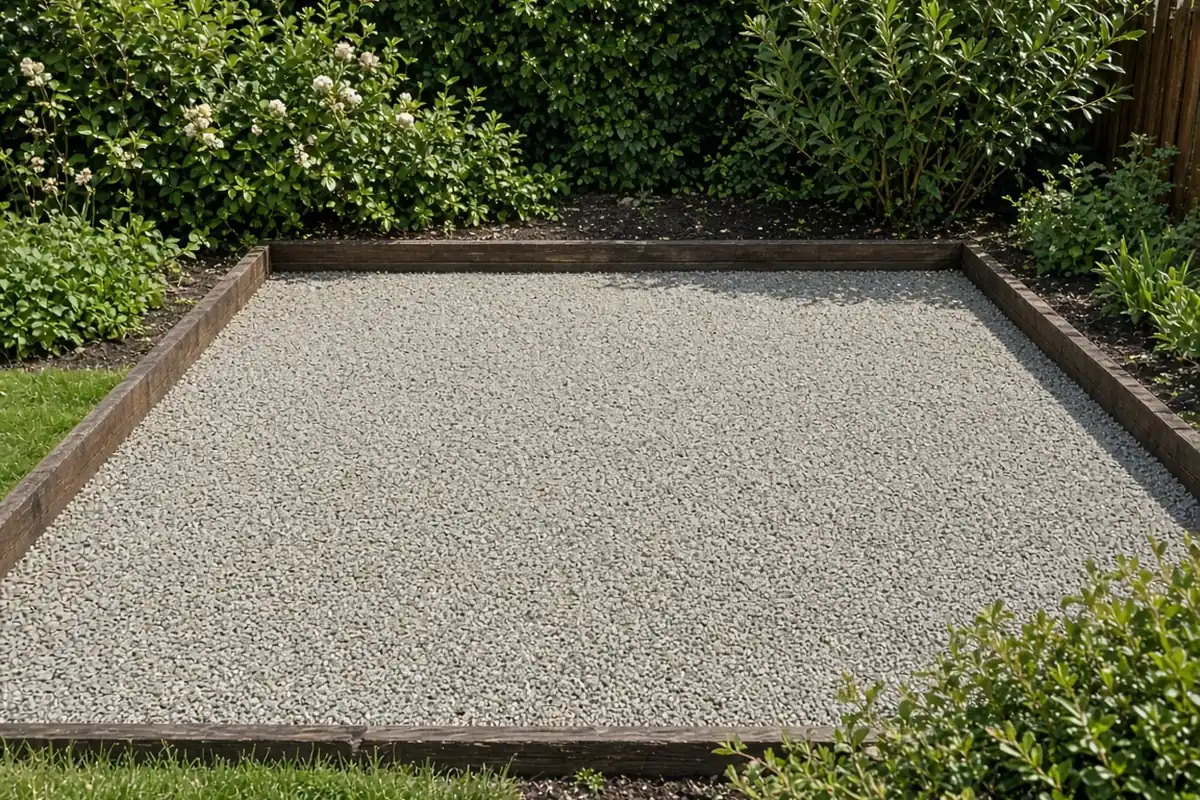
- Outline a footprint slightly larger than the shed.
- Remove sod plus level the soil.
- Build up low spots or add drainage.
- Check the base is level before setting the shed.
Troubleshooting
Shed floor rots: sits on wet soil. Raise the floor off the ground plus fix drainage.
Door sticks: base settled unevenly. Even the base.
Water pools around the shed: low site. Raise the soil or install a drain.
For related reading see planning an outdoor cannabis garden layout, soil drainage checks for cannabis beds plus garden microclimates for cannabis. Kind Seed Co also stocks cannabis seeds.
Sources
- Garden sheds (C1027 7), University of Georgia Extension
- A well drained soil, Alabama Cooperative Extension System
- Solutions to soil problems III: drainage, Utah State University Extension
FAQ
Do small sheds need a foundation?
Every shed needs a dry, level spot. University of Georgia Extension notes a shed should sit in a well drained area plus close to the ground without touching it. It adds that a tool locker or roof overhang can serve a new garden for the first year or two before a shed is bought.
Where should a garden shed go?
University of Georgia Extension advises placing a shed where both a delivery vehicle plus a gardener can reach it, in a well drained area with a little shade. It should open toward the garden. If the garden is fenced, the shed should sit inside the fence plus could form a corner.
How far off the ground should a shed sit?
University of Georgia Extension advises having the shed close to the ground but not touching it, for easy access with rolling tools. A raised floor can dry out. It lists rot resistant wood floors plus 2 by 6 floor joists among features that last.
What if the shed site is poorly drained?
Utah State University Extension notes organic matter improves drainage in fine textured soils, plus raised areas lift roots above poorly drained ground. Alabama Cooperative Extension System advises building up topsoil on clay rather than digging deep plus installing perforated pipe where there is a drainage outlet.
Is a ramp better than steps for a shed?
Yes. University of Georgia Extension notes a ramp works better than steps because the shed is used with wheelbarrows plus other rolling tools. It advises setting the shed close to the ground but not touching it, which makes the ramp short plus makes moving tools in plus out easier.



