
Why Small Tomatoes Happen: Heat, Water and Variety Causes
The short answer
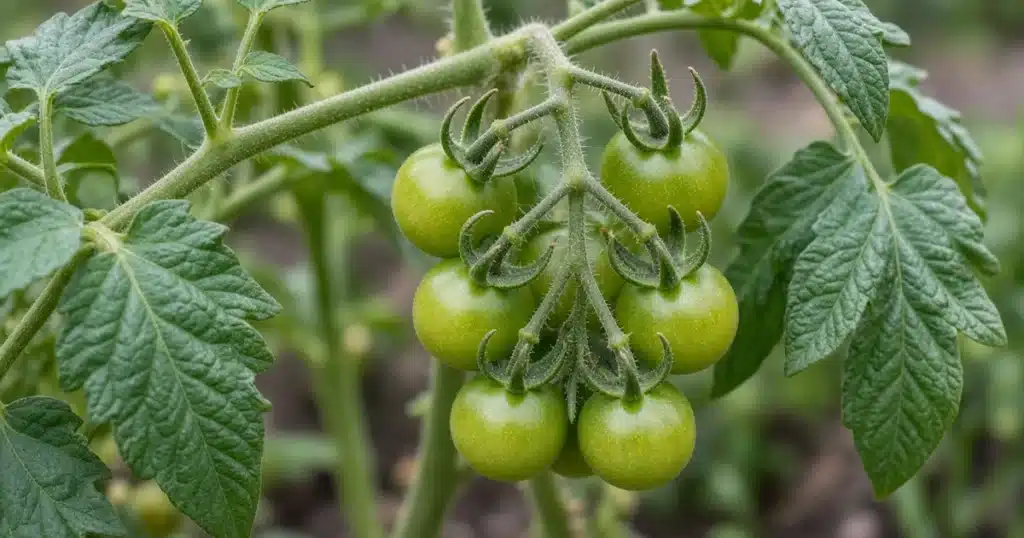
Small tomatoes usually come from a few common causes. Mississippi State Extension points to heat stress, drought, heavy fruit load and the variety itself. Poor pollination can also shrink fruit. Check your variety’s expected size first, then water deeply, mulch and help flowers set fruit during mild weather.
Few things disappoint like a beefsteak plant that gives golf ball fruit. The plant may look green and full, yet the tomatoes never size up. Usually, the cause is easy to spot.
Why are my tomatoes small?
Check the seed packet first, as some varieties are meant to be small. Cherry, grape, paste and many heirloom types never reach slicing size.
If the variety should be large, look at the season. Fruit size depends on water, heat, plant health and how much fruit the plant carries.
The Mississippi State University Extension guide to common tomato problems lists heat and drought as leading reasons for small fruit. Plants under stress shrink fruit to save resources.
A separate Mississippi State answer on why plants produce fruit that’s too small adds heavy fruit load and poor pollination to the list.
How do heat and water affect size?
Tomatoes are mostly water. A plant short on moisture can’t fill its fruit.
Water deeply about one to two inches a week, more in hot, windy weather. Water at the base and soak the root zone. Our post on watering during drought covers deep watering when rain is short.
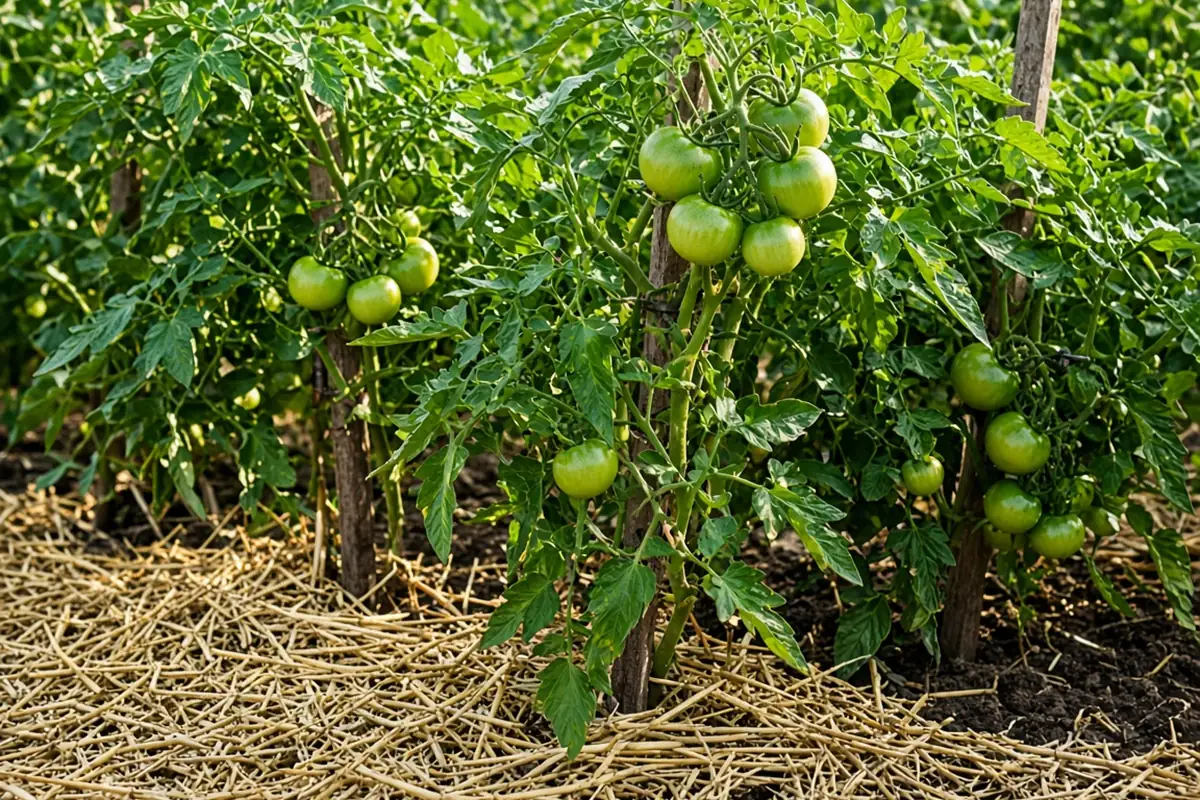
Mulch holds moisture and cools roots. Straw or shredded leaves two to three inches deep work well. Our post on mulch compares common types.
Heat is the other big factor. Days above the low 90s and warm nights slow fruit growth. They reduce pollen quality, so fewer seeds form and fruit stays small.
Our post on heat stress shows the signs and ways to cool plants.
| Cause | What you notice | What to do |
|---|---|---|
| Variety | Fruit matches the packet size | Choose a larger type |
| Drought | Wilting, small fruit | Water deeply and mulch |
| Heat | Fruit stalls in midsummer | Shade during heat waves |
| Heavy fruit load | Many small fruit on one plant | Thin clusters or prune |
| Poor pollination | Small, oddly shaped fruit | Shake flower clusters |
Sources: Mississippi State University, University of Alaska Fairbanks.
Does pollination change fruit size?
Yes. Tomato fruit size depends partly on how many seeds develop inside, and each seed sends signals that help the fruit grow.
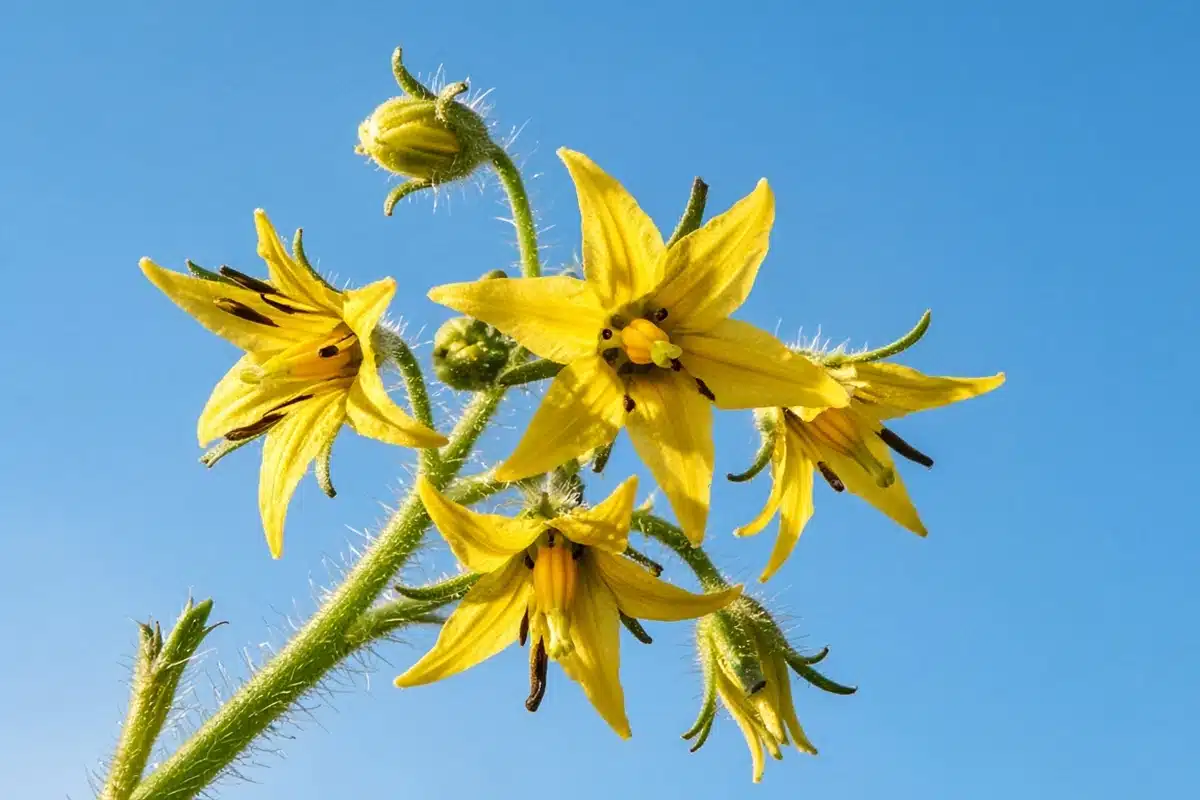
Poorly pollinated flowers give small or lopsided fruit. Some drop off without setting at all.
The University of Alaska Fairbanks guide to tomato pollination and fruit development explains that tomato flowers pollinate themselves with help from wind or vibration. Bumblebees shake pollen loose as they visit.
In still air, greenhouses or tunnels, help the process. Tap or gently shake flower clusters around midday, when pollen sheds most freely.
Pollination is most reliable in mild temperatures and moderate humidity. Very hot or humid weather makes pollen sticky or weak.
Can fruit load shrink tomatoes?
A plant with dozens of fruit at once must share water and sugar among them. Each tomato ends up smaller.
Large fruited varieties often size up better with fewer fruit per cluster. Some gardeners thin clusters to three or four fruit.
Pruning suckers on staked plants limits fruit load. Fewer stems mean fewer clusters and larger fruit on each.
Caged plants with many stems give more fruit overall. Expect each one to be somewhat smaller.
How to: step by step
- Check the expected fruit size of your variety.
- Water deeply and evenly.
- Mulch to hold soil moisture steady.
- Shade plants during extreme heat.
- Support pollination by gently shaking flower clusters.
- Feed based on a soil report.
Does feeding play a part?
Plants need balanced nutrition to size up fruit. Low potassium or phosphorus can limit fruit growth.
Too much nitrogen pushes leaves over fruit. You get a big green plant and small, late tomatoes.
A soil report from your local Extension office shows what your bed lacks. Feed to match it instead of guessing.
Troubleshooting
Every fruit small on every plant. Check the variety and your watering schedule first.
Small fruit only in midsummer. Heat slowed growth. Later fruit often sizes up as nights cool.
Lopsided, small fruit. Pollination was poor. Shake flowers and improve air flow.
Huge plant, small fruit. Nitrogen is likely high. Cut back next season.
Container plants with small fruit. Pots dry out fast. Use a larger pot and water daily in summer.
Steady water and mild weather at bloom give the biggest fruit. Kind Seed Co shares more garden ideas in outdoor growing.
Sources
- Common problems with tomatoes (P2975), Mississippi State University Extension, Common problems with tomatoes (P2975)
- Why do the plants produce fruit that are too small?, Mississippi State University Extension, Why do the plants produce fruit that are too small?
- Pollination and fruit development in tomatoes, University of Alaska Fairbanks Cooperative Extension, Pollination and fruit development in tomatoes
FAQ
Does pruning make tomatoes bigger?
Pruning staked plants limits fruit load, which often gives larger fruit.
Do cherry tomatoes count as small?
Yes. Cherry types are bred to be small and are not a problem.
Can too much fertilizer shrink fruit?
Too much nitrogen favors leaves and can give smaller, later fruit.
Do container tomatoes stay smaller?
They can. Small pots dry quickly, so choose larger pots.
Will small tomatoes ripen normally?
Yes. Small fruit ripens and tastes fine in most cases.



