
Hosta Leaves Turning Brown? Sun Scorch plus Dry Soil
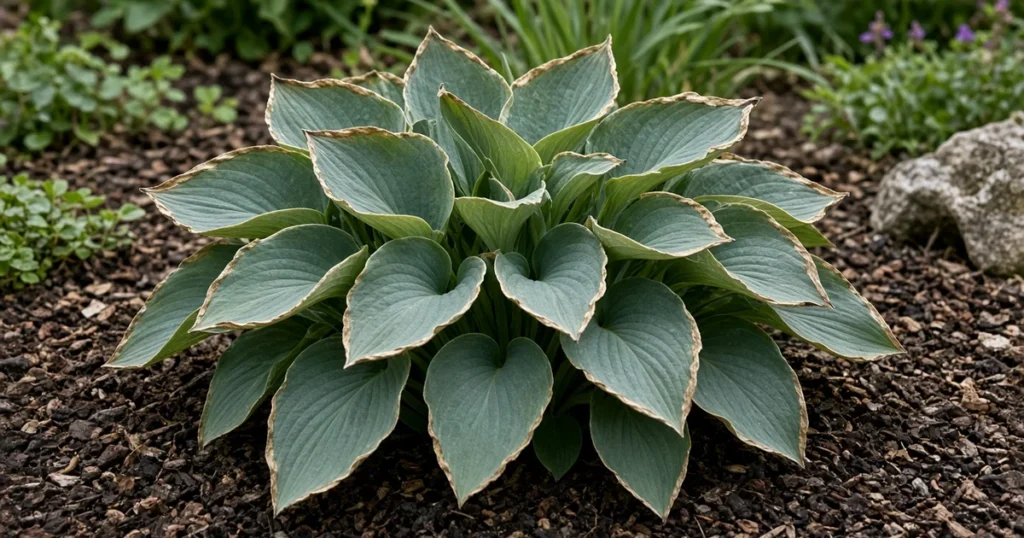
Hosta leaves turning brown along the edges in summer usually have leaf scorch from hot dry weather, too much sun or dry soil. Purdue Plant and Pest Diagnostic Lab notes even sun tolerant hostas can scorch in hot dry weather in full sun. Water deeply plus give more shade where browning starts.
The short answer
Brown crispy edges in summer point to leaf scorch. South Dakota State University Extension notes scorch comes from heat, wind plus low soil moisture. University of Minnesota Extension advises about 1 inch of water a week plus a shadier spot. Brown leaves in late fall are normal dieback before dormancy.
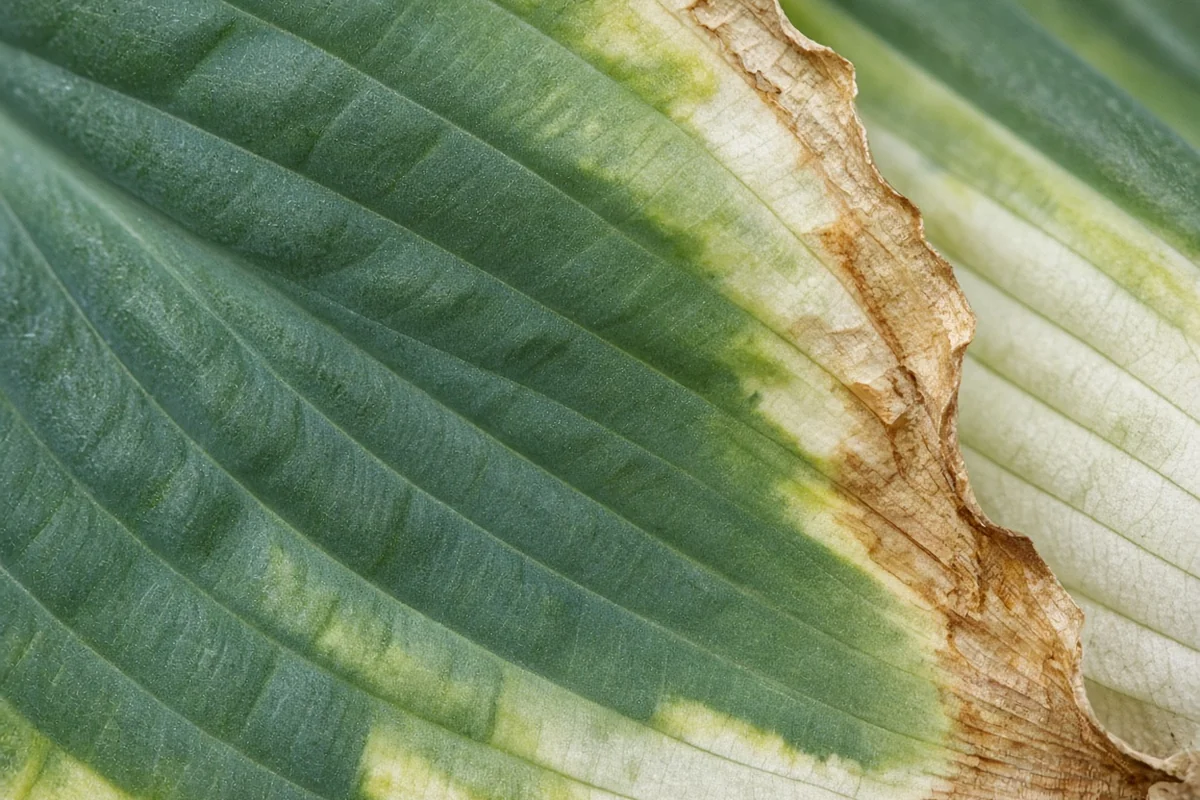
Why do hosta edges turn brown in summer?
South Dakota State University Extension notes heat, high wind plus low soil moisture pull water out through the leaves faster than roots replace it, so damage starts at the edges. Scorch is more about water movement than direct sun, so shaded hostas can still scorch near 100F.
| Factor | Guideline | Source |
|---|---|---|
| Water | About 1 inch per week | University of Minnesota Extension |
| Deep shade | Less than 4 hours of sun | University of Minnesota Extension |
| Gold hostas | 2 to 3 hours of morning sun | University of Minnesota Extension |
| Mulch | 2 to 4 inch layer | University of Minnesota Extension |
| Fall dieback | 28F or below | NC State Extension |
Source: University of Minnesota Extension plus NC State Extension.
How much sun can hostas take?
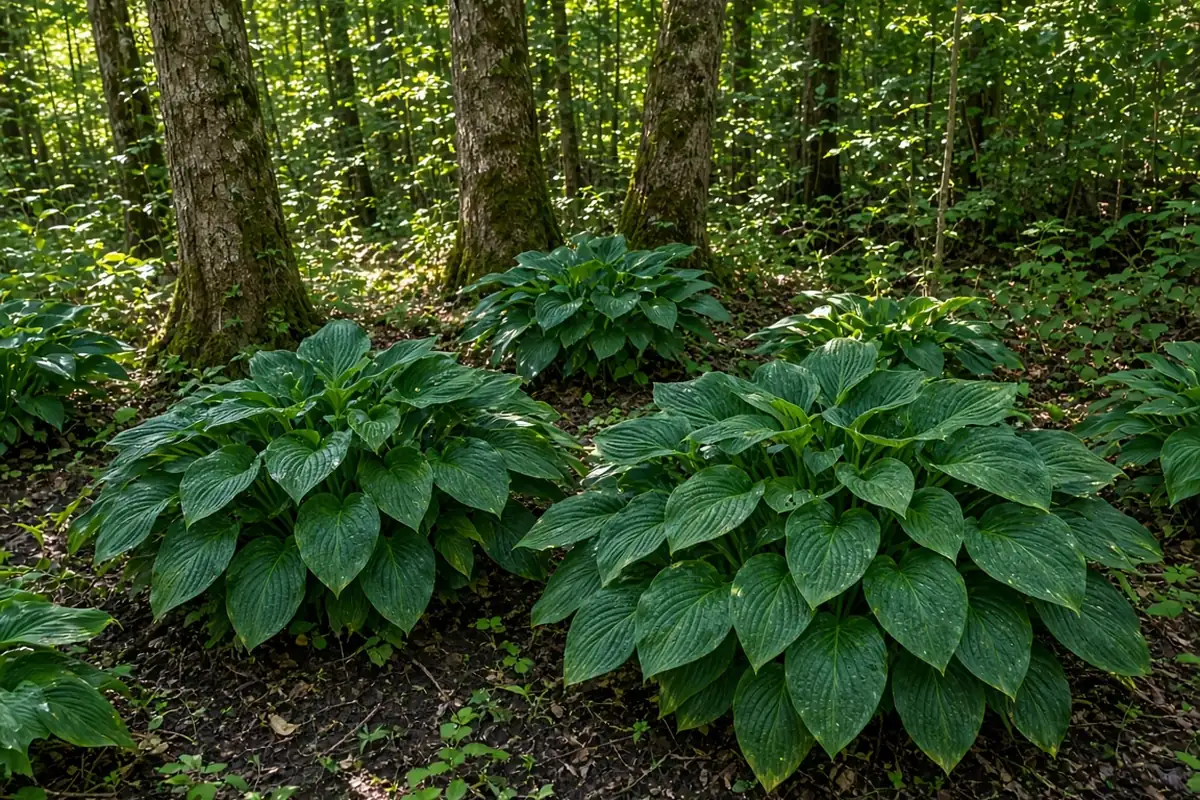
University of Minnesota Extension notes hostas thrive in filtered or dappled shade for much of the day plus survive in deep shade with less than 4 hours of sun. Yellow plus gold hostas color up with 2 to 3 hours of morning sun. NC State Extension notes hostas do well in morning sun.
How should hostas be watered?
University of Minnesota Extension advises even moisture of about 1 inch of water per week, with deep infrequent watering over frequent shallow sprinkles. Hostas in dry shade, sun or under shallow rooted trees may need more. A 2 to 4 inch mulch layer holds moisture, set away from the crown.
How to: step by step
- Note whether browning is on the edges or in spots.
- Gauge how much afternoon sun reaches the plant.
- Soak the base deeply in dry weather.
- Spread 2 to 4 inches of mulch away from the crown.
- Move the plant to more shade in fall or spring.
- Rake dead leaves away in late fall.
Troubleshooting
Crispy brown edges in summer: leaf scorch. Water plus add shade.
Bleached patches then browning: sunburn. Shift it somewhere shadier.
Whole plant browns in late fall: normal dieback. Nothing to do.
For related reading see the effects of environmental stresses on weed plants, cannabis heat stress plus watering cannabis during drought. Kind Seed Co also stocks cannabis seeds.
Sources
- Leaf scorch and sunburn on hosta, Purdue Plant and Pest Diagnostic Lab
- Leaf scorch and sunscald in the garden, South Dakota State University Extension
- Hostas, University of Minnesota Extension
- Hosta, NC State Extension Gardener Plant Toolbox
FAQ
Will scorched hosta leaves turn green again?
No. South Dakota State University Extension notes scorched tissue does not recover, though minor damage will not kill the plant. Scorched leaves still make food for new leaves plus shade new growth. The plant perks up once fresh leaves emerge, plus older scorched leaves can be removed then.
Are some hostas more sun tolerant?
Yes. Purdue Plant and Pest Diagnostic Lab notes some cultivars tolerate considerable sun, though even these can scorch in hot dry weather in full sun. University of Minnesota Extension notes gold hostas like some morning sun, while blue hostas need more shade. Green types accept partial shade, per NC State Extension.
Do hostas need water every day?
No. University of Minnesota Extension advises about 1 inch of water per week, with deep infrequent watering preferred over frequent shallow watering. Hostas planted in summer need more water until roots settle in. Plants in sun, dry shade or under shallow rooted trees such as maples may need extra water.
Should brown hosta leaves be cut off?
Not right away. South Dakota State University Extension advises against removing scorched leaves, since they shade new growth plus green tissue still makes food. Once new leaves emerge, scorched leaves can be gently removed. University of Minnesota Extension advises raking up dead leaves in late fall to cut down on disease plus pests.
Why do blue hostas scorch more easily?
University of Minnesota Extension notes blue hostas have a waxy leaf coating plus need a shadier site to avoid leaf burn plus bleaching. NC State Extension notes blue leaved forms are reported to need deep shade, while green types accept partial shade. Place blue hostas where they miss afternoon sun.



