
How to Landscape a Side Yard: Paths Plus Shade Plants
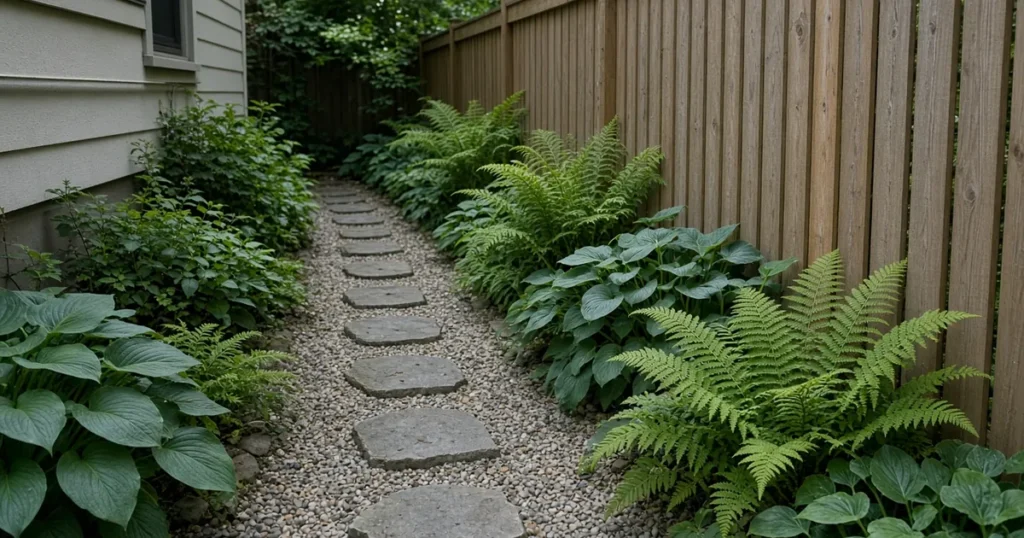
Knowing how to landscape a side yard starts with the path plus the light. A side yard is often a narrow strip next to the house. Mississippi State University Extension notes that areas next to houses are often shaded for part of the day.
The short answer
Lay a clear path sized for how people will use it. Watch how light moves across the strip through the day. Then choose plants suited to that level of shade. Mulch bare soil to hold moisture plus slow weeds, as NC State Extension suggests for shade gardens.
How wide should a side yard path be?
NC State Extension groups paths by use. A path for one person can be 1 to 2½ feet wide. Paths that link to the main entrance path can be 2½ to 3 feet wide. A clearly defined walking surface such as brick shows people where to walk.
How much shade does a side yard get?
Shade changes with the season plus the time of day. NC State Extension notes that a spot that looks shady in the morning might get bright afternoon sun. University of Maryland Extension notes that the north side of a building casts full shade.
| Section | Sun | Plant choice |
|---|---|---|
| North side of the house | Full shade | Plants that handle deep shade |
| Part shade side | Sun for part of the day | A broader range of flowering plants |
| Morning shade plus afternoon sun | Hot afternoon light | Forest edge species rather than interior woodland plants |
Source: University of Maryland Extension plus Mississippi State University Extension.
Which plants suit a shady strip?
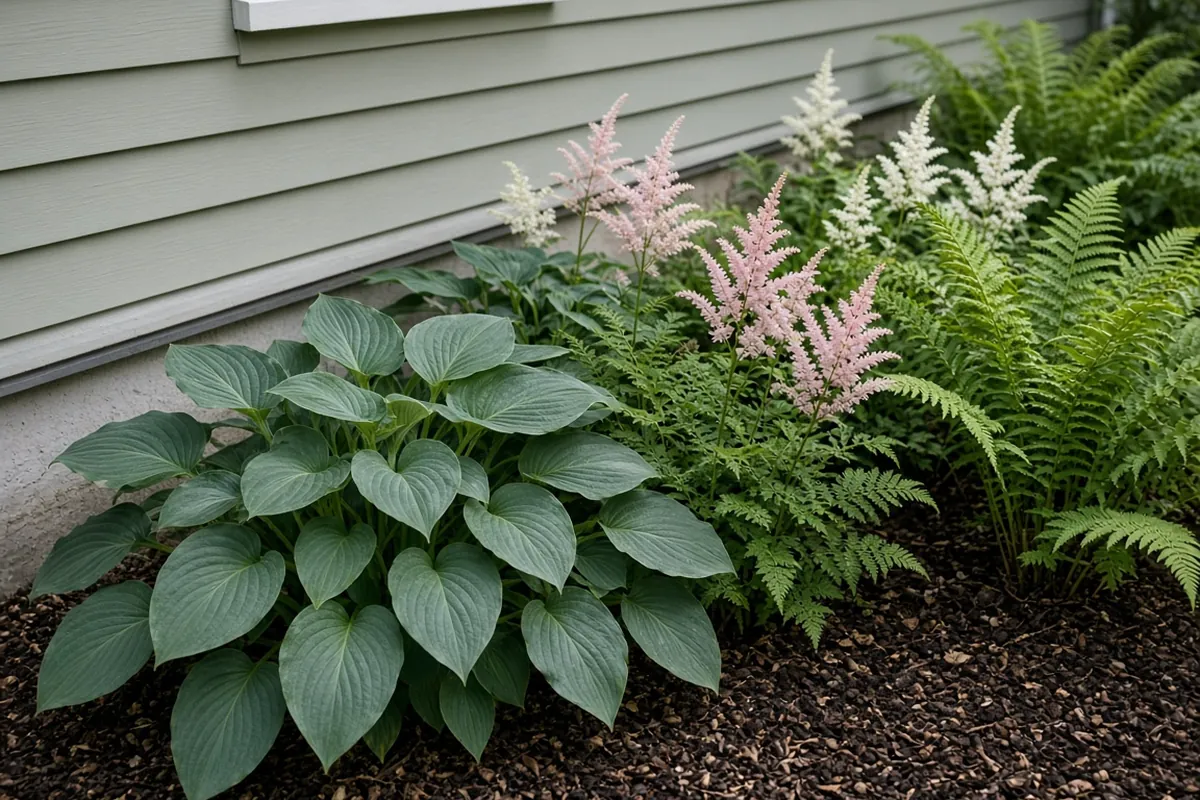
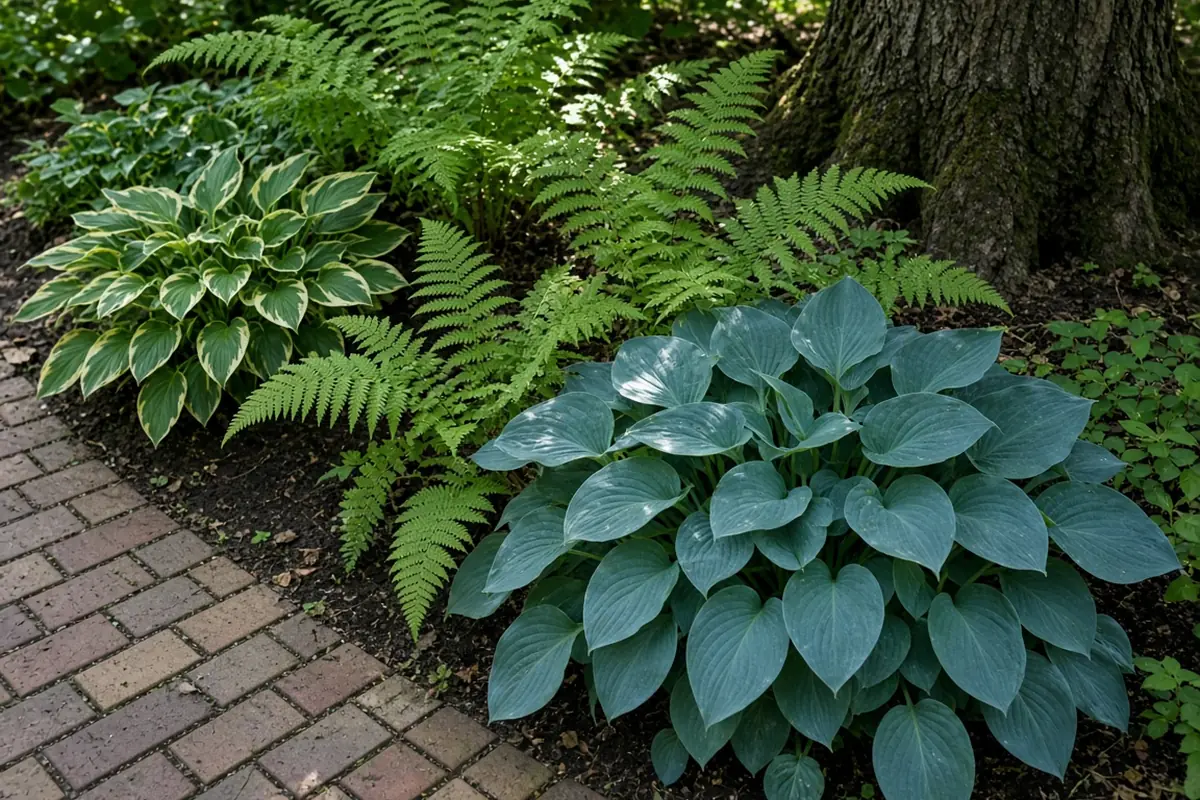
Mississippi State University Extension notes that few shade plants bloom all season. Plants with contrasting leaf size, texture plus color can carry interest instead. It names ferns, groundcovers plus perennials as useful for variety. NC State Extension lists coral bells, columbine plus Christmas fern among shade plants.
How to: step by step
- Mark where people need to walk through the side yard.
- Fit the path to its use.
- Track the light through the day plus the seasons.
- Pick plants for the shade level of each section.
- Vary leaf size, texture plus color.
- Mulch open soil between plants.
Troubleshooting
People cut across the beds: path not clearly defined. Use a distinct walking surface such as brick.
Shade plants scorch: afternoon sun on a morning shade spot. Choose forest edge species.
Plants struggle under trees: roots compete for water. NC State Extension notes that even shade plants need steady moisture.
For related reading see planning a garden layout, mulch for beds plus growing near trees. Kind Seed Co also stocks cannabis seeds.
Sources
- Successful shade gardens, Mississippi State University Extension
- Shade gardening, beauty beyond the sun, NC State Extension Sampson County
- Extension Gardener Handbook chapter 19, NC State Extension
- Native plants for shade, University of Maryland Extension
FAQ
What grows on the north side of a house?
University of Maryland Extension notes that the north side of a building casts full shade, so look for plants that tolerate deep shade. Mississippi State University Extension adds that dense shade calls for plants that handle continuous low light. Drought tolerant shade plants suit low maintenance areas, according to the same source.
Can a side yard have flowers?
Yes, in lighter shade. Mississippi State University Extension notes that light shade or half shade areas allow a broader range of flowering plants. Full sun plants still bloom if they get six to eight hours of direct sun. Impatiens plus begonias give summer color in shade but need frequent watering.
Should native plants be used?
They can be. University of Maryland Extension suggests planting locally native plants in shade gardens to support pollinators plus songbirds. It notes that plants found on hilltops often suit dry shade better than plants from moist valleys. Choosing these lowers the need for watering in a dry side yard.
Why mulch a side yard bed?
NC State Extension notes that mulching helps conserve soil moisture while suppressing weeds. Covering the soil with groundcovers or organic mulch also improves appearance plus mimics natural forest floors. Shade plants still need steady moisture, especially where trees compete with them for water plus nutrients.
How can a narrow space feel larger?
NC State Extension notes that tapering walkways or plantings toward a vanishing point can create an illusion of distance. Using fewer plant types also helps, since too many varieties distract from a single visual theme. Repeating one plant along a path, such as lavender, is an example of unity.


