
How to Landscape a Small Backyard: Zones Plus Layers
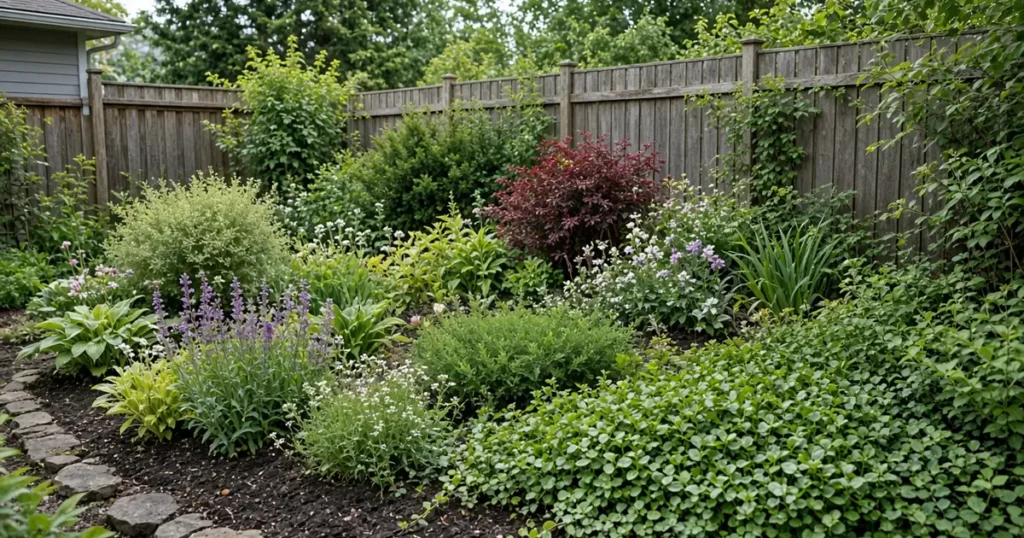
Knowing how to landscape a small backyard starts with deciding how each part of the yard will be used. University of Missouri Extension describes the private area behind the house as a space that needs privacy plus enclosure. NC State Extension adds that certain design choices can make a small space seem larger.
The short answer
Sketch the yard into use areas first, as University of Missouri Extension suggests. Screen views with shrubs, a fence or vines on trellises. Use one bold focal point plus fine textured gray plants at the edges to make the space feel larger. Check the mature size of every plant.
How should a small backyard be divided?
By use. University of Missouri Extension suggests sketching major use areas on tracing paper over a base plan. The private area, generally behind the house, should feel functional, comfortable plus attractive.
The service area should sit out of view from the front but still have easy access. Shrubs or fencing often provide privacy screening for the private area.
How can a small yard feel bigger?
NC State Extension notes that a bold accent in the center of a space can draw the eye plus make the space seem larger. Overhead tree canopies make a space feel smaller.
Color plus texture help too. Distant objects look fine textured plus gray, so gray, fine textured plants at the boundary expand the apparent distance.
| Goal | Approach | Why it works |
|---|---|---|
| Privacy | Vines on trellises | Screens without wide shrubs |
| More depth | Gray, fine textured edge plants | Mimics distant objects |
| Focus | One bold central accent | Draws the eye inward |
Source: NC State Extension plus University of Missouri Extension.
How do layers fit in?
NC State Extension describes three planes of space: horizontal, vertical plus overhead. As these change, the way people experience the space changes.
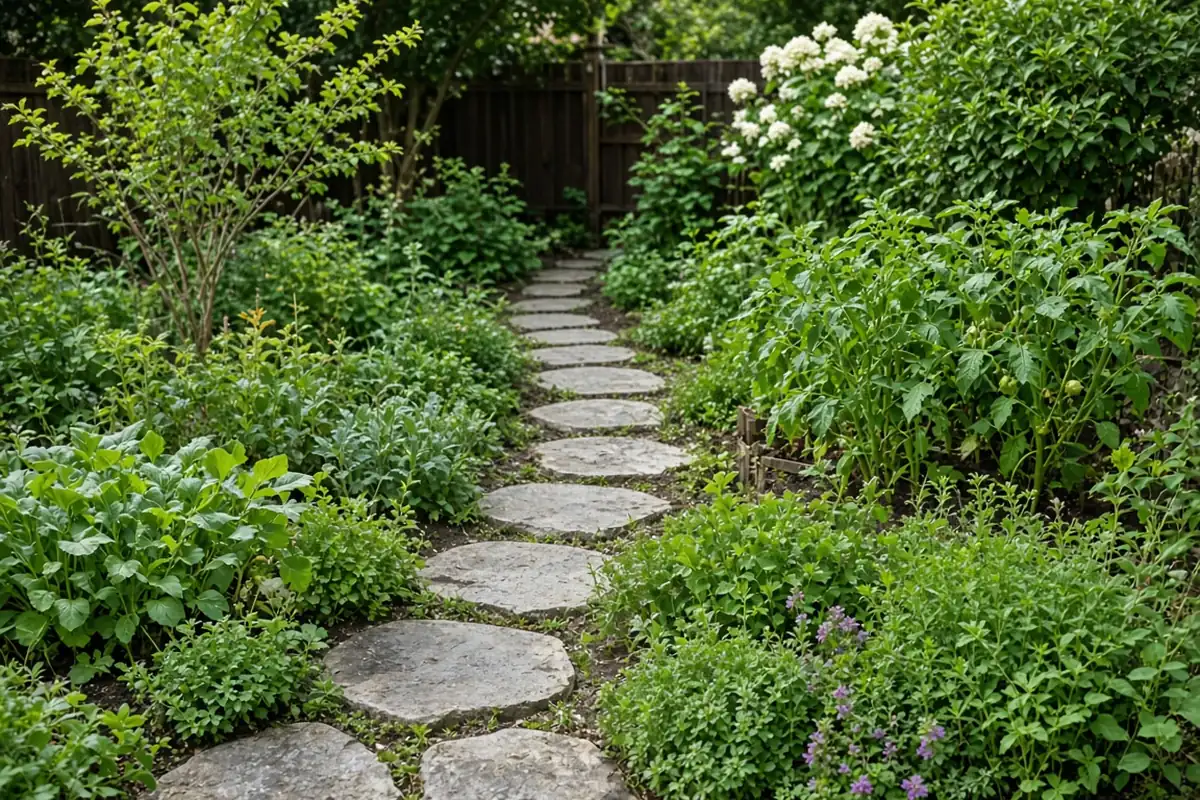
In tight spaces, the vertical plane does a lot of work. NC State Extension notes that vines on trellises create effective screens in tight spaces. UC Master Gardeners list walls, fences, trellises plus hanging planters as small space options.
How to: step by step
- Sketch a base plan of the yard.
- Outline use areas on tracing paper over it.
- Screen views with a fence or vines on trellises.
- Set one bold accent near the center.
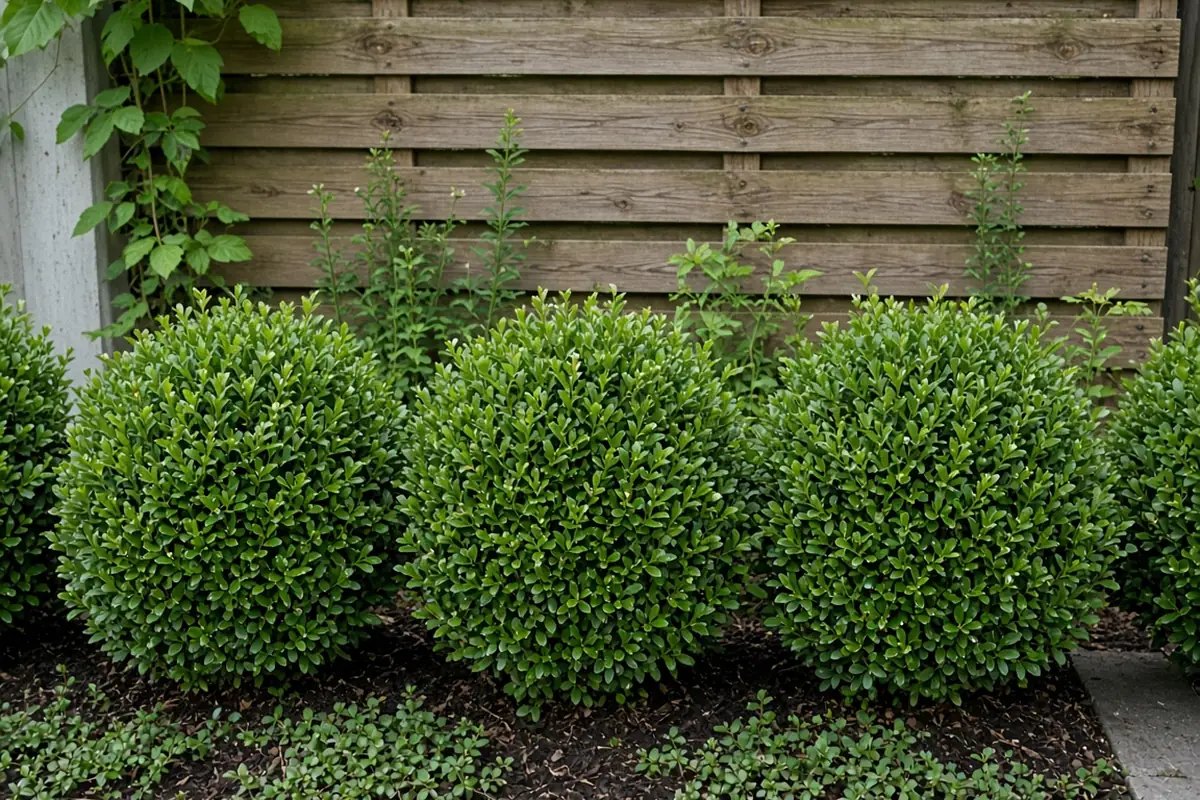
- Pick plants by their mature height plus spread.
Troubleshooting
Yard feels boxed in: a shrub border around grass. NC State Extension notes this makes a space appear confined.
Plants crowd the house: wrong mature size. LSU AgCenter suggests beds 6 to 9 feet wide from the home.
Bare look in winter: all deciduous plants. LSU AgCenter suggests making about half of the selections evergreen.
For related reading see planning a garden layout, square foot gardening plus garden microclimates. Kind Seed Co also stocks cannabis seeds.
Sources
- Extension Gardener Handbook chapter 19, NC State Extension
- Home design plans, University of Missouri Extension
- Designing and planting foundation beds, LSU AgCenter
- Gardening in small spaces, UC Master Gardeners of Orange County
FAQ
How do I add privacy to a small yard?
NC State Extension suggests evergreen shrubs or a fence to screen views, block noise or add privacy. If room plus time allow, a natural evergreen hedge is a good option. In tight spaces, vines on trellises create effective screens without taking up much ground in the yard.
What makes a small yard look smaller?
Some common choices do. NC State Extension notes that overhead tree canopies or structures make a space feel more confined. A lawn surrounded by a shrub border also brings the eye to a boundary plus makes the space appear confined. Plan open views plus a central accent instead.
How do I choose plants for a small backyard?
Start with mature size. NC State Extension advises considering both the mature height plus spread before adding a plant. If the full grown size is too large, a plant can overwhelm the design. University of Missouri Extension adds that large shrubs plus trees may dwarf a small house.
Can I grow vegetables in a small backyard?
Yes. UC Master Gardeners of Orange County note that even a small deck, patio or balcony can become a productive garden. Small spaces need fertile soil, good sun plus appropriate watering, just like larger plots. Raised beds, containers plus trellises all suit limited space well.
Should every part of the yard draw attention?
No. University of Missouri Extension notes that not everything should be of equal interest. It suggests creating a center of interest with specimen plants, pools or statuary. It also advises against building a botanical collection, plus suggests balancing so no area is far more planted than another.



