
How to Landscape a Split Level Yard: Terraces Plus Plants
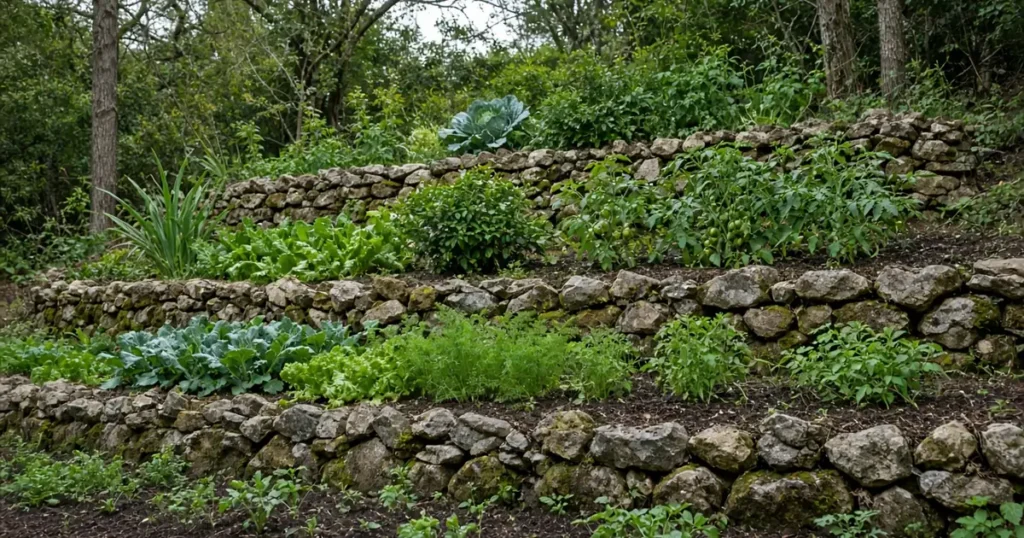
Here is how to landscape a split level yard. Break the grade change into shorter terraces with low walls, then plant the banks with layered trees, shrubs and ground covers. Mississippi State University Extension says terraces reduce erosion by breaking a long slope into shorter, more even steps. Mulch every bare area.
The short answer
Use terraces, low walls and layered plants. Mississippi State University Extension says terraces break a long slope into shorter steps and suggests homeowners limit walls to a foot or two high. Iowa State University Extension says layers of trees and shrubs with ground covers underneath hold a slope more effectively than ground cover alone.
How should walls link the levels?
Mississippi State University Extension says terraces are built by a cut and fill method. Soil is removed to form a flat area, then used to fill a low area.
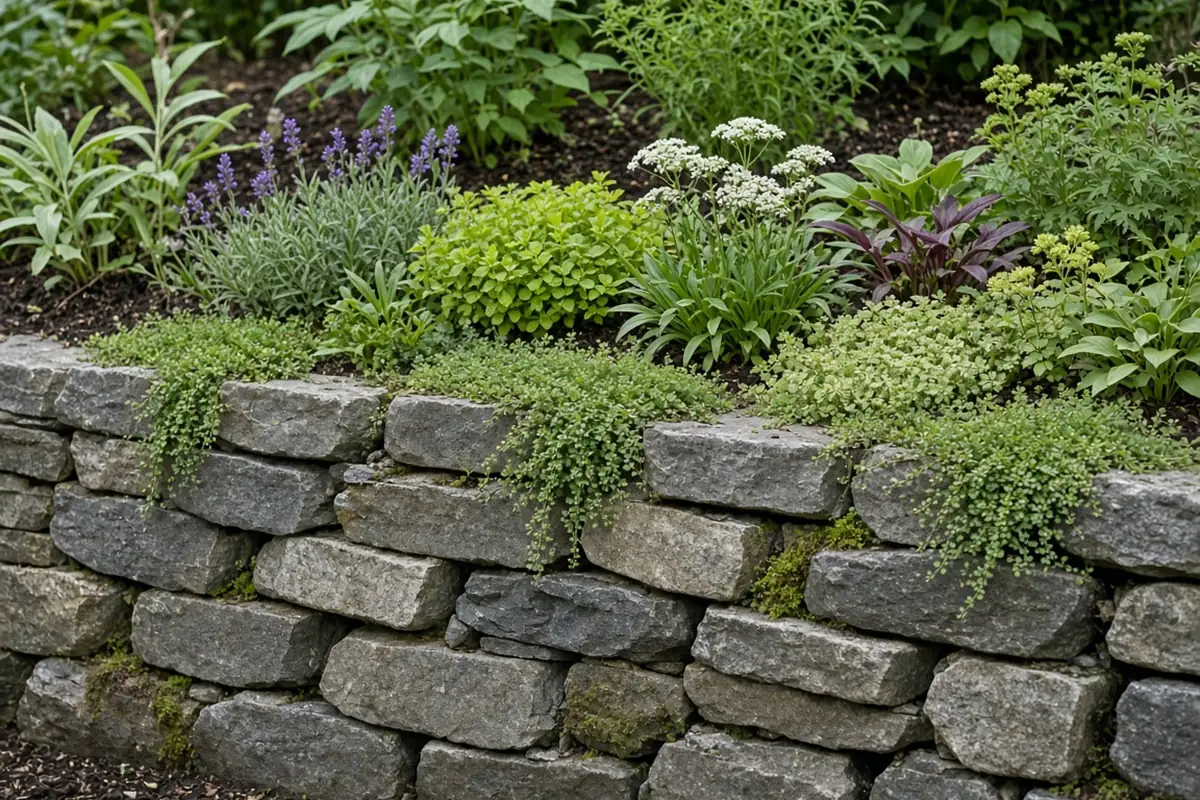
Walls can be brick, rocks, concrete block plus other masonry. Masonry and stone cost more than wood but more than make up for it in longevity.
Iowa State University Extension lists retaining walls, boulders, field stones, bricks or timbers for terracing. Flat areas slow runoff and provide planting zones.
Walls or planted banks?
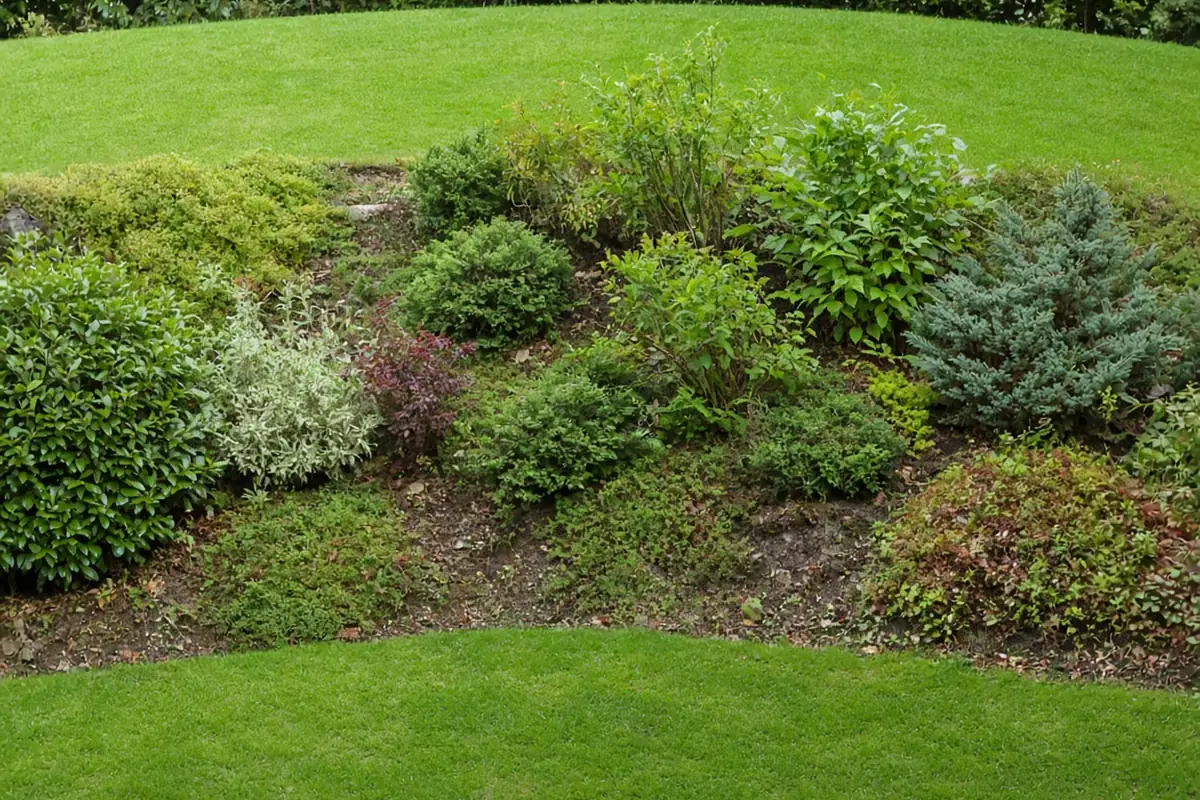
Mississippi State notes that lawngrass binds soil on steep slopes but does a poor job of slowing runoff. Taller grasses, wildflowers, shrubs plus trees slow water much better.
Iowa State University Extension says ground covers cover the soil well. Layers of woody plants with perennials and ground covers underneath can be even more effective.
Varying root systems, from large and deep to small and fibrous, help hold soil in place more effectively, Iowa State adds. University of Missouri Extension notes that lawn is not a good choice on steep slopes.
| Option | Role | Source note |
|---|---|---|
| Low terrace wall | Breaks the slope | Homeowner walls a foot or two high |
| Layered plantings | Hold soil | Trees and shrubs over ground covers |
| Meadow plants | Slow runoff | Better than lawn on sunny slopes |
| Shredded bark mulch | Covers soil | Less likely to wash downhill |
Source: Mississippi State University Extension plus Iowa State University Extension.
How do beds soften the change?
Iowa State University Extension suggests a thick layer of mulch around plants to retain moisture and suppress weeds. Shredded bark plus leaf mold are less likely to wash downhill than bark chips or river rock.
When planting on a bank, set the root ball level with the upper side of the hill. Then heap soil on the lower side to cover it.
NC State Extension notes that people risk tripping when an elevation change is one step or less. Clearly mark any single step or plan for at least two.
How to: step by step
- Measure the rise over run of the slope.
- Spot gullies or other signs of erosion.
- Plan terraces with walls a foot or two high.
- Cut and fill to create flat planting areas.
- Plant layered trees, shrubs and ground covers.
- Mulch with shredded bark or leaf mold.
Troubleshooting
Soil washing down the slope: bare ground. Plant or mulch.
Gullies forming: runoff. Slow or redirect surface water.
Mulch sliding off: round mulch. Use shredded bark.
For related reading see planning an outdoor cannabis garden layout, soil drainage check for cannabis beds plus mulch for cannabis. Kind Seed Co also stocks cannabis seeds.
Sources
- Gardening on slopes plus hillsides, Iowa State University Extension plus Outreach
- Gardening on steep slopes, Mississippi State University Extension
- Extension Gardener Handbook, chapter 19, NC State Extension
- University of Missouri Extension MG11
FAQ
How tall can a garden wall be?
Mississippi State University Extension suggests homeowners building their own walls limit the height to just a foot or two. There is a tremendous amount of water and soil pressure behind a retaining wall. Larger walls need proper equipment, drainage plus expertise from a qualified designer.
Can a slope be planted instead of walled?
Yes. Mississippi State University Extension says trees and shrubs create a network of roots that binds soil and slows rushing water. An open sunny meadow controls erosion better than lawn. Prostrate junipers, ivies, rugosa rose plus sedums tolerate full sun on slopes.
Which plants hold a shady slope?
Mississippi State University Extension suggests shade tolerant shrubs or shade ground covers. Partridgeberry, wood fern, phlox, ivies plus Asian jasmine are among the options it names. A thick carpet of fallen leaves can also break the force of raindrops and slow erosion.
How steep is a steep slope?
Mississippi State University Extension defines steep slopes as land rising more than twenty percent. That is two feet of elevation change for every ten feet of walking area. Slopes under twenty percent are usually more stable and easier to maintain, depending on soil type.
How can levels feel connected?
NC State Extension notes that steps and paths moving up or down change how people experience a space. Plan the point where someone steps up to a new height. University of Missouri Extension adds that paved walks should not be steeper than a 5 percent slope.



