
How to Plant a Formal Garden: Symmetry Plus Hedges
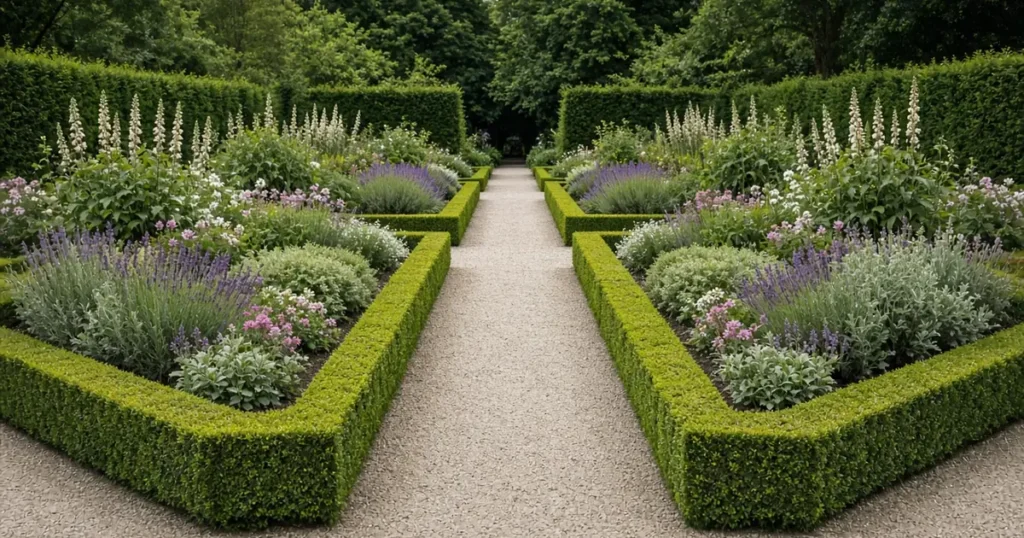
Here is how to plant a formal garden. Draw a center line, mirror the beds and plants on both sides and frame them with sheared hedges. NC State Extension says symmetry is commonly seen in formal gardens. Iowa State University Extension explains that formal hedges need regular pruning and a top narrower than the base.
The short answer
Build on symmetry and sheared hedges. NC State Extension describes symmetrical balance as everything on one axis, duplicated or mirrored on both sides. Iowa State University Extension says to space formal hedge shrubs 1 to 2 and a half feet apart for dense growth. Prune so the top is narrower than the bottom.
Why does symmetry define a formal garden?
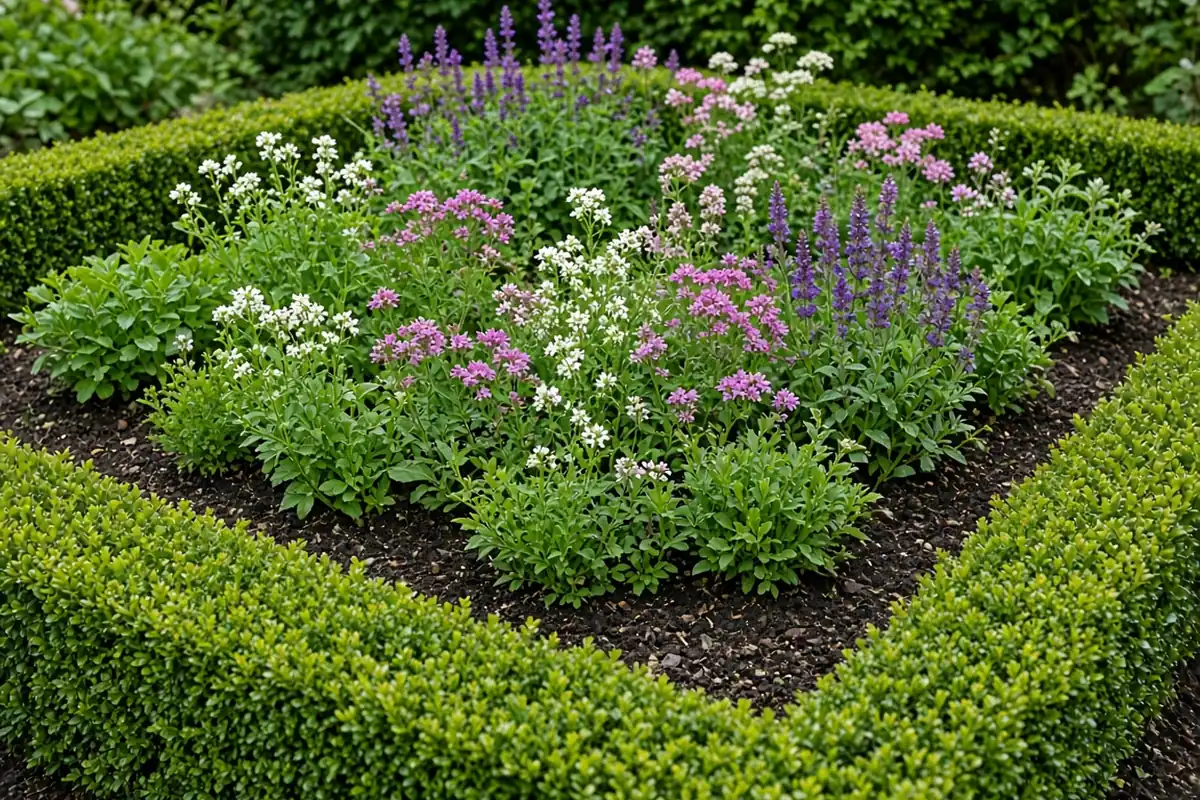
NC State Extension says symmetrical balance is a formal balance with everything on one axis, mirrored on both sides. Symmetry is commonly seen in formal gardens.
University of Missouri Extension adds that if a line were drawn down the middle, each side would have identical placement and choice of plants. It finds symmetry reasonably easy to achieve.
Missouri notes symmetry suits houses that are traditional or formal in character, such as a front door in the middle. Asymmetry feels more casual and needs more planning.
Which hedges frame beds?
Iowa State University Extension lists barberry, boxwood, inkberry plus alpine currant for small formal hedges under 5 feet. Privet, lilac, yew plus arborvitae suit tall hedges over 5 feet.
Learn the natural growth habit and height of each species, the same source says. Trying to hold a privet hedge under 3 feet is frustrating because it grows so quickly.
Iowa State also notes that single species hedges look consistent but show gaps if one plant dies. Insect or disease problems can move through the whole planting.
| Hedge type | Spacing | Source note |
|---|---|---|
| Formal sheared hedge | 1 to 2.5 feet | Close spacing for dense growth |
| Medium shrubs 6 to 8 feet | 2 to 4 feet | Informal use |
| Large shrubs 8 to 12 feet | 4 to 6 feet | Informal use |
Source: Iowa State University Extension plus NC State Extension.
How often should shapes be clipped?
Iowa State University Extension says most deciduous and evergreen hedges need pruning 2 to 4 times or more during the growing season. Formal hedges are time consuming to maintain.
Shape the hedge so it is narrower at the top than at the bottom. That pyramidal shape lets lower branches receive the sunlight needed for a dense, full hedge.
Timing also matters. Extensive pruning of most deciduous hedges is done late in the dormant season. Prune spring flowering hedges such as lilac right after they bloom.
How to: step by step
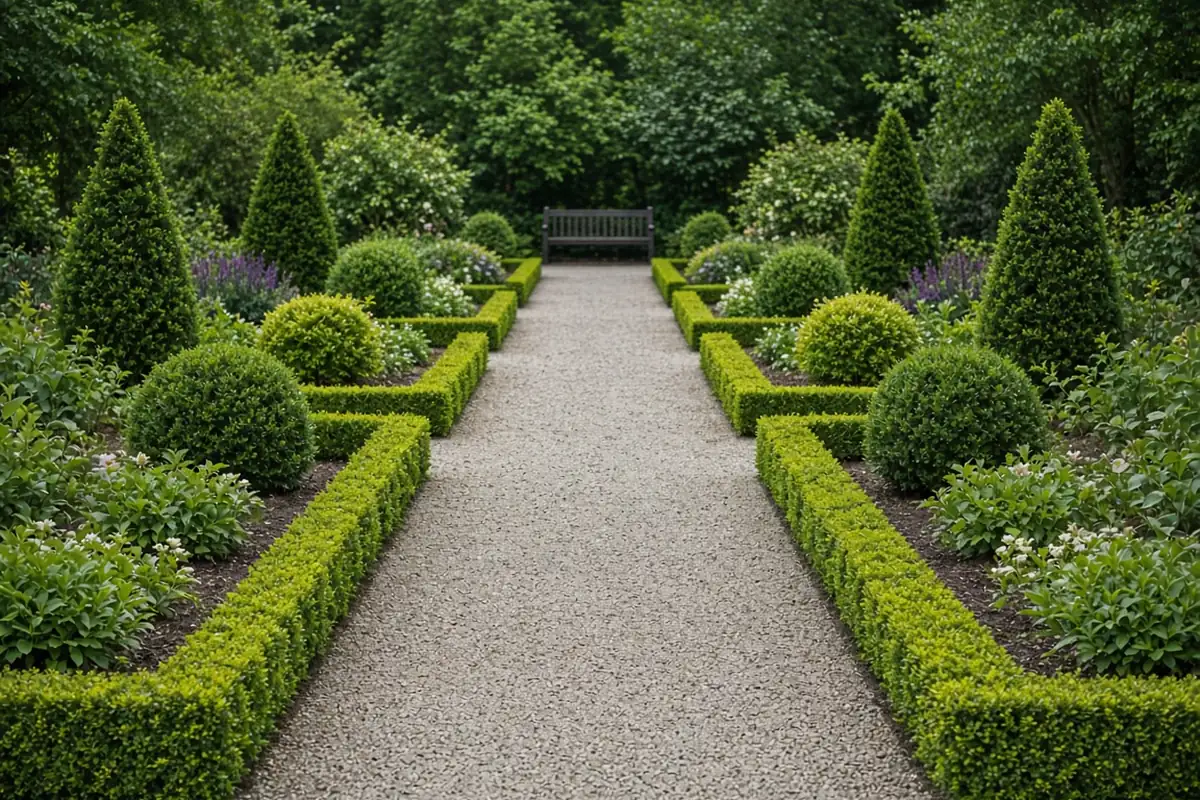
- Choose a center line from the house or door.
- Mirror bed shapes on both sides of the line.
- Choose a hedge species that fits the height you want.
- Space formal hedge shrubs 1 to 2.5 feet apart.
- Mulch with 2 to 3 inches of organic material.
- Shear so the top stays narrower than the base.
Troubleshooting
Hedge bare at the base: top wider than base. Trim narrower on top.
Layout looks uneven: no center line. Measure from the axis.
Constant clipping: plant too vigorous. Match species to height.
For related reading see planning an outdoor cannabis garden layout, square foot gardening for cannabis plus mulch for cannabis. Kind Seed Co also stocks cannabis seeds.
Sources
- How to prune formal hedges, Iowa State University Extension plus Outreach
- Selecting plus planting hedges, Iowa State University Extension
- Extension Gardener Handbook, chapter 19, NC State Extension
- University of Missouri Extension MG11
FAQ
When should a hedge be planted?
Iowa State University Extension says to plant bare root shrubs from late March to mid May, before buds break. Container grown and balled and burlapped shrubs establish well in spring or late summer to early fall. Bare root plants cost less but are small at planting.
Is a formal hedge a lot of work?
Yes. Iowa State University Extension says a sheared hedge needs frequent pruning, often two or more times per year. It adds that maintenance for a formal hedge is almost always more than expected. An informal hedge holds its natural shape and needs only minimal pruning.
Can a formal garden be small?
NC State Extension describes symmetry as mirroring on both sides of one axis, which works at any size. Iowa State University Extension lists boxwood, barberry, inkberry plus alpine currant for hedges under 5 feet. Choosing small hedge species lets the formal look fit a smaller space.
Why trim the top narrower?
Iowa State University Extension says a hedge narrower at the top lets lower branches receive sunlight. That light is needed for a dense, full hedge from top to bottom. The shape also reduces snow buildup on top, which can cause branches to break in winter.
Should a new hedge be cut back at planting?
Iowa State University Extension says to prune bare root deciduous shrubs back hard at planting time. Cut stems to 4 to 6 inches above the ground. That stimulates vigorous, low branching, which helps a formal hedge fill in from the bottom as it grows.



