
How to Plant Along a Walkway: Edging Plus Low Borders
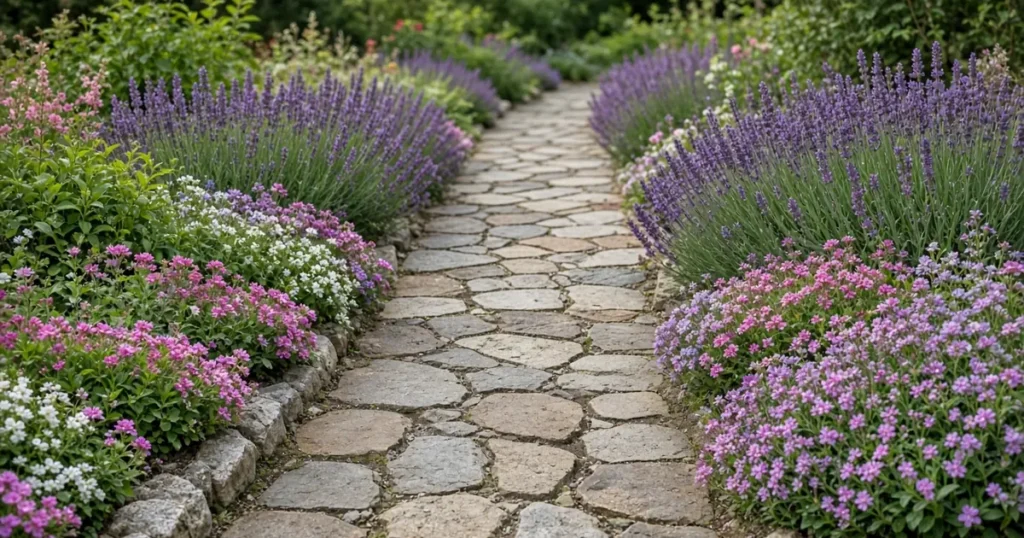
Here is how to plant along a walkway. Edge the bed first, allow room for plants to grow to their mature size and repeat a few plants along the line. Kansas State University Extension says edging stops grass from entering beds and stops path materials out of gardens. NC State Extension shows lavender lining a path.
The short answer
Install an edge, leave room for mature plant size and repeat a few plants. Kansas State University Extension says edging stops path materials from spilling into gardens and gives a crisp, neat look. NC State Extension uses lavender lining a path as its example of unity. It notes that repetition draws the eye through a design.
Why edge the bed first?
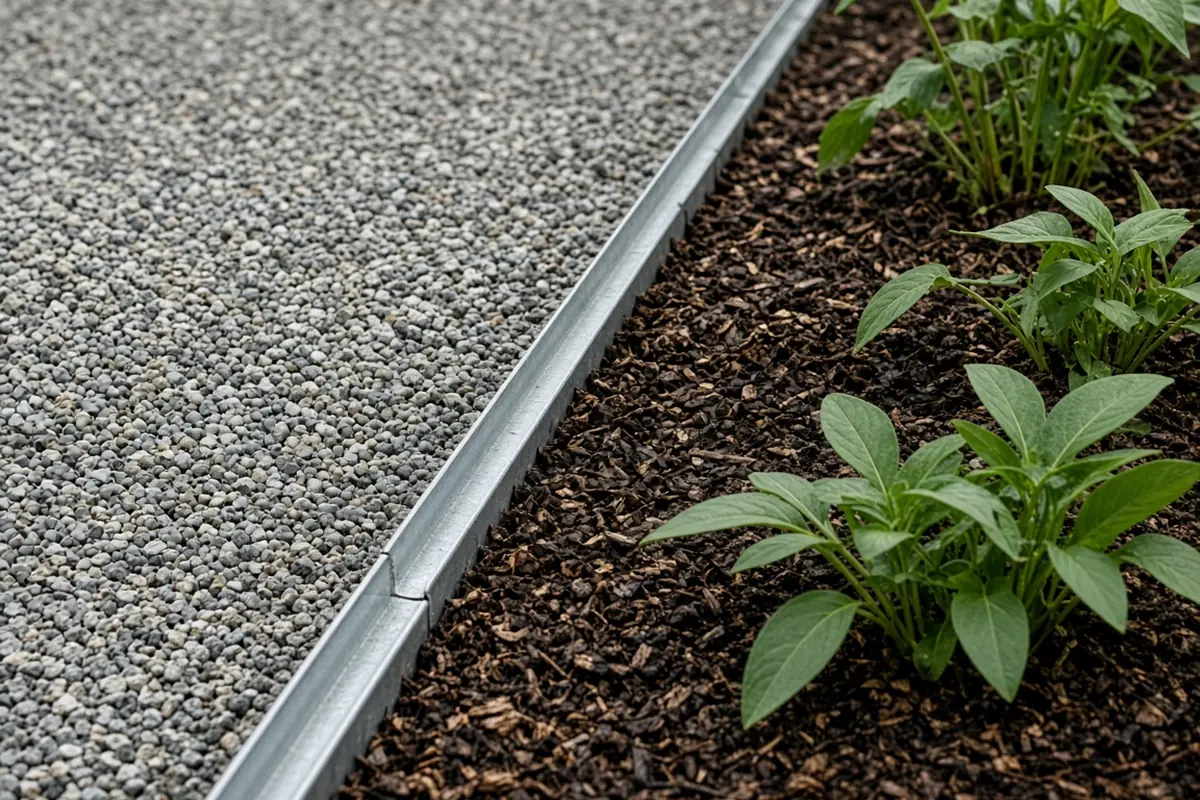
Kansas State University Extension says edging stops grass from invading shrub or garden areas. It also holds pathway materials out of gardens and lawns.
A raised edging stops soil and mulch from washing out of beds during heavy rains, the same source notes. Edgings define the spaces they enclose and emphasize the profile of beds and paths.
When you outline an edge with a hose or rope, adjust curves until they are large and smooth. Be sure to allow room for plants to grow to their mature size.
Which edging materials work?
The simplest edging is a cut edge, a trench 4 to 6 inches deep angled toward the bed. Recut it once or twice per growing season, Kansas State notes.
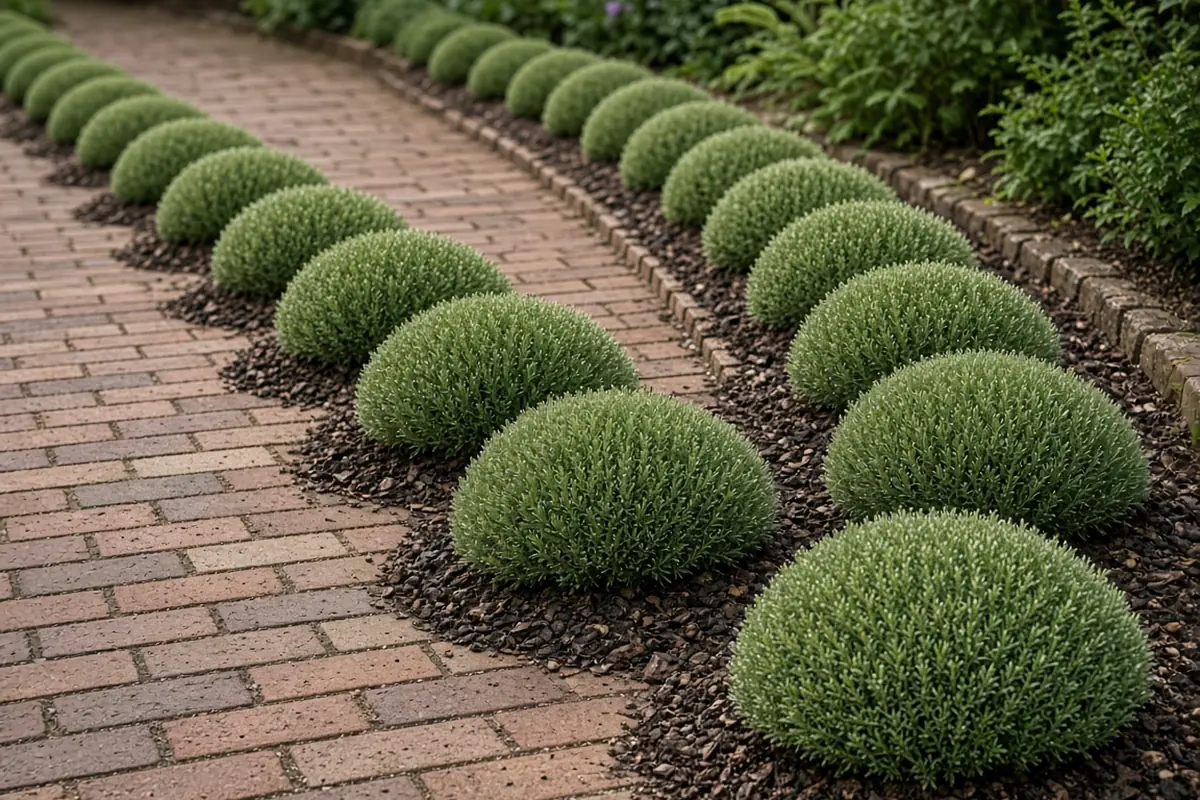
Bricks and pavers installed flush with the ground give a mowing strip, which removes the need for a weed trimmer. Gathered stone looks informal but lets spreading grass into gaps unless mortared.
For gravel paths, UC Master Gardeners suggest a border of bender board, rock, pavers, bricks or lumber. That border prevents gravel from migrating into adjacent soil.
| Edging | Upkeep | Source note |
|---|---|---|
| Cut edge | Recut once or twice a season | Allows easy expansion |
| Bricks or pavers | Low | Flush edge gives a mowing strip |
| Gathered stone | Hand trimming | Grass finds the gaps |
| Wood | Rots over time | Flush edge cuts hand trimming |
Source: Kansas State University Extension plus NC State Extension.
Why repeat a few plants?
NC State Extension lists simplicity, repetition, line, variety plus harmony as organizing principles. It describes every plant being a different species as a common design problem.
The same source says repetition helps draw the eye through the design. Its example of unity is lavender used to line a path.
NC State also notes that tapering walkways or plantings toward a vanishing point can create an illusion of distance. Kansas State adds that a winding path makes a small area look larger.
How to: step by step
- Mark the bed line using a hose or rope.
- Smooth the curves so mowing is easy.
- Cut or install the edge along the path.
- Allow room for plants to reach mature size.
- Repeat a few plant kinds along the walk.
- Mulch the bed behind the edge.
Troubleshooting
Plants spilling onto the path: set too close. Move them back.
Patchy look: too many kinds. Repeat a few.
Gravel in the bed: no border. Install an edge.
For related reading see planning an outdoor cannabis garden layout, mulch for cannabis plus companion plants when growing marijuana. Kind Seed Co also stocks cannabis seeds.
Sources
- All about edging, Kansas State University Extension, Johnson County
- Down the garden path, Kansas State University Extension, Johnson County
- Gravel pathways in the garden, UC ANR Master Gardeners
- Extension Gardener Handbook, chapter 19, NC State Extension
FAQ
How wide should a walkway be?
Kansas State University Extension suggests a path at least three feet wide for a single user. Paths for two people side by side should be five to six feet wide. NC State Extension says a main path to the front of the house should fit at least two people.
Should the border be curved or straight?
Kansas State University Extension says a winding path makes a small area seem larger because you cannot see far ahead. Straight lines can make a yard seem smaller. For curves in an edge, adjust the outline until you have a large, smooth curve that is easy to mow.
Which path materials need the least upkeep?
Kansas State University Extension lists bricks and pavers as durable and low maintenance, though they need a lot of prep work. Mulch paths wash away and need frequent replacing. Gravel is permeable and easy to work with but needs edging to stay in place.
Do gravel paths need edging?
Yes, according to UC Master Gardeners. To create a manicured look and stop gravel from migrating into adjacent soil, they suggest a border. Bender board, rock, pavers, bricks or lumber all work. Kansas State University Extension also lists edging as a need for mulch and gravel paths.
How should a new path be laid out?
Kansas State University Extension suggests marking a tentative outline with a garden hose or rope. Live with it for a while and look at it from different angles. Walk the route to check that the width is comfortable, then adjust before you clear and level the ground.



