
How to Make a Courtyard Garden: Containers plus Walls
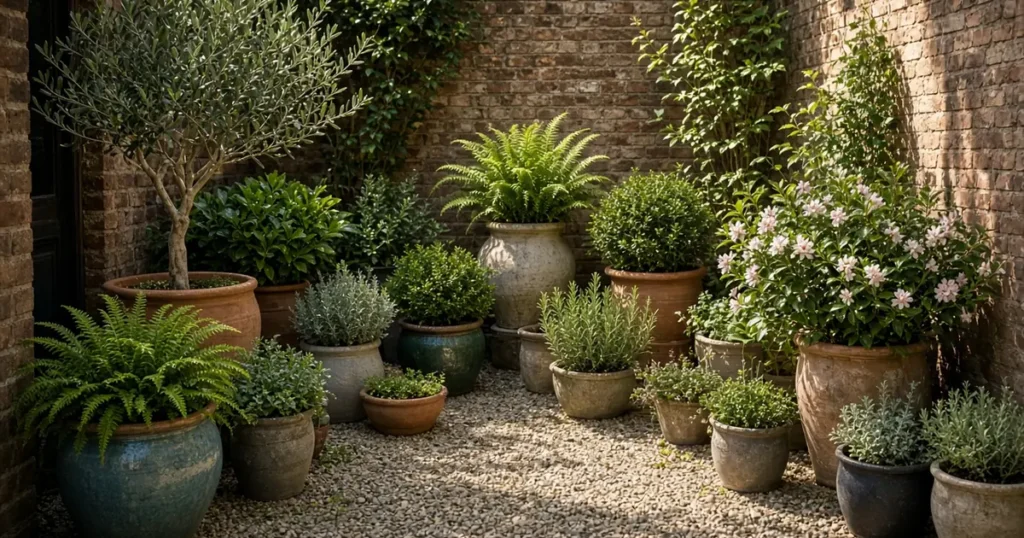
How to make a courtyard garden starts with light. University of Vermont Extension notes a small garden needs a spot with 6 to 8 hours of sun plus a convenient water source. Containers turn paving into planting space. Trellises plus walls let vines grow up instead of out.
The short answer
Find the sunniest part of the courtyard first. Grow in containers matched to each plant’s size, using porous, fast draining potting mix. Train vining plants up trellises or walls. Choose dwarf, compact or patio varieties. UC Master Gardeners of Orange County notes planning is the first step for any small garden.
Where should plants go in a courtyard?
Start by taking a good look at the space. University of Vermont Extension notes the ideal location gets at least 6 to 8 hours of sunlight each day for fruits, vegetables plus many flowering plants. Look for a convenient water source too.
UC Master Gardeners of Orange County notes leafy crops such as lettuce plus chard need at least 4 hours of sun a day. Fruiting crops like tomatoes plus beans need at least 6 hours. Check side yards plus balconies for high winds that hinder plant growth.
| Area | Light | Plant ideas |
|---|---|---|
| Sunniest corner | 6 to 8 hours | Tomatoes, peppers plus beans in large pots |
| Partly sunny wall | At least 4 hours | Lettuce, chard plus herbs in window boxes |
| Railings plus ledges | Varies | Herbs plus salad greens in small containers |
| Wall or fence | Sunny side | Cucumbers or beans on a trellis |
Source: University of Vermont Extension plus UC Master Gardeners of Orange County.
Which containers suit a courtyard?
University of Vermont Extension notes containers come in many sizes, are portable plus can sit wherever the sun shines. Small containers suit herbs or salad greens. Larger containers, including grow bags, hold tomatoes, cucumbers or potatoes. Make sure each pot is deep enough for its plant.
Illinois Extension notes container material affects maintenance. Clay, terra cotta plus peat pots soak up water plus lose it faster than non porous materials. Lining a porous pot with plastic slows water loss. Water in pottery pores can freeze plus crack the pot.
How do walls plus vertical space help?
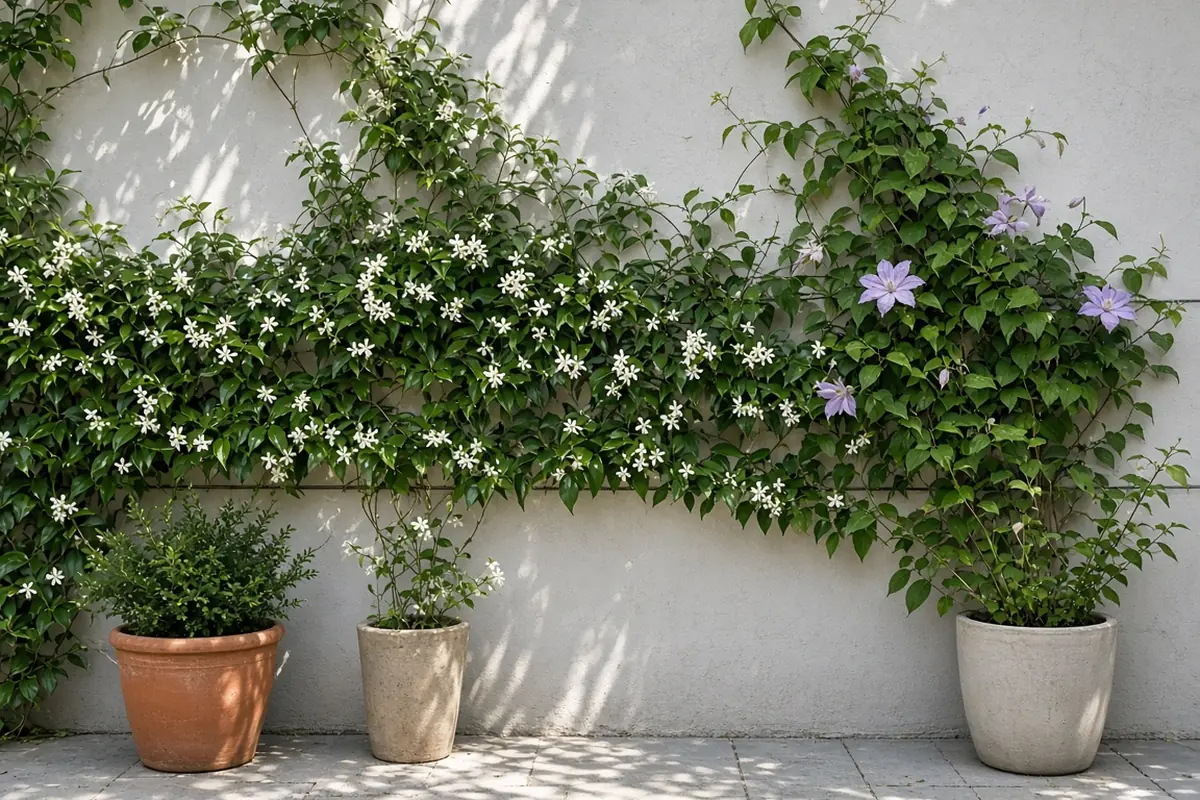
Vining plants such as cucumbers plus squash tend to sprawl. University of Vermont Extension advises training them to grow up instead of out on a trellis or arbor. Put the trellis in place at planting time so roots are not disturbed later. Mississippi State University Extension notes courtyard walls hold the scent of fragrant plants such as roses, gardenia plus jasmine better than an open garden.
UC Master Gardeners of Orange County lists walls, fences, window boxes, hanging planters plus vertical towers as small space methods. Raised beds are another option, plus they can be built at a height that gives access to gardeners with limited mobility.
How to: step by step
- Chart the hours of sun each part of the courtyard gets.
- Locate the nearest water source.
- Pick dwarf, compact or patio varieties sized to the space.
- Select containers deep enough for each plant.
- Load them with porous, fast draining potting mix, not garden soil.
- Install trellises along walls at planting time.
Troubleshooting
Pots dry out fast: porous material. Line clay or terra cotta with plastic, or water more often in summer heat.
Waterlogged containers: gravel in the pot bottom. UC Master Gardeners of Orange County notes gravel does not improve drainage, so skip it.
Vines crowding out other plants: no vertical support. Train cucumbers plus squash up a trellis.
For related reading see fabric pots for cannabis, garden microclimates for cannabis plus terracotta vs plastic pots for cannabis. Kind Seed Co also stocks cannabis seeds.
Sources
- Gardening in small spaces, University of Vermont Extension
- Small spaces, UC Master Gardeners of Orange County
- Container gardening, UF/IFAS Gardening Solutions
- Container material choices, Illinois Extension
- Creative courtyard spaces, Mississippi State University Extension
FAQ
Can vegetables grow in a courtyard?
Yes, given enough sun. UC Master Gardeners of Orange County notes leafy crops need at least 4 hours of sun plus fruiting crops need at least 6 hours. Lettuce, peppers, cherry tomatoes, beans plus herbs are among the crops that suit limited space. Pick the sunniest spot on the patio for vegetables.
Can different plants share one container?
Yes, if their needs match. UF/IFAS notes plants sharing a pot should have the same light, water plus fertilizer needs. Match the container size to the plant. University of Vermont Extension notes a large pot can hold a tomato with basil planted at its base, making good use of a small space.
Do courtyard plants need special soil?
Containers need potting mix rather than garden soil. UC Master Gardeners of Orange County advises a porous, fast draining yet moisture retentive mix with compost. Garden soil, planting mix plus topsoil are too dense for pots. Do not layer gravel in the bottom of a pot, since it does not improve drainage.
How often should courtyard containers be watered?
More often than garden beds. University of Vermont Extension notes containers need water more frequently than in ground plantings, especially in summer heat. UF/IFAS advises checking soil with a finger first plus skipping water if it is already moist. Overwatering is the most common reason container plants die. Water in the morning.
How can a small courtyard fit more plants?
Grow up plus choose compact plants. University of Vermont Extension advises varieties described as dwarf, compact or patio, plus trellises for vining crops. UC Master Gardeners of Orange County lists window boxes, hanging planters, wall planters plus vertical towers as ways to use limited space. Interplanting vegetables among ornamentals also helps.


