Johnsongrass in Cannabis Gardens: Rhizomes and Removal
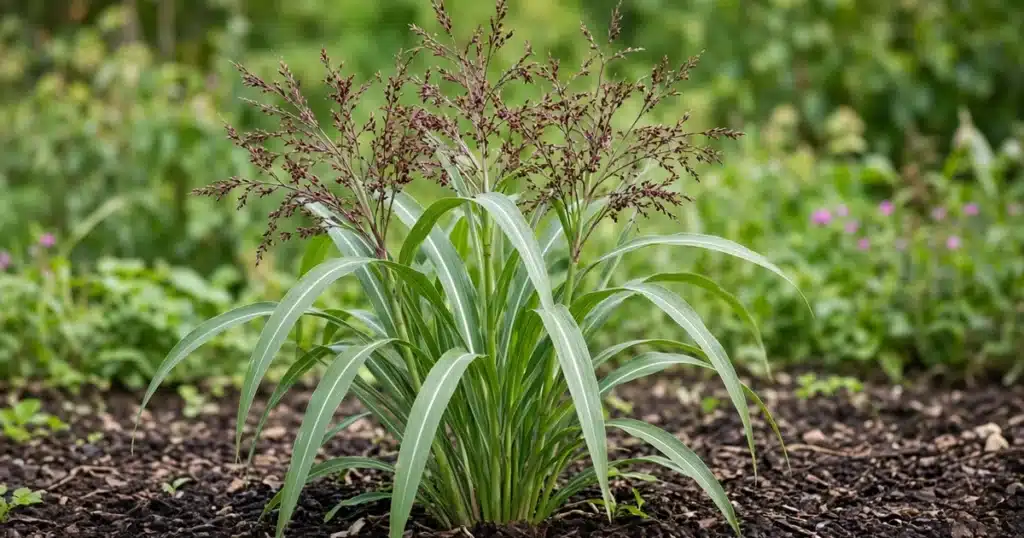
Quick answer: Johnsongrass is a tall perennial grass with a white midvein on each leaf, large purplish seed heads and thick, fleshy rhizomes. UC IPM calls it one of the most troublesome perennial grasses. Dig out young plants and as much rhizome as you can, cut stems before seed, and check new topsoil, since NC State says rhizomes can arrive in bags.
What Is Johnsongrass?
A tall, aggressive perennial grass. The University of California Statewide IPM Program (UC IPM) calls johnsongrass a coarse, generally clumping grass and one of the most troublesome perennial grasses. It forms colonies quickly and competes hard with crops.
NC State Extension describes it as an erect, 2 1/2 to 7 foot perennial grass that is invasive in many states. It was brought to the US as a forage plant and spread aggressively by thick rhizomes and seeds. NC State says it is listed as a noxious weed in 19 states. Our overview of weed control in outdoor cannabis explains why perennial grasses need early attention.
How Do You Identify Johnsongrass?
Start by folding a leaf. UC IPM says the leaf has a prominent whitish midvein that snaps readily when folded over. Other traits:
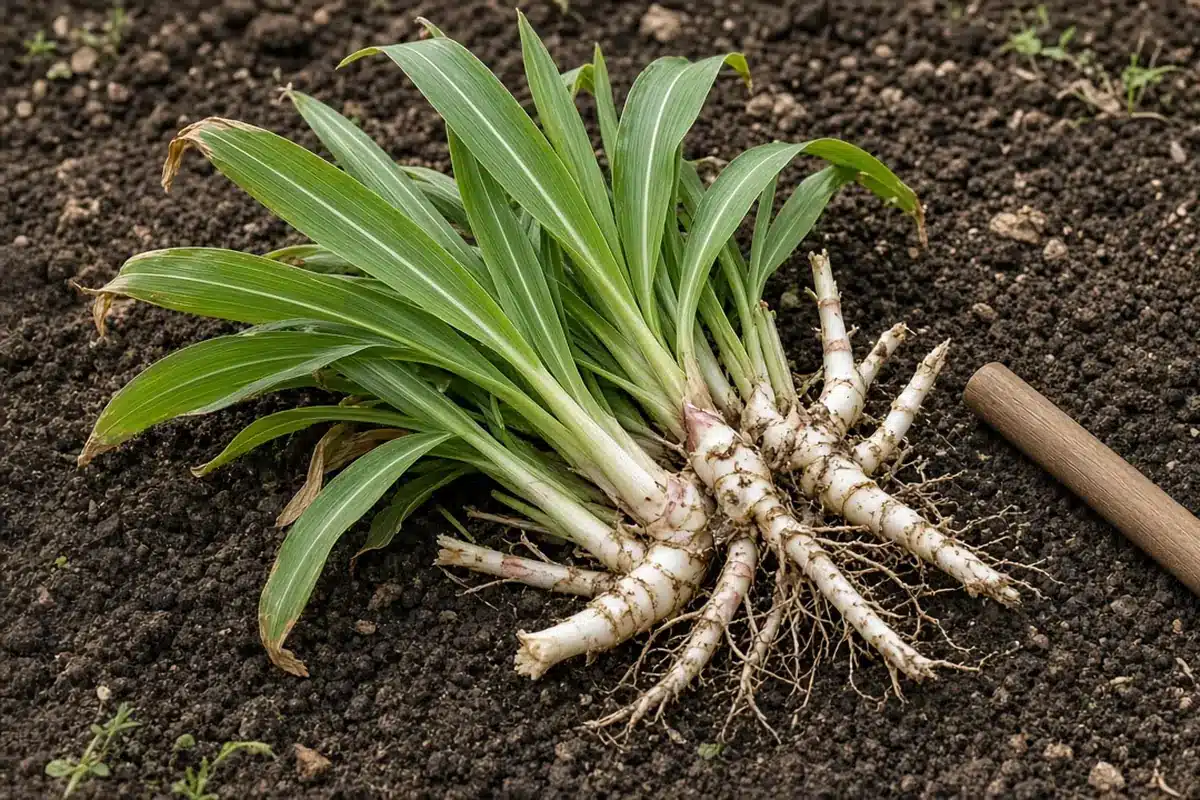
- Height. UC IPM says stems stand 6 to 7 feet tall. NC State gives 2 1/2 to 7 feet.
- Leaves. NC State says blades reach 24 inches long and 1 to 3 inches wide, with pale central veins.
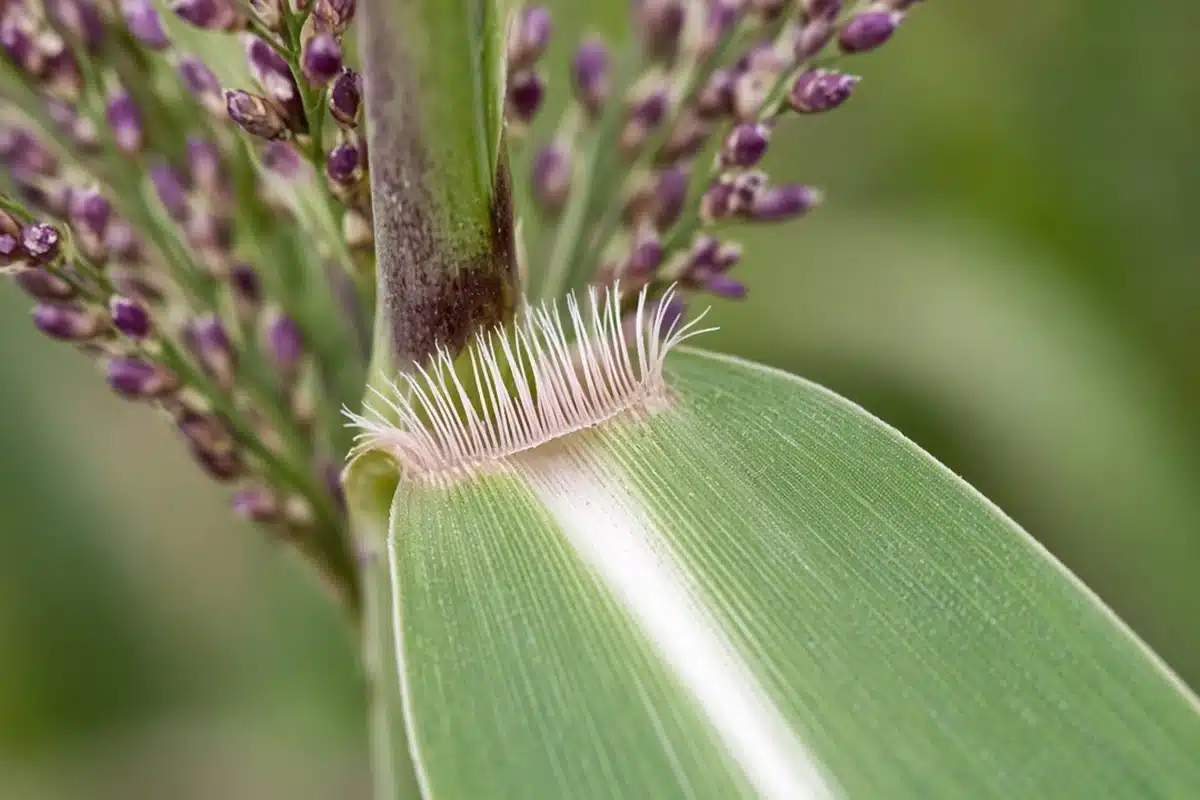
- Ligule. Membranous, with a fringe of hairs at the top and no auricles, per UC IPM.
- Seed head. Large, open and pyramid shaped, green or greenish violet at first, then dark reddish or purplish brown, UC IPM says.
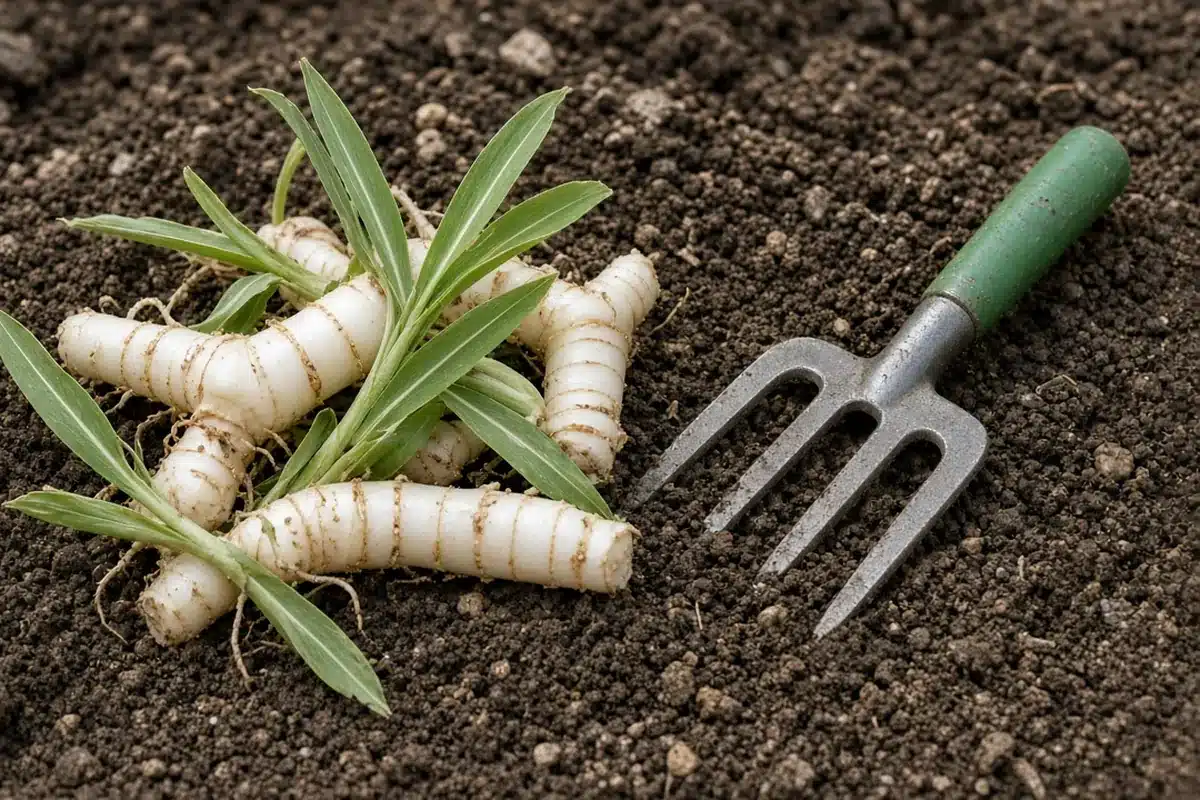
- Rhizomes. UC IPM describes thick, fleshy, segmented underground stems that sprout roots and shoots.
UC IPM gives a bloom window of May through October.
How Can You Tell a Johnsongrass Seedling?
Dig it up gently. UC IPM says a johnsongrass seedling resembles a young corn seedling, but it can be identified by its dark reddish brown to black seed, which stays attached when you carefully lift the seedling from the soil. The first leaf blade lies parallel to the ground.
If you have pulled goosegrass in cannabis beds, note the difference. Goosegrass is a low annual, while johnsongrass stands tall and comes back from rhizomes.
Why Is Johnsongrass So Hard to Remove?
Rhizomes. UC IPM says it reproduces by seed and underground stems, and that roots and shoots can sprout from each rhizome segment. NC State says the thick rhizomes and seeds produced in the hundreds let it form dense colonies.
Breaking a rhizome while you dig can leave pieces that regrow. That is why digging slowly, following each rhizome and removing as many pieces as you can matters more than speed.
How Does Johnsongrass Get Into Gardens?
Sometimes it arrives in soil. NC State says the grass can invade gardens and that both seeds and rhizomes can be carried into new areas in contaminated bags of topsoil. Our guide to buying topsoil for cannabis beds covers how to choose a clean supplier.
UC IPM’s landscape guide also says new soil should come from a reputable source and be free of weed seeds. Check any bulk soil or compost for grass roots before spreading it.
Is Johnsongrass Harmful to Animals?
It can be. UC IPM says the leaves of johnsongrass can, under certain conditions, produce toxic amounts of hydrocyanic acid that can poison livestock. NC State says foliage wilted by frost or hot, dry weather can contain enough to harm cattle and horses if eaten in quantity, and that young plants are more toxic than mature ones.
Keep it out of areas where animals graze, and do not feed garden clippings that include it to livestock.
Can Solarizing Help With Johnsongrass?
It can be one part of the plan. UC IPM describes covering moist soil with clear plastic for 4 to 6 weeks in the sunniest months to reduce weeds before planting. Our guide to soil solarization for cannabis beds walks through it.
UC IPM does not single out johnsongrass here, so pair solarizing with digging and repeated removal of new shoots. Cutting stems before the seed heads ripen keeps fresh seed out of the soil while you work on the roots.
How to Control Johnsongrass in a Cannabis Garden
- Confirm the white midvein. UC IPM says the whitish midvein snaps when the leaf is folded.
- Dig young plants early. Seedlings and young clumps have fewer rhizomes to chase.
- Follow and remove the rhizomes. UC IPM says shoots and roots sprout from rhizome segments.
- Cut stems before seed ripens. UC IPM says it flowers from May through October. Remove seed heads early.
- Bag rhizomes and seed heads. Do not compost pieces that can regrow.
- Check new soil. NC State says rhizomes and seed can arrive in contaminated topsoil.
- Solarize and mulch. UC IPM describes solarizing for 4 to 6 weeks and mulching 3 to 4 inches deep afterward.
Johnsongrass at a Glance
| Subject | Extension finding | Attribution |
|---|---|---|
| Life cycle | Perennial grass | UC IPM, NC State |
| Height | 2 1/2 to 7 feet | NC State |
| Key trait | White midvein that snaps when folded | UC IPM |
| Spread | Seed and thick rhizomes | UC IPM, NC State |
| Bloom period | May through October | UC IPM |
| Hazard | Can poison livestock under some conditions | UC IPM, NC State |
Should You Use Herbicides Near Cannabis?
No. Pull, hoe shallowly and mulch. If herbicides ever come up for other parts of your property, follow the label exactly. Remember that EPA has not registered any herbicide for use on marijuana, and state rules vary, so check with your state agriculture department. UC IPM says home gardeners who hand weed and mulch should not need herbicides. Before you plant cannabis outdoors, check your state’s home grow law.
Troubleshooting Johnsongrass
It regrew after digging. UC IPM says rhizome segments sprout. Dig again, remove all the pieces you can find and watch for new shoots.
It appeared after adding soil. NC State says rhizomes can arrive in contaminated topsoil bags. Check new soil.
Seedlings look like corn. UC IPM says the attached dark seed identifies johnsongrass seedlings.
Seed heads ripened before you got to them. Cut and bag heads earlier next season.
Animals graze nearby. UC IPM and NC State warn about livestock poisoning. Keep it out of grazing areas.
At Kind Seed Co, we think every load of soil deserves a look for grass rhizomes before it touches a bed.
Frequently Asked Questions
How do I identify johnsongrass?
UC IPM says johnsongrass is a tall perennial grass with a prominent whitish midvein that snaps when the leaf is folded. Its seed head is large, open and pyramid shaped, turning reddish or purplish brown. NC State says leaves can reach 24 inches long and plants grow 2 1/2 to 7 feet tall.
Why does johnsongrass keep coming back?
UC IPM says johnsongrass reproduces by seed and by thick, fleshy rhizomes, and that roots and shoots sprout from each rhizome segment. If you leave pieces in the soil, they regrow. NC State says it forms dense colonies. Dig carefully, follow each rhizome and remove every piece you find.
Can johnsongrass come in with topsoil?
Yes. NC State says both seeds and rhizomes can be carried into new areas in contaminated bags of topsoil. UC IPM’s landscape guide also advises getting new soil from a reputable source that does not contain weed seeds. Inspect bulk soil and compost for grass roots before spreading it.
Is johnsongrass toxic to animals?
UC IPM says the leaves can, under certain conditions, produce toxic amounts of hydrocyanic acid that can poison livestock. NC State says foliage wilted by frost or drought can harm cattle and horses if eaten in quantity, and young plants are more toxic. Keep it out of grazing areas.
How tall does johnsongrass grow?
UC IPM says mature johnsongrass stems stand erect from 6 to 7 feet tall and are unbranched, growing in spreading, leafy tufts. Leaves have a prominent whitish midvein. Underground stems are thick, fleshy and segmented, and roots and shoots can sprout from those segments, so dig carefully around any clump.
Sources
- UC Statewide IPM Program, Johnsongrass, Weed Gallery: https://ipm.ucanr.edu/weeds-identification-gallery/johnsongrass/
- NC State Extension Gardener Plant Toolbox, Sorghum halepense: https://plants.ces.ncsu.edu/plants/sorghum-halepense/
- UC Statewide IPM Program, Weed Management in Landscapes: https://ipm.ucanr.edu/home-and-landscape/weed-management-in-landscapes/