Ladysthumb in Cannabis Beds: The Spotted Smartweed Guide
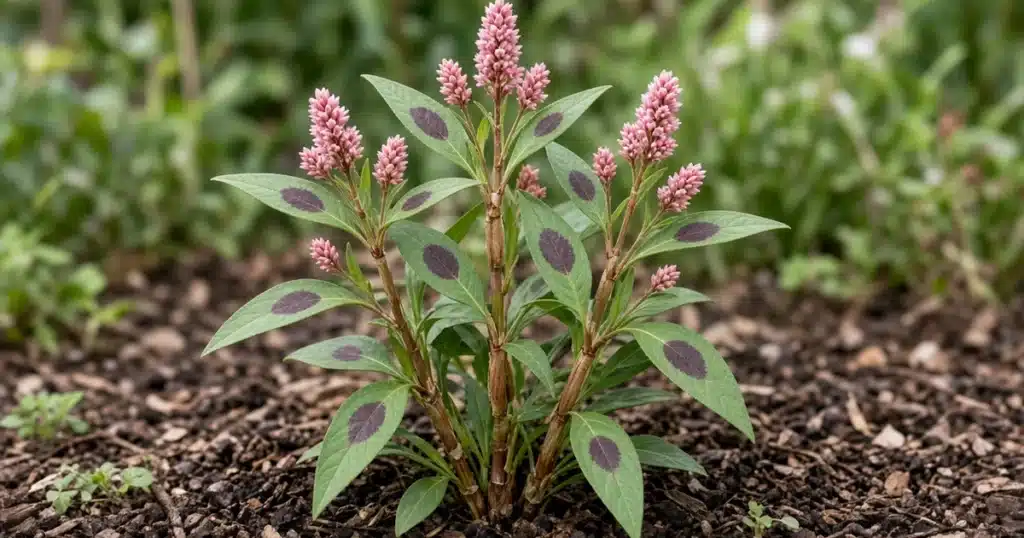
Quick answer: Ladysthumb is a summer annual smartweed with lance shaped leaves marked by a purple blotch and dense spikes of small pink flowers. UC IPM says it grows in moist soil and reproduces by seed. Pull it young from damp soil, remove plants before seed forms, fix wet spots and keep bare soil mulched.
What Is Ladysthumb?
A smartweed of moist ground. The University of California Statewide IPM Program (UC IPM) calls ladysthumb a summer annual broadleaf weed that grows in moist soil. It often follows human disturbance and grows in wet fields, irrigation ditches, pastures, irrigated cropland and the edges of ponds and streams.
University of Maine Cooperative Extension lists it as spotted ladysthumb, also called redleg and redshank. Its page also lists the common names gambetta and lady’s thumb smartweed. Our overview of weed control in outdoor cannabis covers the wider plan for summer weeds.
How Do You Identify Ladysthumb?
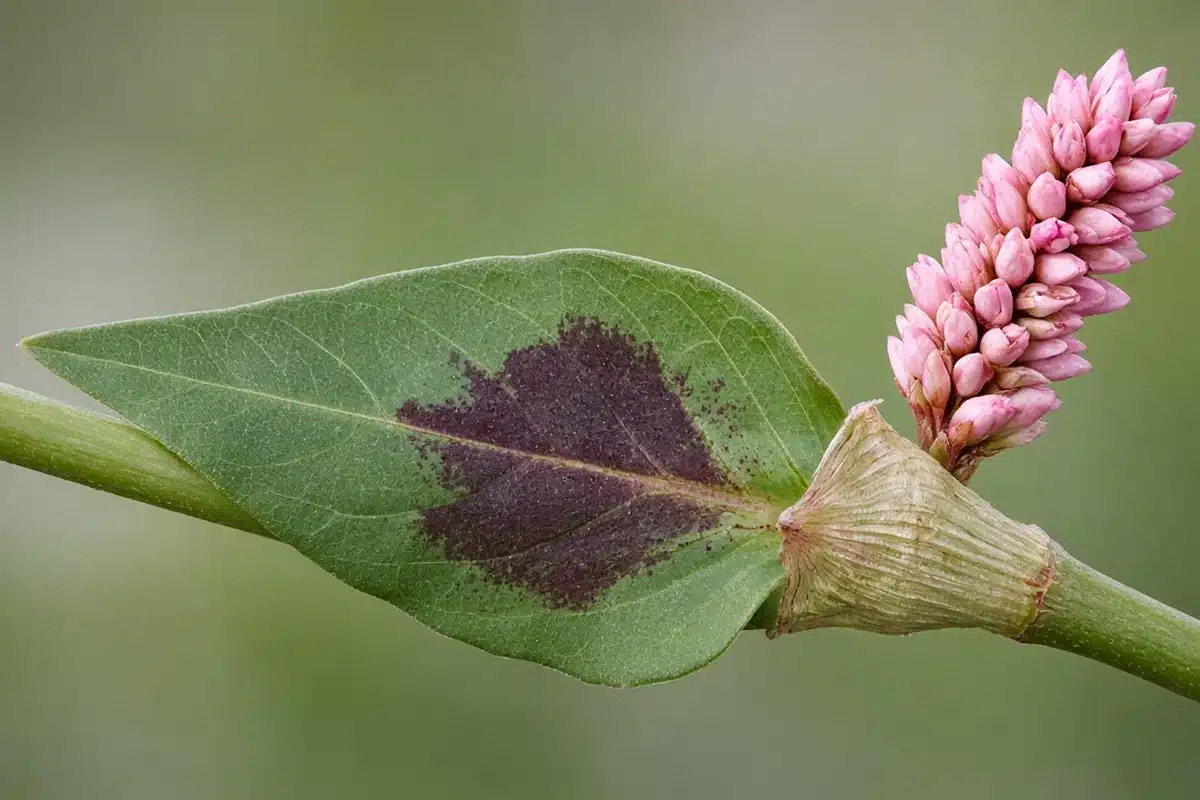
Look for the thumbprint. UC IPM says the leaves are lance to football shaped with a characteristic purplish blotch near the middle. Maine’s leaf photos show the same reddish to brownish spot. Other traits from UC IPM:
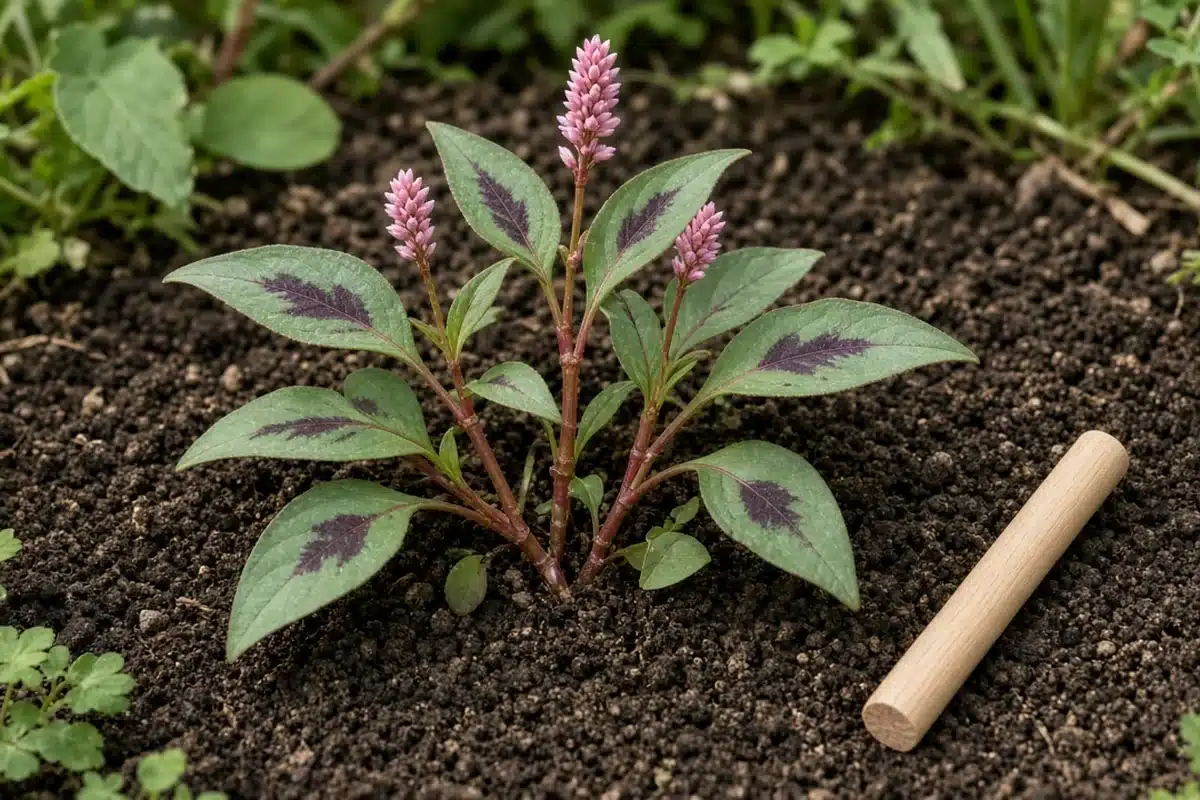
- Leaves. About 1 to 8 inches long, hairless or sparsely covered with tiny stiff hairs, alternate on the stem.
- Stems. Erect or spreading, 1 to 3 feet long, and able to root at lower joints.
- Sheaths. Maine shows a membranous sheath, or ochrea, on the stem. UC IPM says it is tipped with short stiff hairs.
- Flowers. Small pink flowers packed on upright spikes about 1 inch long.
- Seed. Glossy, brown to black, more or less three sided, under 1/12 inch long.
Mature plants often form large clumps, UC IPM says.
How Is Ladysthumb Different From Pale Smartweed?
Check the blotch and the sheath. UC IPM says pale smartweed looks similar but lacks the purple leaf blotch and the short hairs on the leaf sheaths. Ladysthumb flowers are also darker and droop less, and its flower spikes open while those of pale smartweed stay closed.
Both belong to the same family as prostrate knotweed in cannabis beds, which shares the papery sheath at each leaf joint. They are managed the same way.
Why Does Ladysthumb Grow in Cannabis Beds?
Mostly water. UC IPM ties ladysthumb to moist soil, irrigated crops and places that flood. A bed with a leaky drip line, a low corner or frequent shallow watering gives it ideal conditions.
Our soil drainage test for cannabis beds shows how to check whether water is sitting in the root zone. Fixing that helps both your plants and your weed control.
Can Ladysthumb Root From Its Stems?
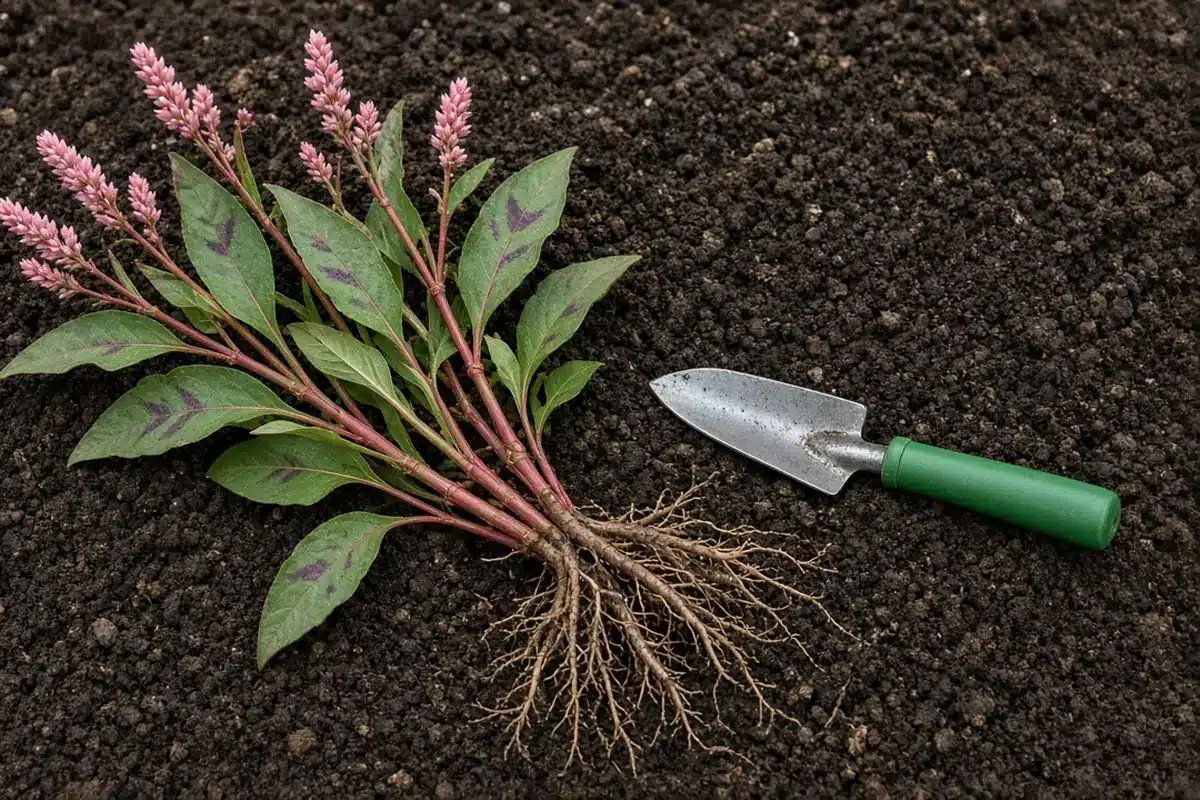
Yes, at the lower joints. UC IPM says ladysthumb stems can start roots at lower stem nodes. A plant chopped by a hoe and left on wet soil can reroot from those joints.
Rake up pulled or hoed plants rather than leaving them on damp ground. Remove flowering plants from the bed and bag them so they cannot spread seed.
When Should You Pull Ladysthumb?
Early in the summer, ideally. UC IPM calls it a summer annual that reproduces by seed, and its small pink flower spikes turn into glossy seeds. Pulling young plants before the spikes appear keeps new seed out of the soil.
UC IPM’s landscape guide says to remove young weeds by hand before they flower and set seed, and to use shallow hoeing for annual weeds. Damp soil makes pulling easier. Work along the wettest part of the bed first, since seedlings may come up there, then move outward. Regular checks through early summer keep the job small, and each plant you remove before it flowers is one less source of seed for next year.
Does Ladysthumb Have Any Value?
To wildlife, yes. UC IPM says ladysthumb seeds are an important food source for many songbirds, waterfowl and mammals, and its leaves give cover to wildlife. That makes it worth leaving in wild areas away from the garden.
Inside and beside cannabis beds, though, it competes for water and space. Keep it out of the growing area and leave wilder corners for the birds. A clear line between the bed and the wild edge, such as a mowed path or a strip of mulch, makes it easy to see when seedlings cross over. Check that line regularly through summer, and pull anything with a purple thumbprint before it can flower and add to the seed in your soil.
How to Control Ladysthumb in a Cannabis Bed
- Look for the purple blotch. UC IPM says the leaf blotch is a key trait.
- Find the wet spot. UC IPM ties ladysthumb to moist soil and irrigated areas.
- Pull young plants from damp soil. Moist soil makes pulling easier.
- Remove plants before flower spikes appear. UC IPM says it reproduces by seed.
- Rake up the pieces. UC IPM says stems can root at lower joints.
- Fix leaks and overwatering. Dry out the spots that stay soggy.
- Mulch bare soil. UC IPM recommends a medium mulch kept 3 to 4 inches deep. Our guide to mulch for cannabis compares materials.
Ladysthumb at a Glance
| Subject | Extension finding | Attribution |
|---|---|---|
| Life cycle | Summer annual | UC IPM |
| Key trait | Purple blotch on each leaf | UC IPM, Maine |
| Stem length | 1 to 3 feet | UC IPM |
| Flowers | Pink spikes about 1 inch long | UC IPM |
| Favored site | Moist, irrigated, disturbed soil | UC IPM |
| Lookalike | Pale smartweed, no leaf blotch | UC IPM |
Should You Use Herbicides Near Cannabis?
No. Pull, hoe shallowly and mulch. If herbicides ever come up for other parts of your property, follow the label exactly. Remember that EPA has not registered any herbicide for use on marijuana, and state rules vary, so check with your state agriculture department. UC IPM says home gardeners who hand weed and mulch should not need herbicides. Before you plant cannabis outdoors, check your state’s home grow law.
Troubleshooting Ladysthumb
It clusters along the drip line. UC IPM ties it to moist soil. Check for leaks and reduce watering there.
Hoed plants rerooted. UC IPM says stems can root at lower joints. Rake up pieces.
You cannot tell it from pale smartweed. UC IPM says ladysthumb has a purple blotch and hairy sheath tips.
Seedlings return each summer. It reproduces by seed. Pull plants before flower spikes form.
Low corners stay soggy. Run a drainage test and improve the bed.
At Kind Seed Co, we think wet spots are the first thing to check when smartweeds show up.
Frequently Asked Questions
How do I identify ladysthumb?
UC IPM says ladysthumb has lance shaped leaves 1 to 8 inches long with a characteristic purplish blotch near the middle, and dense pink flower spikes about 1 inch long. Its stems grow 1 to 3 feet and can root at lower joints. The leaf sheaths are tipped with short stiff hairs.
Why does ladysthumb grow in my garden?
UC IPM says ladysthumb grows in moist soil and often follows human disturbance. It is common in irrigated cropland, ditches and areas that flood. In a garden, leaky drip lines, low corners and frequent watering give it ideal conditions, so fixing wet spots helps keep it out.
Is ladysthumb the same as smartweed?
Ladysthumb is one type of smartweed. University of Maine Cooperative Extension lists the common names spotted ladysthumb, redleg and lady’s thumb smartweed. UC IPM says pale smartweed looks similar but lacks the purple leaf blotch and the short hairs on the leaf sheaths that ladysthumb has.
How do I get rid of ladysthumb?
Pull young plants from damp soil before the pink flower spikes appear, since UC IPM says it reproduces by seed. Rake up hoed pieces, because stems can root at lower joints. Fix leaks and overwatering, then cover bare soil with 3 to 4 inches of mulch, as UC IPM recommends.
Do birds eat ladysthumb seeds?
Yes. UC IPM says ladysthumb seeds are an important food source for many songbirds, waterfowl and mammals, and its leaves provide cover for wildlife. That value belongs at a pond or ditch edge, not in a cannabis bed. UC IPM says it reproduces by seed, so pull plants before the pink spikes set seed.
Sources
- UC Statewide IPM Program, Ladysthumb, Weed Gallery: https://ipm.ucanr.edu/weeds-identification-gallery/ladysthumb/
- University of Maine Cooperative Extension, Spotted ladysthumb: https://extension.umaine.edu/blueberries/weed-images/herbaceous-broadleaf-weeds/pink-flowers/spotted-ladysthumb/
- UC Statewide IPM Program, Weed Management in Landscapes: https://ipm.ucanr.edu/home-and-landscape/weed-management-in-landscapes/