Hairy Bittercress in Cannabis Beds: Stop the Seed Pods Early
Quick answer: Hairy bittercress is a small winter annual in the mustard family with a flat rosette, tiny white flowers and slender upright pods. University of Maryland Extension says ripe pods pop open and throw seed. Pull rosettes from moist soil in fall and early spring, remove plants as soon as they flower, and mulch beds well.
What Is Hairy Bittercress?
A small, fast winter annual in the mustard family. NC State Extension says hairy bittercress is one of the first weeds to appear in spring and turns up in lawns, parks, gardens and paved areas. Its seeds germinate in fall or winter, the plants rest in cold weather, and they resume growth in spring to make more seed.
University of Maryland Extension lists it as primarily a winter annual. NC State says it has a 12 week life cycle and can quickly invade sparsely planted lawns or poorly mulched gardens. Our overview of weed control in outdoor cannabis covers the wider plan for cool season weeds.
How Do You Identify Hairy Bittercress?
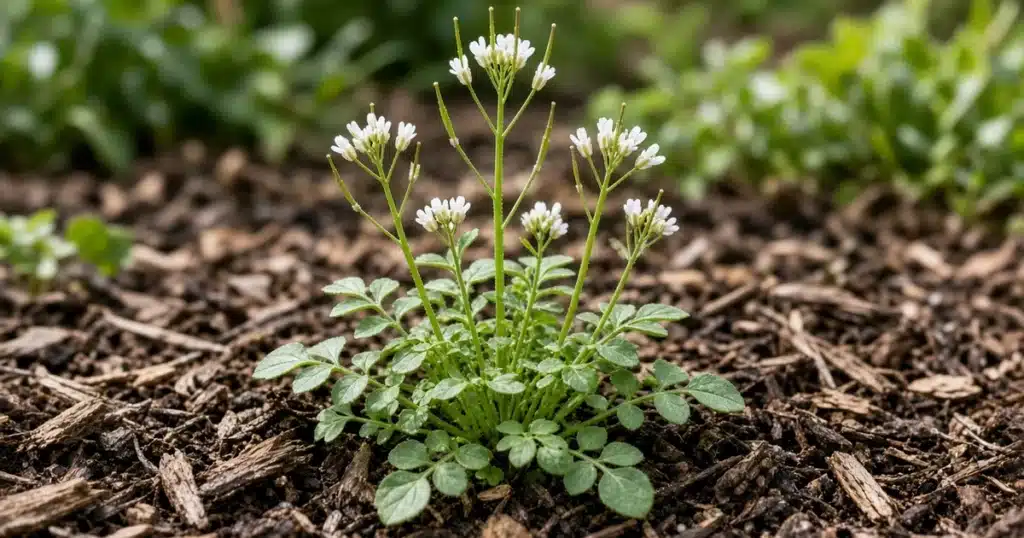
Start with the rosette. Maryland describes a basal rosette of leaves divided into 1 to 3 pairs of leaflets with a larger leaflet at the tip. Other traits from Maryland and NC State:
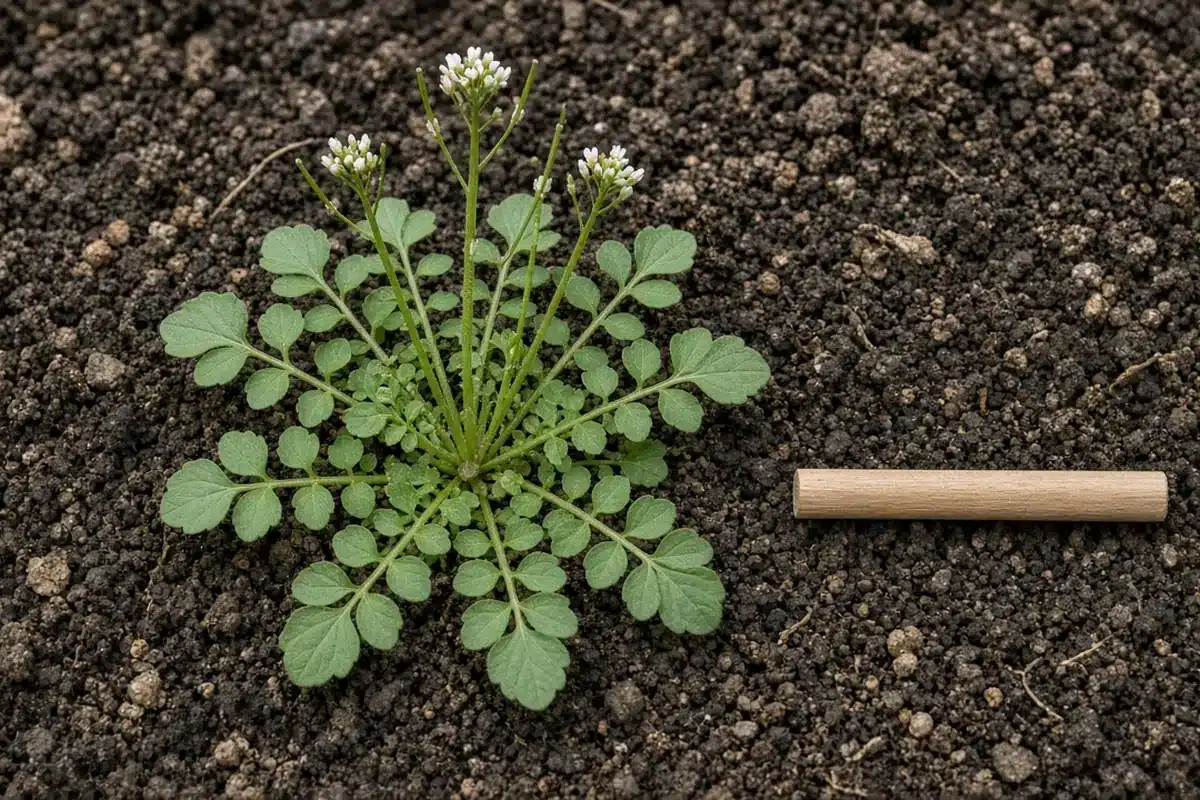
- Size. NC State says stems are upright, branched and 3 to 10 inches tall.
- Hairs. Tiny hairs on the upper and lower leaf surfaces give the plant its name, NC State says.
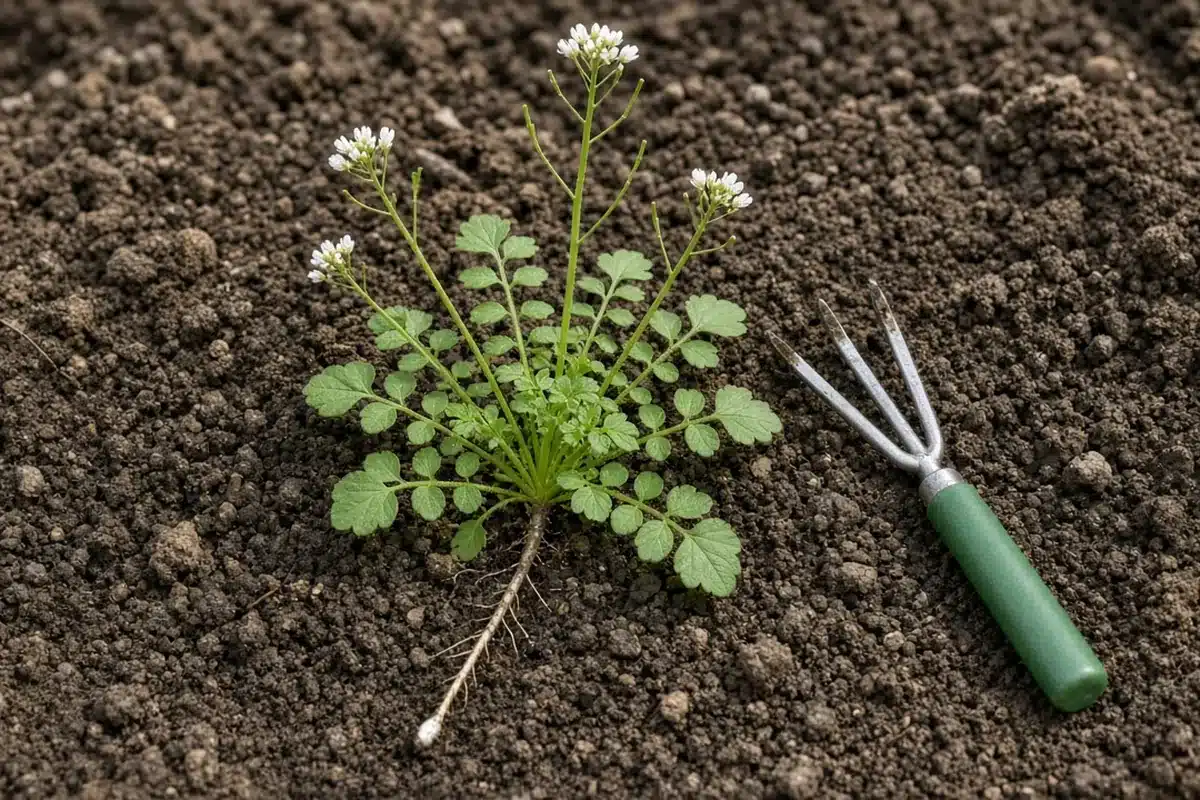
- Roots. Fibrous and shallow.
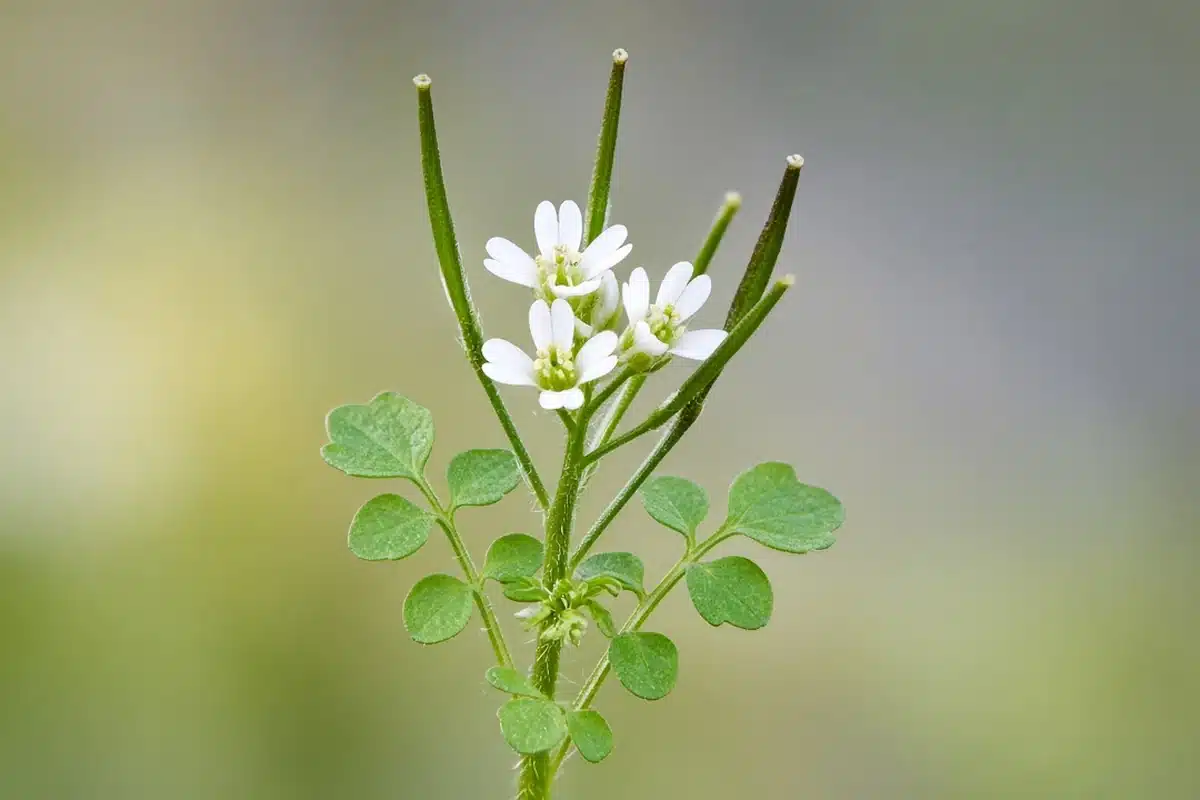
- Flowers. Clusters of tiny white, four petaled flowers at the stem tops.
- Pods. Long, narrow seed pods standing upright around the flowers, appearing between March and May, per NC State.
Most of the leaves sit low on the stem in that flat rosette.
How Does Hairy Bittercress Spread Seed?
It literally throws it. Maryland says the mature pods pop open explosively. NC State says the seeds are scattered up to several feet from the plant, and that each plant may make 600 to 1,000 seeds.
That is why a few plants in spring can become a carpet the next fall. Handle ripe plants gently, and remove plants before the pods are dry and ready to split.
How Is Hairy Bittercress Related to Shepherd’s Purse?
Both are small winter annuals in the mustard family that flower early with tiny white blooms. The pods tell them apart. Hairy bittercress has slender, upright pods, while shepherd’s purse has flat, heart shaped pods. Our guide to shepherds purse in cannabis beds covers that plant.
The plan is the same for both. Pull them young, never let them set seed, and keep bare soil covered over winter.
What Conditions Favor Hairy Bittercress?
Bare, damp, disturbed soil. NC State says it is commonly found in sunny, damp or disturbed soil, and can grow year round when conditions suit it. Maryland adds shade and short mowing to the list of conditions that favor it.
NC State says it moves fast into sparsely planted lawns and poorly mulched gardens. An empty cannabis bed over winter fits that description, so cover crops or mulch help.
When Should You Remove Hairy Bittercress?
Ideally twice a year. Since seeds germinate in fall or winter, as NC State describes, a fall check catches the first rosettes. A second pass in late winter or early spring catches plants before they flower. Our guide to fall garden cleanup after cannabis harvest is a good time for the first round.
Maryland says to remove plants immediately once they flower, or cut back the flower stalks. Do not wait for the pods to lengthen and dry.
Is Hand Pulling Enough?
Usually, if you start early. Maryland says hand pulling or using a weeding tool to remove the rosette is a viable option at the beginning of an infestation and on young weeds, and that moist soil makes the task easier. NC State says hand weeding and good mulching of beds are helpful, and that the weed is best controlled by prevention.
The shallow, fibrous root lets most plants lift out whole. The real work is consistency, since a single missed plant can throw hundreds of seeds.
How to Control Hairy Bittercress in a Cannabis Bed
- Check beds in fall. NC State says seeds germinate in fall or winter.
- Pull rosettes from moist soil. Maryland says moist soil makes pulling easier.
- Recheck in late winter. NC State calls it one of the first weeds to appear in spring.
- Remove plants once they flower. Maryland says to remove plants immediately once they flower.
- Handle ripe plants gently. Maryland says pods pop open explosively. Bag plants carefully.
- Do not leave beds bare. NC State says it invades poorly mulched gardens.
- Mulch after weeding. UC IPM recommends a medium mulch kept 3 to 4 inches deep. Our guide to mulch for cannabis compares materials.
Hairy Bittercress at a Glance
| Subject | Extension finding | Attribution |
|---|---|---|
| Life cycle | Primarily winter annual | Maryland, NC State |
| Family | Mustard family | NC State |
| Height | 3 to 10 inches | NC State |
| Pods | Slender, upright, March to May | NC State |
| Seed output | 600 to 1,000 per plant | NC State |
| Seed spread | Pods burst and throw seed | Maryland, NC State |
Should You Use Herbicides Near Cannabis?
No. Pull, hoe shallowly and mulch. If herbicides ever come up for other parts of your property, follow the label exactly. Remember that EPA has not registered any herbicide for use on marijuana, and state rules vary, so check with your state agriculture department. UC IPM says home gardeners who hand weed and mulch should not need herbicides. Before you plant cannabis outdoors, check your state’s home grow law.
Troubleshooting Hairy Bittercress
Beds fill with rosettes over winter. NC State says seeds germinate in fall or winter. Pull rosettes in fall and mulch.
Seed flew when you pulled plants. Maryland says ripe pods pop open. Pull plants as soon as they flower.
It keeps returning in pots. Seed can be thrown several feet, per NC State. Clear plants near containers too.
It thrives in shady, damp corners. Maryland lists shade as a favoring condition. Improve drainage and cover soil.
You confuse it with shepherd’s purse. Check the pods. Bittercress pods are slender and upright.
At Kind Seed Co, we pull small winter weeds before their pods can throw seed.
Frequently Asked Questions
What does hairy bittercress look like?
University of Maryland Extension says it forms a basal rosette of leaves divided into 1 to 3 pairs of leaflets with a larger leaflet at the tip. It produces clusters of tiny white, four petaled flowers on stems 3 to 10 inches tall, followed by slender upright seed pods, according to NC State.
Why does hairy bittercress spread so fast?
Its pods throw seed. Maryland says mature pods pop open explosively, and NC State says seeds are scattered up to several feet away, with 600 to 1,000 seeds per plant. NC State also says it has a 12 week life cycle, so plants can go from seedling to seed in a single season.
When does hairy bittercress grow?
NC State says its seeds germinate in fall or winter, the plants rest in cold weather, and they resume growth in spring to make seed. It is one of the first weeds to appear in spring. Check beds in fall and again in late winter so you catch rosettes before they flower.
How do I get rid of hairy bittercress?
Pull the rosettes by hand or with a weeding tool, ideally from moist soil, as University of Maryland Extension suggests. Remove plants as soon as they flower, before the pods ripen. NC State says hand weeding and good mulching help, and that prevention works best, so keep bare beds covered.
Where does hairy bittercress grow?
NC State says hairy bittercress may be seen in lawns, parks, gardens and paved areas, and is commonly found in sunny, damp or disturbed soil. It can quickly invade sparsely planted lawns or poorly mulched gardens. Keeping bed surfaces covered with mulch and pulling plants early help keep it out.
Sources
- NC State Extension Gardener Plant Toolbox, Cardamine hirsuta: https://plants.ces.ncsu.edu/plants/cardamine-hirsuta/
- University of Maryland Extension, Hairy Bittercress: https://extension.umd.edu/resource/hairy-bittercress
- UC Statewide IPM Program, Weed Management in Landscapes: https://ipm.ucanr.edu/home-and-landscape/weed-management-in-landscapes/