
Live Staking for Erosion: Willow and Dogwood Stakes on Banks
The short answer
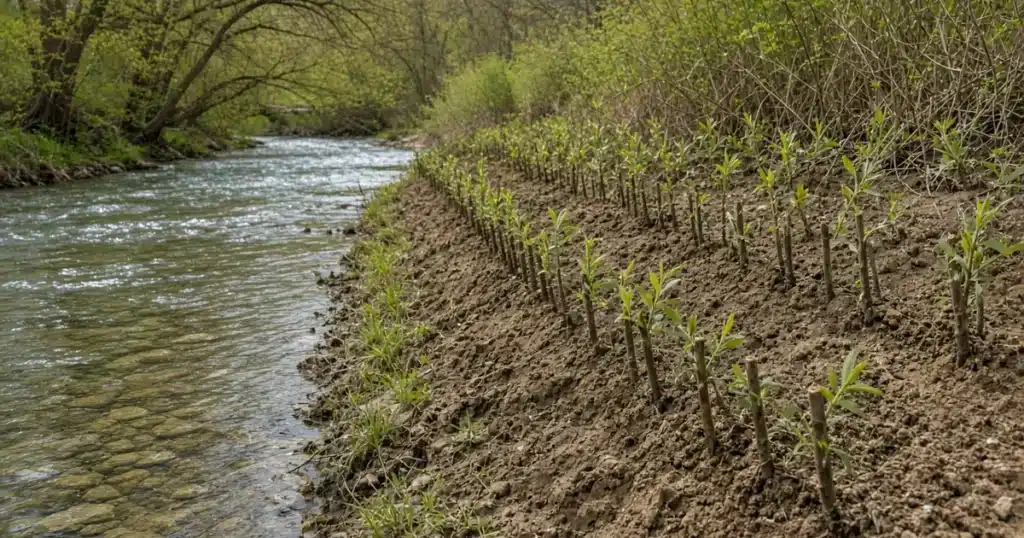
Live staking means cutting dormant stems of willows or shrub dogwoods and driving them into a moist bank, where they root and grow into shrubs that hold soil. Cut stakes in the dormant season, angle the bottom, store them in water and plant them soon. Push most of each stake into the soil, leaving a few buds above ground.
It is one of the cheapest ways to plant a streambank. All it takes is cuttings, a mallet and a few hours in late winter.
What is live staking?
Some shrubs root easily from bare cuttings. Willows and shrub dogwoods are the classic examples. When a dormant stem of one of these plants is pushed into moist soil, it grows roots below and shoots above.
The Penn State Extension article on live staking for stream restoration explains how the roots help stabilize banks while the tops slow water. Over a few seasons, a row of bare sticks becomes a shrubby buffer.
It works much like taking cuttings from a garden plant. Our post on how to make cannabis clones covers the same basic idea of rooting a stem, though live stakes usually skip rooting hormone and trays.
| Step | Detail | Why |
|---|---|---|
| Timing | Dormant season, after leaf drop and before bud break | Stems root well before leafing out |
| Stake size | About two to three feet long, half to one and a half inches thick | Long enough to reach moist soil |
| Cut ends | Angled bottom, flat top | Easy to drive and tells you which end is up |
| Storage | Store in water and plant within a few days | Dry stakes fail to root |
| Depth | Most of the stake in the ground, a few buds above | Roots need moisture, buds make shoots |
| Spacing | Two to three feet apart | Shrubs fill in to cover the bank |
Sources: Penn State Extension, NC State Biological and Agricultural Engineering.
Which plants work for live staking?
Native willows such as black willow and silky willow root readily. Shrub dogwoods such as silky dogwood and red osier dogwood work well too. Elderberry, buttonbush and ninebark can be staked on wet sites.
Cut stakes from vigorous plants. Some nurseries and conservation districts sell bundles of live stakes in late winter.
How do you cut and store stakes?
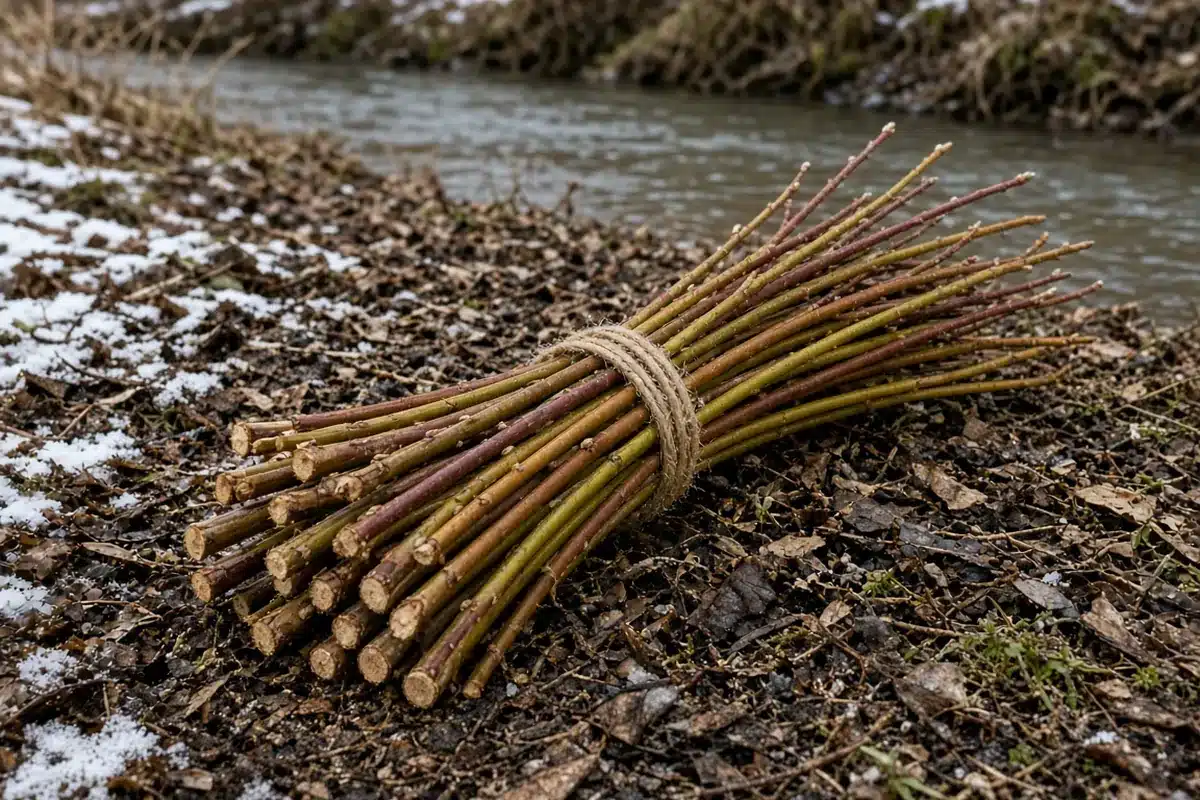
The Penn State Extension live staking how to guide covers the cutting process. Pick straight stems that are at least a year old. Remove side branches. Cut the bottom at an angle and the top flat, so you always know which end goes down. Stakes planted upside down won’t grow.
Bundle the stakes and store them in water. Soak them in a bucket or stream, or wrap them in wet burlap in a cool, shaded place. Plant them within a few days of cutting.
How do you plant live stakes?
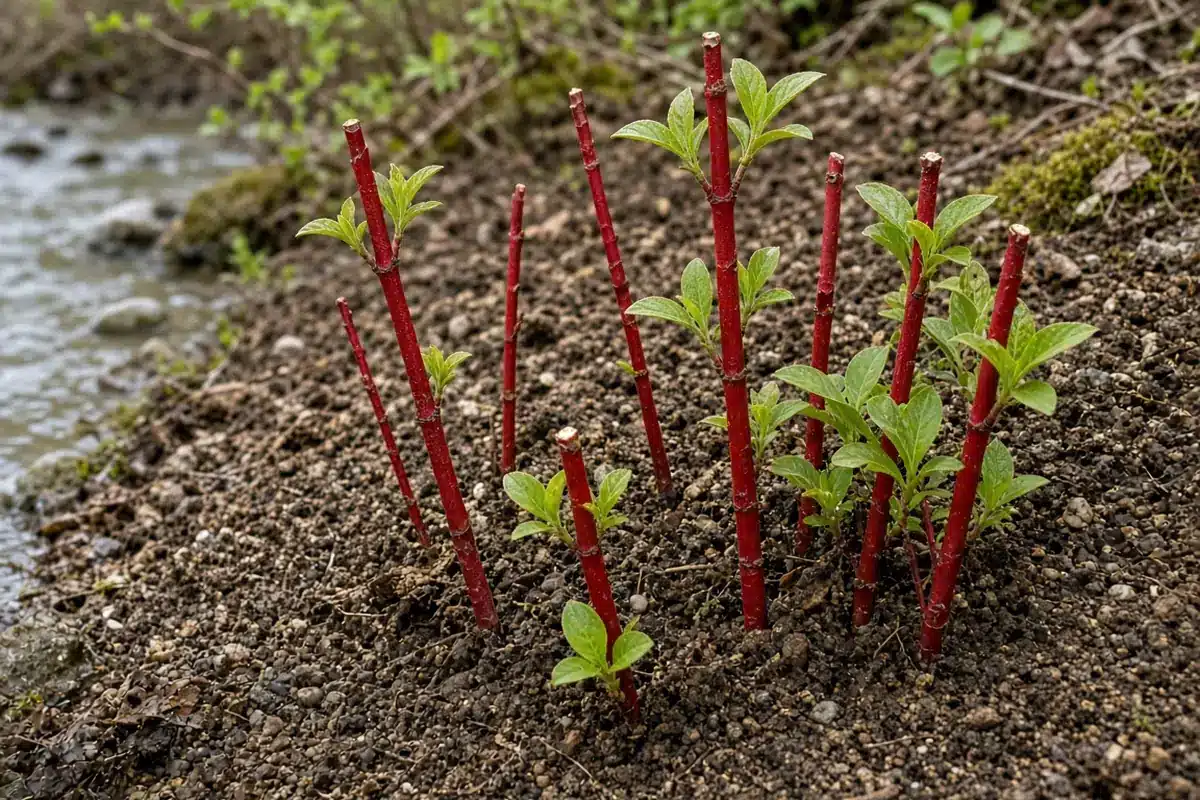
The NC State Biological and Agricultural Engineering live stake installation guide describes planting in moist soil along the bank. Push or tap each stake straight in or at a slight downstream angle. In firm soil, make a pilot hole first with a steel bar so the bark doesn’t tear.
Drive at least two thirds of the stake into the ground so the base sits in moist soil. Leave two to three buds showing above ground. Firm the soil around the stake so there are no air pockets. If the top splits while tapping, trim it clean.
Plant in staggered rows across the bank. Put plants that like the most water low near the stream and others higher up.
Our post on growing cannabis on a slope covers ways to manage soil on sloped ground that pair well with staking.
How do you care for stakes?
Most care happens in the first season. Check stakes after high water and reset any that wash loose. Water during long dry spells if the bank dries out. Expect some losses and replace dead stakes the next dormant season.
Our post on garden microclimates for cannabis explains how moisture and sun change across a site, which helps you place each type of stake.
How to: step by step
- Cut stakes in the dormant season from willows or shrub dogwoods.
- Trim side shoots, angle the bottom and cut the top flat.
- Store stakes in water and plant within a few days.
- Make pilot holes in firm soil.
- Drive most of each stake into moist soil, leaving a few buds above.
- Space stakes two to three feet apart in staggered rows.
Troubleshooting
Stakes don’t leaf out. They dried out or went in upside down. Store them in water and check the angle.
Bark tears while planting. Use a pilot hole.
Stakes wash out. Drive them deeper and plant earlier in the dormant season.
Leaves wilt in summer. The base is above the moist zone. Plant lower on the bank.
Some stakes die. Survival is often around half, so plant extra stakes to allow for losses.
Live staking turns bare cuttings into a living bank. Kind Seed Co shares more outdoor projects in outdoor growing.
Sources
- Live staking for stream restoration, Penn State Extension, Live staking for stream restoration
- Live staking: a how to guide, Penn State Extension, Live staking
- Live stake installation guide, NC State Biological and Agricultural Engineering, Live stake installation guide
FAQ
When should you cut live stakes?
In the dormant season, after leaves fall and before buds open.
How long should stakes be?
About two to three feet long.
How deep do you plant them?
At least two thirds of the stake in moist soil.
Do you need rooting hormone?
No. Willows and shrub dogwoods root on their own.
How far apart should stakes go?
About two to three feet apart.


