
Erosion Blanket Basics: Covering New Slopes While Plants Establish
The short answer
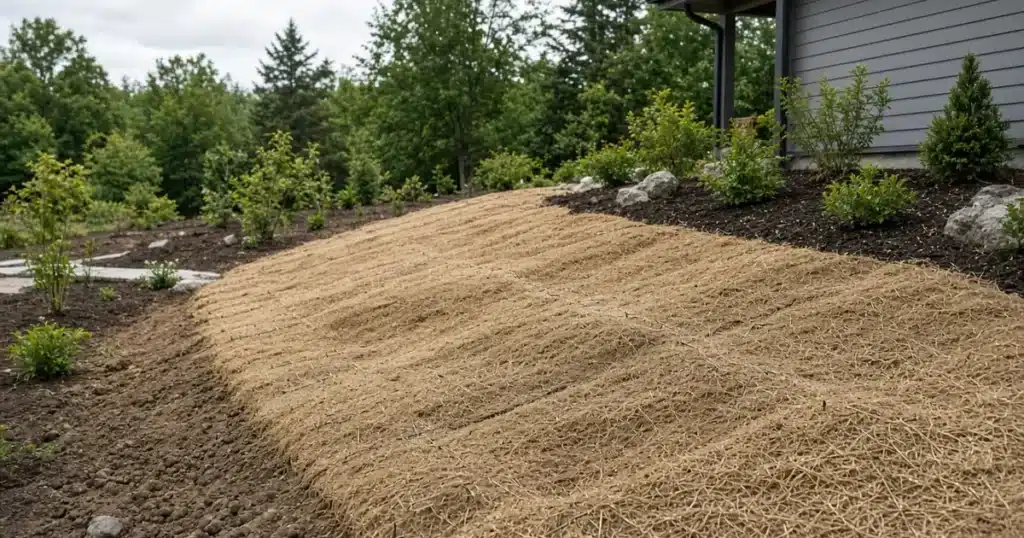
An erosion blanket is a roll of straw, wood fiber or coir laid over a bare, seeded slope to hold soil and seed in place until plants take root. Prepare and seed the soil first. Anchor the top of the roll in a shallow trench, unroll it downhill, overlap the edges and staple it so it touches the soil everywhere.
Bare slopes lose soil with every hard rain. A blanket buys time for grass or groundcover to grow roots that do the job for good.
What is an erosion blanket?
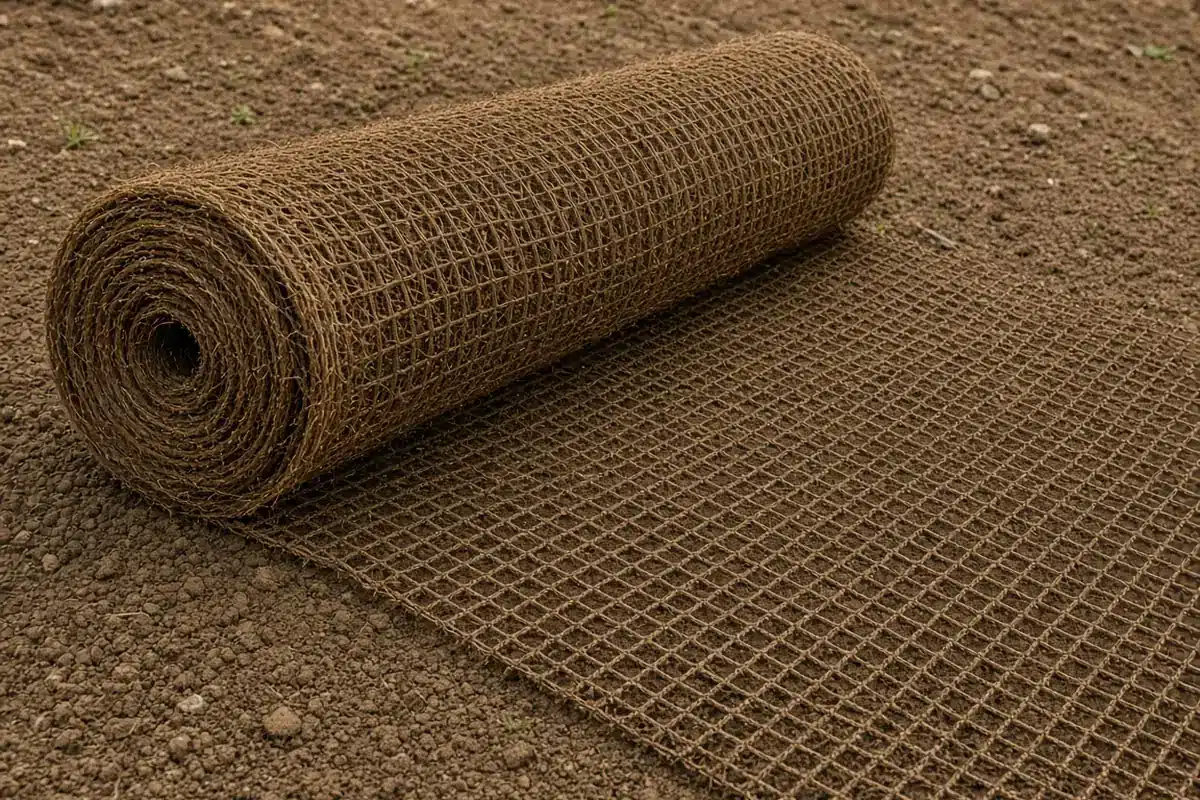
Erosion control blankets are thin mats of natural fiber held together by a light netting. Straw, wood fiber and coconut coir are the common materials, and some blankets break down within a season. Others, such as slowly degrading coir, last longer.
The NC State Extension article on mulch options for erosion control on construction sites compares loose mulch with rolled blankets. Loose straw suits gentle ground. On steeper slopes and in channels where water flows, blankets stay put better and give more even cover.
| Material | How long it lasts | Main use |
|---|---|---|
| Straw | A few months | Gentle to moderate slopes |
| Straw and coconut mix | Temporary, lasts longer than straw | Moderate slopes |
| Wood fiber | Temporary | Gentle slopes, quick cover |
| Coir | Temporary, slow to break down | Steep slopes and banks |
| Loose straw mulch | Weeks to months | Flat or gentle ground |
Source: NC State Extension.
Why do slopes need cover?
Raindrops hitting bare soil knock particles loose. Water running downhill carries them away and carves small channels that grow into gullies. Seed washes off before it sprouts.
The University of Georgia Extension report on controlling soil erosion in vegetable gardens explains that covering soil is the simplest way to cut losses. Mulch, cover crops and blankets all shield the surface from rain impact.
Our post on growing cannabis on a slope covers how slope affects water and soil in a garden.
How do you prepare the slope?
Smooth the soil and remove rocks, roots and clods so the blanket can lie flat. Loosen the top inch or two. Add compost or topsoil if the ground is poor.
Spread seed and any starter fertilizer before laying the blanket. The blanket goes over the seed, not under it. Lightly rake the seed in so it touches soil.
Our post on garden microclimates for cannabis explains how slope direction changes sun and moisture, which helps when you choose seed for a bank.

How do you lay and anchor a blanket?
Dig a trench about six inches deep and six inches wide along the top of the slope. Lay the end of the roll in the trench, staple it to the bottom, then backfill and pack the soil. That anchor stops water from running under the blanket.
Unroll the blanket downhill, not across the slope. Hold it loose enough to touch the soil everywhere. Gaps under the blanket let water flow beneath it and wash out seed.
Overlap side edges by a few inches and staple along the overlap. Where one roll ends and another starts, shingle them so the upper roll lies on top of the lower one, like roof shingles. Space staples closer together on steeper ground.
At the bottom of the slope, tuck the end into a shallow trench or staple it well.
How do you care for the slope?
Water lightly and often until seed sprouts, then less often and deeper. Check the blanket after heavy rain and add staples where it lifts. Fill washouts and reseed bare spots.
Grass and groundcovers grow through the blanket. Natural fiber blankets break down as plants fill in. Our post on mulch for cannabis covers how mulch layers help hold moisture while plants get going.
How to: step by step
- Smooth the slope and loosen the top inch or two of soil.
- Spread seed and rake it lightly into the soil.
- Dig an anchor trench at the top and staple the roll end in it.
- Unroll downhill and press for full soil contact.
- Overlap edges, shingle roll ends and staple as directed.
- Water often until seed sprouts and check after storms.
Troubleshooting
Water runs under the blanket. The top anchor is weak or the blanket isn’t touching soil. Anchor it again and add staples.
Seed washes out in strips. Edges didn’t overlap. Overlap and staple.
Blanket lifts in wind. Add more staples.
Bare spots after rain. Fill, reseed and cover with a patch.
Slow growth. Seed may be too deep or too dry. Water more often.
An erosion blanket gives new plants time to hold a slope on their own. Kind Seed Co shares more outdoor projects in outdoor growing.
Sources
- Mulch options for erosion control on construction sites, NC State Extension, Mulch options for erosion control on construction sites
- Controlling soil erosion improves vegetable gardens, University of Georgia Extension, Controlling soil erosion improves vegetable gardens
FAQ
Do you seed before or after laying the blanket?
Seed first, then lay the blanket over the seed.
Which way do you roll it?
Downhill, starting from an anchor trench at the top.
Will grass grow through it?
Yes. Plants grow through the open netting.
Do you remove the blanket later?
Natural fiber blankets break down on their own.
How much should rolls overlap?
A few inches, with upper rolls on top.


