
What Is Chitting Potatoes? Pre Sprouting Seed Potatoes Explained
The short answer
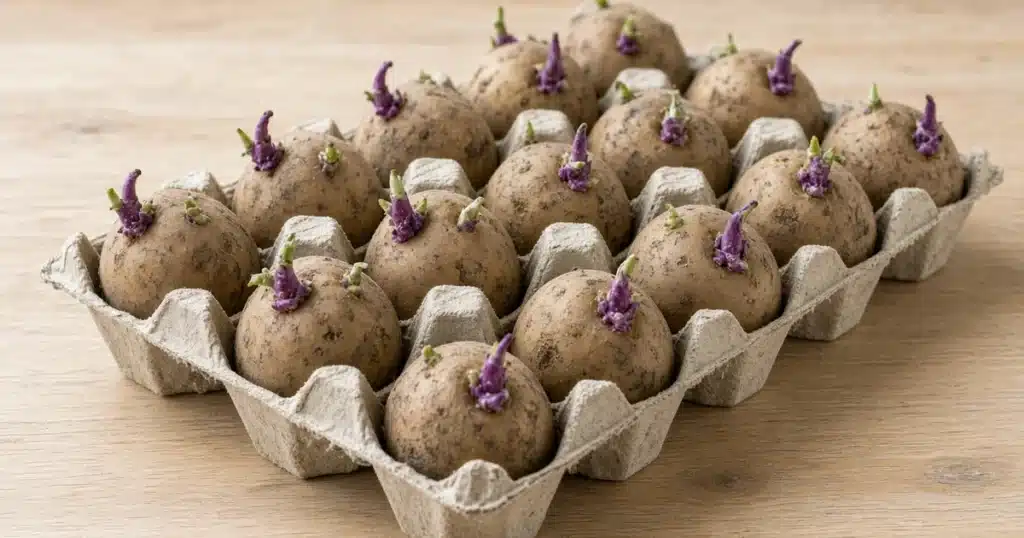
Chitting potatoes means setting seed potatoes in a bright, cool spot for a few weeks so short, sturdy sprouts form before planting. Utah State and Maine Extension say this can give plants a faster start. Plant chitted tubers gently with sprouts facing up so the new shoots stay intact.
Potatoes are a staple crop for home gardeners. Chitting can bring harvest sooner in some gardens, especially in short seasons or cool springs.
What does chitting mean?
Chitting is an old British gardening term for pre sprouting. You wake seed potatoes from dormancy before they go into the ground.
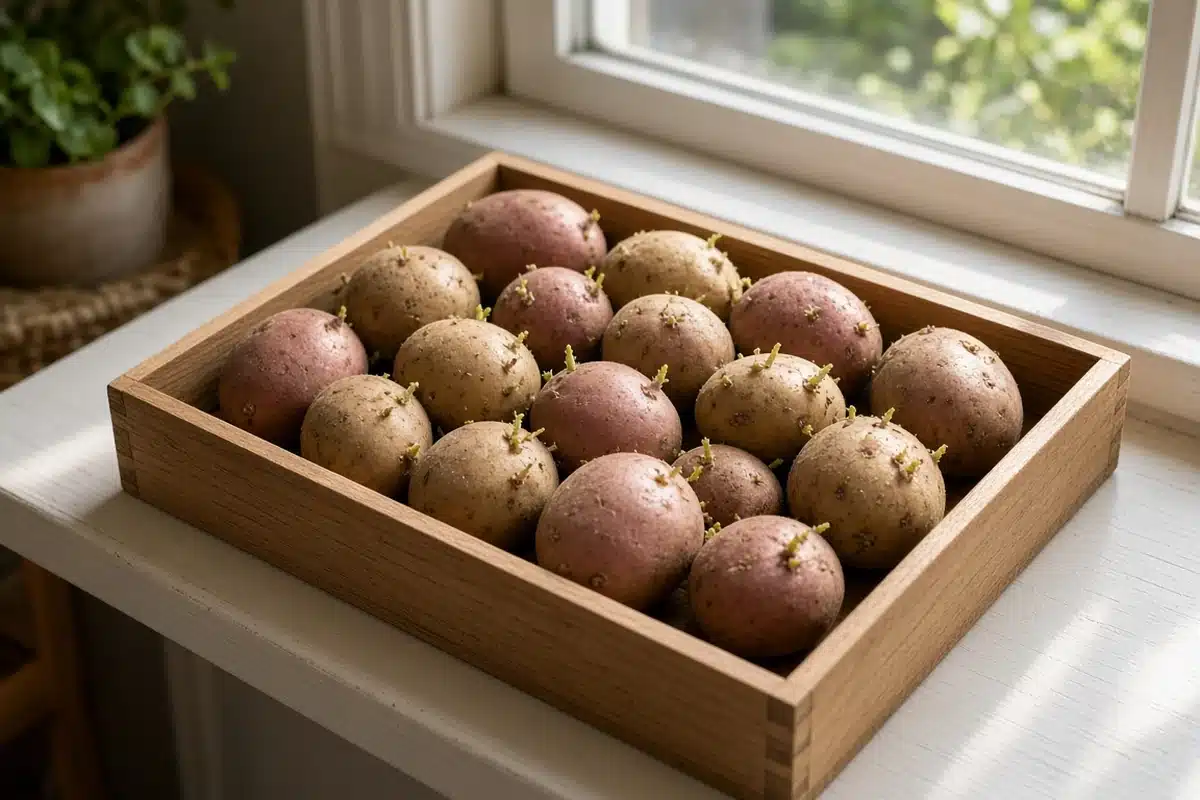
Each potato has eyes, small buds that grow into stems. In a bright, cool room, those eyes form short, thick, green or purple sprouts.
These sprouts look nothing like the long, pale sprouts on potatoes stored in a dark cupboard. Light makes them compact and tough.
The University of Maine Cooperative Extension potato bulletin describes greening sprouts in light before planting. It notes that pre sprouted tubers often emerge faster after planting.
How do you chit potatoes?
Start about three to five weeks before your planting date.
Lay seed potatoes in a single layer in a shallow tray or egg carton. Set them with the end that has the most eyes facing up. That end is called the rose end.
Place the tray in a bright room at about 50 to 70 degrees. A cool windowsill, porch or garage with light works well. Our post on cold frames for seedlings shows another bright, cool spot for this job.
Shade tubers from direct hot sun, which dries them. Turn trays now and then so sprouts grow evenly.
Plant once sprouts reach half an inch to an inch. Longer ones snap off easily.
| Condition | Effect on sprouts | Tip |
|---|---|---|
| Bright, cool room | Short, sturdy, green sprouts | Ideal for chitting |
| Dark, warm room | Long, pale, weak sprouts | Avoid |
| Very cold room | Little or no sprouting | Move somewhere warmer |
| Direct hot sun | Shriveled tubers | Use bright indirect light |
Sources: University of Maine, Utah State University, NDSU.
When does chitting help?
Chitting helps most where seasons are short or springs are cool, giving plants a head start of a week or two.
It also helps early varieties, which you may want to harvest as new potatoes. Pre sprouted tubers often give an earlier crop.
The Utah State University Extension page on potato seed handling explains how warming seed before planting speeds emergence and growth.
Main crop potatoes left in the ground all season gain less from chitting. Many gardeners still do it for even, quick emergence.
What is physiological age?
Physiological age describes how far along a tuber is in its sprouting life, not how many days old it is.
The NDSU Potato Extension article on the physiological age of seed potato explains that warmth over time ages a tuber. Older tubers sprout faster and make more stems but often fewer, smaller potatoes per stem.
Young tubers sprout slowly and make fewer stems, often with larger potatoes.
Chitting ages tubers on purpose. Short chitting suits most home gardens. Very long chitting can age them too far.
How to: step by step
- Buy certified seed potatoes.
- Set tubers in a shallow tray, eyes up.
- Place them in a bright, cool room.
- Wait for short, sturdy sprouts.
- Cut large tubers if guides suggest.
- Plant with sprouts facing up.
Should you cut seed potatoes?
Egg sized tubers can go in whole. Larger ones can be cut into pieces.
Each piece should weigh one to two ounces and carry at least two eyes or sprouts. Let cut pieces dry for a day or two so the cut surface dries over.
Cut carefully around sprouts so they stay attached.
When should you plant?
Plant once the soil has dried enough to work and has warmed to about 45 degrees or more. Our post on when soil is ready to work shows how to check.
Soil temperature matters for fast emergence. Our post on soil temperature for planting explains how to read it.
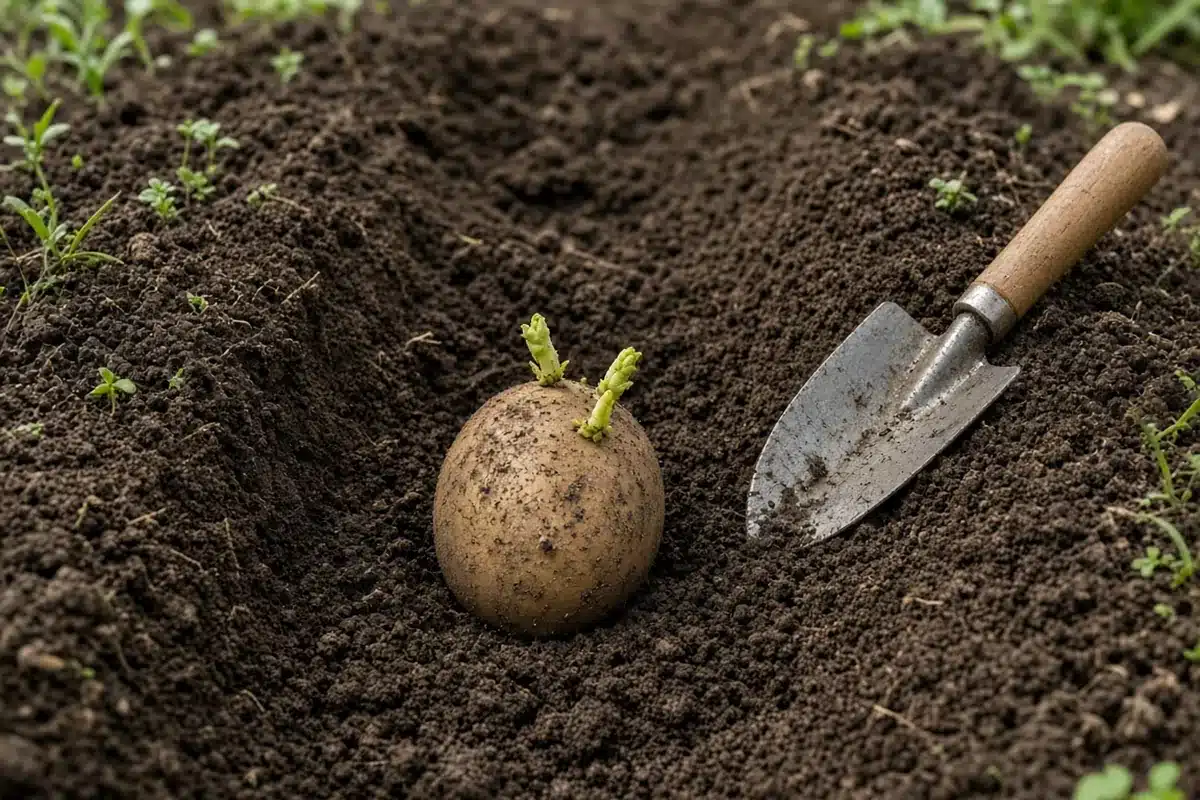
Set tubers in a trench about four inches deep with sprouts up. Cover gently so the sprouts do not break.
Troubleshooting
Long, pale sprouts. Your room was likely too dark or warm. Rub them off and move tubers to a bright spot.
No sprouts after weeks. The room is too cold. Move tubers somewhere a bit warmer.
Sprouts break at planting. They grew too long. Plant sooner next time.
Tubers shriveled. They dried out in hot sun. Use indirect light.
Cut pieces rot. You planted them while too wet. Let them dry before planting.
Chit seed potatoes for several weeks before planting to encourage earlier emergence. Kind Seed Co shares more garden ideas in outdoor growing.
Sources
- Potato seed handling and treatment, Utah State University Extension, Potato seed handling and treatment
- Potato facts: growing potatoes in the home garden (Bulletin 2077), University of Maine Cooperative Extension, Potato facts
- Physiological age of seed potato, NDSU Potato Extension, Physiological age of seed potato
FAQ
Is chitting necessary?
No. Unchitted potatoes still grow well, though they emerge a little later.
How long does chitting take?
Most tubers need about three to five weeks.
Can you chit grocery potatoes?
Many are coated to slow sprouting. Certified seed potatoes work better.
What is physiological age?
It describes how far a tuber has moved through its sprouting life.
Which end of the potato goes up?
Set the rose end, with the most eyes, facing up.



