Rose Rosette Disease: Witches Broom Signs and Plant Removal

The short answer
Rose rosette is a virus disease spread by tiny mites that causes witches broom growth on roses. Look for clusters of thin red shoots, extra thorns and twisted leaves. There is no known way to clear the virus from a plant, so removing infected roses is the usual advice. Spacing and close inspection help stop it from spreading.
Knowing the signs early helps you save nearby roses.
What are the signs of rose rosette?
The most telling sign is witches broom. A stem sends out many short shoots bunched together, like a small broom.
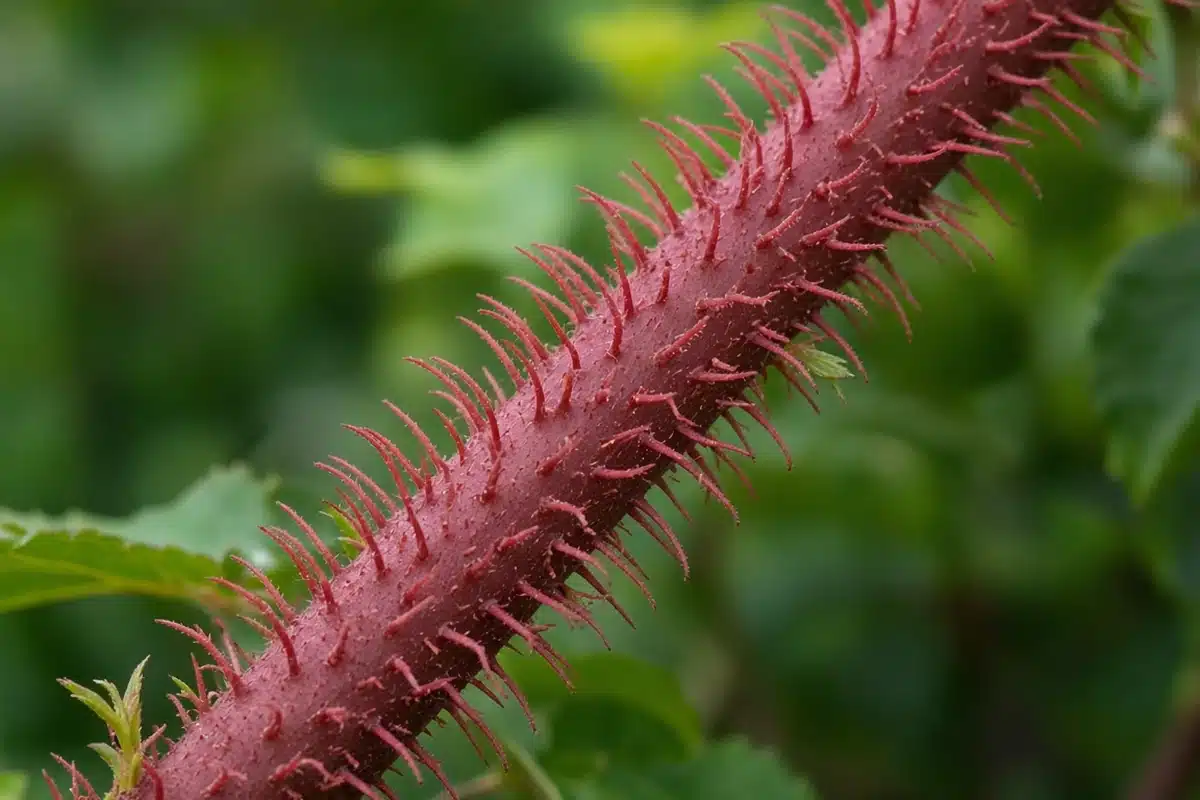
The University of Maryland Extension page on rose rosette disease describes the main signs. New shoots are often bright red and grow fast. Thorns become dense and soft, and leaves may look small, twisted or crinkled.
| Sign | What it looks like | Notes |
|---|---|---|
| Witches broom | Bunched short shoots | Main sign |
| Red new growth | Bright red stems and leaves | Stays red longer than normal |
| Extra thorns | Dense soft thorns | Stems look hairy |
| Deformed leaves | Small, twisted, crinkled | Often on new shoots |
| Thick stems | Stems swell | Canes may look fleshy |
Sources: University of Maryland Extension, Virginia Cooperative Extension, Clemson Cooperative Extension.
Some roses have red new growth that’s normal. The difference is that infected growth stays red, bunches up and looks distorted.
How does rose rosette spread?
Rose rosette is caused by a virus. Tiny eriophyid mites carry it from plant to plant. These mites are too small to see without magnification. They drift on wind and move through touching plants.
The Virginia Cooperative Extension publication on rose rosette disease explains how the mites spread the virus and how wild multiflora roses can act as a source.
Closely spaced roses let mites move between plants easily.
What should you do with an infected rose?
There’s no known way to clear the virus from an infected plant. Removal is the usual advice.
The Clemson Home and Garden Information Center fact sheet on rose rosette disease recommends removing and bagging the whole plant, including roots. Bagging stops mites from spreading to nearby roses. Put it in the trash, not compost.
Pruning out only the broom growth usually doesn’t stop the virus, since it may already be in the rest of the plant.
Clean tools after working on infected roses. Our post on sanitizing pruning shears for cannabis covers how to clean blades.
How can you stop it from spreading?
Leave space between roses so they do not touch. Gaps make it harder for mites to move between plants.
Remove wild multiflora roses nearby if you can. They often carry the virus.
Check roses often during the growing season. Catching broom early lets you remove plants before mites move on.
Buy roses from a trusted nursery and inspect them before planting.
Our post on pruning marijuana plants covers pruning habits that apply to many garden plants.

Can you replant roses in the same spot?
Many gardeners wait a short time before replanting to be sure all roots are gone. Remove every bit of root, since root sprouts can carry the virus.
Pick a rose with a good record in your area. Space new plants well.
Our post on the effects of environmental stresses on weed plants explains how stress can weaken plants in general.
How do you tell rose rosette from herbicide damage?
Drift from weed killers can twist rose leaves and make odd, narrow growth. That can look a lot like rose rosette at first glance.
Herbicide damage often shows up on several plants at once and on many types of plants nearby, not only roses. Leaves may be strappy or cupped, but you rarely see dense soft thorns or swollen canes. Growth often returns to normal over time.
Rose rosette often starts on one plant or one cane and gets worse each week. Dense thorns, bright red bunched shoots and thick stems point to the virus. When in doubt, take clear photos and a sample to your local extension office.
Which roses are most at risk?
Most garden roses can get the virus. Shrub roses and roses planted in dense mass beds are often hit hard, since their tightly packed canes let mites move freely. Wild multiflora roses along fence lines are a common source. A mixed planting with roses spaced apart among other shrubs gives mites fewer easy paths.
How to: step by step
- Learn the signs of witches broom and extra thorns.
- Inspect roses often in spring and summer.
- Bag and remove infected plants with their roots.
- Clean tools after each plant.
- Space roses so they do not touch.
- Remove nearby wild multiflora roses.
Troubleshooting
Red new growth. It may be normal. Watch for bunching and distortion.
Broom on one cane. The whole plant is likely infected. Plan to remove it.
Disease in several plants. Mites are moving. Remove infected plants and widen spacing.
Root sprouts after removal. Roots were left behind. Dig them out.
New rose showing signs. It may have come infected. Remove it and talk to the nursery.
Early action stops rose rosette from moving through a garden. Kind Seed Co shares more garden ideas in outdoor growing.
Sources
- Rose rosette disease, University of Maryland Extension, Rose rosette disease
- Rose rosette disease (450-620), Virginia Cooperative Extension, Rose rosette disease (450-620)
- Rose rosette disease, Clemson Cooperative Extension, Rose rosette disease
FAQ
Can rose rosette be reversed?
No known method clears the virus from a plant. Removal is standard advice.
What causes rose rosette?
A virus carried by tiny eriophyid mites.
Is pruning the broom enough?
Usually not. The virus may already be in the rest of the plant.
How far apart should roses be?
Far enough that their leaves do not touch.
Can I compost infected roses?
No. Bag them and put them in the trash.