
Common Ragweed in Cannabis Gardens: Spot It and Stop Seed
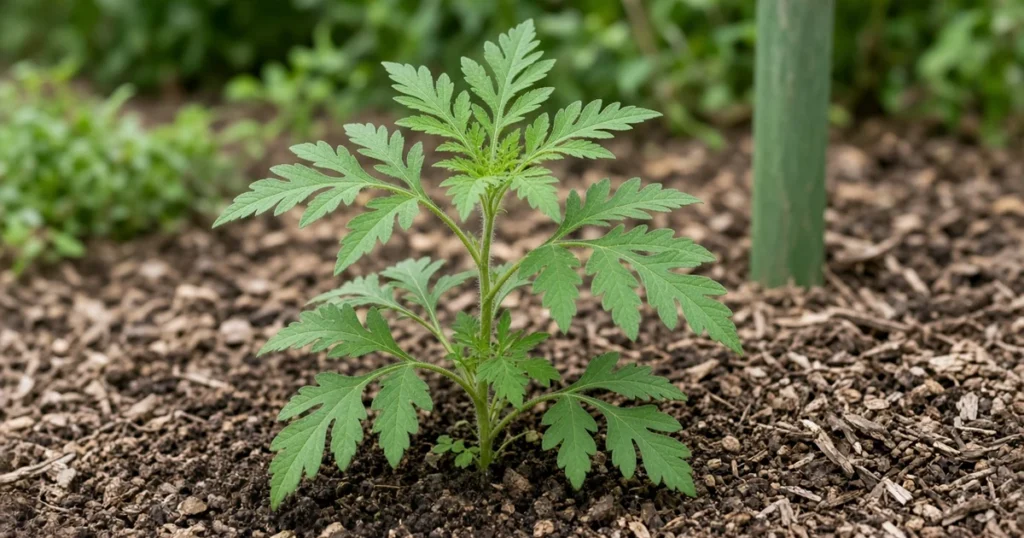
Quick answer: Common ragweed is a summer annual with fernlike leaves that sprouts in late spring and can reach 6 feet. Cornell University calls it a widespread garden weed and its pollen a common allergy trigger. NC State Extension says hoeing and hand pulling control it best, and the key is removing plants before they set seed.
What Is Common Ragweed?
A native summer annual in the daisy family. NC State Extension describes it as native to most of North America and naturalized in many other parts of the world. Its distribution list covers nearly every state in the lower 48.
Cornell University’s weed identification site calls common ragweed a widespread and common weed of farm fields, waste areas and gardens. It adds that the plant can cause significant crop loss if left unmanaged for 2 to 3 weeks after planting. That early window matters in a cannabis bed, because young transplants have the least room to compete. Our overview of weed control in outdoor cannabis covers the wider picture.
How Do You Identify Common Ragweed?
Look for finely cut leaves on a bushy, hairy plant. Cornell lists these clues:
- Seedlings. Cornell, which covers the Northeast, says they emerge from May through June. Seed leaves are dark green, thick and spatula shaped, often with tiny purple spots on the edge.
- First true leaves. These are opposite, hairy on top and very hairy below, and already show the fernlike cut of adult leaves.
- Older plants. Upright and bushy, up to 6 feet tall, with hairy stems and alternate leaves that are once or twice compound.
- Roots. Fibrous rather than taprooted, and shallow, Cornell says, which is why young plants pull out easily.
- Flowers. Tiny and green. Male flowers sit on spikes at the top of the plant, while female flowers are tucked where upper leaves join the stem.
NC State Extension adds that most plants stand 1 to 3 feet tall with a spread of 3 to 4 feet, though some reach 6 feet.
What Looks Like Common Ragweed?
Two other plants are easy to mix up with it. Cornell says mayweed chamomile also has fernlike foliage, but it is much smaller, forms a low rosette and carries a daisy flower. Giant ragweed can grow even taller than 6 feet, according to Cornell, and its leaves usually have 3 lobes spread like fingers on a hand instead of the feathery cut of common ragweed.
Checking the leaf shape on a young plant is usually enough. If the leaves look like a fern and the stems are hairy, you are most likely looking at common ragweed, so pull it.
Why Does Ragweed Pollen Matter in the Garden?
Cornell calls its pollen a common allergy trigger. The plant makes tiny green flowers at the ends of its branches in late summer.
NC State Extension explains that the male flowers release large amounts of pollen from late summer into fall, and the wind carries it. That timing overlaps the stretch when outdoor cannabis is bulking up. Pulling ragweed in early summer, before those male spikes form, keeps the plant from ever reaching that stage in your beds.
How Long Does Ragweed Seed Last?
It can last several years. NC State Extension says each plant makes many seeds that stay viable for several years, and its fruit description notes seeds viable for up to 5 years. NC State describes the woody fruit as having 4 to 7 spinelike projections resembling a crown.
The University of Maine Cooperative Extension makes the practical point: a garden can become infested quickly with an annual weed like ragweed when plants are allowed to set seed. One season of escaped plants can feed several seasons of seedlings.
Where Does Common Ragweed Grow Best?
It does best on dry, sunny, poor ground. NC State Extension says it adapts to many soils, prefers drier conditions in full sun to partial shade, and tolerates drought and poor soil. That means it often shows up first along dry bed edges, paths and fence lines before moving into the bed itself.
How to Control Common Ragweed in a Cannabis Bed
- Scout in late spring. Cornell says seedlings emerge from May through June. Check beds weekly in that window and look for the thick, spotted seed leaves.
- Pull or hoe while small. NC State Extension says control is best accomplished by hoeing and hand pulling. The shallow, fibrous roots make young plants easy to lift.
- Keep cultivation shallow. The University of California Statewide IPM Program (UC IPM) advises shallow hoeing and warns that deep tilling brings buried weed seeds to the surface. Our post on tilling vs no till cannabis beds covers that tradeoff.
- Mulch the cleared soil. UC IPM recommends a medium mulch about 3/4 inch in size kept 3 to 4 inches deep, replenished as it breaks down. See our guide to mulch for cannabis for material choices.
- Pull anything that gets past you before flowering. UC IPM says to remove young weeds by hand before they flower and set seed. For ragweed, that also means before the pollen spikes open.
- Cover idle ground. For a bed you will skip for a season, the University of Maine suggests a cover crop to crowd ragweed out, ended before it goes to seed. Our post on cover crops for cannabis lists options.
- Watch the edges. Because the plant favors dry, poor soil, check paths and borders each week and weed them along with the bed.
Common Ragweed at a Glance
| Subject | Extension finding | Attribution |
|---|---|---|
| Life cycle | Summer annual from seed | Cornell, NC State |
| Seedling emergence | May through June | Cornell |
| Mature height | Usually 1 to 3 feet, up to 6 feet | NC State |
| Root system | Fibrous and shallow | Cornell |
| Seed life | Several years, up to 5 years | NC State |
| Early competition | Significant crop loss if unmanaged 2 to 3 weeks after planting | Cornell |
Should You Use Herbicides Near Cannabis?
No. Use pulling, hoeing and mulch. No EPA registered herbicide label lists cannabis as a use site, and state rules vary, so check your state agriculture department. UC IPM says herbicides should not normally be needed by home gardeners.
Troubleshooting Common Ragweed
Seedlings keep coming back every spring. NC State Extension says seeds stay viable for several years. Keep pulling before seed set and the seed bank will shrink over time.
Plants are already tall and bushy. Cornell describes mature plants up to 6 feet. Pull them before the green flower spikes open and bag the tops.
A new patch appeared after digging. UC IPM warns that deep tilling brings buried seed up. Switch to shallow hoeing and mulch right after.
It might be giant ragweed. Cornell says giant ragweed has leaves with about 3 fingerlike lobes. Either way, remove it early.
The bed sat empty and filled with ragweed. The University of Maine notes that unattended gardens infest quickly. Plant a cover crop next time.
Hand pulling, hoeing and mulch handle most annual weeds in cannabis beds, and the other weed guides from Kind Seed Co cover more species.
Sources
- Cornell University Weed Identification, Common Ragweed: https://blogs.cornell.edu/weedid/field-crops/common-ragweed-ambrosia-artemisiifolia/
- NC State Extension Gardener Plant Toolbox, Ambrosia artemisiifolia: https://plants.ces.ncsu.edu/plants/ambrosia-artemisiifolia/
- University of Maine Cooperative Extension, How do you eliminate ragweed from your garden: https://extension.umaine.edu/gardening/2023/04/13/how-do-you-eliminate-ragweed-from-your-garden/
- UC Statewide IPM Program, Weed Management in Landscapes: https://ipm.ucanr.edu/home-and-landscape/weed-management-in-landscapes/
FAQ
Is common ragweed an annual?
Yes. NC State Extension and Cornell both describe common ragweed as a summer annual that grows from seed each year. Cornell says seedlings appear from May through June, so a weekly check of your beds in late spring catches most of them while they are small and easy to pull out by hand.
When should I pull ragweed from my cannabis bed?
Pull it as early as you can. Cornell says ragweed can cause significant crop loss if left unmanaged for 2 to 3 weeks after planting. NC State Extension recommends hoeing and hand pulling, and the best time is before the plant forms its green flower spikes and starts to set seed.
How long does ragweed seed stay alive in soil?
NC State Extension says ragweed seeds remain viable for several years, and its fruit notes list up to 5 years. That is why letting even a few plants go to seed can restock a bed for seasons. Removing every plant before seed set is the surest way to shrink that supply.
Does mulch help stop common ragweed?
Yes. UC IPM says mulch blocks the sunlight that weed seeds need to sprout. It recommends a medium mulch kept about 3 to 4 inches deep and topped up as it breaks down. Use it after you have pulled existing plants, then hand pull any seedling that pushes through.


