Pine vs Spruce: Needles Plus Cones Plus Siting
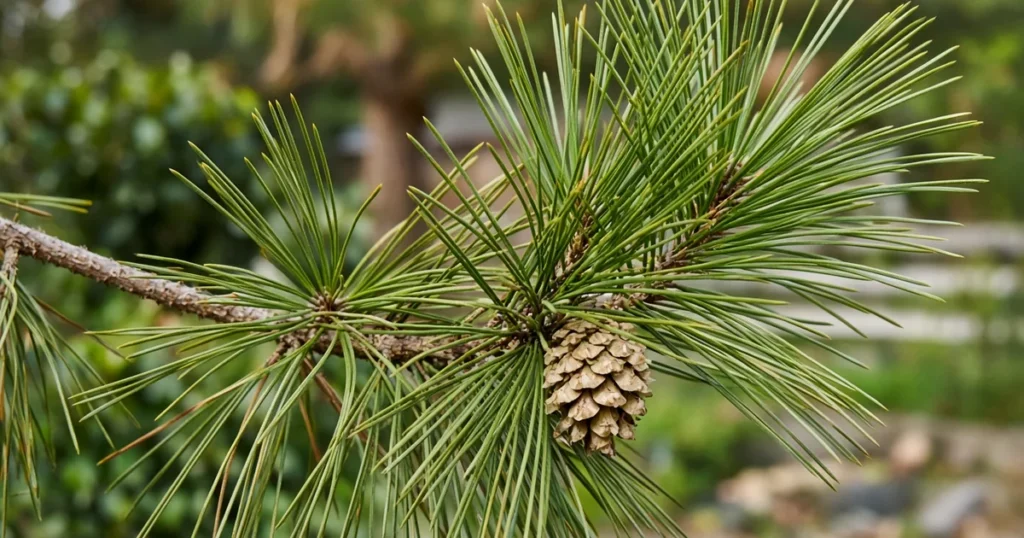
Pine vs spruce is easiest to settle by checking the needles. NDSU Extension says pine needles are longer than those of spruce or fir and grow in bundles called fascicles. NC State Extension says Norway spruce needles are up to 1 inch long, four sided and arranged in rows.
The short answer
Pines carry long needles in bundles of 1 to 5. Spruces carry short single needles in rows like a hairbrush. NDSU Extension says pine needles run 1.5 to 9 inches. NC State Extension says spruce cones hang down and Norway spruce cones reach 4 to 6 inches. Spruces favor cool summers.
How do pine and spruce needles differ?
NDSU Extension says pines are unique among evergreens because their needles are longer, at 1.5 to 9 inches. They are held together in bundles called fascicles.
NC State Extension says pine needles come in fascicles of 1 to 5 on short shoots. NDSU uses the count per bundle, two, three or five, to tell pines apart.
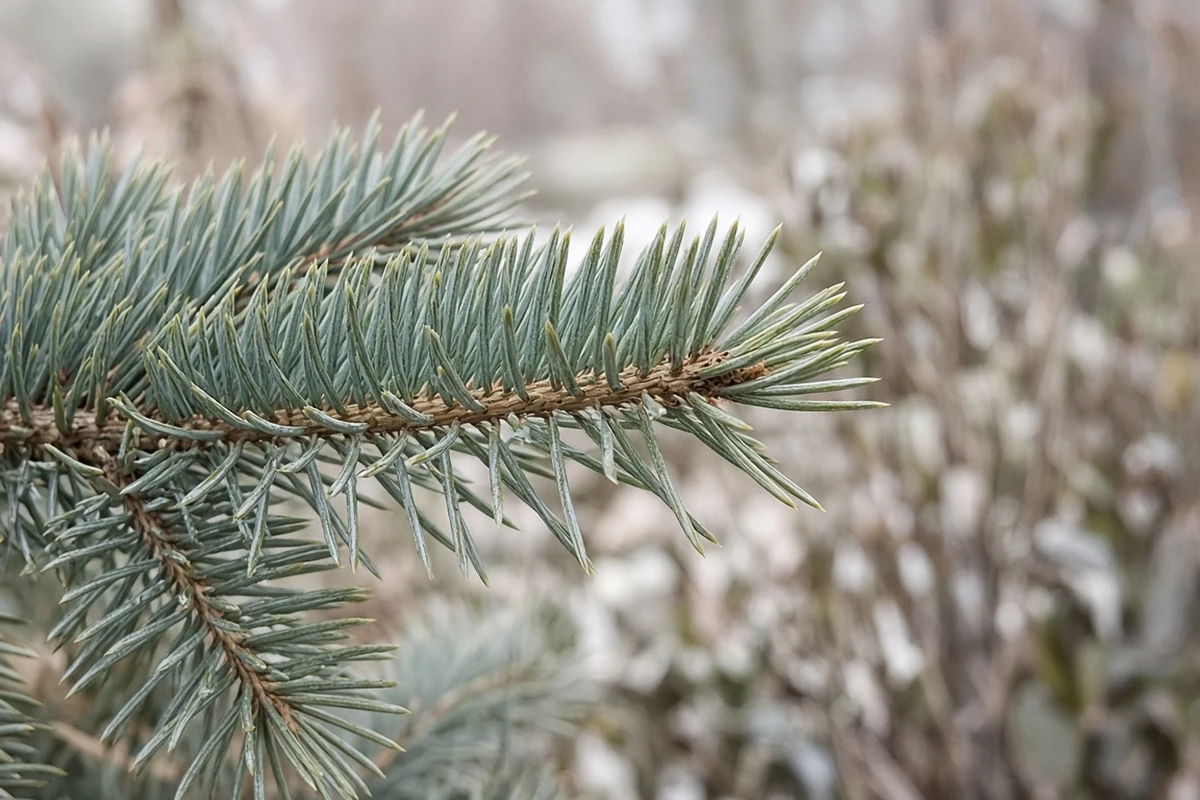
Spruce needles grow singly. NC State says Norway spruce needles are four sided and attached by tiny pegs in rows like a hairbrush. Blue spruce needles are sharply pointed and silvery blue.
How do the cones compare?
NC State Extension says Norway spruce cones are pendulous. They start green to violet and ripen silvery brown at 4 to 6 inches long with rounded scales.
Pine cones differ by species. NDSU Extension lists ponderosa pine cones at 3 to 5 inches with a sharp prickle on each scale.
Eastern white pine cones run 4 to 8 inches long and narrow, says NDSU. Mugo pine cones are only 1 to 2 inches and generally round.
| Trait | Pine | Spruce |
|---|---|---|
| Needle length | 1.5 to 9 inches | Up to 1 inch |
| Needle form | Bundles of 1 to 5 | Single, four sided, in rows |
| Cones | Vary by species | Pendulous |
| Climate | Many tolerate dry sites | Prefers cool summers |
Source: NDSU Extension plus NC State Extension.
Which tree suits which site?
NC State Extension says pines need sunny positions with room to grow. Shed needles, resin and cones can be untidy near patios.
Norway spruce prefers full sun and moderately moist, well drained, sandy, acidic soil. NC State says it has a shallow root system and does poorly in zone 7 in the southern United States.
Blue spruce thrives in cooler climates and cannot tolerate heat and humidity. NDSU says ponderosa pine is fairly drought tolerant and does well on a variety of soils.
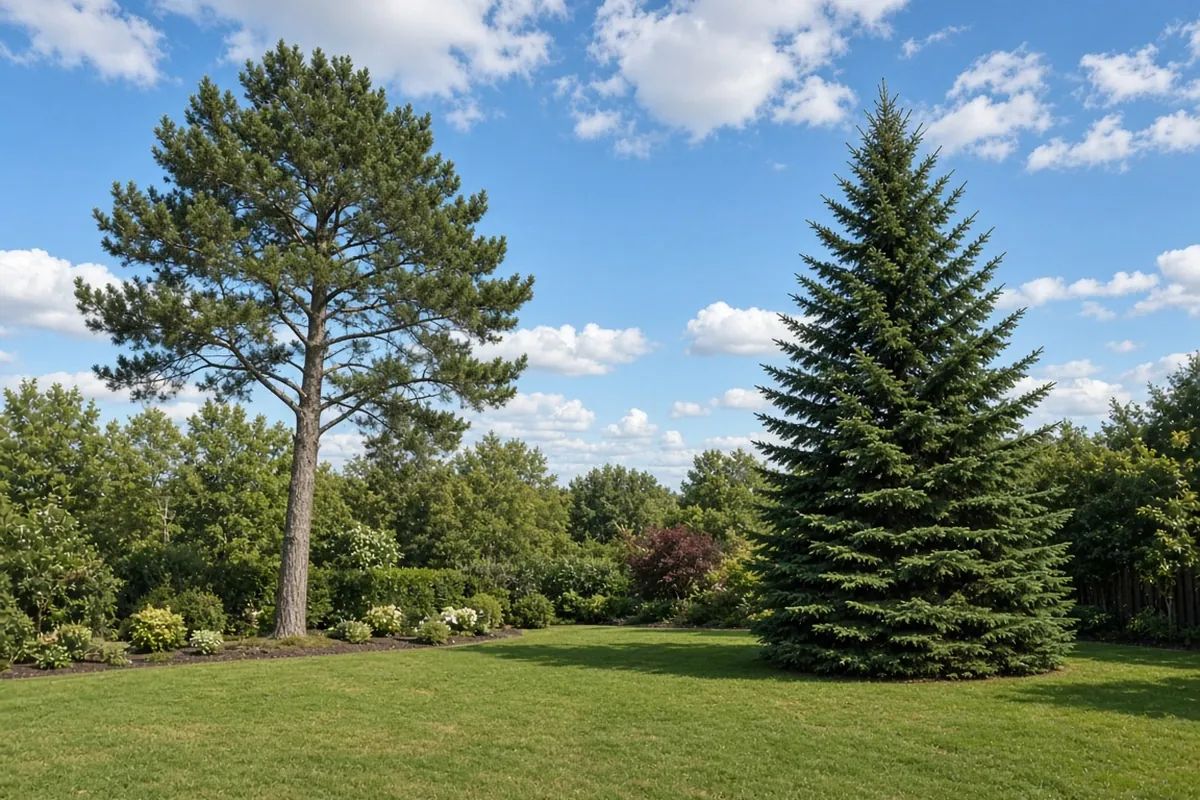
How to: step by step
- Look at a twig to see bundles or single needles.
- Count needles per bundle on a pine.
- Roll a spruce needle to feel four sides.
- Note whether cones hang down.
- Choose pine for sunny or dry spots.
- Choose spruce only where summers are cool.
Troubleshooting
Spruce struggling in the South: summer heat. Choose a pine instead.
Messy patio: shed needles plus resin. Site pines away from paving.
Sparse growth: too little sun. Give pines open space.
For related reading see growing cannabis near trees, windbreaks for outdoor cannabis plus cannabis leaf anatomy. Kind Seed Co also stocks cannabis seeds.
Sources
- Pinus (pine), NC State Extension Gardener Plant Toolbox
- Picea abies (Norway spruce), NC State Extension Gardener Plant Toolbox
- Picea pungens (Colorado blue spruce), NC State Extension Gardener Plant Toolbox
- Pines for North Dakota, NDSU Extension
FAQ
Do growth rates differ?
Rates vary by species. NC State Extension says blue spruce has a slow to medium growth rate and reaches 30 to 60 feet tall and 10 to 20 feet wide. NDSU Extension calls Swiss stone pine very slow growing. Check the rate for the exact species before you plant either tree.
Do pines need full sun?
Yes. NC State Extension says pines need sunny positions with room to grow. NDSU Extension says ponderosa pine is fairly drought tolerant and does well in shelterbelts and urban areas. Plan for shed needles, resin and cones, which can be messy and a nuisance near paths or patios.
Can spruce grow in hot climates?
Poorly. NC State Extension says Norway spruce does poorly in zone 7 in the southern United States because it prefers cool summer climates. It dislikes heat, wet feet and hot, dry summers. Blue spruce cannot tolerate heat and humidity and does well in cooler climates.
How do you tell pines apart?
NDSU Extension says the main traits are the number of needles per fascicle, the length of those needles and the size and shape of the cones. Scotch pine has two twisted needles per bundle. Limber pine and eastern white pine both carry five needles per bundle.
Do deer bother Norway spruce?
Not often. NC State Extension lists Norway spruce as particularly resistant to deer and air pollution. It grows 40 to 60 feet tall as a conical needled evergreen. Its branches are upright when young and become pendulous as the tree matures, so give it ample room.