
Raised Bed on Grass: Smother the Turf Underneath
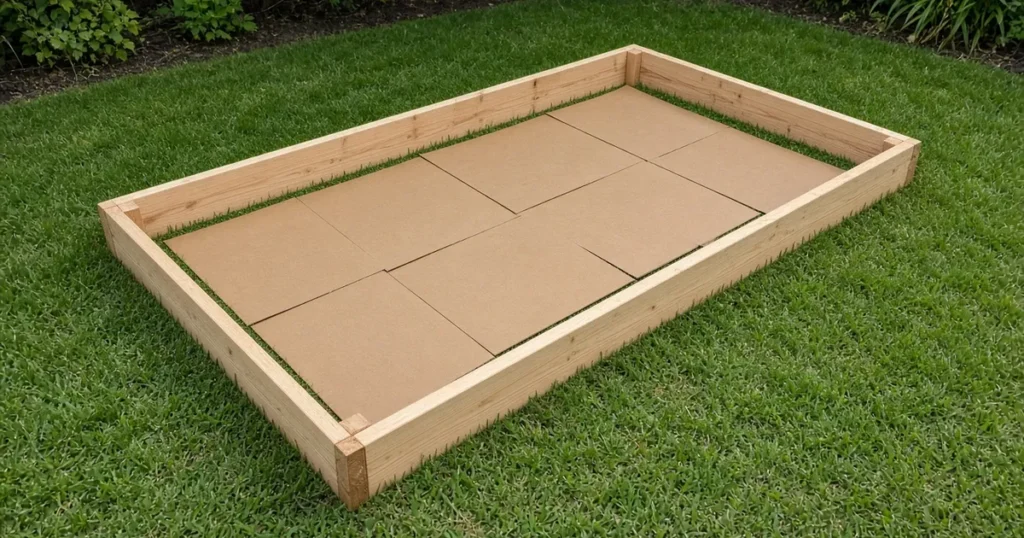
A raised bed on grass does not need the turf dug out first. Oregon State University Extension advises smothering the grass with plain brown cardboard before the bed goes on. University of Vermont Extension advises mowing the lawn as short as possible first. The cardboard breaks down over a few months while the bed fills.
The short answer
Mow the grass short, cover it with one or two layers of plain cardboard plus set the frame on top. Iowa State University Extension notes smothering takes six weeks or longer and several months to kill the turf fully. Overlap the sheets 8 to 10 inches so no light gets through, then fill the bed.
How do you smother grass under a raised bed?
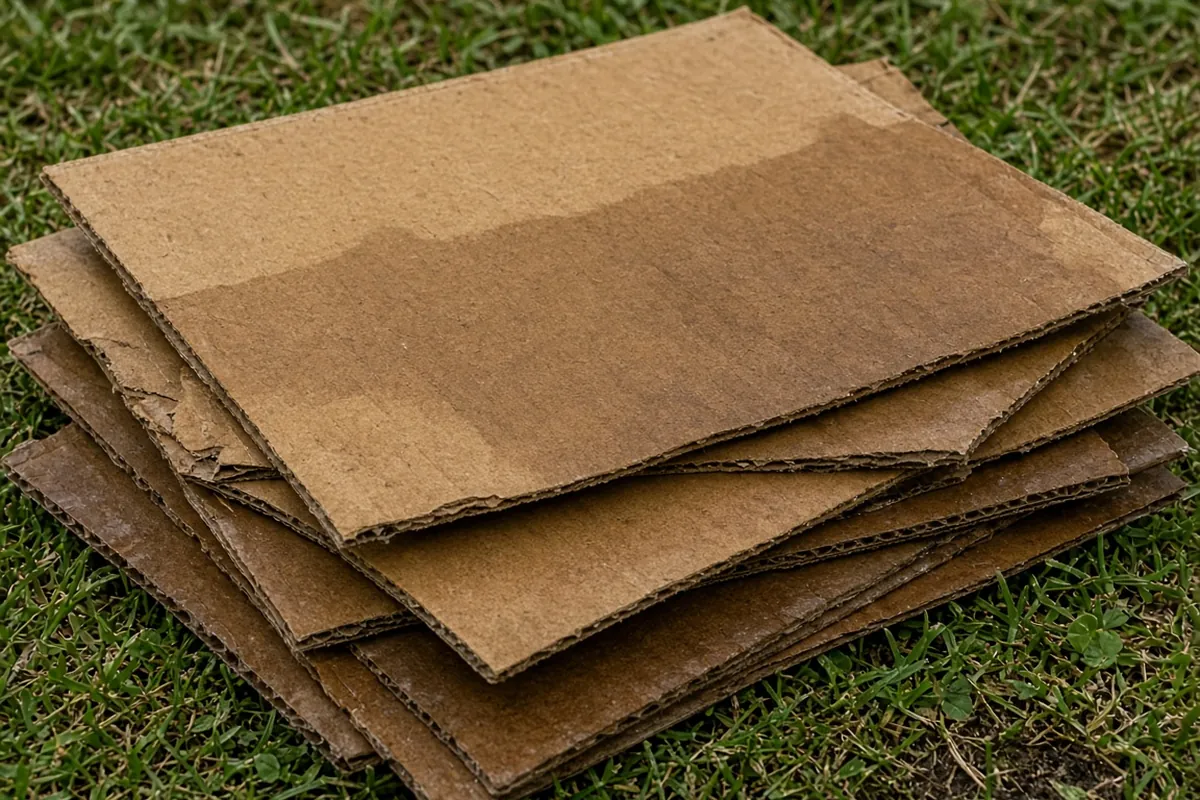
Oregon State University Extension advises plain brown corrugated cardboard that is not shiny or printed. Strip any tape or staples first. Wet the cardboard before laying it so it settles onto the turf. University of Vermont Extension advises overlapping the sheets 8 to 10 inches with no gaps.
| Cover | Layering | Timing |
|---|---|---|
| Cardboard | 1 to 2 layers overlapped 8 to 10 inches | Six weeks or longer |
| Newspaper | 6 to 8 sheets | Six weeks or longer |
| Wood chip mulch | At least 8 inches deep | Check after 2 to 4 weeks |
| Sheet mulch over turf | Mulch 4 to 6 inches deep | Breaks down in about 4 to 6 months |
Source: Iowa State University Extension plus University of Vermont Extension.
How thick should the cardboard be?
Iowa State University Extension advises one to two layers of cardboard or six to eight sheets of newspaper. It notes that thicker does not help. Oregon State University Extension also advises cardboard that is not too thick. University of Minnesota Extension notes cardboard can slow water from moving into the soil until it breaks down.
What should the bed be filled with?
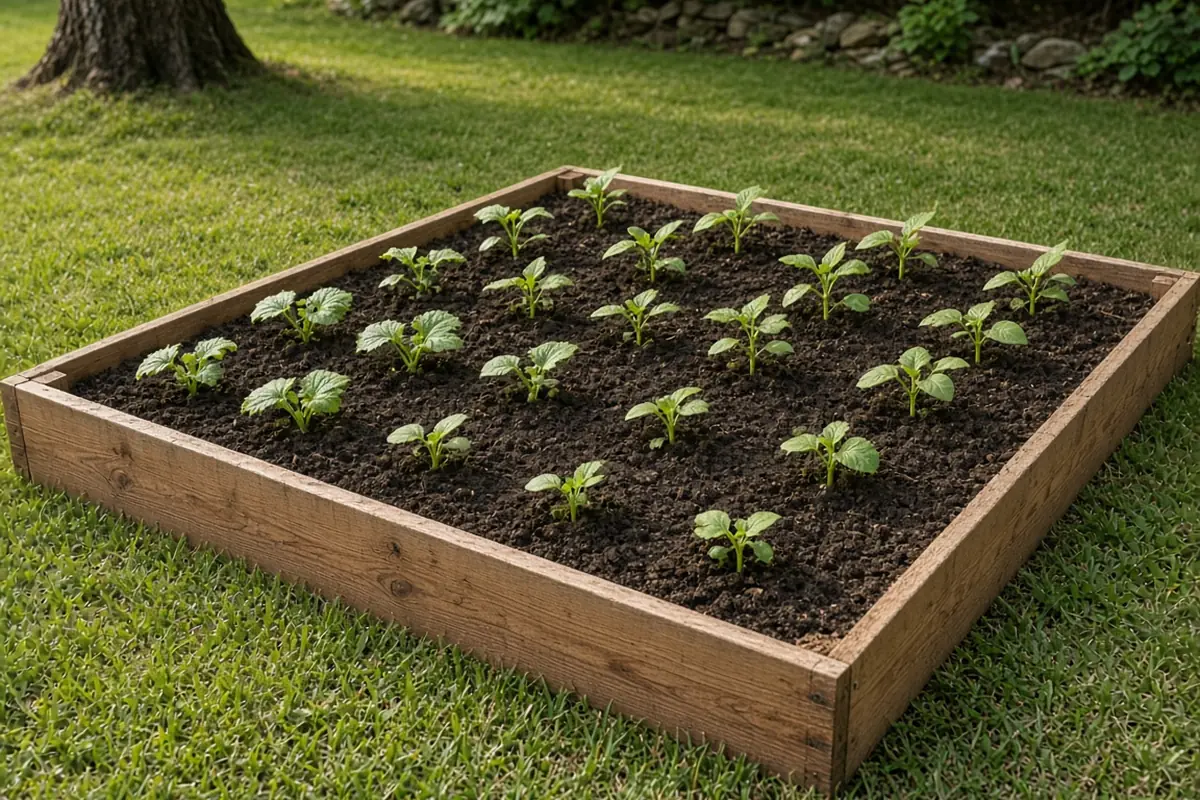
University of Minnesota Extension advises a mix of 2/3 to 1/2 topsoil with 1/2 to 1/3 compost. It notes that too much compost can dry out quickly. University of Vermont Extension advises spreading mulch 4 to 6 inches deep over the cardboard, with deeper soil for annual flowers plus vegetables.
How to: step by step
- Mow the grass as short as possible.
- Remove tape plus staples from plain brown cardboard.
- Wet the cardboard so it lies flat.
- Lay one or two layers, overlapping 8 to 10 inches.
- Place the bed frame on top of the cardboard.
- Fill with a topsoil plus compost mix.
Troubleshooting
Grass growing through gaps: the sheets did not overlap enough. Lift the edge plus add a piece that overlaps 8 to 10 inches.
Water pooling on top: the cardboard has not broken down yet. Water slowly plus allow a few months to soften.
Bed soil settling: the organic layers are breaking down. Top up with more of the topsoil plus compost mix.
For related reading see raised beds for cannabis, mulch for cannabis plus square foot gardening for cannabis. Kind Seed Co also stocks cannabis seeds.
Sources
- Sheet mulching and lasagna composting with cardboard (EM 9559), Oregon State University Extension
- Sheet mulching for lawn to garden conversion, University of Vermont Extension
- How to kill grass to create a new garden bed, Iowa State University Extension, Yard and Garden
- Raised bed gardens, University of Minnesota Extension
FAQ
Should grass be dug out before building a raised bed?
Digging is not needed. Iowa State University Extension lists smothering with cardboard or newspaper as a way to kill turf in place. Oregon State University Extension notes the cardboard breaks down after several months. Smothering also leaves the soil structure under the bed in place, which saves a lot of labor.
What kind of cardboard works?
Oregon State University Extension advises plain brown corrugated cardboard that is not glossy or printed. Iowa State University Extension notes to avoid waxed cardboard. Remove any plastic tape plus metal staples before laying it down. Moving boxes plus appliance boxes usually work well once they are flattened and the tape is pulled off.
How long does the grass take to die?
Iowa State University Extension notes smothering takes six weeks or longer and several months to kill the turf completely. University of Vermont Extension notes cardboard plus mulch break down in about four to six months. Starting in fall for spring planting gives the grass plenty of time under the cover before the season begins.
Can I plant right away?
Iowa State University Extension notes you can plant right away through the mulch if there is no time to wait. University of Vermont Extension notes plants can go directly into the bed once the sheet mulch has broken down. Waiting a season usually gives the most even results.
How much should cardboard sheets overlap?
University of Vermont Extension advises overlapping the edges by 8 to 10 inches so there are no gaps. Grass finds any gap that lets in light plus grows up through it. Lay the sheets like shingles plus extend them a little past the frame so the edges of the bed stay covered too.


