
Ridge and Furrow Beds: Shaping Rows for Drainage or Water Holding
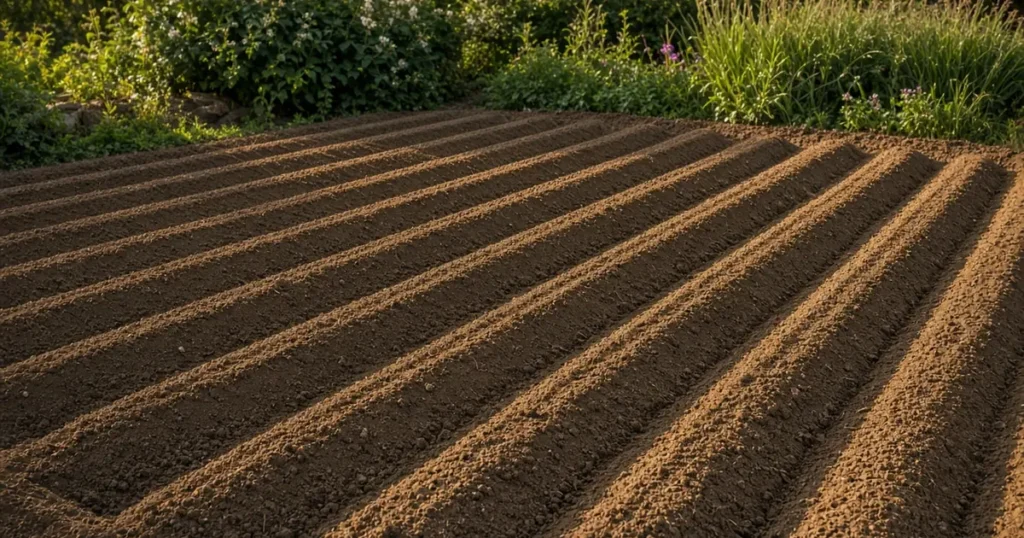
Ridge and furrow beds form soil into raised rows with channels between. The UC Master Gardener Program pairs beds 5 or 6 inches high with furrows that carry water, and says raised beds let excess rain drain away.
The short answer
Plant on ridges where soil stays wet, since water drains into the furrows. Where water is scarce, plant low, since it collects there. UC suggests ridges 5 or 6 inches high and 32 to 40 inches apart from center to center, with flat tops 18 to 24 inches wide.
What are ridge and furrow beds?
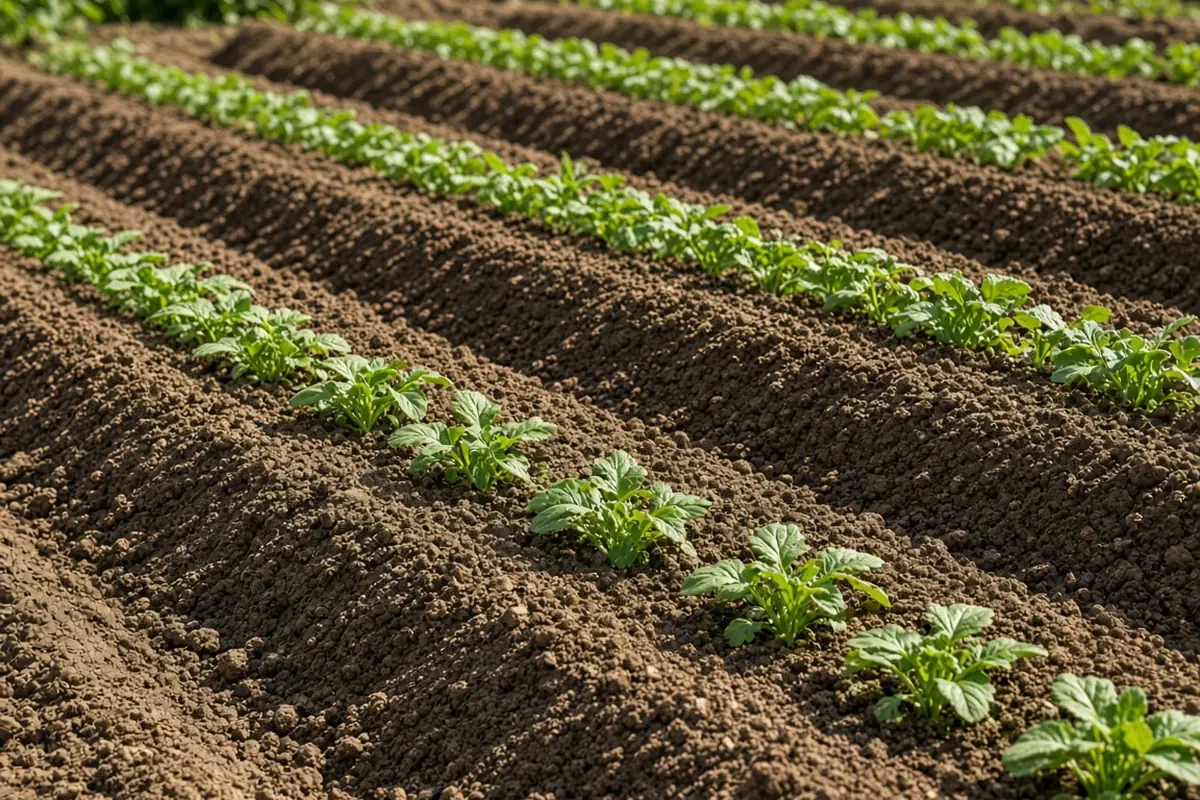
Ridges are low beds. Furrows are the channels between them. UC says to rake ridge tops flat and set seed rows about 3 inches from each edge, then run water down the furrows. Arizona Extension notes a slight slope so water moves along the furrow.
When should you plant on ridges?
Wet ground calls for planting on ridges. UC says raised beds help winter crops by letting excess rain drain off. Delaware adds that raised beds hold roots above waterlogged or compacted soil, and Minnesota says raised soil warms sooner in spring. Read more in checking drainage in cannabis beds.
When should you plant in furrows?
Plant low when water is short. Arizona Extension suggests sunken beds in windy areas to collect water and shelter young plants. Nevada Extension says furrows work well wide and shallow, 3 to 4 inches deep, on level ground. In sand, it limits furrows to larger crops like tomatoes and peppers, each in a basin that holds water at the roots.
| Site | Plant where | Source |
|---|---|---|
| Wet or heavy soil | On ridges | UC, Delaware |
| Dry and windy | In sunken beds | Arizona |
| Sandy soil | In basins | Nevada |

How to: step by step
- Mark rows 32 to 40 inches apart.
- Pull soil into ridges 5 or 6 inches high.
- Rake tops flat, 18 to 24 inches wide.
- Sow about 3 inches in from each edge.
- Run water down the furrows.
Troubleshooting
Ridges wash away: South Dakota State slopes bed sides at 45 degrees and uses drip lines.
Water stops halfway: add a slight slope, as Arizona notes.
Hillside site: see growing cannabis on a slope. For dry seasons, read watering cannabis during drought and garden microclimates for cannabis.
Shape for your site
Raise crops in wet ground and sink them in dry. Kind Seed Co shares more garden notes for outdoor growers.
Sources
- Irrigation, UC Master Gardener Program
- Ten steps to a successful vegetable garden, University of Arizona Cooperative Extension
- Irrigating (watering) your vegetable garden (FS 10-16), University of Nevada Cooperative Extension
- Gardening in raised beds and containers in the Northern Great Plains (P-00301), South Dakota State University Extension
- Raised bed gardening, University of Delaware Cooperative Extension
- Raised bed gardens, University of Minnesota Extension
FAQ
How tall should ridges be?
UC Master Gardeners suggest 5 or 6 inches high for furrow watering.
How far apart should ridges be?
UC suggests 32 to 40 inches from center to center, with flat tops 18 to 24 inches wide.
Which crops suit ridges?
UC says raised beds suit winter crops because they let excess rain drain off.
Do ridge and furrow beds need edging?
No. South Dakota State slopes the sides at 45 degrees and suggests drip lines or soaker hoses so the sides do not wash away.
Do furrows use more water?
UC says furrow watering takes more water to wet the soil to depth than sprinklers or drip.



