Snake Plant vs ZZ Plant: Leaves plus Roots plus Care
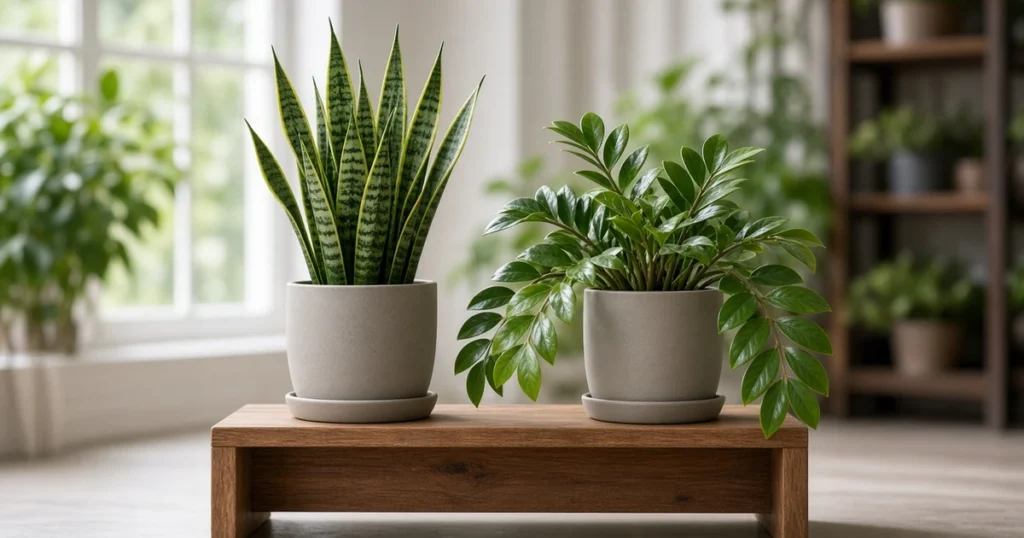
Snake plant vs ZZ plant comes down to leaves plus roots. Snake plant grows stiff, upright, banded leaves in rosettes. ZZ plant grows glossy leaflets on upright stems from thick rhizomes that store water. Both tolerate low light plus dry spells, plus both rot if overwatered.
The short answer
NC State Extension describes snake plant as a clumping succulent in the asparagus family with stiff, banded leaves up to 4 feet long. ZZ plant is an aroid with glossy, pinnate leaves rising from water storing rhizomes. Both tolerate low light. Let the soil dry between waterings for either plant.
How do the leaves differ?
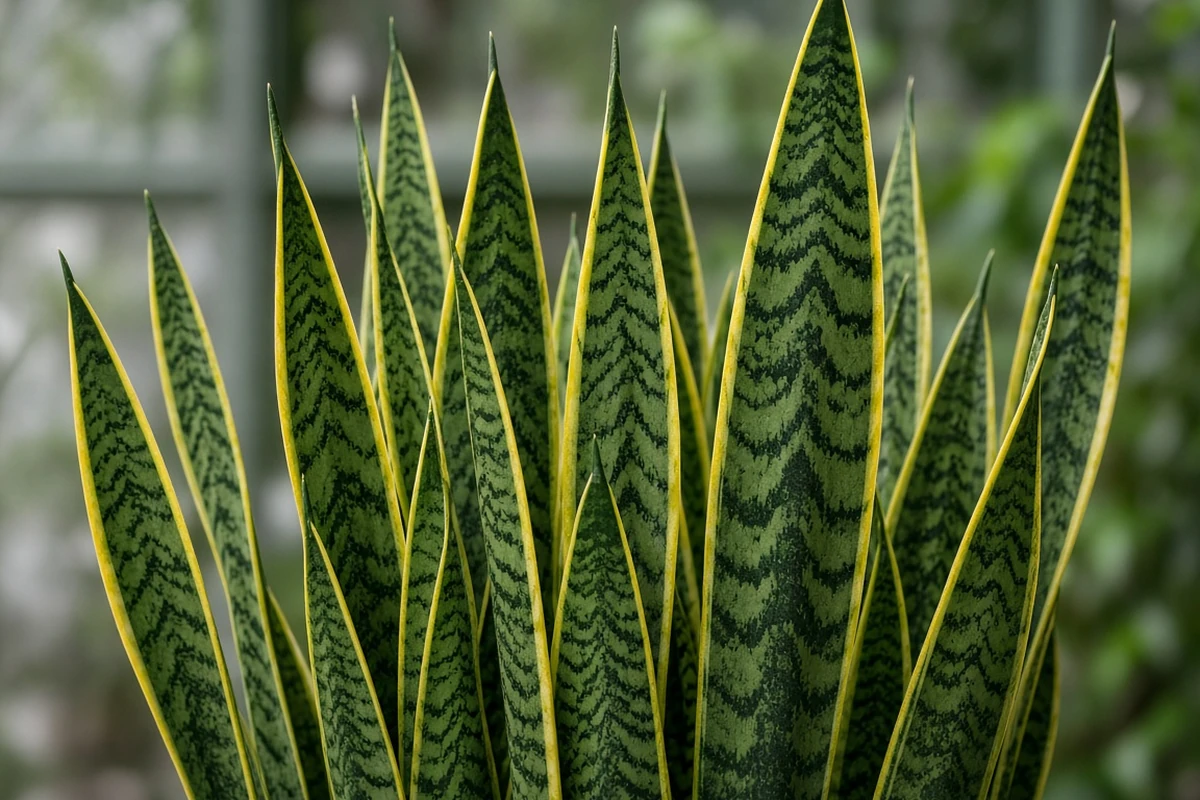
NC State Extension notes snake plant leaves are stiff, upright plus succulent. They grow in rosettes or clusters, up to 4 feet long plus 2 to 4 inches wide. Alternating transverse bands of green mark the leaves. Some varieties have yellow to white bands on the edges.
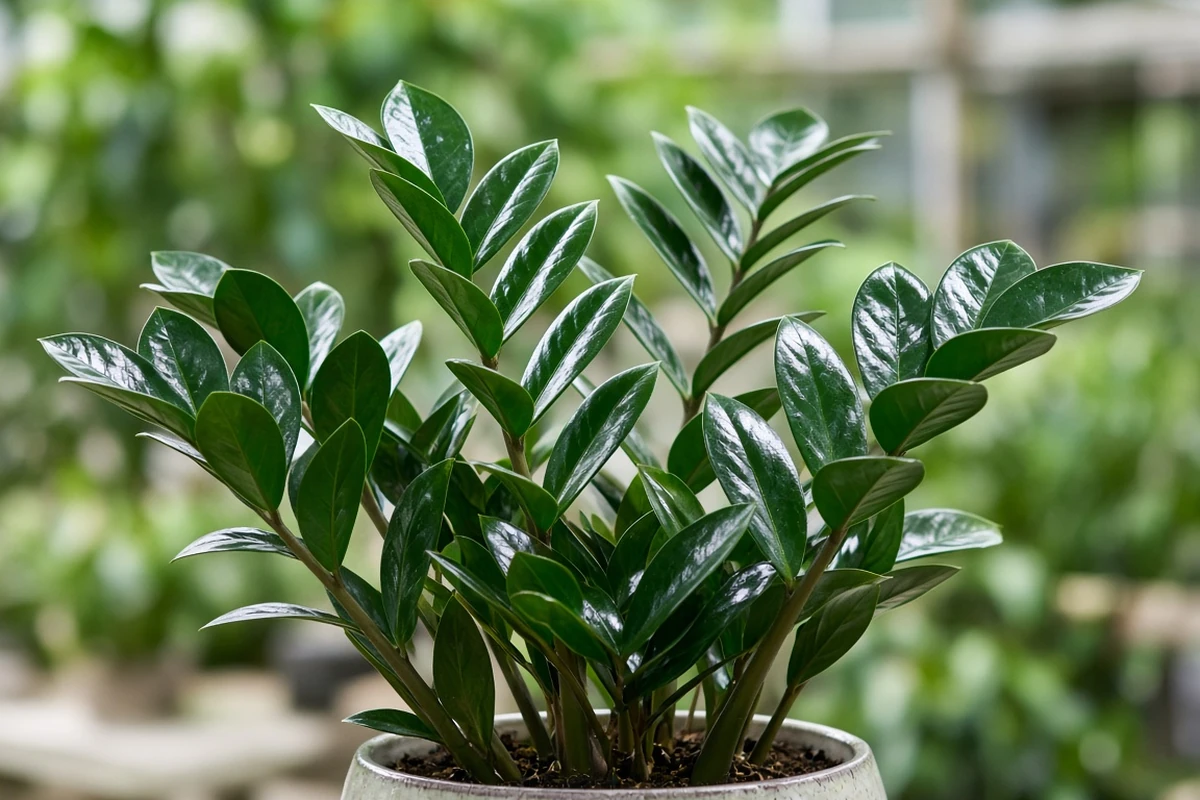
ZZ plant leaves are pinnately compound. NC State Extension notes each leaf has 6 to 8 pairs of glossy green elliptic leaflets. UF/IFAS notes ZZ looks similar to cycads, which explains its Latin name, but it is an aroid. Its closer relatives are elephant ear, anthurium plus philodendron.
| Trait | Snake plant | ZZ plant |
|---|---|---|
| Family | Asparagus family (Asparagaceae) | Aroid family (Araceae) |
| Leaves | Stiff, banded, up to 4 feet long | Glossy leaflets, 6 to 8 pairs per leaf |
| Size | Leaves up to 4 feet | 2 to 4 feet tall plus wide |
| Light | Tolerates very low light | Bright indirect, tolerates low light |
| Winter water | Every one to two months | About once a month |
Source: NC State Extension plus UF/IFAS.
How do the roots differ?
ZZ plant grows from a thick, underground rhizome. NC State Extension notes its bulbous, fleshy rhizomes give rise to glossy leaves that store water. That makes it highly drought tolerant. UF/IFAS notes this helps it survive dry periods in its native habitat in eastern Africa.
Snake plant is a clumping perennial propagated by division or stem cuttings. NC State Extension stresses well drained soil plus careful watering. Overwatering rots the roots. Both plants share that weak point, so drainage matters for both.
How does care compare?
Snake plant needs only 2 to 6 hours of direct sun a day plus tolerates very low light. In spring to autumn, let the soil dry between waterings. In winter, water only every one to two months. NC State Extension notes it tolerates low humidity plus temperatures around 50 degrees.
ZZ plant grows well in bright, indirect light but tolerates very low light. Direct sun can scald plus brown its leaves. NC State Extension advises watering twice monthly in summer only if the soil has dried out. Feed with a balanced liquid houseplant fertilizer once or twice a year.
How to: step by step
- Look for banded rosette leaves or glossy leaflets.
- Grow either plant in well drained potting soil.
- Site snake plant where it gets 2 to 6 hours of sun.
- Put ZZ in bright, indirect light, out of direct sun.
- Let the soil dry fully between waterings.
- Reduce winter watering to monthly or less.
Troubleshooting
Soft, rotting base on either plant: overwatering. Let the soil dry plus improve drainage.
Scalded, brown ZZ leaves: direct sunlight. Shift the plant to bright, indirect light.
Long, spindly growth with pale leaves: etiolation from low light, as University of Maine Cooperative Extension notes. Move the plant to brighter light.
For related reading see cannabis leaf anatomy, overwatering plus cannabis growth plus grow lights for cannabis. Kind Seed Co also stocks cannabis seeds.
Sources
- Dracaena trifasciata, NC State Extension Gardener Plant Toolbox
- Zamioculcas zamiifolia, NC State Extension Gardener Plant Toolbox
- ZZ plant, UF/IFAS Gardening Solutions
- Too much water or not enough light, University of Maine Cooperative Extension
FAQ
How often should they be watered?
Let the soil dry between waterings for both. NC State Extension advises watering snake plant only every one to two months in winter. ZZ plant needs water about once a month in winter plus twice monthly in summer, only if the soil has dried out. UF/IFAS notes ZZ does well with moderate watering every week or two.
Which one tolerates lower light?
Both tolerate low light. NC State Extension notes snake plant will tolerate very low light plus needs direct sun only 2 to 6 hours a day. ZZ plant grows in very low light, even under fluorescent light alone, but does well in bright indirect sunlight. UF/IFAS notes ZZ tolerates light levels that challenge other plants.
Why are the leaves soft or rotting?
Overwatering is the usual cause. NC State Extension notes snake plant roots will rot if overwatered, so careful watering plus well drained soil are a must. ZZ plant does not tolerate wet feet. UF/IFAS advises against letting ZZ roots sit in water, or the plant may rot. Let the soil dry between waterings.
How are they propagated?
Both grow from division. NC State Extension lists division plus stem cuttings for snake plant. ZZ plant can be propagated by division or leaf cutting. UF/IFAS notes ZZ is easily propagated from leaf cuttings, which makes it a popular passalong plant. Its rhizomatous roots store water, helping new divisions through dry periods.
Do snake plant plus ZZ plant flower indoors?
Rarely. NC State Extension notes snake plant blooms in winter in its native habitat but rarely blooms as a houseplant. Orange berries follow flowers but are rarely seen indoors. ZZ plant flowers are a spadix surrounded by a sheath like spathe, the typical aroid flower form, as NC State Extension describes.