
Starting a Pawpaw Patch: Native Fruit, Shade at Planting and Pollination
The short answer
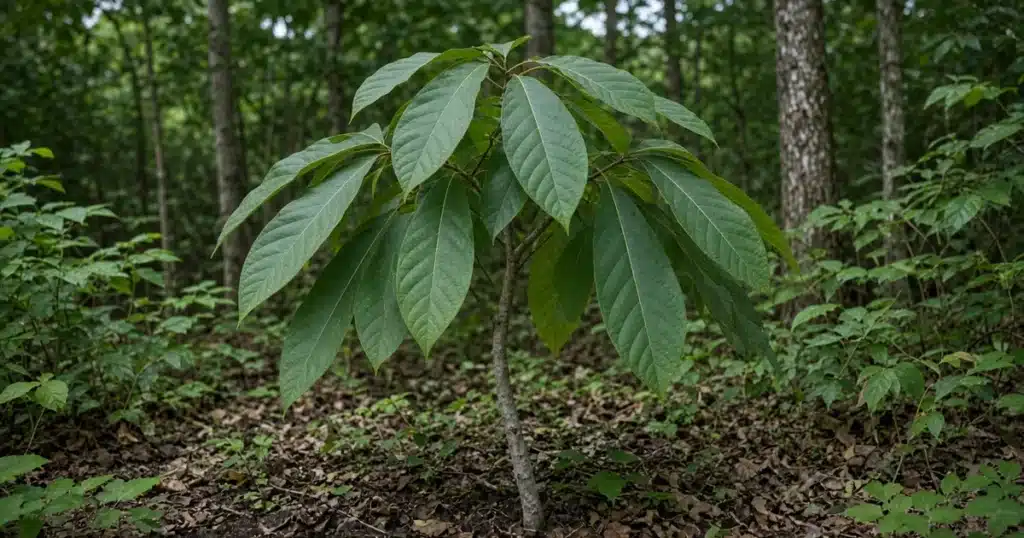
A pawpaw is a native fruit tree that bears large, custardy fruit with a tropical taste. Young trees need some shade for their first year or two, then fruit well in sun. Most pawpaws need a second, unrelated tree for pollination. Plant two or more varieties in moist, rich, well drained soil to start a backyard patch.
Pawpaw is the largest edible fruit native to North America, and it is easier to grow than many people expect.
What is a pawpaw?
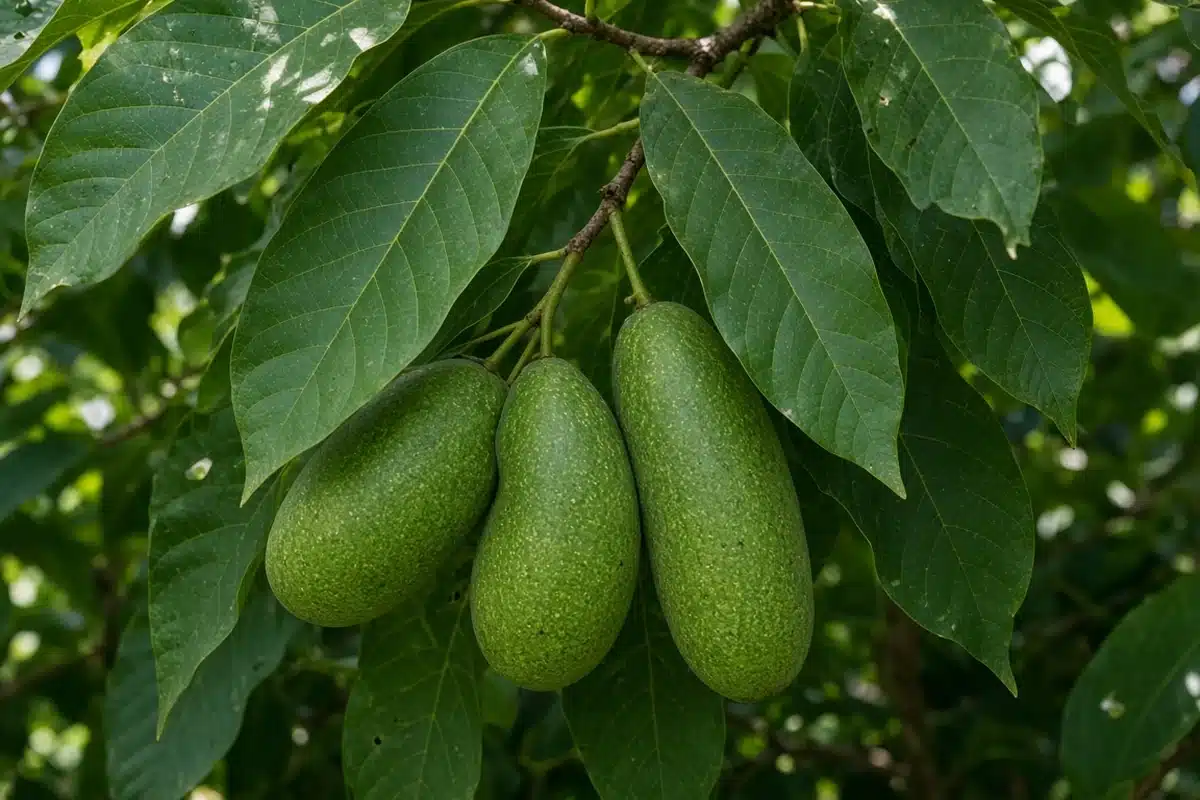
Pawpaw, Asimina triloba, is a small understory tree native to the eastern United States. The Clemson Cooperative Extension HGIC fact sheet on pawpaw describes it as a tree that grows about 15 to 30 feet tall, often forming patches by root suckers in the wild.
Leaves are large and droop, giving the tree a tropical look. Maroon flowers appear in spring before the leaves. Fruit ripens in late summer to early fall and tastes something like banana and mango.
| Topic | Detail | Tip |
|---|---|---|
| Size | About 15 to 30 feet tall | Space trees about 8 feet or more apart |
| Young trees | Need shade for the first year or two | Use shade cloth or plant near cover |
| Mature trees | Fruit more in sun | Plan for sun as trees grow |
| Soil | Moist, rich, well drained | Avoid wet or heavy clay |
| Pollination | Needs a second, unrelated tree | Plant two or more varieties |
| Fruit | Ripens late summer to early fall | Soft to the touch when ripe |
Sources: Clemson Cooperative Extension HGIC, Purdue Extension, Kentucky State University.
Why do young pawpaws need shade?
In nature, pawpaw seedlings grow in the shade of larger trees. Young plants are sensitive to harsh sun and can scorch in full exposure. The Purdue Extension publication on growing pawpaws recommends giving young trees shade for the first year or two.
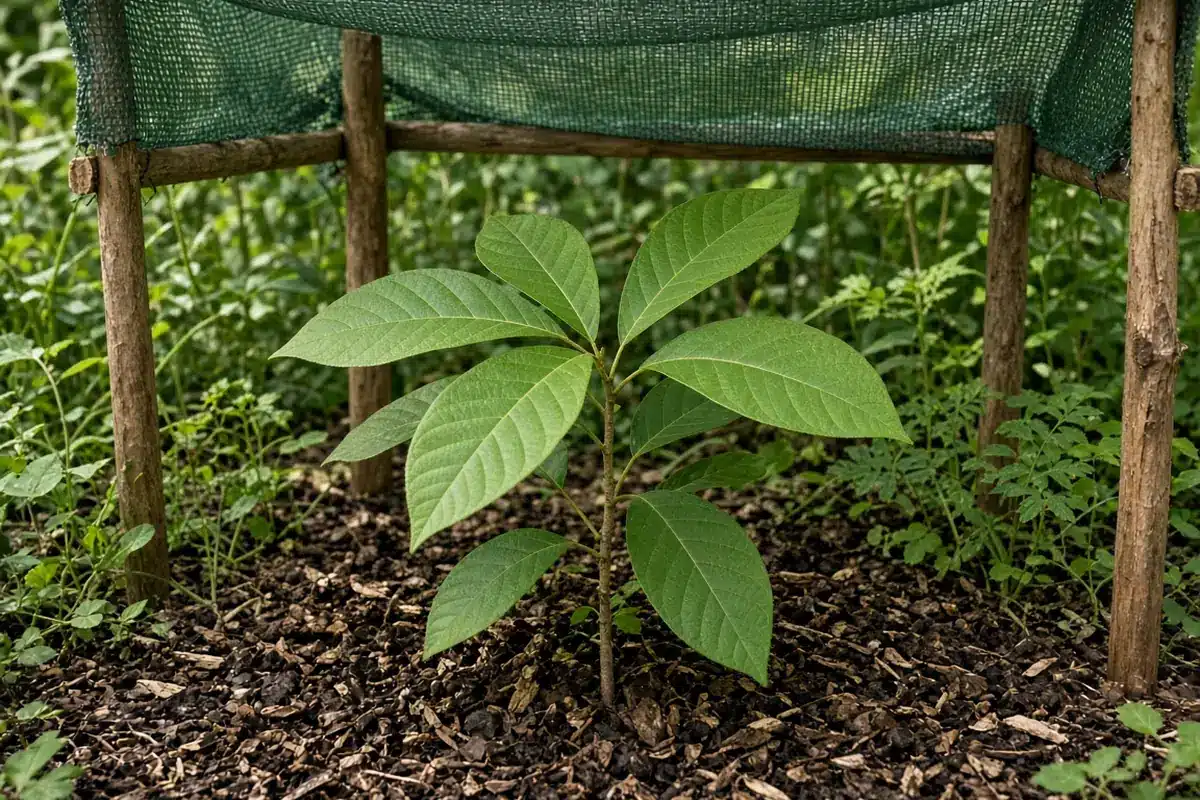
Shade cloth on a simple frame or a tube shelter works well. Planting on the east side of a building or near taller shrubs can give natural shade. Once trees are a few feet tall and established, they handle full sun and fruit better in it.
Our post on growing cannabis near trees covers how shade from trees changes conditions for nearby plants.
How do you plant pawpaw?
Pawpaws have a long taproot and fragile roots, so they dislike transplanting. Buy container grown trees rather than bare root plants when possible. Plant in spring after the soil warms.
Pick moist, rich, well drained soil. Pawpaw doesn’t like standing water or heavy clay. Dig a hole as deep as the container and wider. Set the tree at the same depth it grew, backfill, water and mulch.
Water often through the first season. Pawpaws are slow to start and may put on little top growth the first year while roots establish.
Our post on garden microclimates for cannabis helps you read sun and moisture in your yard before you choose a spot.
How does pawpaw pollination work?
Most pawpaws can’t pollinate themselves. The Kentucky State University page answering questions about pawpaw explains that you need at least two genetically different trees for fruit. Suckers from the same root count as the same tree.
The flowers are pollinated mostly by flies and beetles, not bees. Some gardeners hand pollinate with a small brush to help fruit set, moving pollen from one tree’s flowers to another’s.
Bees still matter to a garden overall. Our post on what roles bees play in outdoor cannabis covers how pollinators support a planting.
When does pawpaw bear fruit?
Grafted trees may fruit within a few years, but seedling trees take longer. Fruit is ripe when it softens like a ripe peach and gives off a sweet scent. Ripe fruit bruises easily and lasts only a few days at room temperature, longer in the fridge.
How to: step by step
- Pick a spot with moist, rich, well drained soil.
- Buy two or more container grown trees of different varieties.
- Plant in spring and set trees at their nursery depth.
- Shade young trees for the first year or two.
- Water through the first season and mulch.
- Hand pollinate with a small brush if fruit set is low.
Troubleshooting
Leaves scorch. Young trees get too much sun. Add shade.
No fruit. Only one variety or suckers of one tree. Plant a second variety.
Slow growth. Roots are establishing. Water and wait.
Tree dies after transplanting. Roots were damaged. Use container trees.
Fruit bruises quickly. Pick when soft and chill.
A pawpaw patch brings a native fruit to the backyard. Kind Seed Co shares more fruit growing ideas in outdoor growing.
Sources
- Growing pawpaws (HO-220), Purdue Extension, Growing pawpaws (HO-220)
- Pawpaw, Clemson Cooperative Extension HGIC, Pawpaw
- Questions about pawpaw, Kentucky State University, Questions about pawpaw
FAQ
How tall do pawpaws grow?
About 15 to 30 feet.
Do you need two pawpaw trees?
Yes. Two different varieties are needed for fruit.
When do pawpaws ripen?
Late summer to early fall.
Do pawpaws grow in shade?
Young trees need shade, but mature trees fruit more in sun.
What pollinates pawpaws?
Mostly flies and beetles.


