What Is a Graft Union? Spotting It and Setting the Right Planting Depth
The short answer
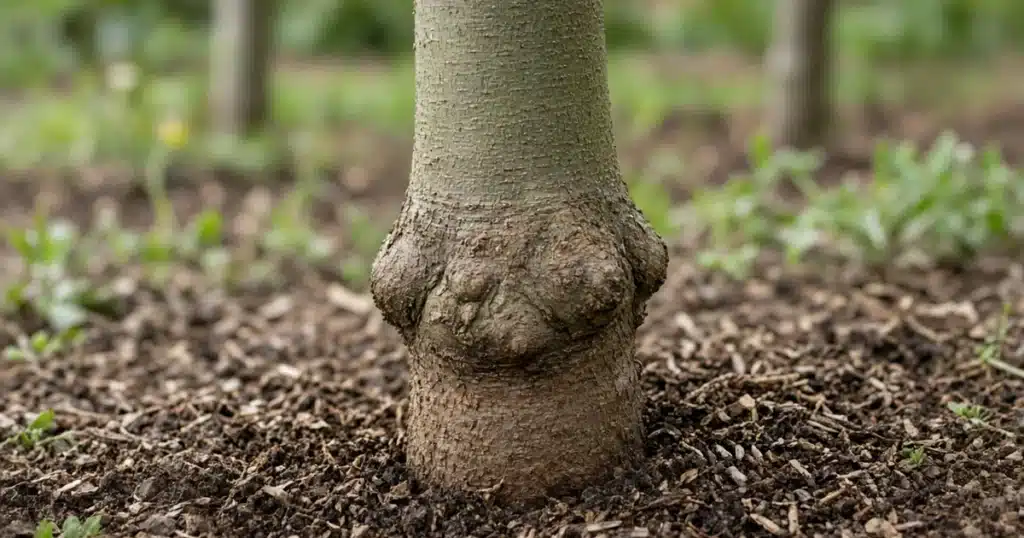
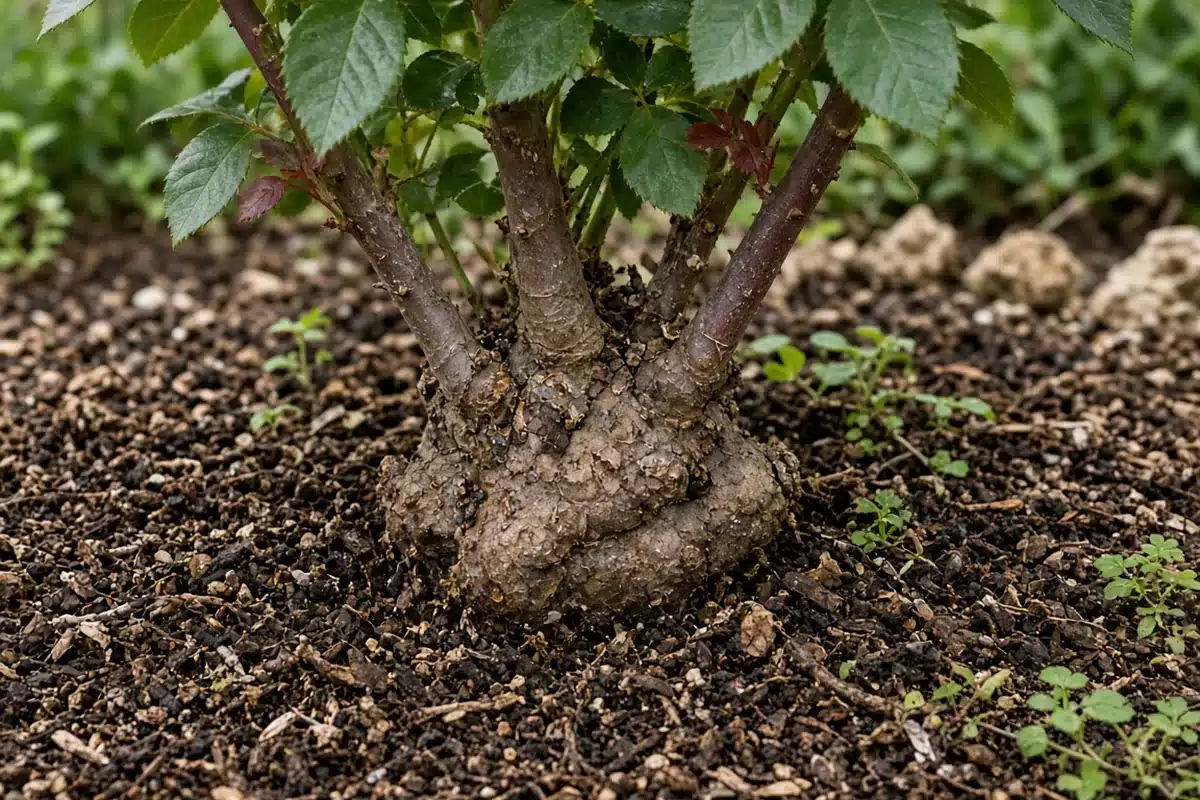
A graft union is the spot on a plant where a chosen top variety was joined to a separate rootstock. It usually shows as a knob, bend or change in bark just above the roots. On most fruit trees, set the graft union a few inches above the soil at planting. Grafted roses follow different rules by climate.
Knowing where that joint is and how high to set it saves trees from problems years later.
What is a graft union?
Grafting joins two plants so they grow as one. The top part, called the scion, is a stem from the variety you want, such as a named apple. The bottom part, the rootstock, supplies the roots. Rootstocks are chosen for traits such as size control, cold hardiness or soil tolerance.
The University of New Hampshire Extension fact sheet on grafting fruit trees in the home orchard explains how the two parts grow together. The cambium is the layer of growing tissue between the bark and the wood, and the cambium of scion and rootstock must line up. Where they meet, the tissue grows together into a lasting joint. That joint is the graft union.
| Plant | Where the union sits | Planting depth tip |
|---|---|---|
| Apple and pear | A few inches above the roots | Set the union 2 inches or more above soil |
| Dwarf fruit trees | Low on the trunk | Set it above soil so the scion does not root |
| Stone fruit | Low on the trunk | Set it above soil |
| Grafted roses | At the base of canes | Depth depends on winter cold |
| Ornamental trees | Low on the trunk or top grafted | Set it above soil |
Sources: University of New Hampshire Extension, Mississippi State University Extension, Iowa State University Extension.
How do you spot a graft union?
Look at the lower trunk above the root flare. A graft union often shows as a swollen ring or knob. There may be a slight bend or dogleg where the scion grew from the rootstock. Bark color or texture can change at the joint, too.
On many young nursery trees, the union sits a few inches above the soil line in the pot. On roses, it’s the knobby crown where the canes come out.
The Mississippi State University Extension publication on basic grafting techniques shows common grafts such as whip and tongue and cleft grafts. Each leaves a slightly different mark, but all form a visible joint.
Why does planting depth matter?
On fruit trees, burying the graft union can let the scion grow its own roots. When that happens, the tree loses the traits of the rootstock. A dwarf apple can grow to full size, defeating the purpose of a dwarf rootstock.
Burying the trunk causes problems of its own. The Iowa State University Extension answer on the proper planting depth for a tree covers this point. The root flare is where the trunk widens into roots, and it should sit at or slightly above grade. Planting too deep can stress roots and lead to decline.
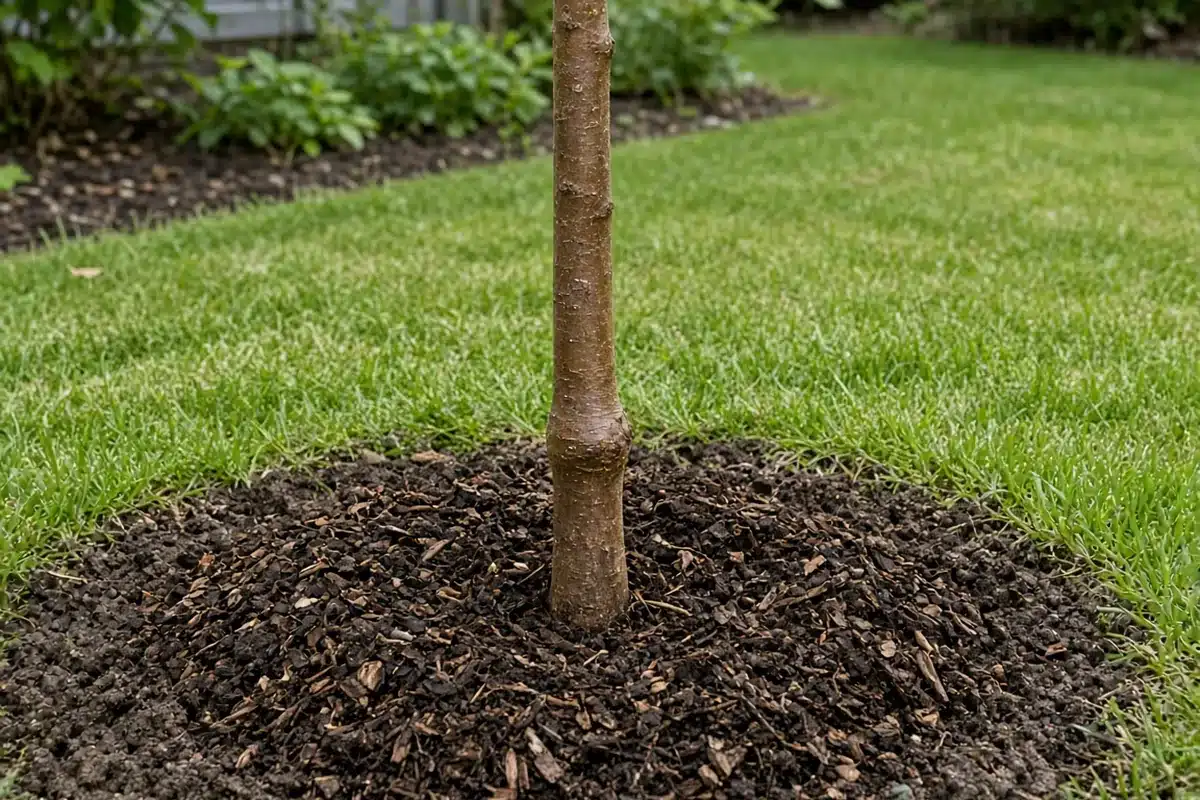
For most grafted fruit trees, set the tree so the union sits a couple of inches or more above the final soil level. Soil settles after planting, so plant slightly high.
Our post on transplanting marijuana plants covers handling roots during a move.
What about grafted roses?
Roses follow different advice. In cold climates, many gardeners plant the graft union a couple of inches below the soil to shield it from harsh winter cold. In mild climates, the union is usually set at or above the soil. Check with your local extension office for the norm in your area.
What should you watch for after planting?
Shoots that sprout below the graft union come from the rootstock. These suckers don’t carry the variety you chose. Cut them off flush at their base as soon as you see them.
Pull mulch back from the trunk so it doesn’t pile up against the union. Our post on growing cannabis near trees covers how trees and nearby plants share space and roots.
Grafting is not only for fruit trees. Our post on cannabis grafting explains how growers join plants in the same way.
How to: step by step
- Find the graft union as a knob, bend or bark change above the roots.
- Locate the root flare on the trunk.
- Dig a hole no deeper than the root ball.
- Set fruit trees so the union sits a couple of inches above soil.
- Follow local advice for rose union depth.
- Remove suckers from below the union.
Troubleshooting
Dwarf tree grows huge. You buried the union, and the scion rooted. Plant higher next time.
Shoots with different leaves at the base. These are rootstock suckers. Cut them off.
Tree sinks after planting. Soil settled. Plant slightly high.
Mulch piled on the trunk. Pull it back a few inches.
Union hard to find. Look for a bend or bark change near the base.
Finding the graft union is the first step to planting a grafted tree right. Kind Seed Co shares more planting tips in outdoor growing.
Sources
- Grafting fruit trees in the home orchard (fact sheet), University of New Hampshire Extension, Grafting fruit trees in the home orchard (fact sheet)
- Basic grafting techniques, Mississippi State University Extension, Basic grafting techniques
- What is the proper planting depth for a tree?, Iowa State University Extension, Yard and Garden, What is the proper planting depth for a tree?
FAQ
What does a graft union look like?
A knob, bend or bark change low on the trunk.
Should the graft union be buried?
Not on fruit trees. Set it above the soil.
Why does burying it matter?
The scion can root and the tree loses rootstock traits.
What are suckers?
Shoots from the rootstock below the union.
Are roses planted the same way?
No. Depth depends on your winter cold.