
Stone Edging Beds: How to Lay a Natural Stone Border
The short answer
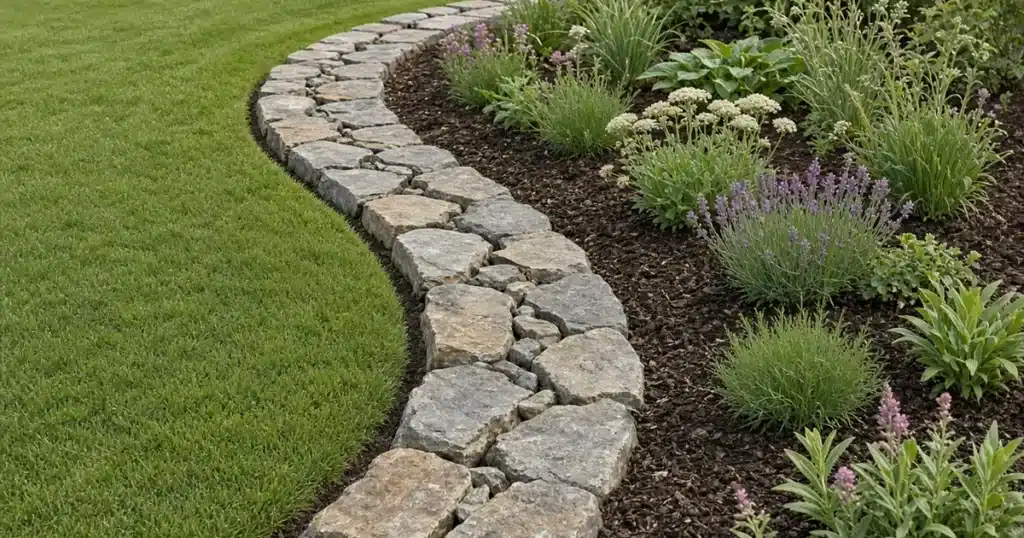
Stone edging beds is simple if you set each stone deep and snug. University of Illinois Extension says edging stone should be at least 3 inches thick and 4 inches wide to stop grass. Washington State University Extension advises placing at least half of a stone’s bulk below ground so it looks natural and stays put.
How do you lay stone edging for garden beds?
Begin with the line. Johnson County Kansas State Research and Extension suggests outlining the bed with a rubber hose or heavy rope and adjusting curves until they are large and smooth enough to mow around. Leave room for plants to reach their mature size.
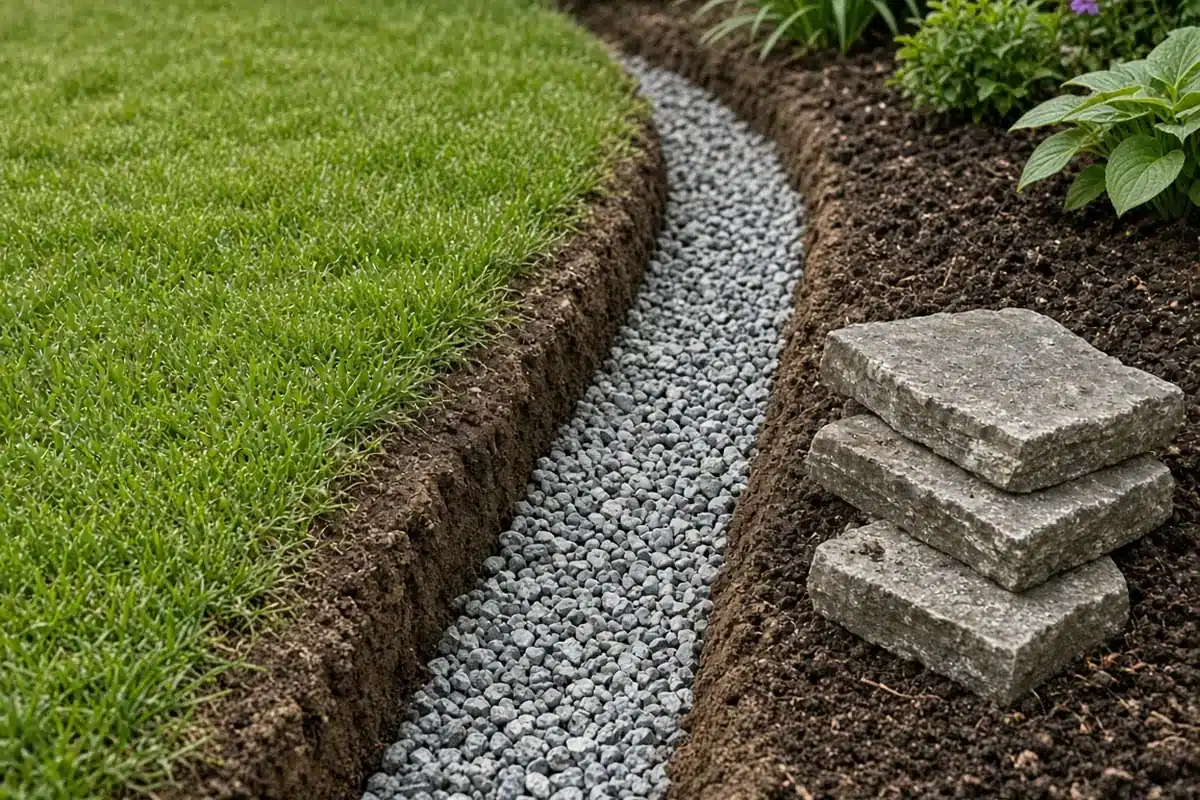
Then cut the edge. The same guide describes the basic cut edge as a trench or V shaped ditch 4 to 6 inches deep and wide, angled toward the bed so grass roots cannot easily cross. Illinois Extension says to cut the edge with a sharp spade and remove the soil and grass to form a small cliff, then fill the space with stone or another solid material.
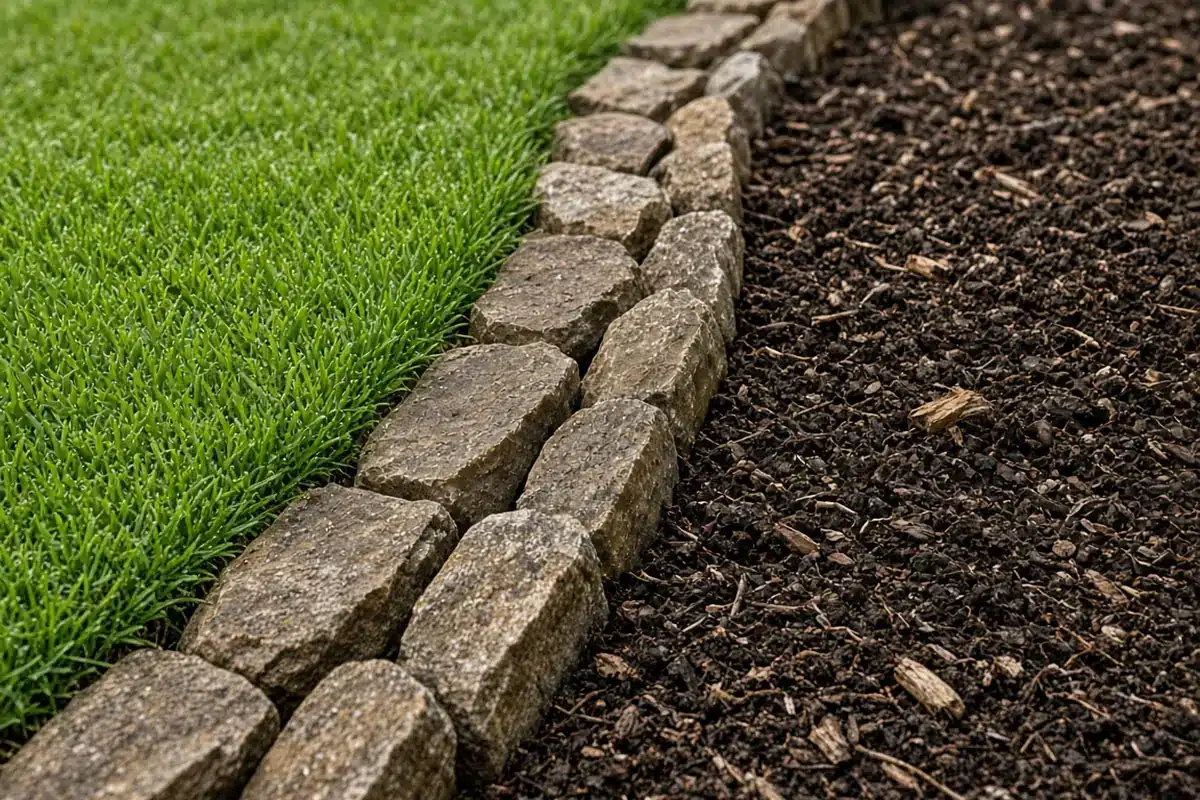
Then set the stones. Illinois Extension says stone should be at least 3 inches thick and 4 inches wide to stop grass. Washington State University Extension says to place at least half of a stone’s bulk below ground, since nothing looks more artificial than stone perched on the surface.
| Step | Purpose | Notes |
|---|---|---|
| Outline with a hose or rope | Sets a smooth line | Make curves easy to mow |
| Cut a 4 to 6 inch trench | Stops grass roots | Angle it toward the bed |
| Choose stone 3 by 4 inches or more | Blocks grass | Thinner stone lets grass through |
| Bury half of each stone | Looks natural, stays put | Avoid stones perched on top |
Sources: Johnson County Kansas State Research and Extension, University of Illinois Extension, Washington State University Extension.
What base does dry laid stone need?
Illinois Extension says a sand or concrete base with reinforcing rods adds durability to brick, stone or concrete edging. For an informal dry laid border, sand is the simpler choice. Good drainage around beds also matters. To check how well a bed drains, see how to check drainage in cannabis beds.
How do you keep stone edging from shifting?
Burying deep does most of the work. Burying at least half of each stone, as Washington State University Extension suggests, gives it weight and grip in the soil.
Gaps are the other problem. The Johnson County guide says gathered stone such as fieldstone or flagstone looks informal, but unless the stones are mortared together, spreading turf grass will quickly find its way into the nooks and crannies. It also notes there is no mowing strip with gathered stone, so hand trimming of the lawn is needed. Fit stones as tightly as you can, and recut the grass edge when it creeps in.
Stone edging also suits raised beds. The Johnson County guide says gathered stone can be stacked for raised beds or laid on edge. For more on raised beds, see raised beds for cannabis.
How to: step by step
- Mark the bed line with a hose or rope.
- Cut a trench 4 to 6 inches deep and wide.
- Remove grass and soil to form a clean edge.
- Add sand under the stones if you want a firmer base.
- Set stones snugly, burying at least half of each.
- Backfill and firm the soil on both sides.
- Recut the lawn edge once or twice a season.
Work smart. Roll, drag or lever stone into place rather than lift it, and use a hand cart for any distance.
Troubleshooting
Grass growing between stones: gaps. Set stones tighter or mortar the joints.
Stones look perched or loose: too shallow. Reset with at least half of each stone below ground.
Grass crossing under the edge: stones too small. Use stone at least 3 inches thick and 4 inches wide.
Lawn edge looks ragged: no mowing strip. Trim by hand along gathered stone.
Stones too round to sit well: Washington State University Extension notes found stone can be too round and smooth for some uses. Pick flatter pieces from a stone yard.
A border with weight
Stone that is thick, buried deep and fitted tight makes an edge that stays in place. Sun on stone warms nearby plants too. See garden microclimates for cannabis. The Kind Seed Co blog has more garden help for plants beyond cannabis.
Sources
- Garden stoneworks, Washington State University Extension
- All about edging, Johnson County Kansas State Research and Extension
- Bed edges, University of Illinois Extension
FAQ
Do you need mortar for stone edging?
Not always, since dry laid stone works for an informal look. The Johnson County Extension guide warns that without mortar, spreading turf grass quickly finds its way into gaps between gathered stones. Fit stones tightly and plan to trim by hand, or mortar the joints if grass is a big problem.
What type of stone works for bed edging?
Gathered stone such as fieldstone or flagstone gives an informal look, according to Johnson County Extension. Illinois Extension says the stone should be at least 3 inches thick and 4 inches wide to stop grass. Washington State University Extension suggests weathered stone for a more mature look.
How deep should the trench be?
The Johnson County Extension guide describes a basic cut edge 4 to 6 inches deep and wide, angled toward the bed. When setting stone, Washington State University Extension advises placing at least half of each stone's bulk below ground, so dig deep enough for that.
Does stone edging stop weeds?
It helps with grass but does not stop it alone. Illinois Extension says stone 3 inches thick and 4 inches wide can stop grass. The Johnson County guide says grass still creeps into gaps between gathered stones, so recut the edge once or twice a season.
Is a plain cut edge enough?
Often. Johnson County Extension calls the cut edge the most basic and least expensive edging. It needs no materials and allows easy bed expansion, but it must be recut once or twice a season before grass invades. Illinois Extension says a hand edge 4 inches deep and wide can contain bluegrass.


