
Brick Path Laying: Base, Sand and Edging Steps
The short answer
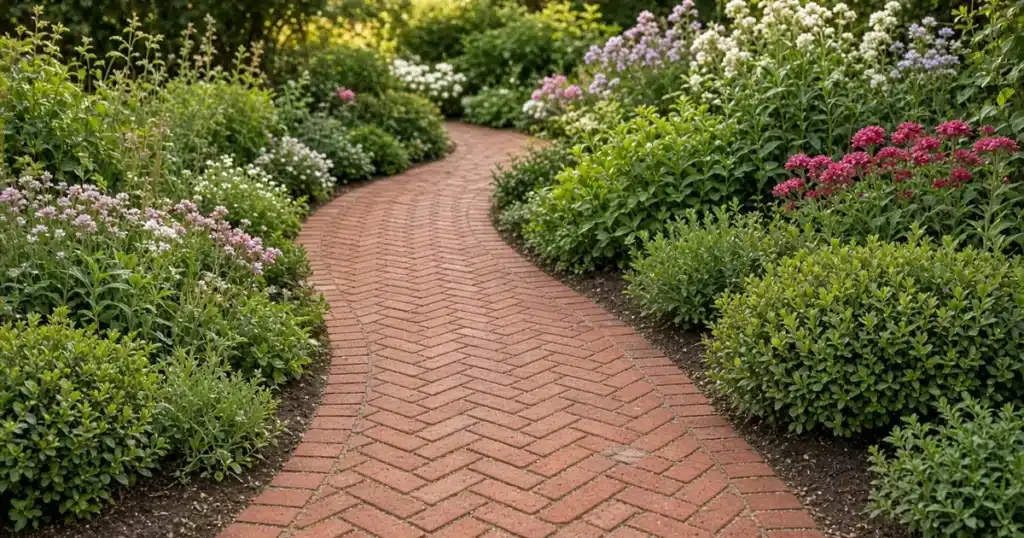
Brick path laying starts below the surface. Oregon State University Extension describes the order: plan the layout, excavate, add a crushed gravel base in compacted layers, install edge restraints, screed one inch of bedding sand, lay the bricks close together, then sweep fine sand into the joints. Slope the path so water runs off.
How do you lay a brick path?
Start with a plan. The Oregon State guide suggests drawing the area on graph paper, then laying out the outline on the ground with a hose or wood. Mark or spray paint a second outline about eight inches outside it so the base extends past the bricks.
Next, count bricks. Multiply the width by the length for square footage, then use the coverage rate from your supplier. Add 5 percent for bricks cut to fit curves and odd spaces, or 10 percent if you expect a lot of cutting.
Set the slope before digging. The guide says paving should slope down one inch every 4 feet and away from the house so water drains off rather than pooling. Set stakes around the edge, mark the slope on them and run a tight string to show the level to follow.
For layout ideas before you dig, see planning an outdoor cannabis garden layout.
What base does a brick path need?
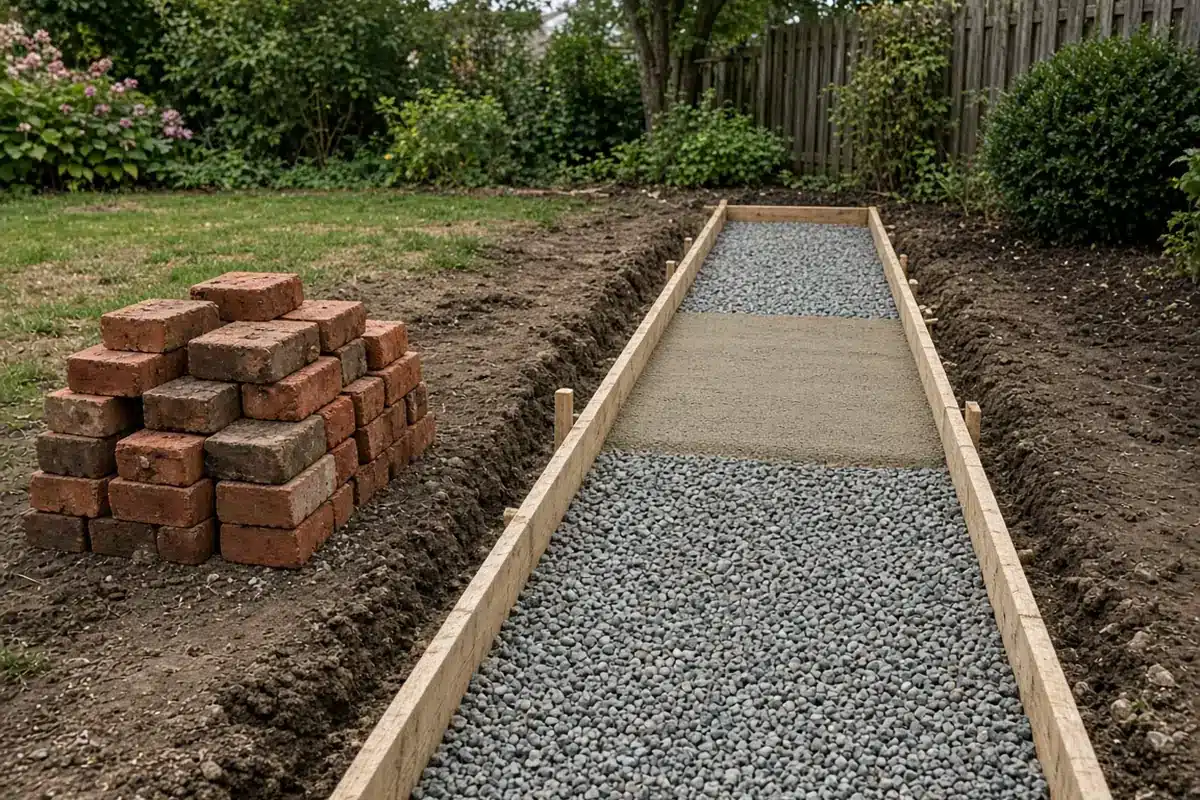
The base bears the load. Oregon State Extension says to calculate total excavation depth by adding the base (4 to 6 inches), the sand bedding (1 inch) and the brick thickness. Dig to that depth, then level and compact the ground.
The base usually consists of crushed rock such as 3/4 minus gravel. Its sharp edges and mix of sizes make it compact well, and gravel with a little moisture in it compacts more easily. The guide suggests spreading it in three smaller layers and compacting between each. Soft clay underneath calls for a thicker base.
| Layer | Purpose | Notes |
|---|---|---|
| Compacted soil | Firm subgrade | Level and compact after digging |
| Crushed gravel, 4 to 6 inches | Carries the load | Spread in three layers, compact each |
| Edge restraint | Stops bricks moving | Plastic, precast concrete, metal or wood |
| Bedding sand, 1 inch | Bed for setting bricks | Screed level over PVC pipe guides |
| Bricks with sand joints | Walking surface | Use fine dry sand in joints |
Source: Oregon State University Extension.
Compaction affects nearby soil too. See soil compaction in cannabis beds for how it affects planting areas.
Why does edging matter?
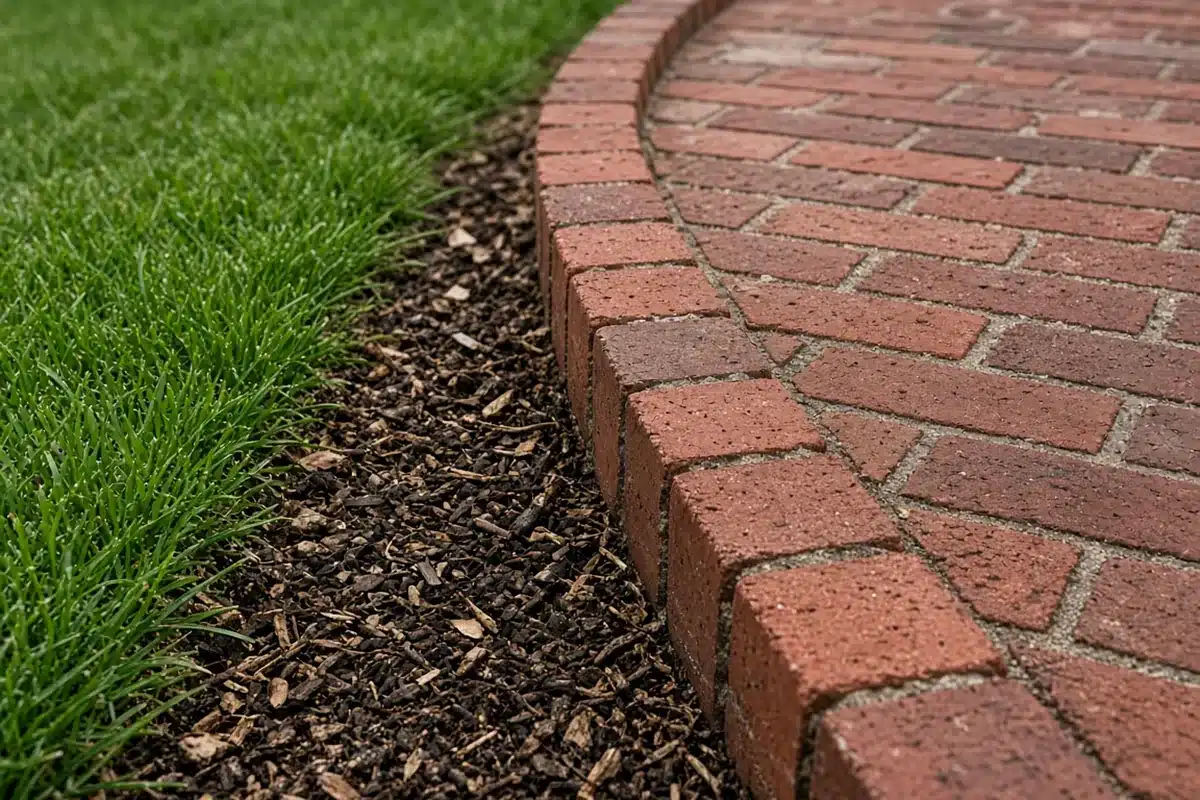
Oregon State Extension calls edging essential. Without edge restraints, pavers will move and separate, and harsh weather and high traffic will ruin the surface. Edge restraints can be made of plastic, precast concrete, metal or wood.
How to: step by step
- Outline the path with a hose and mark the slope on stakes.
- Excavate to the base depth plus 1 inch of sand plus brick thickness.
- Level and compact the soil.
- Spread crushed gravel in three layers, compacting each.
- Install edge restraints along both sides.
- Lay 1 inch PVC pipes on the base and spread 1 to 1.5 inches of sand.
- Screed across the pipes with a 2 by 4, then remove the pipes carefully.
- Lay bricks close together in your planned pattern.
- Run a plate compactor over the bricks to set them into the sand.
- Sweep dry fine sand into the joints.
If bricks need cutting, the guide lists a diamond saw, masonry chisel or mechanical splitter.
Troubleshooting
Bricks sinking: weak base. Rebuild with crushed gravel compacted in layers.
Bricks spreading apart: no edge restraint. Add firm edging on both sides.
Puddles on the path: no slope. Regrade to drop about one inch every 4 feet.
Joint sand washing out: coarse sand or wash damage. Use fine sand, and avoid power washing, which the guide says dislodges joint sand.
Moss or chalky deposits: shade and damp. Oregon State Extension recommends regular cleaning and sweeping in shaded or damp areas.
A path that stays flat
Most brick path problems trace back to the base, slope or edges. Get those right and bricks sit level for years. A path also changes how sun and heat move around a garden. See garden microclimates for cannabis. The Kind Seed Co blog has more outdoor growing help.
Sources
FAQ
Can you lay bricks directly on soil?
Oregon State Extension describes a base of crushed gravel 4 to 6 inches deep, compacted in layers, under a 1 inch sand bed. Its guide says pavers need a stable base and edge restraints, or they move and separate. Bare soil gives neither.
How much extra brick should you buy?
Oregon State Extension suggests adding 5 percent to your square footage to account for cuts needed for curves and odd spaces. If you expect to cut a lot of bricks, add 10 percent. Ask your supplier for the coverage rate for your brick size.
What sand goes between bricks?
Oregon State Extension says to use fine grained sand rather than coarse. Sifted bagged play sand or sand labeled paver sand works well, because fine sand compacts better and fills joints faster. Both the sand and the bricks must be dry when you sweep it in.
How much slope does a brick path need?
The Oregon State guide says paving should slope down one inch every 4 feet so water runs off instead of pooling. Near a house, slope the path away from it. Mark the slope on stakes and follow a tight string line while you grade.
Should you seal a brick path?
Oregon State Extension describes sealing with a sand binding sealant after sweeping. It says this holds joint sand in place, discourages plants growing in the joints and helps resist stains. You may need to reseal regularly to maintain color and appearance.


